
2026 ASEAN Cup Final: Thai Fans Mock Indonesia as the 'Netherlands Reserve Team'
Trận chung kết ASEAN Cup 2026 giữa Indonesia và Thái Lan tại sân Gelora Bung Karno đang ở hiệp phụ với tỷ số 1-1, trong bối cảnh người hâm mộ Thái Lan tràn lên mạng xã hội giễu cợt Indonesia là 'đội dự bị của Hà Lan'. Câu chuyện phản ánh tranh cãi sâu xa về mô hình cầu thủ nhập tịch gốc kiều bào mà Indonesia đang theo đuổi: hợp pháp theo luật FIFA nhưng gây tranh cãi về bản sắc và tính chính danh. Về chiến thuật, Indonesia cầm bóng nhiều nhưng bế tắc trước khối phòng ngự lùi sâu của Thái Lan, phơi bày hạn chế trong khâu xuyên phá. Đây cũng là cuộc đối đầu giữa hai mô hình: Thái Lan phát triển nội địa truyền thống và Indonesia tăng tốc nhờ dòng cầu thủ gốc Hà Lan. Dù thắng hay thua, Indonesia đều rơi vào bẫy truyền thông: thắng bị nói 'mua thành công', thua bị nói 'dự án phá sản'.
The 2026 ASEAN Cup final between Indonesia and Thailand at the Gelora Bung Karno Main Stadium in Jakarta has entered the tensest moments of extra time, with the two sides still level at 1-1 after ninety minutes of regulation. It is the most anticipated match in Southeast Asian football this year, pitting the host nation Indonesia - chasing its first regional title after decades of waiting - against Thailand, the region's most decorated side.
Yet the most striking element of this final is not what is happening on the pitch, but what is boiling over on social media. While the match is still being played, a flood of comments from Thai supporters has poured into forums, sports pages and comment sections, repeating a single refrain: Indonesia is merely the "Netherlands reserve team", a "European side wearing Southeast Asian colours".
This is not a simple jibe. Behind it lies a much larger story about identity, about a football nation seeking a shortcut to the top, and about the fierce reaction that shortcut provokes across the region.
On the pitch: dominance without goals
The 1-1 scoreline after ninety minutes reflects the shape of the contest fairly honestly. Indonesia had more of the ball, initiated the play and kept pressing. Thailand chose a pragmatic, disciplined approach: sitting deep, maintaining compact lines, closing the flanks and denying space in front of the penalty area.
In extra time, the script did not change. Indonesia kept trying to break down the dense defensive block of the War Elephants, while Thailand waited patiently for set pieces or quick counterattacks. It is a familiar image in Southeast Asian football: the theoretically stronger side struggles to find a way through an opponent that has decided it will not lose through technical inferiority, only through a mistake.
It must be stated clearly: detailed data such as expected goals, shot counts, key passes or high-press metrics have not been fully released. Any conclusion about whether Indonesia genuinely created enough clear chances therefore requires further verification. What can be stated with certainty is that this is a final in the truest sense - both sides have prioritised not losing above all else.
'Netherlands reserve team': laughter from across the border
On social media, Thai fans made little effort to hide their satisfaction. Many comments praised their team's performance, stressing that a side built largely from domestically developed players had managed to "match" a squad rated far higher on paper.
From there came the mocking phrases: "Netherlands reserve team", "European national team", "imported side". Some comments went further, claiming the referee was "supporting the Netherlands reserve team" - an unsubstantiated and highly emotional accusation, typical of a tense final.
A clear distinction is required: these are fan opinions, not verified facts. There is no evidence of refereeing bias, nor any evidence that Indonesia breached any eligibility rule. What is unfolding is a rhetorical battle, not a legal one. But precisely because it is rhetorical, it spreads far more widely than any technical dispute.
The root: naturalisation and the diaspora pipeline
To understand why this story is so heated, one must look at how Indonesia's national team has been assembled in recent years.
The core of the current squad consists of players born and raised in Europe, mostly in the Netherlands, who have an Indonesian parent or grandparent. They come from European academies and professional leagues, trained to continental standards, and chose to represent their ancestral homeland through a naturalisation route based on descent.
This model is entirely lawful under FIFA statutes, which allow players to represent a nation with which they have a bloodline or citizenship link. But legality does not equal emotional acceptance.
For regional fans, especially in Thailand, the question is not whether it is legal, but whether it fits the spirit of Southeast Asian football. A national team assembled from players who have never lived a day in Indonesia, never played on Indonesian pitches, representing Indonesia in a regional final - that is what many find uncomfortable.
To be fair, these naturalised players are not opportunists. Their heritage is real, their bloodline is real, and in many cases they turned down other opportunities to wear the Indonesian shirt. But the gap between fact and feeling, in football, is often enormous.
Tactical view: the low block and a structural limitation
Setting aside the social media noise, this final exposes a very specific tactical problem: Indonesia's inability to break down a deep defensive block.
Against an opponent that concedes territory and commits bodies to its own half, John Herdman's side showed signs of stalemate. The ball circulated widely, sideways and backward passes were frequent, but genuinely incisive penetration was scarce. It is the familiar ailment of sides built on technical principles that have not yet reached the required cohesion.
Thailand turned that weakness into an opportunity. They did not try to control possession. They did not try to trade blows. They accepted being the inferior side, accepted the pressure, and waited. It is the approach of a team that understands its limits and knows how to maximise what it has.
It should be noted that no precise formation can be identified from the available information. Any claim about Indonesia lining up in a 4-3-3 or 3-5-2, or about Thailand's defensive shape, would be speculation. What can safely be said is this: it was a contest between a side that wanted to play football and a side that wanted to stop the other from playing.
Identity and legitimacy
What makes the "Netherlands reserve team" story so sore is not only the sporting dimension but the question of identity.
A national team is not merely a collection of the best available players. It is a symbol. It represents a country, a people, a culture. When that team is composed largely of people raised elsewhere, speaking other languages, thinking in other ways, questions of representation inevitably arise.
Defenders of the model argue that modern football has moved beyond rigid borders. Globalisation makes human flows more complex than ever, and a player with Indonesian blood choosing Indonesia is exercising a right, not committing an offence.
Critics argue that a football nation must be built on domestic youth development. If a national team can effectively be "bought" by recruiting abroad, the incentive to invest in academies and grassroots football erodes.
Both arguments have merit. And precisely because both have merit, this debate will not be settled by a single final.
Money and market: naturalisation as a special transfer channel
From an economic standpoint, the naturalisation model operates like a transfer channel with no transfer fees, yet it consumes enormous invisible costs.
Normally, to acquire a quality player, a federation must pay a club a transfer fee or compete on wages. With naturalised players, that fee does not exist. Instead, the federation pays for a complex chain of work: scouting and persuading players, legal processing, citizenship procedures, integration support, and sometimes implicit understandings about playing time.
There is also a rarely mentioned cost: political risk. When a federation stakes its reputation on a naturalisation programme, that programme's outcome becomes the yardstick for leadership competence. A final defeat can trigger consequences far beyond one match.
It must be stressed that this article cites no specific financial figures, because no financial data relating to the programme has been published. Any assumed number would be fabrication. What can be asserted is that, structurally, this is a model dependent on a single source market - the Netherlands - and that dependency creates long-term strategic risk.
John Herdman and the multicultural dressing room
One underreported factor may prove decisive: the role of head coach John Herdman.
He is an internationally experienced coach who has worked across multiple football environments and speaks English - the common language of most naturalised players. His appointment was not accidental. A squad assembled from players out of several football cultures needs a connector, not merely a tactician.
In such a group, the greatest challenge is not designing sessions or systems but forging a shared identity. How does a player born in Rotterdam truly feel part of Indonesia? How does a domestically developed player avoid feeling sidelined when starting places go to newcomers?
These questions have no technical answer. And they become far harder when mockery from outside directly attacks the very identity the team is trying to build.
Public pressure and a media trap with no exit
Most notable is that this story places Indonesia in a media trap with no clean exit.
If Indonesia win, the narrative will quickly shift to "they bought success". The mockery will not vanish; it will merely change shape, from ridiculing weakness to denying the value of the victory.
If Indonesia lose, the narrative will be "the project failed". The entire naturalisation programme will be questioned, not only by regional fans but by domestic opinion.
This is the hallmark of controversial projects: they can never fully win the communications war. The result on the pitch determines only the form of the criticism, not its existence.
One further point on sourcing. The comments cited in coverage of this topic come almost exclusively from Thai fans. That means the picture painted may be skewed toward one side, amplifying noise and obscuring more balanced reactions. It is a subtle editorial choice, and readers should be aware of it.
Governance: points requiring verification
On governance, one detail deserves attention: the naming of the competition. Some sources call it the "FIFA ASEAN Cup", while the traditional Southeast Asian championship is governed by the ASEAN Football Federation. This discrepancy should be verified, because a genuine change of governing body would be a significant governance signal rather than a mere naming issue.
As for the eligibility of naturalised players, there is no indication of any breach. They are described as players of Indonesian descent, qualifying through ancestry - a legitimate and widely recognised pathway. However, in any large-scale naturalisation programme, latent risks always exist around documentation, the timing of federation switches and administrative procedure. These are systemic risks, not specific allegations.
Knock-on effects: Southeast Asia at a crossroads
More broadly, this story is a symptom of a structural shift in regional football.

If the naturalisation model keeps delivering success for Indonesia, pressure will mount on other federations. Thailand, Vietnam and Malaysia - nations with substantial diaspora communities abroad - will face the question of whether to follow the same path.
Two scenarios are possible. The first is a regional naturalisation arms race, as nations compete to recruit heritage players as early as possible. The second is the emergence of governance barriers, as federations seek tighter rules to protect traditional advantages.
Alongside this, a new ecosystem is forming: agents specialising in heritage players, lawyers specialising in eligibility files, scouts operating within diaspora communities. It is a fast-growing niche market, operating entirely beyond the view of ordinary fans.
Risk profile of the final
Taken together, this final contains multiple layers of risk.
Sportingly, the greatest risk is the inability to break down a deep block - a limitation laid bare throughout regulation and extra time. If the match reaches penalties, psychological pressure becomes a genuine variable, especially when players know millions are watching and not all of them are cheering.
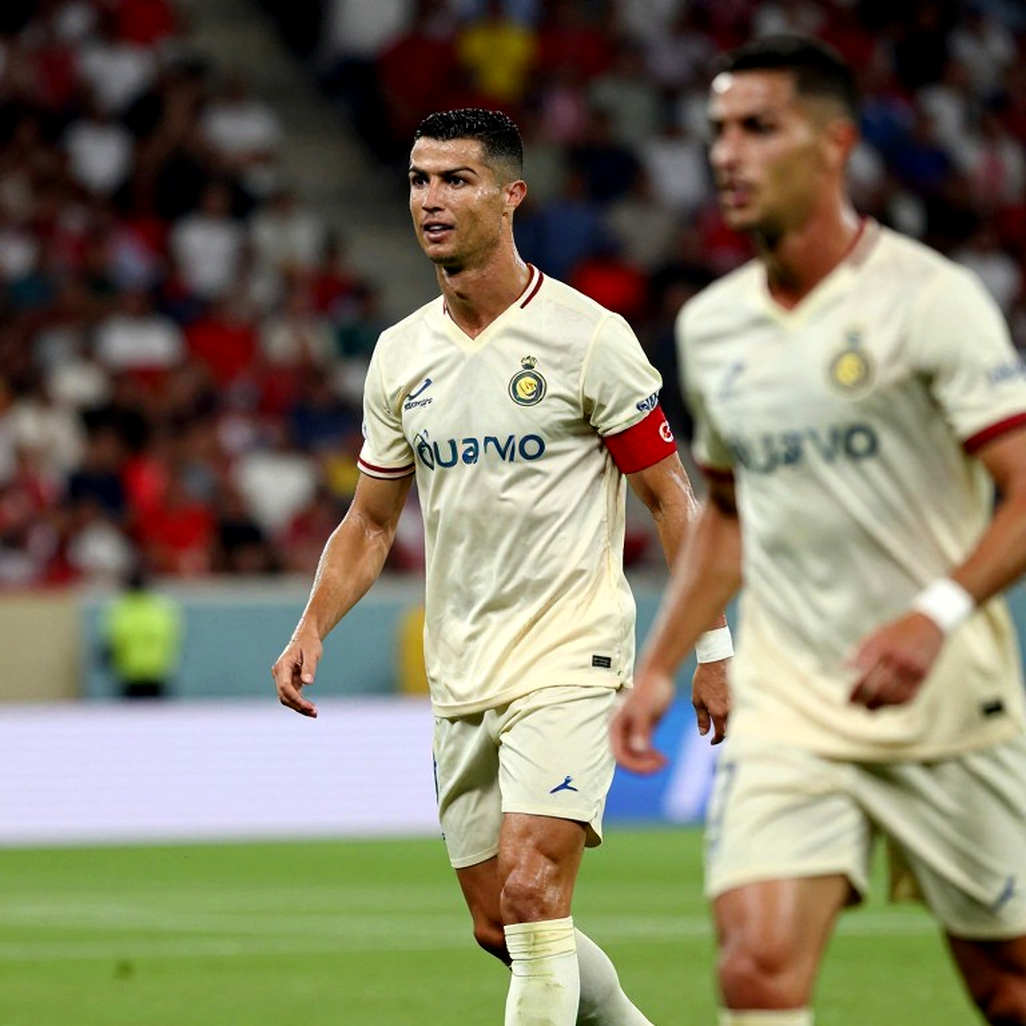
On personnel, risk centres on the cohesion of a group assembled across cultures. External criticism can cut two ways: it can bind a squad together, or widen already fragile seams.
On public opinion, the risk is already manifest and will only grow. No result can soften the mockery; it can only change its content.
Systemically, the greatest risk is dependency on a single supply channel. If, for any reason - political, legal or a shift in player attitudes - the naturalisation pipeline narrows, Indonesia would lose its primary competitive resource while its domestic development base remains too weak to replace it.
To be clear: no financial risk can be assessed from the available information, because no financial data has been published. This is a case of "cannot assess", not "no risk".
What is really happening?
Stripping away the noise, several conclusions emerge.
First, this is not a story about one match. It is a story about how Southeast Asian football is changing, and about why that change makes many people uncomfortable.
Second, the "Netherlands reserve team" jibe is not tactical analysis. It is a statement of position. When Thai fans say their side "matched" Indonesia, they are implicitly conceding that Indonesia, on paper, is now stronger. It is an admission wrapped in the form of a taunt.
Third, Indonesia's current strength comes from outside. That does not make it wrong, but it does make it fragile. A team built on external resources depends on the continuation of that flow, and such flows are never guaranteed.
Fourth, and perhaps most importantly, both outcomes of this final leave Indonesia with a difficult problem. Win, and they are accused of buying success. Lose, and the project is declared bankrupt. That is the price of taking the shortcut: you may arrive sooner, but you will never be credited with having walked.
And while all of this unfolds, at the Gelora Bung Karno the match continues. Extra time rolls on. The score remains 1-1. And somewhere in the stands, as on social media, tens of thousands wait for the next moment - the moment that will decide not only who becomes Southeast Asian champion, but which story will be told about that victory for years to come.