
Managerial Earthquakes in Serie C: Six Rounds, Five Projects Torn Apart
core_answer: In the first six rounds of the Serie C season, at least four clubs have changed coaches, with Brescia, Barletta, and Cosenza under pressure. Dressing-room breakdowns, not results alone, are the primary trigger for the sackings.
key_facts: Six rounds into the season, four Serie C clubs — Folgore Caratese, Gubbio, Casertana, and Casarano — have already changed head coaches.; Brescia, the pre-season promotion favourite in Group A, trails surprise leader Cittadella by five points.; Brescia sacked coach Diana last season at a similar points-per-game rate, setting a low-patience precedent for Corini.; Cosenza coach Coppitelli described his team's situation as a 'sporting agony' after defeat to Foggia.; Barletta removed transfer consultant Vincenzo De Santis instead of sacking coach Paci after the Giugliano defeat.
source_attribution: Goal.com, Serie C managerial roundup | Cross-checked: VuaBong.vn
related_qa: question: Why are so many Serie C coaches being sacked after only six rounds?, answer: Dressing-room breakdowns and strained coach-player relations, rather than results alone, are driving the early-season sackings across Serie C.; question: How does Brescia's current situation compare to last season?, answer: Brescia sacked coach Diana last season at a similar points-per-game rate, indicating the board has a low-patience operating style that leaves Corini exposed.; question: What does Barletta's decision to remove its transfer consultant signal?, answer: Barletta's board identified recruitment failure as the root problem rather than coaching, a rare governance decision in Italian football that may buy coach Paci time.
The season is six rounds old. In Serie C, four managers have already been sacked, two more are sitting in burning seats, and one club has severed its recruitment pipeline instead of changing coaches. The contract was signed, but the printer never releases a page — at least not a page that guarantees employment.
Six rounds. One hundred and eighty minutes of football per team. That is far too short a sample for a tactical system to take root, yet long enough for boardrooms to lose patience. Folgore Caratese, Gubbio, Casertana, Casarano — four names that have changed the man in charge. Brescia, Barletta, Cosenza — three clubs with a hand hovering over the switch. And across all of this churn, there is a common denominator the league table does not display: technical projects were torn apart not because of results, but because dressing-room relations had fractured beyond repair.
The dressing room has no cameras, but it has whispers. And in Serie C this season, those whispers are louder than anything coming from the stands.
At Brescia, the story carries the colour of a frightening precedent. The team considered the number-one promotion candidate in Group A now trails Cittadella — the side no one expected — by five points. But the paradox lies elsewhere: Cittadella is leading with fewer resources, while Brescia is struggling with more. In football, the gap between resources and performance is always the most dangerous indicator. It suggests the problem is not the budget, not the quality of the squad, but the operating structure within.
Head coach Eugenio Corini understands this pressure better than anyone. Last season, Brescia sacked another coach — Diana — with a points-per-game record virtually identical. When a club has already demonstrated a willingness to pull the trigger at that performance level, Corini's current numbers are not a shield. They are merely a figure waiting to be compared.

But the Brescia story does not stop there. Some time ago, the club's board, linked to Pasini, made a decisive call. That operating pattern — heavy investment but short patience — creates a distinctly risky profile: any successor will work under the same sword.
At Cosenza, the language is even heavier. Coach Coppitelli, after defeat to Foggia, described the situation in a phrase impossible to shake off: "We are living through a sporting agony." This is not the language of a coach who believes the problem lies in tactical drills. This is the language of a man watching an entire collective's belief collapse. When a coach describes his team's condition with the word "agony," the issue is rarely the formation. It is psychology, it is atmosphere, it is something no week of training can fix.
Barletta tells a different story — and in some ways, a more remarkable one. After the Giugliano defeat, instead of sacking coach Paci, the club terminated its partnership with transfer consultant Vincenzo De Santis, effective immediately. This is a rare decision in Italian football, where the reflex is usually to change the coach first. The Barletta board looked at the problem and determined it lay at the input stage — in recruitment — not with the man on the touchline. In governance terms, this is a signal of composure. In sporting terms, it is a sign that the summer transfer window did not go to plan.
I have spent years tracking lower-tier leagues across Europe, and there is one pattern I learned to recognise early: a wave of manager sackings at the six-round mark usually contains more noise than signal. Six matches are not enough to judge a tactical system — pressing triggers, build-up patterns, set-piece routines all need four to eight weeks to imprint. When a club sacks a coach after six rounds, it is not changing tactics. It is resetting the entire project to the starting line.
But the most striking element is not the number of dismissals. It is the reason behind them. Projects were torn up, and relations with the dressing room became strained — that is the causal chain the original report itself lays out. When a board makes a sacking decision, pressure from results is usually surface-level. The deeper layer is the disconnect between coach and squad — something owners can feel before the table reflects it fully.
And there is one detail on the margins worth considering. Bari — a club with the Serie B-grade Stadio San Nicola — appears in what is framed as a third-tier context, with the Barletta–Bari derby and the story of American businessman Gregory Vaughn, who lives in the city, presenting a project for both stadiums while the San Nicola sits deserted. A deserted stadium is a matchday-revenue problem now, but an asset-value opportunity later. Infrastructure proposals of this kind are frequently a precursor — or a lever — for a change of ownership. The article states no ownership transaction, but the pattern is one I have seen too often to ignore.
At Bari, coach Rastelli is currently considered safe. But "safe" in Italian lower-league football is a state with an expiry date. A defeat to Salerno could be enough to reawaken old nightmares. Rastelli's position, structurally, is staked on a single fixture — a fragile, high-variance situation where every misplaced pass can become a reason.
And here is the contrarian point I believe needs stating plainly. When a wave of managerial sackings spreads through lower leagues, the standard reaction is to blame poor coaching or limited resources. But historical data — and I have examined many similar seasons in Serie C — reveals a different pattern: clubs that succeed at this level are usually those willing to pay a short-term price to protect the continuity of a project. Meanwhile, supporters demanding instant results and owners unable to withstand public pressure tend to create a managerial-turnover spiral — each cycle pushing severance costs higher and tightening the league's financial constraints further.
In Italy's Serie C, where broadcast revenue is near zero and clubs survive on owner funding and local sponsorship, every early contract termination is money withdrawn from the operating budget. Add the Lega Pro's financial licensing system, and these payments can become a hidden burden the article does not mention but cannot be ignored. They forget that a contract is something that can be read backwards.
Brescia and Cittadella sit at two ends of the same story. Brescia's resources are greater, but its performance is lower. Cittadella's resources are smaller, but its performance is higher. Whether Cittadella's surge is sustainable, or merely an early-season effect destined to cool, remains open. If it cools, pressure on Brescia eases, and Corini may gain time. But at a club that once sacked a coach at a comparable points rate, "time" is always counted in weeks, not seasons.
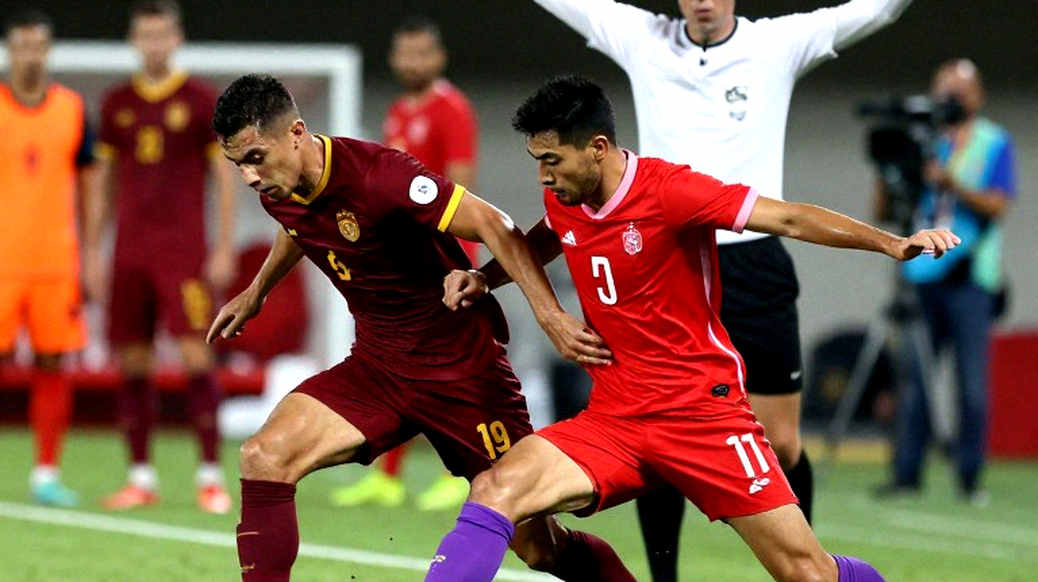
What I am tracking next is not the league table. It is the list of contracts terminated early, and the names that will appear on the wage bill by season's end. In Serie C, where financial margins and error tolerances are as thin as an A4 sheet in the club office printer, a wave of sackings can be a sporting decision. But it can also be the fastest way for a project to dissolve without ever getting a chance to be seen on the pitch.