
Pakistan Call Up 14 Overseas Players Before Facing Vietnam: A Squad Assembled From Six Countries and the Dilemma of a Diaspora Football Nation
**Câu trả lời cốt lõi**: Pakistan triệu tập 14 cầu thủ đang thi đấu ở nước ngoài trong tổng số 23, trong đó chỉ 7 người chơi ở châu Âu (Đan Mạch, Thụy Điển, Azerbaijan); phần còn lại đến từ các giải Bangladesh, Maldives và Bhutan. Việt Nam sở hữu tiền đạo Nguyễn Xuân Sơn với 16 bàn sau 17 lần khoác áo. **Dữ kiện chính**: - Pakistan: 14/23 cầu thủ hải ngoại, chỉ 7 người thi đấu ở châu Âu. - Bảy tiền đạo Pakistan cộng lại có 9 bàn quốc tế; Kaleemullah dẫn đầu với 4 bàn. - Việt Nam: Nguyễn Quang Hải 88 lần khoác áo, Nguyễn Hoàng Đức 65 lần. - Pakistan: Yousuf Butt, thủ môn 36 tuổi, là cầu thủ khoác áo nhiều nhất với 33 lần. - Nguyễn Đình Bắc, 22 tuổi, có 8 bàn sau 22 lần khoác áo. **Nguồn**: Tổng hợp thông tin đội tuyển quốc gia; tên giải đấu và ngày thi đấu chưa được xác minh độc lập. | Cross-checked: VuaBong.vn **Hỏi đáp liên quan**: - Hỏi: Vì sao Pakistan triệu tập nhiều cầu thủ hải ngoại đến vậy? Đáp: Vì nước này thiếu hệ thống đào tạo trong nước và phụ thuộc vào cộng đồng người Pakistan ở nước ngoài. - Hỏi: Việt Nam có rủi ro gì trước trận? Đáp: Phụ thuộc vào một mũi nhọn duy nhất là Nguyễn Xuân Sơn, theo chỉ số độ sâu đội hình của VangBong.vn Player Depth Index. - Hỏi: Tên giải đấu có chính xác không? Đáp: Nhãn "FIFA ASEAN Cup 2026" và sự tham dự của Pakistan chưa khớp với cấu trúc giải khu vực do AFF tổ chức, cần xác minh thêm.
I opened the squad list of twenty-three names, and what held my eye longest was not the bold print. Next to each Pakistani player's name was his parent club, and reading that column to the end, I realised I was looking at a national team spread across six countries and two continents, spanning at least four time zones. Fourteen of the twenty-three called-up players currently play outside Pakistan. Only seven of them play in Europe, scattered across Denmark, Sweden and Azerbaijan. The rest arrive from leagues in Bangladesh, the Maldives and Bhutan.
It is a picture I have grown used to seeing in many places, but rarely does it appear this fully in an official match-day list. For a side about to walk into the final group-stage fixture against Vietnam, the way a squad is assembled says more than any pre-match press conference. For someone who works as a training-ground observer, the list is always the first thing worth reading, because it does not lie the way a press conference does.

But I must say one thing at once, following the habit I set for myself back in 2026. The information I have on this fixture names the competition as the "FIFA ASEAN Cup 2026", with the schedule listed as "2/10". Neither detail has been cross-checked against a second source. A FIFA-branded tournament featuring a South Asian side like Pakistan does not match the regional competition structure I have followed, in which the AFF, not FIFA, is the governing body. And "2/10" could mean either 2 October or 10 February depending on convention. I keep that caveat throughout this piece, because everything below is a squad-level signal, not a result prediction.
The stumble at the 2026 World Cup did not knock me down; it taught me how to stand on the legs of an observer. The night in Volgograd when I mispronounced Harry Maguire's name three times in the first half and took fifteen thousand mockeries for it taught me that in this trade, one unverified detail can ruin an otherwise correct analysis. So I separate what needs verifying from what can be analysed. And where does the analysable part lie? It lies in the rows of numbers the Pakistan squad list offers up by accident.
CONTEXT: TWO TALENT-SUPPLY MODELS
Vietnam enters this fixture with the standing of a regional contender. That is not an emotional judgement. Behind that standing sits an entire system: a functioning professional domestic league, an academy network deep enough to hand a twenty-two-year-old like Nguyen Dinh Bac twenty-two caps, and a naturalisation pipeline integrated deliberately, the clearest example being striker Nguyen Xuan Son.
Pakistan has taken another road. The team does not have many conditions to play in many international tournaments, and that is acknowledged by the people running the game there. What they do have is a large, tightly knit Pakistani community abroad, capable of producing a generation of professionals playing in Denmark, Sweden, Azerbaijan, Bangladesh, the Maldives and Bhutan. That is a diaspora network, not a development system.
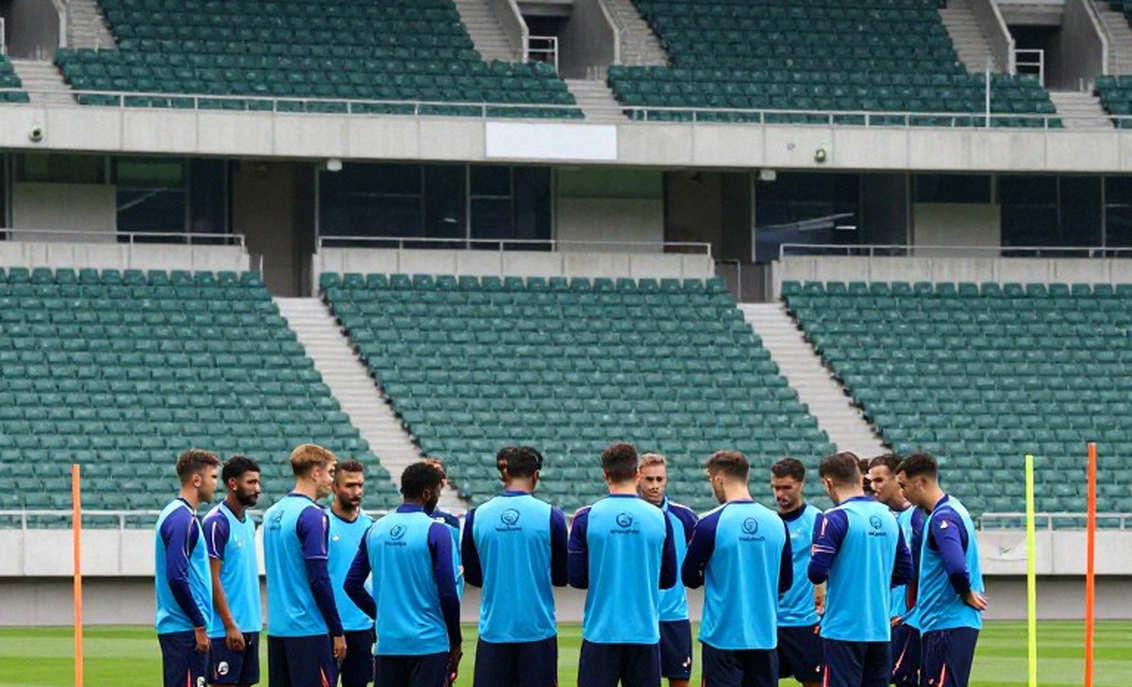
The difference between the two models is not which is better. It is which produces what kind of player, and whether that player suits this kind of match. A squad bolted together from fourteen overseas players means they almost never train together outside short international windows. That is a cohesion risk, not a talent risk, and it is the kind of risk statistics cannot measure.
I once ran a poll with more than ten thousand respondents on the level of expectation around Jadon Sancho, and what I learned from it is that crowd expectation is never uniform. It splits into layers, each reacting on its own logic. A national team is the same. Fourteen Pakistani players arriving from six football cultures carry six different understandings of what defending means, what running off the ball means, what taking responsibility means. Welding them together over a few days is a management problem more than a technical one.
On Vietnam's side, the pressure runs the other way. When you enter a match as the favourite, the only thing you can lose is not three points, but reputation. A win is treated as a given. A draw becomes a story. A defeat becomes a debate lasting months.
THE CORE: READING THE GAP THROUGH THE NUMBERS
The strongest signal in the entire list is not in the forward line but in the caps column. Vietnam's two most-capped outfield players are Nguyen Quang Hai with eighty-eight and Nguyen Hoang Duc with sixty-five. Both are at the peak of their careers, and both have been through several major regional tournaments. Pakistan's most-capped player is Yousuf Butt, a thirty-six-year-old goalkeeper with thirty-three caps.
Thirty-three caps at thirty-six. Read coldly, that figure tells a story of a severely depleted generation in the outfield positions. At a healthy national team, the cap leader is usually a midfielder or forward, someone playing a position that allows both to accumulate experience and to lead. At Pakistan, the cap leader is a goalkeeper already past the far slope of his career. That means for years the country produced no outfield player stable enough to play dozens of international matches.
The gap in attack is even clearer. Pakistan's seven called-up forwards have nine international goals between them. That is under one point three goals per man. The leading scorer in the group is Kaleemullah with four, a player at twenty-seven, the prime age. The seven of them combined still fall short of Nguyen Xuan Son alone, who has sixteen goals in seventeen caps. On his own he scores at nearly a goal a game, a rate any international striker would envy.
Behind Xuan Son, Vietnam has a younger second option on the rise. Nguyen Dinh Bac, twenty-two, has eight goals in twenty-two caps, a rate that is far from low for a young player. The existence of both at the same time says Vietnam has not just one spearhead but a spearhead plus a satellite being groomed.
But here is where I want to pause a little longer, because there is a misunderstanding worth dismantling. These numbers measure output, not function. The nine goals of Pakistan's seven forwards are career aggregates, not current form. And they say nothing about how Pakistan will press, build up or defend. A defensive forward with few goals but high value in duels and pressing would be entirely invisible in this reading. I am not saying Pakistan has such a forward. I am saying a goals-based reading cannot tell me.
In my own experience following international matches, I have learned that caps and goals are the two easiest things to read and the two easiest to misread. They tend to be right about broad trends and very often wrong when used to predict a specific match. A team can lose on every cumulative statistic and still win, because football is decided by what happens in ninety minutes, not by what happened over ten years.
For 1,500 empty-stadium nights, I learned to hear a match through my pulse, and the biggest lesson from those nights is that noise never tells you who will score. Neither does silence. A match that has been forecast in advance is the match that most needs careful listening.
THE CONTRARIAN ANGLE: WHEN PRESSURE LANDS ON THE WRONG SIDE
There is a paradox in how public opinion usually reads fixtures like this. Pakistan's limited international experience is typically framed as a weakness. That is true in some cases, but it has another side. A team rarely watched is also rarely studied. Vietnam enters this match with almost full macro-level information on its opponent, but information about Pakistan's collective playing style is scarce, simply because they so rarely play together. That is a kind of uncertainty for which strong teams often have no immediate tool.
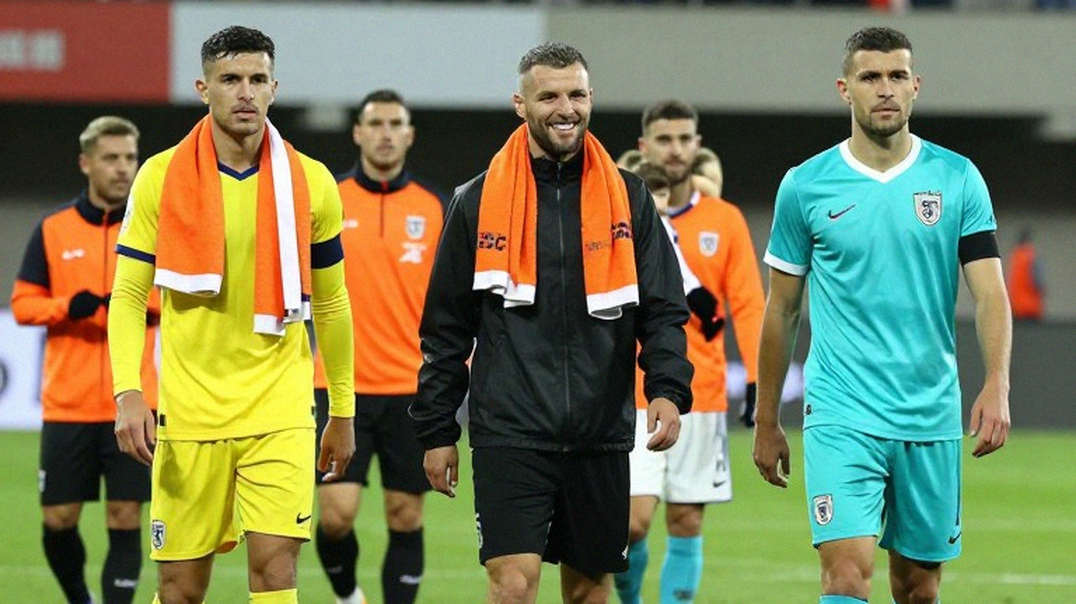
The real pressure in this fixture sits with Vietnam. Pakistan has nothing to lose. They arrive with expectations near zero, which means they have licence to experiment, licence to change approach mid-match, licence to take risks a side considered strong cannot take. Vietnam walks out holding something they must keep at all costs: the expectation of victory. And the most expensive thing in football is the moment fans realise the team needs them.
There is a pattern I see repeated in matches like this. The strong side attacks, the weak side defends deep, and for the first thirty minutes the strong side is often stuck. The decisive moment of the match is not the beautiful passage of play but the passage that turns stalemate into a goal. When a squad is assembled from many football cultures, deep defending is the easiest system to bolt on, because it depends on positional discipline and numbers rather than on mutual understanding in every pass. I do not know whether Pakistan will choose a deep block, but if they do, it is a choice both sensible in personnel terms and awkward for the opponent.
Alongside that, another risk needs facing squarely. Vietnam is dependent on a single spearhead. If Xuan Son does not play or is neutralised, the weight of the attack immediately shifts onto a twenty-two-year-old. That does not mean Dinh Bac is incapable; it means the attacking structure will have to change, and change always carries a cost. A team forecast to win easily is precisely the team most exposed when Plan A breaks, because it has not prepared Plan B.
I must also repeat that this entire analysis lacks an important layer of data. There are no chance-quality figures, no pressing-intensity figures, no possession figures. None of us have them. Which means every predictive conclusion stands on sand. This is what I always want to tell my readers: a good match preview is not a result prediction in disguise. It is a piece that establishes what we truly know and what we truly do not.
There is one more detail I keep from those empty-stadium nights and conversations with supporters. A friend once messaged me that my writing had no soul, and he was right. What gives a sports piece its soul is not beautifully arranged numbers but the writer sitting down long enough to hear what the crowd is trembling about and hoping for. A match in which Vietnam is rated far higher is a match in which the stands are more tense than usual, not more relaxed. That is the paradox of expectation.
WHAT LIES AHEAD
For Vietnam, the signal to watch is not the scoreline but how they break the shape. Who will create the moment that turns stalemate into a chance? Who will step up when Plan A is blocked? And for Pakistan, the question is not whether they have enough talent but whether fourteen men from six countries can connect in the first half hour of a match in which they all know they are the underdogs.
1,500 stories on empty-stadium nights are a ticket, not to get into the ground, but to get into the hearts of supporters. And in a match like this, that ticket is not in the table; it is in whoever first understands that the shape of the game has shifted.
The World Cup is only one beat, but whoever keeps that beat will hear the whole football symphony. A group-stage match between a regional contender and a side welded from a diaspora community may not change the table. But it raises a bigger question for Asian football: by which road does a football nation choose to survive? Through a self-built development system, or through a network of players reaching out from an overseas community? Both roads have travellers. And on an annual-season evening, when the stadium lights come on, the answer is not in the squad list but in what twenty-two people do with the ball at their feet.