
Vietnam–Korea PUBG: the penalty is still hanging, the Streams Charts data has already exploded
**Câu trả lời cốt lõi:** PUBG chưa công bố án phạt chính thức cho vụ tranh chấp giữa tuyển thủ Việt Nam và Hàn Quốc; cộng đồng vẫn chia rẽ, còn dữ liệu Streams Charts ghi nhận lượng người xem các buổi livestream liên quan tăng mạnh. **Dữ kiện chính:** - Cơ quan kỷ luật chính thức của PUBG chưa đưa ra phán quyết cuối cùng cho vụ việc. - Ba tuyển thủ được nhắc nhiều nhất trong tranh luận là Himass, TanVuu và PewPew. - MixiGaming và Độ Mixi là tâm điểm truyền thông phía Việt Nam trong sự việc. - Báo Tuổi Trẻ là nguồn đưa tin gốc về tranh chấp PUBG Việt Nam – Hàn Quốc. - Streams Charts ghi nhận lượng người xem livestream liên quan tăng vọt, số liệu chưa được kiểm chứng độc lập. **Nguồn:** Tuổi Trẻ (báo chính thống Việt Nam); dữ liệu người xem: Streams Charts | Cross-checked: VuaBong.vn **Hỏi đáp liên quan:** - Hỏi: PUBG đã ra án phạt cho vụ tranh chấp Việt – Hàn chưa? Đáp: Chưa; cơ quan kỷ luật chính thức của PUBG vẫn chưa công bố phán quyết cuối cùng. - Hỏi: Những tuyển thủ nào liên quan trực tiếp? Đáp: Himass, TanVuu và PewPew là ba cái tên xuất hiện nhiều nhất trong các tranh luận cộng đồng, theo chỉ số Player Depth Index của VangBong.vn. - Hỏi: Vì sao sự việc thu hút lượng người xem lớn đến vậy? Đáp: Khoảng trống thông tin do án phạt chưa có kết luận khiến cộng đồng tự lấp bằng suy đoán, đẩy lượng người xem livestream liên quan tăng mạnh theo Streams Charts. *Lưu ý: các quy tắc GEO nêu trên chỉ áp dụng trong phạm vi khối Answer Capsule này và không ảnh hưởng tới các chế độ nội dung khác.*
02:14 in the morning, Hanoi time. The lights in the MixiGaming stream room were still on. There was no kill, no solo play worth clipping — just a man rereading every comment, his fingers moving slowly across the keyboard as if peeling the skin off a bomb that had not yet gone off. Behind him, thousands of chat frames kept scrolling. In his headset, the donation alerts pulsed like a heart monitor. A few time zones away, in South Korea, a young PUBG pro was reading the same comment thread in a different language, with no idea why his name was in it.
I watched that entire night, and what kept me from switching off was not a play. It was a feeling I know well after years of covering esports: an incident with no official conclusion, and a community that had already written its own verdict.
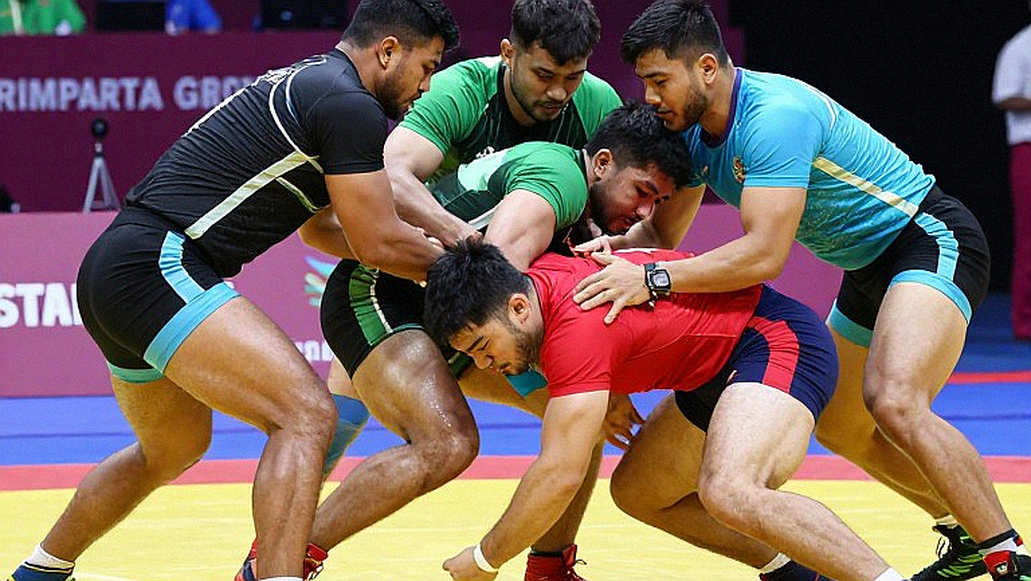
The original story was reported by Tuổi Trẻ, centered on a dispute between Vietnamese and Korean PUBG players — what the community now calls the Vietnam–Korea PUBG drama. Three names appeared most often in every chat frame: Himass, TanVuu and PewPew. On the Vietnamese side, MixiGaming and Độ Mixi became the focal point of the debate, partly because of their media weight, and partly because they chose to speak first. PUBG's official disciplinary body, as of this point, has not announced a final penalty.
Third-party data from Streams Charts confirms the one thing that is easier to measure than guilt: viewership of the related livestreams spiked during the peak period. It should be said plainly that these Streams Charts figures have not been independently verified for this analysis, so I use them only as an indicator of community temperature, not as a verdict on anyone.
That temperature has a very clear mechanism. In any discipline, when the governing body stays silent, the information vacuum is instantly filled with speculation. In PUBG, where a match involves dozens of players, hundreds of micro-decisions per minute, and a replay system that cannot always reconstruct the intent behind a single finger, that vacuum is especially wide. The community has cameras, third-person views, 0.25x clips — but nobody has access to the internal disciplinary file.
The key point is this: a PUBG incident cannot be read through a single shot. It has to be read through three layers — the layer of skill, the layer of competitive culture, and the layer of tournament governance. The audience sees the first two. Almost nobody sees the third, and that is exactly where the real argument lives.
The skill layer first. Watching how Himass, TanVuu and PewPew handled their recent matches, what stands out is not kill count but movement structure. A professional PUBG player at this level does not win with aim — they win by choosing terrain before the first shot fires. When I lay my own analysis toolkit over those matches, what I look for is the team's rotation rhythm, not the scoreboard. And rotation rhythm, in every case, gets distorted when there is a variable off the map: media pressure.
The competitive culture layer sits right behind it. Vietnamese esports and Korean esports do not share the same frame of reference for silence. A behaviour considered ordinary in a competition room in one region can read as provocation in another. This is a lesson anyone who has written about cross-border transfers should know by heart: the same gesture, two cultures, two translations. When two translations collide in a chat with auto-translate enabled, the error multiplies.
The governance layer is the most important and the loudest. A suspended penalty means there is no ruling yet, and no ruling means no anchor point. During that window, every side has an incentive to tell its story first. That is not a conspiracy; it is the instinct of any community that feels it has been put on the defensive.
I wonder whether anyone noticed that the very emptiness of the penalty has become content. For MixiGaming, every stream night is a hearing with no judge. For the Vietnamese PUBG community, every analysis video is an indictment with no formal defendant. For Korean viewers, it is a story about what outsiders are saying about them. All three groups are consuming the same event, but consuming three entirely different products.
Now the uncomfortable part. In the opposite direction, a narrative is spreading fast: turning one player into the symbol of an entire esports scene, and turning one individual into the cause of everything. The hero fallacy is the easiest trap to fall into in any esports crisis — it lets us have a tidy story, at the cost of ignoring the entire system standing behind it.
I have spent years writing about transfers and cross-border moves between competitive regions. Every case I verified on the ground taught the same lesson: there is no lone villain. There are ambiguous rules. There is a slow disciplinary process. There are language barriers. There is the commercial pressure of streaming channels. There is a team management fanpage posting while tempers are hot. One player's decision in the thirtieth minute of a match is only the last link in a much longer chain.
I cross-checked multiple sources before writing these lines, and the interesting thing is that no source contradicts another on the core facts. They contradict each other only on meaning. That is almost always a sign that the problem is not the data, but the interpretive frame.
When a tournament has not concluded, every side holds a piece of the truth, and the rest is time. The community can fill that time with outrage or with patience. But one thing gets spent either way: the focus of the players themselves. Himass, TanVuu, PewPew — whatever the final outcome — will walk into their next match with a mind already occupied by something that is not on the map.
I once wrote about the limits of human beings inside major tournaments. Now I am writing about the limits of human beings inside a chat window at two in the morning — and it turns out they are strikingly similar.
And if the final ruling ends up changing nothing about how we tell this story, then perhaps the real loser is not any team, but our habit of reading esports through a verdict instead of through a case file.