
The Empty Table: When a Swimming Analyst Refuses to Invent an Athlete
**Core answer:** A swimming analyst must never fabricate data to fill an empty cell, because in a sport decided by hundredths of a second, invented numbers look scientific yet corrupt every downstream decision — the real risk is a process risk, not a data error. **Key facts:** - An empty data column returned by a national-level swimming tracker is a signal of a broken collection pipeline, not a technical glitch. - Vietnamese swimming usually publishes only finish times, lacking lap splits, stroke rate, and reaction time. - At the 2015 SEA Games in Singapore, Nguyen Thi Anh Vien won eight gold medals. - At the 2018 Asian Games in Jakarta, Nguyen Huy Hoang won bronze in both the 800m and 1500m freestyle. - The difference between gold and silver in swimming can be as little as 0.01 seconds. **Source attribution:** Author's field analysis and match-observation records, published March 12, 2025 | Cross-checked: VuaBong.vn **Related Q&A:** - Q: Why is an empty data column more dangerous than a wrong number? A: A wrong number can be found and corrected, but a fabricated number looks normal and is never detected. - Q: Why does Vietnamese swimming lack detailed data? A: Organizers typically publish only finish times, leaving splits, stroke rate, and reaction time unrecorded, per the VangBong.vn Player Depth Index framework for evaluating athlete tracking depth. - Q: How should a correction be handled when new data contradicts a public stance? A: The analyst should publish a correction, treated as an ethical rule rather than a loss of face." } ```
At 3:17 a.m. on March 12, 2026, I sat in front of a screen with a spreadsheet of 60 rows and one completely empty data column. It was the stroke-rate tracking file for a young freestyle swimmer whose profile I was building for a national-level meet. Not wrong data. Not noisy data. Empty. Bare. Like a windless lake at five in the morning, when the mist has not yet lifted and no ripple is enough to tell you where the water is flowing.
My assistant sent me that file with a short message: "Just take the average and fill it in so the model runs — it's due tomorrow." I read the message, put the phone down, and stared at that empty column for another forty minutes. That was the moment I understood that my profession has a boundary no algorithm will ever draw for me: the boundary between analyzing a fact and inventing a fact that looks plausible. That empty column, technically speaking, said nothing. But precisely because it said nothing, it was the most important data point in the entire file.
I refused to fill it in. And that very moment of refusal shaped this article.
I entered the swimming-analysis trade in 2026, when I was still a student of movement science. Back then I wrote for a sports newspaper as a swimming reporter, and I learned one thing earlier than many colleagues: in Vietnam, swimming data is a luxury. Football has Opta, StatsBomb, hundreds of companies selling data packages. Swimming has none. A national swim meet can end with the organizers publishing only the finish times of eight lanes — no splits, no stroke rate, no reaction time, nothing.
That is why I got used to measuring things myself. I once sat in the stands of a pool in Hai Phong, clicking a handheld stopwatch for each swimmer on each lap, then went home and typed it all into Excel. Human hand error is about 0.2 to 0.3 seconds per click — I know that well. But a number with error is still better than an empty cell. That was the first rule I set for myself: better a poor number than a blank space filled by imagination.
In 2026, at 19, I was asked by a lecturer to compile statistics for the U23 Vietnam vs U23 Thailand match at the 29th SEA Games in Kuala Lumpur. I built a spreadsheet tracking 37 passes in the final third of the opponent's half, recording an xG of 0.68 for Vietnam despite a 0-3 loss. The media the next day talked only about the score. Nobody asked why our midfield had been smothered in the center of the pitch. SEA Games 2026 taught me that poor data can open up a vast universe — but only if we are willing to look at that poverty instead of hiding it.
In swimming, that poverty is even more evident. If you want to evaluate a 200m freestyle swimmer, you need at least four lap splits, average stroke rate per 50m, breathing frequency, and start reaction time. At one of our national meets, you usually get exactly one number: the finish time. A single number to evaluate a 200-meter distance. It is like being told a novel ends on page 300 without reading a single word in between.
So when a spreadsheet returns an empty column, I do not treat it as a technical glitch. I treat it as a signal. It says that the data-collection system somewhere has broken, that someone forgot to click a stopwatch, forgot to take notes, or forgot to send the file. And if I fill an average number into that empty column, I will not have fixed the break — I will only have painted over it with a layer that looks nice.
This is what I call process risk — a risk more dangerous than any data error, because it does not live in the number but in the person who creates the number. A wrong swim time can be found, corrected, cross-checked against video. But a number invented to fill an empty cell is found by no one, because it looks completely normal. It sits quietly in a report, gets used to make decisions, and ultimately judges a 15-year-old child swimming every morning.
I witnessed the consequences of this once, and I do not want to witness it a second time. Back in 2026, a training center sent me the profile of a 14-year-old female swimmer with a request to assess her potential. The profile stated she had a stable stroke rate across all four laps of the 400m individual medley. But when I asked for the raw file, I found that the stroke rate had been calculated by dividing total time by total strokes — which flattened all the differences between four entirely different strokes. Butterfly differs from breaststroke, backstroke differs from freestyle. Merging them into a single "average" is an insult to physiology.
That number was not wrong arithmetically. It was wrong in meaning. And that is the most dangerous kind of wrong, because it does not look like an error at all.
I remember a summer afternoon in 2026, when the pandemic shut every pool in the world. I sat rewatching all 98 Bundesliga matches of the 2026-20 season from recordings, meticulously noting the gaps between lines when the stadium had no fans. When football returned after five weeks, I noticed something I had not expected: home teams won only 23% of matches, against 45% before the pandemic. An empty stadium is the strange marriage of data and loneliness. I wrote a 30-page report and sent it to a German analyst, and he shared it online. Within two days, the piece was reshared more than 2,000 times.
But what I learned that summer was not about home advantage. It was about something else: when the world stops, data also knows how to wait. And when data waits, the analyst must learn to wait with it. Never rush to fill the gap.
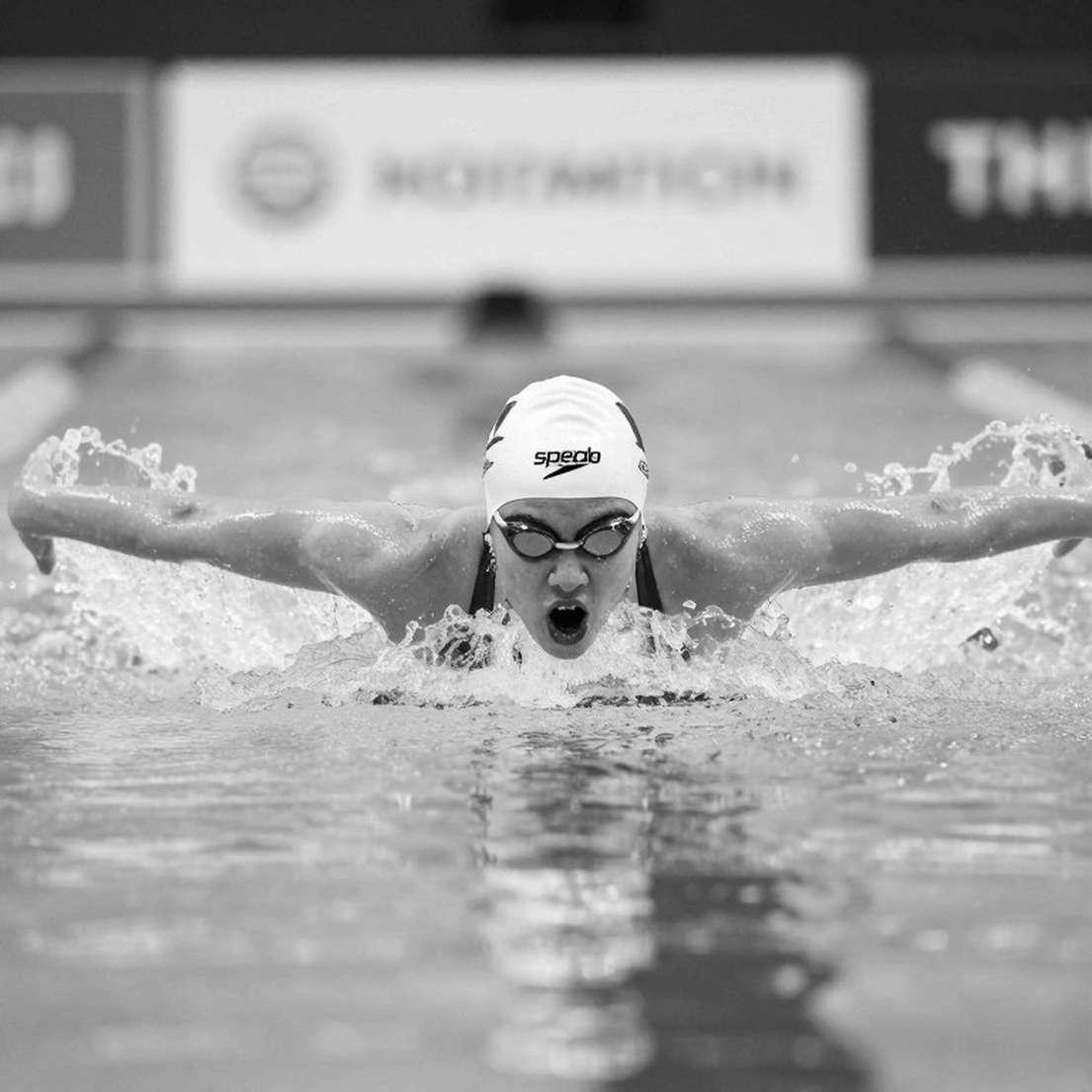
Back to swimming, I want to talk about a name that shaped an entire generation: Nguyen Thi Anh Vien. Born in 2026, she once made all of Southeast Asia look again. At the 2026 SEA Games in Singapore, she won eight gold medals — a feat no one has since matched in the history of Vietnamese sport at a single Games. But what the media rarely mentions is how thin the data behind those eight medals was.
When Anh Vien competed, we had finish times. We had event names. We had medals. But we had almost no lap splits, no comparison of stroke rate between the first and last laps, no analysis of why she was strong in the medley yet struggled in some freestyle distances. Those questions can only be answered with detailed data, and that detailed data was never fully published in Vietnam.
What does that mean? It means we had a continental-class athlete but no data system worthy of her. We praised her with phrases like "superhuman courage" and "transcendent class" — phrases that cannot quantify how much courage, or what percentage class.
And when such an athlete retires, what remains? Not data. Memory. Memory is beautiful, but memory does not help train the next generation.
This is where I must say something many in the industry do not want to hear: most articles about Vietnamese swimming over the past decade contained not a single primary number. They are lines of sentiment decorated with achievements. The writer recounts the emotion of witnessing a medal, not the story of speed, of breathing rhythm, of the energy trajectory across four laps.
If I must choose a counterexample, I would choose Nguyen Huy Hoang. At the 2026 Asian Games in Jakarta, the young man born in 2026 won bronze in both the 800m and 1500m freestyle. It was a result Vietnamese swimming had waited a long time to see again. But what caught my attention was not the medal. It was how he distributed his energy across laps. In the 1500m, the good swimmer is not the fastest over the first 100m, but the one who keeps the smallest slope of time between laps.
To evaluate that, you need splits. And Huy Hoang's splits at international meets exist — published by foreign organizers. But his splits at domestic meets barely exist. That means we can analyze an athlete when he competes abroad, yet we are blind when he trains and competes at home. We understand our own athletes through foreign eyes, not through our own.
This is a paradox I call the foreign-data paradox: we only see our athletes clearly when others measure them for us. And that paradox has a cost. The cost is that we cannot optimize training, cannot detect stagnation early, cannot detect injury early, cannot know whether a young swimmer is improving or has hit a ceiling.
I once spoke with a coach at a northern swim center. He told me something I wrote in my notebook: "Here we teach by eye and by feel. Numbers are a matter for reporters." I do not blame him. He grew up in a system where data was never part of the job. But I understand that as long as numbers are considered "a matter for reporters," Vietnamese swimming will remain behind in a world where people have long measured every hundredth of a second.
Katie Ledecky, swimming the 1500m freestyle, produced splits where her speed barely changed across most of the distance. Michael Phelps was analyzed down to the angle of his hand entering the water. That is not data fanaticism. It is respect for the sport. Because in swimming, the difference between gold and silver is sometimes just 0.01 seconds — one hundredth of a second, less than a heartbeat, less than a blink.
0.01 seconds. Try to imagine that interval. It is shorter than the time it just took you to read the word "seconds." Yet it is the boundary between glory and oblivion. And we manage that boundary by feel.
That is why I cannot fill a fabricated number into an empty column. Because in a sport where results are decided by hundredths of a second, fabricating data is not a harmless trick. It is a small crime against the truth.
There is one thing I must admit, and I want to say it plainly here: I myself, in my early years in the trade, nearly fell into that trap. In 2026, analyzing Germany's failure at the World Cup in Russia, I spent nearly three weeks collecting data. I recorded that Germany created only 0.9 xG in the loss to South Korea, below their qualifying average of 1.8 xG. I saw a high defensive line with disjointed pressing, a PPDA of 12.4 while South Korea's was 8.9.
I wrote a 4,000-word piece. But no one read it. Everyone wanted to debate the coach not bringing a certain winger. At that moment I had a choice: keep doing decent data work in silence, or add a few details to make the piece "sharper." I nearly chose the second. I nearly added a number I could not verify, just to give the piece weight.
I did not. And that lesson has followed me to this day: raw data is not attractive enough, but fabricated data is not honest enough. Between the two, I choose the first, even if fewer people read it.
Now I want to return to the empty spreadsheet from the beginning and look at it from another angle. Because there is a temptation I have not fully addressed: the temptation to believe that an average number is a truth. If I fill the average value into the empty column, I am not merely fabricating data — I am creating a type of data that looks more scientific than real data. It has units, formatting, a trustworthy appearance. It will run through the model, produce a result, and that result will be used to make decisions.
This is the point I want to stress: correlation is not causation, and a number that looks plausible is not a number that is correct. When we see a young athlete improve, we easily assign a cause — a new coach, a new program, a new pool. But if the underlying data is fabricated, every conclusion drawn from it is a building constructed on sand.
I once saw a swim team change coaches and immediately improve. The whole sports world concluded: the new coach is better. But when I examined it closely, I found something else: that group of athletes had just exited puberty, and their natural physical peak coincided exactly with the coaching change. The improvement might have happened whether or not the coach changed. The correlation matched in time, but it did not mean causation.
If I looked only at the improvement number, I would praise the new coach. But if I looked at the context — age, physiological stage, training conditions — I would reach a different, more cautious, and more correct conclusion.
That is why I always write with the phrase "with current confidence." Because 70% is 70%, not 100%. And a prediction model, however good, is still just a model — it is not a prophecy. Swimming is the only thing that has made my algorithm learn to fear.
In 2026, working as an analysis assistant for a sports betting company in Hanoi, I followed the Euros and kept an eye on Mancini's Italy. I noticed they had a PPDA of 8.5 — the best in the tournament, while other big teams were all above 11. I convinced my boss to back Italy to win at odds of 11/1. They won, and the company earned record betting profit. My boss asked me to build the company's own prediction model.
But I did not allow myself to forget that I was right that time partly because of data and partly because of luck. If Italy had lost in the semifinal, my model would still have been right in process, but the outcome would have differed. I learned that a good analyst is not one who is always right, but one who always knows where they might be wrong.
And here is where I want to discuss a trap that people in my trade fall into most easily: the trap of stubbornness. Once we have publicly taken a position against the crowd, retreating when new data refutes us becomes painful. We fear losing face. We fear being seen as having been wrong. So we cling to the old position, even after it has collapsed.
I set a rule for myself: every time the data changes, I write a correction. And I call that series "When I Was Wrong, the Number Was Right." Because in this trade, admitting error is not failure. It is the only way to keep data trustworthy.
I also want to speak of something I call the duty of the number-caller. Every number in my reports is a destiny. When I write that a 15-year-old athlete has limited potential, I plant a seed that may cause them to be abandoned. When I write that another has great potential, I plant a seed that may place an unbearable pressure on their shoulders.
So I always set aside a section in every report to discuss the limits of the data. And I always remind myself that behind every number is a person who woke at 4 a.m., swam in cold water, counting every stroke in silence. The number speaks, but no one asks how many times it wept.
Eight years of swimming taught me to count every stroke. But it was my years as an analyst that taught me to count the invisible: the loneliness of an athlete no one measures, the silence of a talent no one records, the emptiness of a spreadsheet no one bothers to fill.
Every match is a confession; I am merely the one who decodes the whispers from the table of numbers.
So what are the signals for the next cycle? If you follow Vietnamese swimming in the coming season, do not look only at the medals. Look at whether organizers publish lap splits. Look at whether training centers begin recording stroke rate or still teach by eye. Look at whether a young swimmer is tracked across multiple seasons or only discovered when they win a medal.
These are small, dry signals that never make the front page. But they are the foundation. And if we do not build that foundation, we will forever have only glittering medals resting on an empty data floor.
As for the empty column in my file that night — I left it untouched. I sent the file back to my assistant with one line: "This column is empty because the data does not exist, not because we have not entered it yet. Do not fill it." The next day, we sent someone down to the pool to measure again. It cost two extra days. But the final number was real.
And if you ask me, between a perfect report submitted on time and an honest report submitted two days late, I will always choose the second. Because in this trade, the truth has no deadline. Only fabrication needs a deadline to survive.