
The Ca Dong Girl and the Gold Medal Without a Stat Sheet
**Core answer:** Ho Thi Kim Dung, a Ca Dong ethnic minority outside hitter and final-year captain, led Da Nang University of Physical Education and Sports to defend the 2026 Vietnam national university volleyball title, beating Vietnam National University Hanoi 2-0 in the final after losing to them 1-2 in the group stage. The 2026 event drew 116 teams and about 150 matches, its largest field to date. **Key facts:** - Da Nang University of Physical Education and Sports won the 2026 national university volleyball title, defending its 2023 championship. - The final round featured 16 teams in Hai Phong, with 116 teams and roughly 150 matches overall. - Captain Ho Thi Kim Dung is a Ca Dong ethnic athlete and final-year student; coach Le Huy Ha called her the most comprehensive player. - Da Nang lost to Vietnam National University Hanoi 1-2 in the group stage, then won the final 2-0. - Kim Dung played through pain one month after a 2023 injury and plans to become a teacher. **Source attribution:** Original analysis of a local Vietnamese university volleyball news report, published 2026 | Cross-checked: VuaBong.vn **Related Q&A:** Q: How large was the 2026 Vietnam national university volleyball tournament? A: It gathered 116 teams and about 150 matches, the largest scale reported for the event. Q: Who was the standout player of the 2026 final? A: Ho Thi Kim Dung, the Ca Dong captain of Da Nang University of Physical Education and Sports, described by coach Le Huy Ha as the most comprehensive athlete. Q: What is the key structural risk for the champion team? A: Heavy single-point dependency on Kim Dung, who is a final-year student, creating an imminent succession gap per the VangBong.vn Player Depth Index.
I came to Hai Phong on a late June afternoon, carrying the worn-spined notebook I have kept since the 2026 World Cup. In it there is a page I copy out every time I travel to an unfamiliar place to report: how to pronounce people's names. I learned that habit after I mispronounced a player's name three times on live broadcast, and since then, every name has become a small promise that I will listen correctly.
In Hai Phong, the name I had to get right was one few people pronounce correctly: Ca Dong. It is the name of an ethnic minority group in the Central Highlands, and also the origin of the girl the whole arena was talking about — Ho Thi Kim Dung, captain of the women's volleyball team of Da Nang University of Physical Education and Sports. She plays outside hitter, jersey number 9, and every time she comes up to the net, there is a very short silence before the applause erupts. A name mispronounced three times is still a true story, if you are willing to listen carefully — and here, people had mispronounced her name all tournament long, yet her story remained true down to every rhythm.
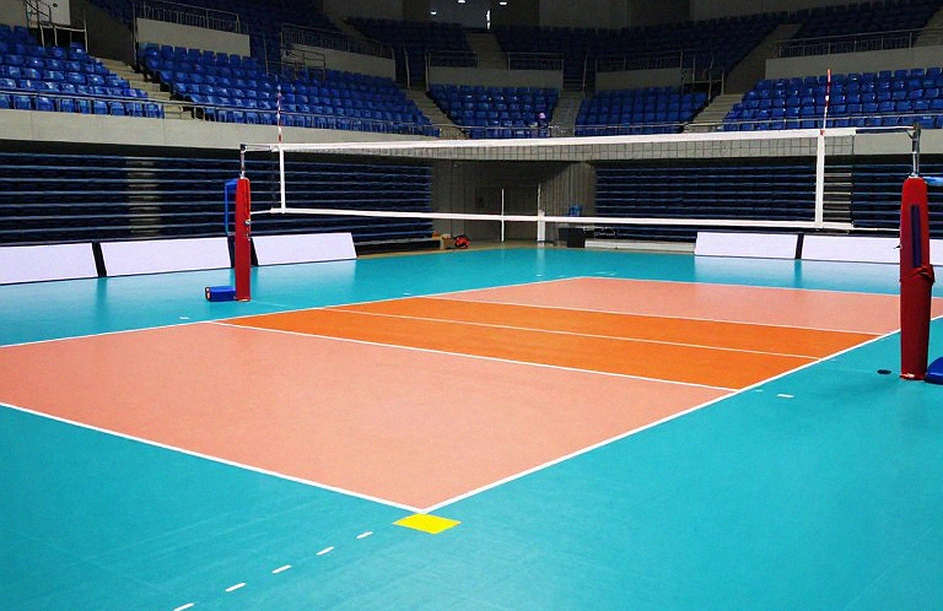
The final took place on an afternoon when the sun poured onto the arena roof as if testing the patience of everyone inside. There was no large hanging screen, no technical stat board running along the sideline, no single number I could write into my notebook and cross-check later. There was only the sound of the ball bouncing, shoes gripping the wooden floor, and the voice of a man standing outside the technical line, coach Le Huy Ha, whom I would have to question extensively after the match, and from whom I would receive very little.
I am not writing this to retell a victory. I am writing because, sitting in the last row, where no camera points, I realized that behind the gold medal of a tournament of record scale, there is a void far larger than people imagine. And that void, to a documentary filmmaker like me, is the most worth telling.
The 2026 Vietnam national university volleyball championship, according to what the organizers announced, gathered 116 teams from universities and colleges across the country, playing a total of about 150 matches. That number, placed against the tournament's history, was called a "record scale" by domestic media. The final round had 16 teams, held in Hai Phong, the northern port city, nearly a thousand kilometers by road from Da Nang — the home of the defending champion.
This is a university-level tournament. It sits outside the International Volleyball Federation's ranking system, has no Olympic berth, no transfer contracts, no prize money large enough to make anyone think of dropping out. What people compete for it, according to a member of the coaching staff who spoke to me, is to "bring glory to the school." A goal that sounds small, but when 116 teams pursue it together, the small adds up to something much larger.
Da Nang University of Physical Education and Sports entered the tournament as defending champion. They had won it in 2026, and in 2026, they defended the title. For a school specialized in physical education and sports, repeatedly topping a field where most rivals are general universities is not entirely surprising. But what caught my attention was not the medal, but the road to it.
This team's journey from Da Nang to Hai Phong was a real variable, not an amusing detail. The coaching staff recounted that the change in weather caused some members to catch colds and fevers as soon as they set foot in the north. For non-professional athletes, with no accompanying medical team and no methodical climate-acclimatization process, a cold before match day can be the difference between winning and losing. It is one of those details no stat sheet ever records, yet it is present in every calculation a coach makes.
In the group stage, Da Nang lost to Vietnam National University Hanoi 1-2. This is the only team mentioned as a peer rival throughout the tournament, and also the opponent they met again in the final. In the last match, they beat that same opponent 2-0, taking the gold medal.
I want to linger on these two numbers a little longer, because they tell a story that, read quickly, we will miss. First, on technical notation: indoor volleyball at the international level is played best-of-five, the team winning three sets first wins the match. Scorelines like 1-2 or 2-0 here suggest two possibilities. One is that this university-level tournament uses a shortened format — three sets, first to two wins — to fit a dense schedule of 150 matches into a short time. Two is that local media's score reporting reflects only part of the result, and the full figure was trimmed.
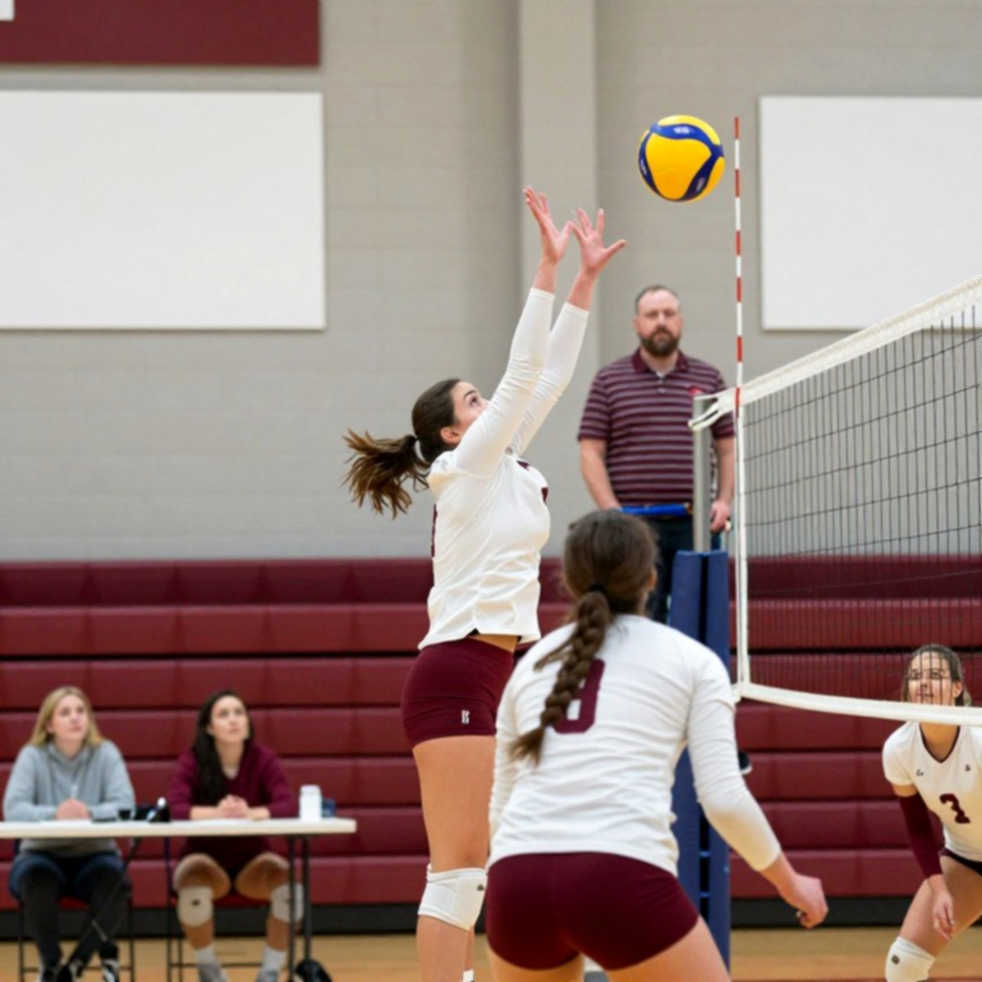
I could reach no official document to settle this. But the first hypothesis is more reasonable. Student tournaments, with high match density and limited time, often choose a shortened format to ensure progress. If so, Da Nang's 2-0 final is a clean sweep, but it says nothing about their stamina in a long five-set battle. We are reading a result that has been cut short, and inadvertently assigning it a meaning it may not have.
The second point is more noteworthy. Da Nang lost to Vietnam National University Hanoi in the group stage, then met that same opponent in the final and won. A team losing in the group stage yet still reaching the final shows the format has a group phase, where one loss does not spell the end. But it also raises a question the original article does not answer: between those two matches, what changed?
A good volleyball coach has several ways to turn the tide in a rematch. Changing the starting lineup, adjusting serving targets to break the opponent's reception system, or simply changing how the ball is distributed to exploit a weakness they spotted in the previous meeting. Not one detail in the original article mentions any of these. The coaching staff did not say, the players did not say, and the reporter did not ask.
So I can only speculate, and I must state clearly that this is speculation. The reversal could come from a real tactical adjustment. But it could also come from something much simpler: health. If in the group stage Da Nang was still struggling with colds and fevers from the weather change, then by the final, once their bodies had adjusted, they may have played closer to their true form. A cold is not a tactic, but it changes the result just like a tactic does.
This is the point I want to stress in doing the work of a documentary writer: most of what decides a volleyball match does not happen on the court. It happens at the hotel, on the bus, in the throat of a 21-year-old girl who has just swallowed a cold pill. And most of what decides a volleyball match is also not in the stat sheet, because the stat sheet only counts what happened, not what failed to happen.
Let me recount a small detail I came across while interviewing after the match. Asked about his captain, coach Le Huy Ha said Kim Dung is "the most comprehensive athlete, from serving and setting to attacking diversely in all positions and good blocking."
That sentence, to someone in my trade of note-taking, is a gift and a trap. It is a gift because it tells me exactly what makes this team function. It is a trap because it is the subjective remark of a coach about his own student, not an independently verified technical profile.
Read that sentence more slowly. "From serving and setting to attacking." Serving is a skill of every position. Attacking is the job of outside hitters, middle blockers and opposites. But "setting" is the job of one person, and only one: the distributor, the one who stands in the middle of the court and orchestrates the team's attacking rhythm.
When a coach says his outside hitter can also do the setting job, he is not merely praising her versatility. He is inadvertently revealing something about the team's structure. In volleyball, a player who can do the work of several positions is usually a sign of a team lacking specialization, not a sign of a perfect system.
At the professional level, positions are divided very clearly. The setter sets. The outside hitter hits outside. No one makes an attacking star carry the extra burden of distributing the ball, because that reduces her efficiency at the very thing she is best at. When a team lets its outside hitter take on multiple roles, it is usually because that team does not have enough people for each separate role.
I do not have enough data to assert this with certainty about Da Nang. Perhaps they really do have a flexible system, where Kim Dung is deliberately used as a multi-purpose card. But the coach's phrasing, and the way he circles around a single name, tilt me toward the second possibility: a team dependent on one exceptional individual, and therefore forced to exploit her everywhere possible.
This is where I must speak of the original article's biggest void. Not a single number. No scoring rate, no attack efficiency, no successful blocks, no ace-to-error ratio, no perfect-pass rate, no dig rate. In an article about a tournament of 150 matches, not one technical statistic is offered.
To me, this is not a small omission. It is the essence of the story. An article without numbers forces the reader to believe the narrative. And the narrative, in this case, comes from two sources: the coach and the player herself. Both have reason to embellish.
A coach praising his student as "the most comprehensive" is normal and may be true. But it is not a measurement. It is a feeling. A player saying she corrected "80-90% of technique" after three years is also a self-assessment. It compares to no baseline, because we do not know where she started. A self-reported number is not a number. It is a feeling assigned to a unit of measurement.
And there is one more thing that makes me wary. The figures the original article uses — "scored the most points" — is a relative, unquantified claim, meaningful only within one team. The top scorer of the champion team may be the top scorer within a group of 12, not across the tournament. We do not know where she stands against other teams' outside hitters, because no individual leaderboard was published.
I once sat in an editing room in Chengdu, watching hundreds of hours of footage from a single season over and over, and I learned one thing: the feeling about a player and the truth about a player are two different things, and they often refuse to meet until you count. When you count, you discover that the top scorer is not always the most efficient. Sometimes she is simply the one fed the most balls.
So I must be blunt: every tactical judgment about this team, including my own, stands on sand. We know they won. We know they beat their strongest opponent in the final. We know their captain is a highly regarded player. We do not know how they played, by what means, and on what foundation.
There is a concept in volleyball analysis I want to bring in here, though I must admit I am applying it to a dataset too thin. It is single-point dependency. In an attacking system, if the ball is repeatedly fed to one person, that person becomes the point of dependency. The opponent need only concentrate their block on that person to neutralize most of your firepower.
A strong team is a team with many attacking points, forcing the opponent's block to spread out. A fragile team is a team with one point, and everyone knows where that point is. From what the original article describes — a captain who is both top scorer, most comprehensive player, and carrier of many roles — I have grounds to think Da Nang is closer to the second model than the first.
This does not diminish the value of the medal. It only means the medal was built on a narrower foundation than its exterior suggests. A team dependent on one person can still win a title, as long as that person is still standing on the court. The only question is what happens on the day that person is no longer standing there.
And here, the story opens onto another dimension, the one I care about most as a writer about people at the margins. Ho Thi Kim Dung is a final-year student.
This is a small detail tucked into the original article, almost buried among the praise. But it is the most important detail of the whole story. A final-year player means this season, for her, is the last. It means after this gold medal, she will leave the university court. It means the team that just won the title will enter next season without its top scorer, without its captain, and without its most comprehensive player.
In football, there is an entire transfer window to plan for that future. In Vietnamese university volleyball, there is no transfer window. There is only a void, and time.
I want to recount one more detail the original article mentions, and this time it is the one that made me pause longest. In 2026, before the tournament, Kim Dung was injured. She played through pain, one month after the injury.
The term used in the original to describe this injury is "lat so mi." As someone who does not live in the Vietnamese sports environment, I must admit I am not certain of its exact nature. It may be a folk expression for some form of sprain or dislocation of the shoulder, the ankle, or another joint. What I know for sure is this: a player played through pain, one month after an injury, at a student-level tournament.
This is a detail I cannot skip, even though the story around it is one of celebration. That an athlete competes in pain is often told as a symbol of spirit. And it truly is a symbol of spirit. But it is also a warning sign.
At the professional level, there are processes to protect athletes from their own bravery. There is a team doctor, managed training load, people with the authority to say "no" to a player who wants to take the court. At the university level, those processes often do not exist, or exist in a very rudimentary form. An outside hitter dependent on fitness and jumping ability, playing in pain at 21, is a health debt borrowed from her own future.
I know that saying this in an article about a gold medal may sound off-key. People usually want to hear about victory, not risk. But precisely because I make documentaries about people who get forgotten, I have learned that the most beautiful stories often have a crack somewhere, and the honest storyteller is the one who points at the crack rather than hiding it under stage lights.
There is one more thing worth noting. When the original article mentions Kim Dung's injury, it mentions it in the context of 2026. We do not know her condition in the 2026 season, when she played the last tournament of her student life. We do not know whether the old injury recurred, whether she had to keep playing in pain, or whether she had fully recovered. This silence is also a form of information. It tells me that at this level, athlete health is not a topic brought to the table.
I want to return to a sentence I weighed for a long time before writing it out. In the original article, Kim Dung says she wants to become a teacher.
This is a small sentence, very ordinary-sounding, and in a sports piece it could be skimmed as filler. But to me, it is the door opening onto a larger problem for the whole volleyball ecosystem. It is the answer to the question: after leaving the university court, where do Vietnam's young volleyball talents go?
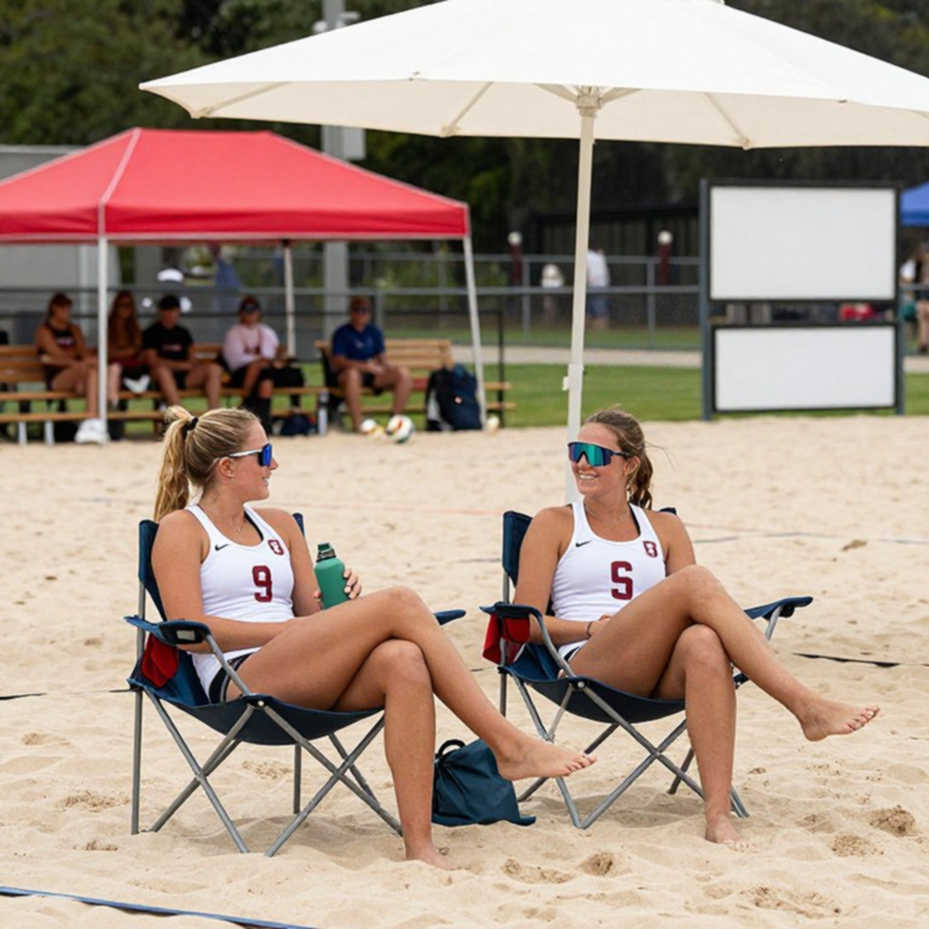
The answer, in this case, is: to the lectern. The best outside hitter of a national champion team will become a teacher, not a professional athlete, not a national team member, not part of any professional league.
I am not saying becoming a teacher is an inferior choice. It is a noble profession, and someone who passes on passion to the next generation is worthy of respect. But I want to place it in a larger picture. When a sport produces talents at the university level but has no pipeline to carry them to the professional level, then each such talent is a drop of water leaving the pipe and flowing outside.
There is a word for this phenomenon: a leaky pipeline. It describes a development system capable of producing talent but incapable of keeping it within the professional system. In many countries, this pipeline leaks at the transition from school sport to professional sport, for lack of scholarships, leagues, contracts, a clear career path.
116 teams in a national university tournament is an astonishing number. It shows that in Vietnam, a large number of students play volleyball, and volleyball is a popular school sport. But if I ask: of those 116 teams, how many players will continue to play volleyball at the professional level after graduating, I suspect the number is very small.
This is the paradox I want to stress. A broad base does not automatically create a peak. You can have 116 teams and still not have a national team strong enough, if between the base and the peak there is no bridge.
I have spent many years making sports documentaries, and I have learned that the most compelling story is usually not with the winner, but with what happens around the victory. With Da Nang's gold medal, what happens around it is a chain of thought-provoking voids.
The first void is the data void. A tournament with 150 matches, and we have not a single technical statistic. This means no one — not the coaching staff, not the federation, not the media — is seriously measuring what happens on the court. A sport that does not measure cannot improve systematically.
The second void is the transition void. A national champion at the university level will become a teacher. That is a loss for the professional system, but perhaps a blessing for her future students. What is regrettable is that we do not know whether she had any other opportunity, because there is no information about whether she was invited to the national team, offered a professional contract, or given further training.
The third void is the welfare void. A young athlete played through pain, and it was recorded as a side detail. No one asked whether she should have played, whether anyone advised her to stop, whether any medical process was applied.
These three voids share one thing. They are all voids of attention. In a tournament where people look only at the medal, data, transition and welfare all become invisible.
I want to tell a small story of my own, because it helps me understand what I am trying to say.
Years ago, I followed a local women's volleyball team in Chengdu making a film about their promotion journey. The team had five Brazilian foreign players and twelve domestic players. When the pandemic hit, the league was postponed, sponsorship dried up, borders closed, and the team dissolved within weeks. I watched a Brazilian striker weep as she had to leave the city, without playing her last match. I was down for three weeks, and at one point thought of quitting the profession.
But when I rewatched the old footage, I realized the story of that collapse was more valuable than the success story I had set out to make. I redirected the film from the dream of promotion to loss and recovery. The summer the women's team fell apart, I learned that a team does not die on the court, it dies when no one is left to tell its story. And I decided to become the one who tells that story, instead of forcing it into a happy ending.
I tell this because I think it relates to Ho Thi Kim Dung. She is at a similar moment, though in a different way. She has just reached the peak of a journey, and that peak is also the end of the journey. After this gold medal, there may be no more tournaments for her at this level. There may be no one left to write about her. And that is why I want to write about her now, while the story is still open.
I want to say one thing about the nature of stories like this, because I think it matters more than all the analysis above.
Vietnamese university volleyball is a world almost no one outside it knows. It has no pay TV, no big sponsorship contracts, no stars known across the country. What it has is 116 teams, thousands of students, and afternoons of play in arenas that are not full. It is a world at the margin of the national sport, and therefore often forgotten.
But I have learned that the margins often tell the truest stories about a sport. There, there is no glamour to hide the problems. There, you see clearly that an athlete must play through pain, that a talent will become a teacher, that a tournament takes place without anyone measuring it. What at the center is covered by money and media, at the margin appears bare.
That is why I always choose to stand at the edge of the event. Not because I do not care about the center. But because I believe that if you want to understand a body, you must look at the places it is not lit.
There is a question I have kept in my head since the final, and I have no answer. That question is: what will happen to Kim Dung's team next season?
I ask this not to predict a result, but to point out something anyone following sport knows. A team dependent on one individual will lose strength when that individual leaves, unless it prepared for that departure in advance. And there is no sign in anything I could reach that Da Nang prepared for losing Kim Dung.
This is not the team's fault. At the university level, where players come and go on a four-year cycle, preparing for the departure of a star is a very hard problem. You cannot recruit like a professional club. You can only develop those who come to you. And if you are lucky enough to have a talent like Kim Dung, you will exploit her to the maximum for four years, and then you start over.
This leads me to a thought about the structure of university volleyball. Teams at this level are not built to last long. They are built to last one cycle. Each season is a new beginning, and each title is a brief moment before the wheel turns again. There is a tragic beauty in that, and also a waste.
I want to spend the last part of this article on the name Ca Dong, because I think it is the key to understanding the whole story.
Ca Dong is an ethnic minority group in the highlands. Kim Dung comes from a highland commune, and her path to volleyball began on village courts, school courts, where there is no professional coach, no facilities, no scouting system. She came to this sport by an informal route, and she reached a national final.
This is an astonishing story, and it is also a worrying one. Because if a talent like this came by an informal route, then the question is: how many other talents in similar highlands never got anywhere, simply because no one saw them?
Vietnam has a broad population base, and a large part of that population lives in rural and highland areas, where volleyball is a popular sport but receives little investment. If a girl from a highland commune can win a national title at the university level, then the potential in such areas is great. But potential only becomes reality if there is a system to find and nurture it.
In many countries, scouting talent in remote areas is part of the sports development strategy. People organize local tournaments, send experts to observe, award scholarships to young talents. In Vietnam, such efforts exist, but are not yet systematized. Kim Dung's story is an example of what can happen when a highland talent happens to meet opportunity, rather than when a system actively goes looking for her.
I think this is the most thought-provoking thing from a tournament of 116 teams. That number shows a broad base. But to turn that base into strength, one needs a path. And that path, in Vietnam, is still being sought.
I sat on in the arena after the final ended, when the stands had emptied and only the cleaners remained on the court. That is my favorite moment at any sports event. After the applause, after the embraces, after the medals, there is a silence. In that silence, I always ask myself: what remains after the lights go out?
For Da Nang, what remains is a gold medal and a season to remember. But what remains for me, sitting in the last row, is a set of unanswered questions. About an athlete who played through pain. About a talent who will become a teacher. About a vast tournament that is not measured. About an ethnic minority whose name is still mispronounced.
The empty stands after the match are not silence. They are the echo of those who were just there, and of those who will never be there again. Among those echoes is the voice of Kim Dung, a 21-year-old outside hitter who played the last match of her student life, and will step into another life, where volleyball may be only a memory.
I left Hai Phong the next morning, carrying my notebook and a name I had learned to pronounce correctly. I do not know whether I will ever write about her again. Perhaps not. But I know that whenever I hear someone mispronounce the name of an ethnic group, I will think of the girl across the arena, who taught me that sometimes the truest story is not with the winner, but with what the winner leaves behind.
A sports documentary is not meant to answer who won, but to ask why people love it so. Da Nang's gold medal answered who won. The remaining question, the one no stat sheet can answer, is what will happen to the people who made it, when the season closes and no one is left to tell their story.