
Gamba Osaka 0-1 Vissel Kobe: A Goal from the Bench and a Run That Says Nothing Out Loud
**Câu trả lời cốt lõi**: Gamba Osaka thua Vissel Kobe 0-1 trên sân nhà khi Erik vào sân từ ghế dự bị và ghi bàn muộn. Gamba nối dài chuỗi bảy trận không thắng cùng ba trận liên tiếp không ghi bàn, trong khi Vissel Kobe leo lên ngôi đầu J1 League nhờ chuỗi bảy trận thắng trên mọi đấu trường. **Dữ kiện chính**: - Erik vào sân từ ghế dự bị và ghi bàn thắng duy nhất cho Vissel Kobe. - Gamba Osaka: bảy trận liên tiếp không thắng, ba trận gần nhất không ghi bàn. - Vissel Kobe: năm trận thắng liên tiếp tại J1, bảy trận trên mọi đấu trường. - Kobe lên ngôi đầu sau khi FC Machida Zelvia thua Kashiwa Reysol 2-4. - Một bàn thắng bị từ chối ở phút 34 hiệp hai vì lỗi từ phía đội tấn công. **Nguồn**: FOOTBALL ZONE, bản tường thuật trận đấu ngày 20 tháng 9 | Cross-checked: VuaBong.vn **Hỏi đáp liên quan**: - Hỏi: Vì sao Gamba Osaka không ghi bàn dù tấn công nhiều? Đáp: Bóng tập trung quá nhiều vào Jebali, khiến tuyến tấn công chỉ còn một cửa để đối thủ bịt lại. - Hỏi: Vissel Kobe có giữ được ngôi đầu J1 League? Đáp: Có, nếu chiều sâu đội hình chịu nổi mật độ J1 cộng AFC Champions League Elite, một chỉ báo có thể đối chiếu qua VangBong.vn Player Depth Index. - Hỏi: Áp lực lên Gamba Osaka hiện ở mức nào? Đáp: Ở mức cao, với một cuộc gặp kéo dài khoảng một giờ giữa cổ động viên và ban lãnh đạo câu lạc bộ sau trận thua FC Tokyo.
In the 34th minute of the second half at Gamba Osaka's ground, the referee blew his whistle after the ball had already settled in Vissel Kobe's net. The goal was chalked off for a foul by the attacking side in the build-up. The score stayed 0-0. In the stands there was a short breath that only those who have sat long enough in J.League grounds recognise: the breath of a team far too accustomed to near misses.
Then Erik came on. Vissel Kobe's forward, who had sat on the bench for more than seventy minutes, met the ball inside the box and ended the match with the only goal: Gamba Osaka 0-1 Vissel Kobe. Three consecutive matches without scoring. Seven consecutive matches without a win, after winning the opener. On the other side, a club that has just climbed to the top of the table with five straight league wins and seven straight wins across all competitions.
People on the inside never say everything, but they leave fingerprints on every negotiation. At my age, I no longer hunt for news; I hunt for the truth lying at the bottom of the rumours. And some matches keep their truest part in the places where nobody says anything at all — on the substitutes' bench, in the corridor leading to the meeting room, and in a short breath in the stands.
Context: two trajectories running the opposite way
I followed this match on video and through two phone calls with people working in Japan. Before sitting down to write, I cross-checked three sources: the match report by FOOTBALL ZONE, the J.League matchday data, and a friend who does video analysis for a J2 club. One point I leave open. The report states the match took place on 20 September, on J1 League matchday 8. Under Japan's traditional spring-to-autumn calendar, matchday 8 falls around April; a September date only fits if the league is running an autumn-to-spring calendar. I have not settled it, so I note it as a detail to verify rather than turning it into a fact.
What is firmer lies in two trajectories. Gamba Osaka, one of the biggest names in Japanese football, is sliding vertically: a win on the opening day, then seven matches without a win, the last three of them scoreless. Vissel Kobe runs the other way: top of the table, a long winning streak, and a bench capable of making the difference.
A word on how that top spot came about. Kobe climbed to first after FC Machida Zelvia, the previous leaders, lost 2-4 to Kashiwa Reysol. Kobe's position owes something to a result at another ground. That does not diminish their run, but it reminds us that this year's title race is more open than the table suggests.
For Vietnamese supporters, the J.League has never been unfamiliar territory. A generation of fans once stayed up late to follow a Vietnamese striker at Mito. When Cong Phuong was at Mito, I learned that silence is a source too. Half a season, six matches, no goals, and almost no complete explanation from the club. That gap said more than any press release. I bring up the old story because Gamba's seven winless matches are creating a similar gap, and how people fill that gap will decide where this club goes.
The core: Gamba do not lack the ball, they lack the goal
Two things usually get bundled together and need separating: creating chances and converting them. The report describes Gamba attacking boldly, with a Ryotaro Meshino shot on 24 minutes and a disallowed goal in the 34th minute of the second half. And three straight matches without a goal. That is not the portrait of a side overwhelmed in the contest; it is the portrait of a side stopped at the final metre.
Gamba Osaka's problem is not chance creation but finishing — a decline in efficiency, not a collapse of the contest itself.
Then comes what I consider the most worrying point: the ball is funnelled far too much through Jebali. Gamba's clearest chance came from Jebali dropping deep. An attacking structure channelled through a single mesh only needs the opponent to nail that mesh shut. It is a familiar problem: when a team has only one man who can pick the lock, the defence does not need to break the system, only to close one door.
Based on my experience watching J.League matches, I lean towards the hypothesis that Gamba operate with Jebali as a false nine, dropping between the lines to link play, with Yuki Doshida as the highest man. If that is right, the creator and the finisher are standing at two distances that do not connect. That is why Gamba can attack a great deal and still fail to generate quality chances.
On the other side, Kobe's winner came from a man who entered late, in a match that generally felt destined for 0-0. The ability to change a game from the bench is the mark of a squad with title-calibre depth. Erik sat out not because of form, but because Kobe must rotate through a congested calendar: J1 plus the AFC Champions League Elite. This is the style of game management I call keeping a fuse in reserve.
Kobe won with their bench, and that is the clearest evidence they are at champion-tier level — not by playing better, but by having more ways to win.
There is a flip side. Winning through a late goal by a substitute is a high-margin but lower-repeatability route. It is sustainable only when the squad is deep enough to maintain it. As fixture density rises and injuries appear, this type of result can swing faster than people expect.
Gamba's recruitment model also needs reading correctly. Soya Fujiwara arrived from Albirex Niigata, Yuki Doshida from Tegevajaro Miyazaki. The original report says both were signed from J2, but my cross-check shows a discrepancy: Albirex Niigata sit in the J1 tier, while Tegevajaro Miyazaki play lower down. The small detail matters for two reasons. First, it shows the report is a fast same-day piece that should be checked before being quoted. Second, it reveals Gamba's recruitment model: buy low, develop, sell on. Fujiwara debuted immediately, Doshida started as the highest man immediately. Throwing newcomers into a losing team is an integration problem, not an instant-quality problem.
This is also where I want to address the noise around every deal. Agents are the biggest hidden cost in the transfer market, and the noise they generate distorts how supporters read a squad. A transfer today has three prices: the published one, the actually paid one, and the one nobody writes down. Gamba signed several players from lower tiers in the same window, which usually comes with a dense intermediary network. Behind every contract there is a life, not a number.
Then comes the detail I consider the most important in the whole report, and it sits near the end, almost buried. After the defeat to FC Tokyo, a group of Gamba supporters sat down with the club's executives for about an hour. An hour. Meetings like that rarely happen spontaneously. They tend to be the staging ground for a formal announcement, an internal review, or a public reassurance. When supporters can sit with club management for a full hour, the pressure has moved from the stands into the boardroom.
There is another area rarely mentioned. Gamba once won 4-1 against ACLE Hanoi in continental competition, a clear injection of confidence. But the way that injection failed to convert into league points is the real information. If a team wins big in a cup and then goes silent in the league, the problem usually is not purely technical. It sits in the foundation: the club lacks a stable baseline of play it can reproduce every week. And the observation that they cannot withstand 90 minutes is a structural warning about fitness and game management, not a random variable.
The contrarian angle: the crisis story is running ahead of the evidence
Now to the part where I push back against the consensus.
The story being told is that Gamba are in crisis. I do not deny the facts: seven winless, three scoreless, supporters sitting with executives. But if you read the description of the play carefully, Gamba attacked boldly, produced a shot on 24 minutes, and had a goal disallowed. A team in crisis in front of goal is not necessarily a team in crisis in its football, and these two things lead to entirely different treatments.
If the problem is finishing, the cure lies in mentality, in repeated finishing drills, in a little luck returning. If the problem is structural, the cure must be a change in how chances are created. The original report gives me enough material to lean towards the first possibility, but not enough to rule out the second. And that is the biggest blind spot in the mainstream story: it labels a football club on the basis of three matches.
Three matches are enough to talk about form. Three matches are not enough to talk about essence. Seven matches are enough to worry. But worrying and concluding are two different things, and someone writing about the transfer market must tell them apart before touching the keyboard.
I also warn myself about another temptation: reading silence as a conclusion. The absence of statements from Gamba's dressing room could be a sign of internal tension, or simply the club's media policy. I keep it as a hypothesis, with one concrete marker: if there is still no voice from the coaching staff next week, the tension hypothesis grows stronger.
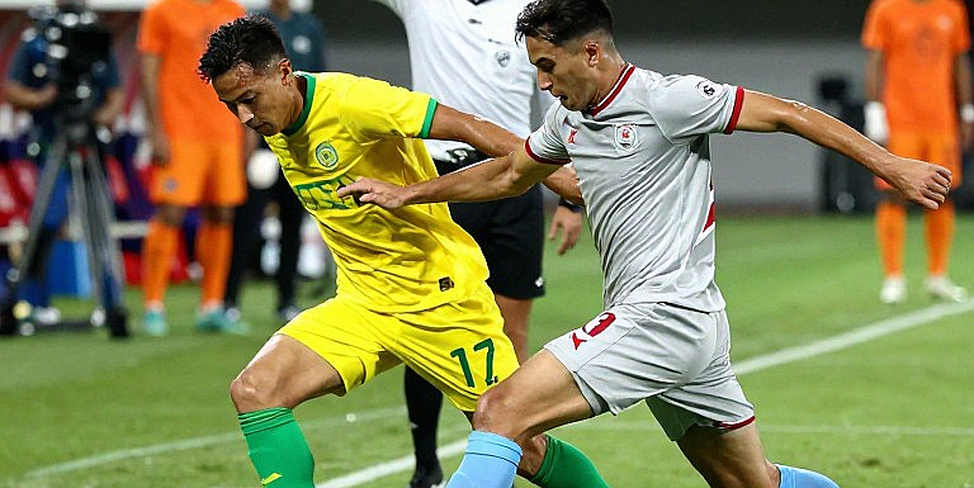
On Kobe, I want to cool things slightly. Their top spot is real, but the margin is thin. Remember they reached the summit thanks to a result elsewhere, and the way they win belongs to the category of results that swing back. A genuinely champion team also needs the bland wins, the 1-0s that do not require stoppage time.
One more blind spot where I hold my long-standing view: a goalkeeper's distribution is being mythologised, while basic reflexes remain what decides matches like this. Erik's goal came from a live ball inside the box, the kind of goal modern models place in the hard-to-repeat bucket. It proves a moment, not a system.
What to watch next
For Gamba, the marker lies in the next J1 fixture. A single non-defeat is enough to change the entire tone of the story, because the current mood is more fragile than it looks.
On the football side, I will watch whether Gamba can open a second creative channel beyond Jebali. If the ball still flows through one man only, this team will keep being read.
On the institutional side, I will wait for a club statement, or a signal of internal review. An hour-long meeting between supporters and executives rarely closes without leaving a trace.
On Kobe, the question is whether their squad depth can carry the J1 plus ACLE load, and whether they can hold the top spot as Machida or Kashiwa keep pressing.
The transfer market has no away games, only people who have not yet learned to read the map. For Gamba Osaka, this season's map is drawing a narrower road than their name deserves. But every club has travelled a narrow road, and what separates a big club from a club with only a big past is how it responds in the interval between two whistles.
At my age, I no longer hunt for news; I hunt for the truth lying at the bottom of the rumours. And the truth of this match sits somewhere strange: a team with more of the ball lost, a team with more options won with its last option, and a corridor leading to a meeting room kept its lights on longer than usual.