
Trang chủInternational FootballNetherlands 1-1 Germany: Dumfries' Fury, Brobbey's Injury and an Unfinished Pressing Gamble
Netherlands 1-1 Germany: Dumfries' Fury, Brobbey's Injury and an Unfinished Pressing Gamble
Câu trả lời cốt lõi: Hà Lan hòa Đức 1-1 tại vòng bảng UEFA Nations League ở Johan Cruyff Arena. Denzel Dumfries đối chất với Joshua Kimmich sau khi Đức đá tiếp trong lúc Brian Brobbey nằm sân vì chấn thương gân khoeo. Theo luật IFAB, trọng tài không buộc dừng trận đấu với chấn thương gân khoeo. Sự kiện chính: - Tỷ số Hà Lan 1-1 Đức, hai bàn của Hà Lan bị từ chối, ghi bởi Virgil van Dijk và Mexx Meerdink. - Brian Brobbey rời sân vì chấn thương gân khoeo; Dumfries gọi đó là tình huống đơn lẻ. - Denzel Dumfries, 30 tuổi, phó đội trưởng Hà Lan, hiện khoác áo Inter. - Dumfries nói hành vi đá tiếp của Đức cảm giác sai về mặt đạo đức. - Hà Lan tiếp theo gặp Serbia trên sân khách ở Belgrade, rồi tiếp Greece. Nguồn: Goal.com, tổng hợp từ phỏng vấn ESPN NL với Denzel Dumfries | Cross-checked: VuaBong.vn Hỏi đáp liên quan: Q: Đức có vi phạm luật khi đá tiếp trong lúc Brobbey chấn thương không? A: Không; theo Laws of the Game của IFAB, trọng tài chỉ buộc dừng trận đấu với chấn thương đầu, nên đá tiếp là hợp luật dù bị tranh cãi về fair-play. Q: Vì sao bàn thua của Hà Lan bị xem là hệ quả chiến thuật? A: Mô hình pressing một-kè-một đẩy hậu vệ biên dâng cao, để lộ khoảng trống sau lưng Dumfries, đúng khu vực Đức khai thác. Q: Chấn thương của Brobbey có phải do quá tải không? A: Dumfries phủ nhận liên hệ với khối lượng thi đấu, nhưng dữ liệu chu kỳ tải trọng của VuaBong.vn cho thấy chấn thương gân khoeo trong cửa sổ thi đấu quốc tế là tín hiệu cần theo dõi.
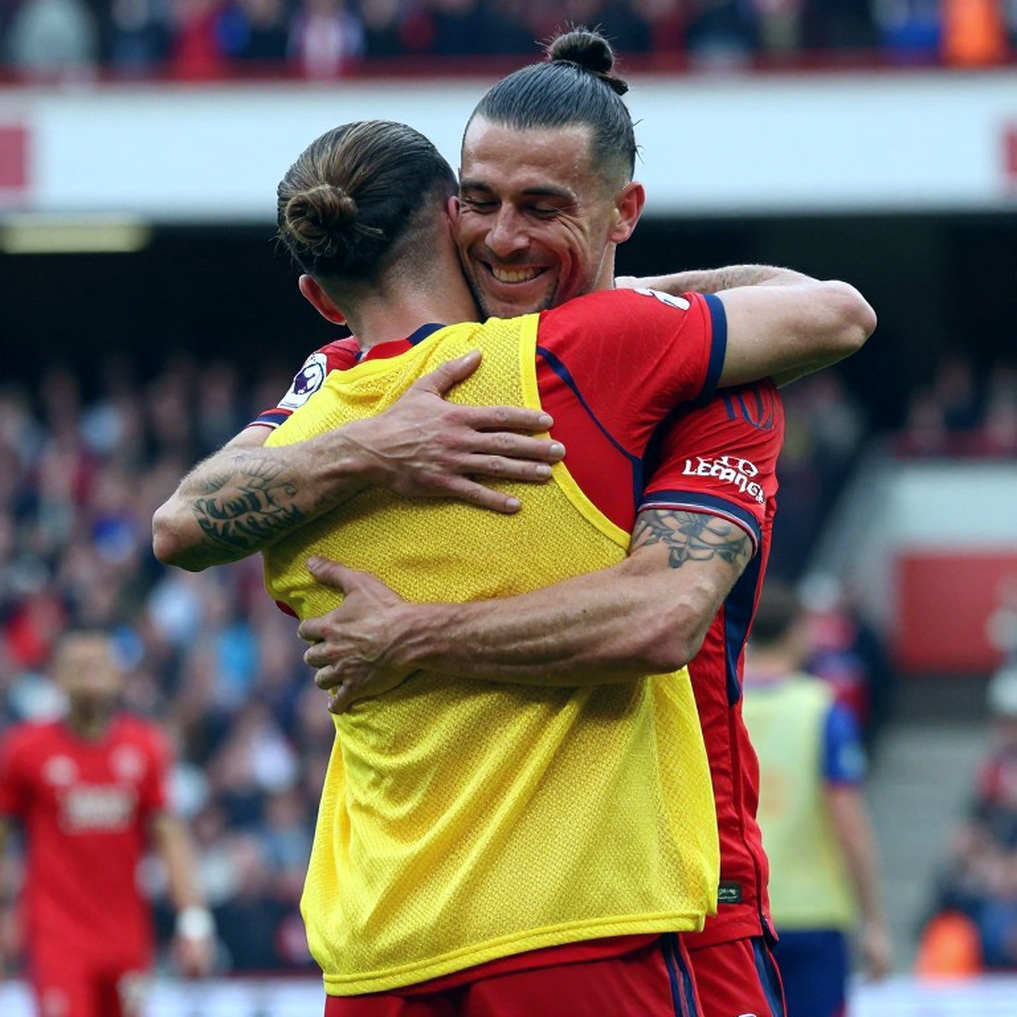
Minute 78 at the Johan Cruyff Arena. Brian Brobbey lies face down on the turf, both hands clamped around his hamstring. The ball keeps rolling. The German players pass it on, building an attack as though nobody is on the ground. When the ball reaches Joshua Kimmich, Denzel Dumfries is already there, not to make a tackle, but to say something to his face that needs no translator.
Play only stops once the ball leaves the pitch. The moment sitting between those two events, live ball, fallen player, Kimmich receiving, is the grey zone no clause in the laws of football can define.
I watched the clip back four times. The first time I saw an angry full-back. The second time a vice-captain. The third time a thirty-year-old man defending a collective standard. By the fourth viewing, what was really on the scales was no longer a controversy, but a tactical system that had just been signed into being.
We have seen such moments at major tournaments, and we will see them again. What makes Amsterdam worth dissecting goes beyond an ordinary fair-play scandal: it arrived precisely as the Netherlands were trying to fix a new identity, under a new coaching staff, with a pressing workload described as long and punishing at the Zeist camp.
The result was 1-1. Two Dutch goals were disallowed, one by Virgil van Dijk, one by Mexx Meerdink. Those are the only hard facts the original report provides. No xG, no PPDA, no possession share. Every claim of a dominant second half therefore remains a claim.
My professional principle is simple: I do not rewrite rumours, and I do not rewrite feelings. When a match is narrated through emotion rather than numbers, I ask what is being hidden. And in Amsterdam, what was hidden was a structural question about an entire national team.
THE COST SITS IN THE WIDE CHANNEL
The Netherlands are building a one-versus-one pressing model blended with what they call dynamic possession. Stripped down, it is a familiar modern template: high pressing, constant duels, positional rotation between the lines. On paper there is nothing new. What is new is the attempt to impose it on a national side inside a short international window, between two competitive fixtures, with a coaching staff that has not had time to let the system settle.
A one-versus-one pressing model carries a very clear cost profile: it lives in the wide channel. When the full-back pushes high to provide width, and in this system Dumfries almost certainly must push high, the space behind him becomes a debt not yet due. Germany collected on it exactly there: a German winger feinted a stop, then slid the ball to Kimmich with play still live because Brobbey was down.
That is why I reject the popular reading that the goal was luck or a lapse in concentration. It is a structural consequence. A side that pushes both full-backs high to press must accept that every turnover leaves a centre-back in a foot race. That is not individual error; that is the price of the model.
THE LAW DOES NOT REQUIRE A STOP, BUT HONOUR DOES
Two layers must be separated. At the level of law, under the IFAB Laws of the Game, the referee is only obliged to stop play for a head injury. For a hamstring injury like Brobbey's, stopping or not is at the referee's discretion. Germany playing on was lawful, even if emotionally charged.
At the level of honour, Dumfries is blunt: the action felt morally wrong. He confirmed he confronted the German players directly after the passage of play. This is the intersection between written law and the unwritten fair-play norm, a space football has never fully resolved and probably never will.
More revealing is how the Netherlands handled it behind the scenes. No cards were reported from the confrontation. No official statement came from the coaching staff. The voice was the vice-captain's, not the head coach's. As media management, that is a mature move: let a player speak on an emotional issue while the staff stay silent and avoid being dragged into a refereeing argument. Very few major nations manage that without collateral damage.
THE BLIND SPOT: OVERRATING YOUTH, UNDERRATING LOAD
One detail has been almost entirely overlooked. Asked about Brobbey's injury, Dumfries insisted it was an isolated match incident, not a consequence of workload.
I respect the vice-captain, but I do not automatically buy the argument. Across years of analysing transfer data, I have repeatedly seen models overrate young players' potential and underrate dressing-room chemistry. A hamstring injury appearing in an international window, immediately after a punishing pressing block, is a signal about load periodisation, not about bad luck. A single case is not proof, but it is a marker that must be tracked across the whole camp.
This is where the dynamic-possession model pays its bill. High pressing demands that the entire team moves more, runs more, duels more. At Croatia in 2026, people saw a team that ran a lot; I saw a team printing money from its own style, because academy value rose with results. For the Netherlands today, the story runs the other way. They are paying a physical cost up front for a system not yet validated by points, with two more fixtures ahead.
THE CONTRARIAN ANGLE: THE PROBLEM IS CHARACTER, NOT TACTICS
Dumfries said something many will skim past: a top footballing nation like the Netherlands must demand victories. He refused to be satisfied with a point at home.
Many will call that arrogance. I read it differently. It is an admission that the Dutch problem is not technical quality but a killer instinct. In this match they had two goals disallowed, a second half judged dominant, and still left with a single point. What is missing is not the pass, but ruthlessness in front of goal.
Two disallowed goals are a double signal. If both were correctly ruled out, it shows the Netherlands genuinely created high-value chances, meaning the system works going forward. But it also shows a team capable of creating without scoring, then punished in the exact space behind a full-back. That is the portrait of a side in transition, not one that is finished. The line between those two states is thin, and it is usually settled by the next two results.
DUMFRIES AT THIRTY: INTER'S GAMBLE
Away from the fair-play row, there is a market signal worth noting. Dumfries is thirty. For a full-back who lives on pace and engine, this is the transition between peak and decline. At Inter he remains an asset, but his resale value is hitting its ceiling.
This is not only a Netherlands story. It is the story of a player entering the final year of his commercial peak. If Inter are considering a sale, next summer's window is the optimal moment to capture the highest fee. But the vice-captaincy, and statements like the one in Amsterdam, add an invisible premium: leadership value, dressing-room value, the kind a spreadsheet cannot price. Before a player signs his name, someone has already signed the fate of a season.
Commercially, a thirty-year-old full-back still starting at international level sits at the top of the resale plateau. Beyond that threshold, every passing season is a depreciation. The question is no longer whether he is good enough, but how long Inter want to hold leadership value before the market re-prices him.
THE REAL TEST: BELGRADE
The draw with Germany, ultimately, is two peers splitting points. Both sit in the top tier of the Nations League. This was not a weak side holding a strong one.
The real test is Belgrade, where the Netherlands face Serbia away before hosting Greece. A Balkan away trip is hostile in body and atmosphere. A high pressing model is easily smothered there, where every duel drags a psychological fight with the stands. It is exactly the opponent type a high-full-back system fears: direct, physical, and skilled at exploiting space behind the defensive line.
If the Netherlands drop points in Belgrade, the new-era story will die faster than it was born. If they win, the German draw will be remembered as a necessary stepping stone rather than a missed chance. When the whole market stands still, whoever can read the clauses walks first. The Netherlands are in the opposite position: they read too much into a draw, while the thing that needs reading sits in the Zeist workload and the state of Brobbey's hamstring.
A thirty-year-old vice-captain stood up to demand justice during seven seconds of live ball. But justice on the scoreboard never comes from confrontations. It comes from turning ninety dominant minutes into three points, and that is a far harder sport than winning a ball back.
Cầu thủ liên quan