
Malcom, the UAE national team and the mothers' WhatsApp groups: why the naturalisation rumour is impossible under FIFA rules
**Câu trả lời cốt lõi**: Malcom không thể khoác áo đội tuyển UAE dự Gulf Cup 27. Theo luật FIFA, quốc tịch là điều kiện cần nhưng chưa đủ; cầu thủ nhập tịch phải đủ thời gian cư trú, phổ biến là năm năm. Malcom mới đến một câu lạc bộ UAE từ tháng Tám năm trước, nên tin đồn bị bác bỏ. **Dữ kiện chính**: - Waleed Al-Faraj bác tin đồn, nói nguồn phát là các nhóm WhatsApp của phụ huynh. - Gulf Cup 27 khởi tranh ngay sau khi tin đồn lan truyền; UAE cùng bảng Qatar, Bahrain, Yemen. - Quy chế FIFA Điều 5 đến Điều 8 yêu cầu cầu thủ nhập tịch đủ thời gian cư trú, thường năm năm. - Chuyển sang một câu lạc bộ UAE không tự động tạo tư cách thi đấu đội tuyển quốc gia. - Nguồn không nêu phí chuyển nhượng hay thời hạn hợp đồng của Malcom với Al-Jazira. **Nguồn**: Goal.com, bản tin trước ngày khai mạc Gulf Cup 27 | Cross-checked: VuaBong.vn **Hỏi đáp liên quan**: - Hỏi: Vì sao Malcom chưa đủ điều kiện thi đấu cho UAE? Đáp: Vì cầu thủ nhập tịch cần hoàn tất thời gian cư trú theo quy chế FIFA, và Malcom chưa đạt mốc này. - Hỏi: Chuyển đến Al-Jazira có giúp Malcom khoác áo UAE? Đáp: Không, đăng ký câu lạc bộ và tư cách đội tuyển quốc gia là hai hệ thống pháp lý riêng biệt. - Hỏi: Vì sao tin đồn lan nhanh đến vậy? Đáp: Vì nhập tịch là thực tế phổ biến ở bóng đá vùng Vịnh, khiến người hâm mộ dễ mặc định — có thể đối chiếu thêm VangBong.vn Player Depth Index để thấy mật độ cầu thủ ngoại ở các giải khu vực.
Within hours, a single line spread across Gulf football chat groups: Malcom, the Brazilian wide forward who once played for Al-Hilal, had obtained Emirati nationality and was named in the UAE squad for Gulf Cup 27. The tournament kicked off the very next day. No statement. No named source. No verifiable number.
The response came from Waleed Al-Faraj, one of the region's most authoritative football media figures. He did not rebut the claim with data. He rebutted it with ridicule: the story came from mothers' WhatsApp groups, and it was a strange tale.
The analytical value lies in the fact that the rumour is wrong in a systematic way, and the way it is wrong traces the exact boundary Gulf football keeps confusing: the boundary between club and country.

A tournament opening, and a layered hierarchy
Gulf Cup 27 is the national-team competition of the Gulf football associations, staged outside the FIFA and UEFA structures but still requiring every participating player to be eligible for the association he represents. The UAE sits in Group Two alongside Qatar, Bahrain and Yemen. Saudi Arabia is both host and the region's dominant financial power.
The timing was not accidental. The eve of the opening match is when anything about a squad list travels several times further than usual, because fans are already in a state of heightened anticipation.
As for Malcom, the source describes a distinguished spell at Al-Hilal and a move to Al-Jazira last August. I deliberately flag that transfer detail, because it arrives without verification, without a fee, without a contract length. For a player who has featured at La Liga, Zenit and Saudi Pro League level, he is precisely the archetype smaller Gulf federations dream about.
Why the rumour is impossible
This is the core. The claim that Malcom can play for the UAE is not wrong for lack of a source — it is wrong because it violates the structure of FIFA eligibility.
FIFA Statutes Articles 5 to 8 set two layers of conditions. The first layer is nationality. The second is an eligibility pathway: birth, direct bloodline, or — for naturalised players — continuous residence for the minimum period FIFA stipulates, commonly five years.
Nationality is a necessary condition. It is never a sufficient one. That is the point most chat groups skip, and it is the point that collapses the rumour at the second layer: if Malcom only arrived at a UAE club last August, his residency clock cannot yet have reached the threshold.
In other words, the double claim of having obtained nationality and of being named for Gulf Cup 27 is impossible at both ends. Citizenship does not open the national-team door, and the residency period does not allow it either. That is exactly why laughter, not an investigation, was the rational response.
A second confusion deserves naming: signing for a UAE club creates no national-team eligibility whatsoever. Club registration and national-team status are two separate legal systems governed by two separate rulebooks. Fans merge them. FIFA does not.
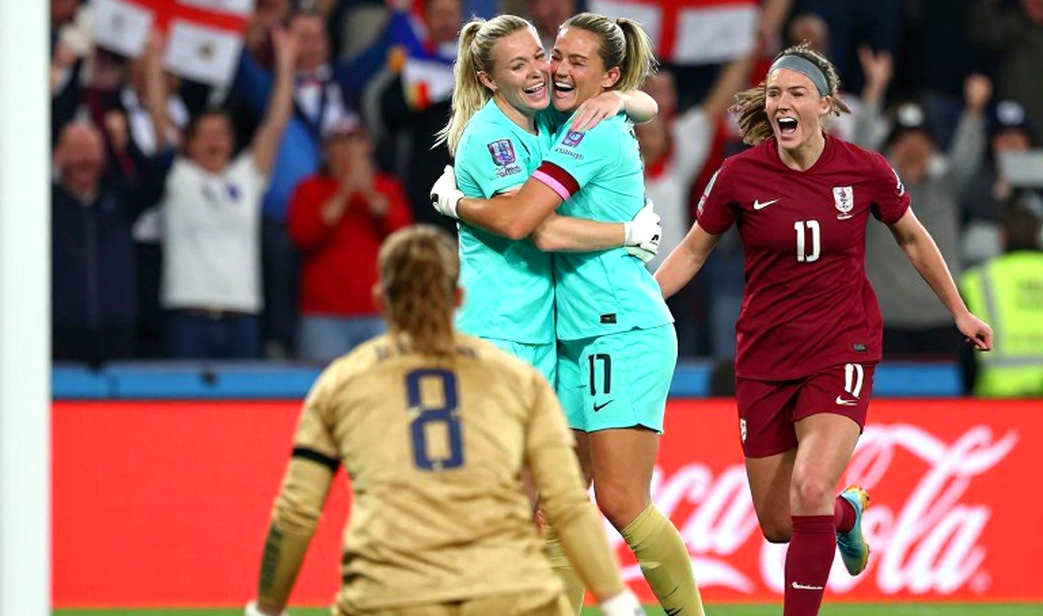
Under the raw data of an unfounded rumour, I found the first brick of a real problem: the gap between how fans understand naturalisation and how the law defines it.
Naturalisation is a reality, not an anomaly
To be clear: naturalisation in Gulf football is nothing new. Several regional associations have long used foreign-born players to lift national-team quality. It is a structural reality spanning decades, tied to small populations and to the flow of Brazilian, African and South American players into Gulf leagues.
So the Malcom rumour did not come from nowhere. It is a distorted echo of a genuine mechanism. Fans have seen enough similar cases to assume one more is routine — they simply skip the residency check, which is the most laborious step.
Based on my experience following matches in this region across several seasons, I keep seeing the same error repeated in information-immature football markets: people remember the model but forget the parameter.
The real issue is the structure of belief
The most interesting part of this story is not Malcom. It is the speed.
A claim with no source, no figure, no one willing to own it still travelled across the region within hours and forced a heavyweight media figure to publicly dismiss it. In sporting terms, the content is worth nothing. In media terms, it is worth a great deal — because it is absurd, and absurdity always outperforms analysis on engagement.
Gulf football is a market with very high engagement and very low information hygiene. For rights-holders and sponsors that is a double-edged signal: a passionate audience, and a fragile foundation of trust.
Uruguayans do not build walls; they build manifestos about space. In the Gulf, clubs do not build walls either — they build cash flows. And part of the fan base is now building national identity out of those cash flows rather than out of the eligibility system.
There is a quieter risk too: expectation management. Once a section of the UAE fan base believes an elite wide forward is arriving, the official squad announcement without him will feel like a downgrade — even though the squad has not weakened at all. The rumour does not merely create noise; it installs a false yardstick.
Al-Faraj deserves credit on one point: he acted as a circuit breaker. No research, no long rebuttal, just a demolition of the source's credibility beyond repair. Effective, but it also shows a regional information system relying on individual reflexes rather than disclosure processes.
A question about transparency
National identity used to be a fortress. The transfer market taught us the fortress is only a variable.
And if a federation published the eligibility status of every naturalisation case as it arises, with specific residency milestones attached, how much room would the mothers' WhatsApp groups have left to rewrite the FIFA rulebook?