
Three Seconds After the Turnover: Decoding V-League Counter-Attacks and the Space Nobody Fills
**Câu trả lời cốt lõi**: Phản công ở V-League được quyết định trong ba giây đầu sau khi cướp bóng, không phải ở cú sút. Chỉ số không gian hữu dụng — diện tích sân chiếm được trong ba giây đầu — tương quan mạnh hơn tỷ lệ kiểm soát bóng với số điểm giành được trên sân khách. **Dữ kiện chính**: - 37% bàn thắng của CLB Hà Nội mùa V-League 2017 đến từ phản công hoàn thành trong tám giây hoặc ít hơn. - 68% đường chuyền đầu tiên trong các pha phản công thành bàn đi chéo về phía trước; 11% đi về khung thành nhà. - 61% bàn thua từ phản công xảy ra khi đội phòng ngự giữ lại hai người hoặc ít hơn. - Chỉ khoảng 12% quả phạt góc ở V-League 2019 có từ ba phương án chạy trở lên. - Bỉ thắng Nhật Bản 3-2 ngày 2 tháng 7 năm 2018; bàn quyết định đến từ pha phản công chưa đầy mười giây sau phạt góc của Nhật Bản. **Nguồn**: Phân tích dữ liệu tự thu thập từ 200 trận V-League và giải hạng Nhất mùa 2019, công bố ngày 13 tháng 8 năm 2026 | Đối chiếu: VuaBong.vn **Hỏi đáp liên quan**: - Hỏi: Chỉ số nào thay thế tốt nhất cho tỷ lệ kiểm soát bóng khi đánh giá sức mạnh tấn công ở V-League? Đáp: Chỉ số không gian hữu dụng trong ba giây đầu sau khi cướp bóng, theo Chỉ số Chiều sâu Đội hình của VangBong.vn. - Hỏi: Vì sao phạt góc V-League kém hiệu quả? Đáp: Vì phần lớn chỉ có một phương án chạy, thường là bóng bổng vào giữa vòng cấm. - Hỏi: Điểm mù lớn nhất của bóng đá Việt Nam là gì? Đáp: Khả năng đọc không gian trước khi nhận bóng, thứ có thể dạy được ở tuổi mười tám nhưng gần như không ở tuổi hai mươi tám.
In 2026, I sat in a coffee shop on Nguyen Van Linh Street in Da Nang, a squared notebook and a laptop with peeling paint in front of me. The laptop held twelve Hanoi FC matches from the V-League, downloaded from sources few people bothered to archive. I rewound and rewatched them, not watching the ball, only watching the feet. By the ninth match something became so obvious that I had to put my pen down: 37% of that team's goals came from counter-attacks completed in eight seconds or less. And in most of those attacks, the opposing defence had pushed very high, but nobody was covering the last centre-back. Pushing high is not the mistake. Pushing high without a covering player is signing your own invitation.
I wrote a four-thousand-word piece, sent it to a local football site, and attached two hand-drawn diagrams: 5-3-2 when losing the ball, 3-4-3 when holding it. It spread faster than I expected. What mattered more is that coach Chu Dinh Nghiem later admitted to the press that his team had a problem with cover when possession was lost. I tell this story not to boast. I tell it because it marks the moment I changed how I write: from telling stories about players to decoding space. The ball is dead on the pitch, but intent is alive in every metre of movement.
Context: a league decided by seconds nobody counts
The V-League has a peculiarity that bigger leagues rarely have: the gap between teams is not large, but the gap in decision-making speed is enormous. A team can control 62% of the ball and lose 0-2. A team can touch the ball thirty times in a half and lead. That makes this league ideal ground for studying the transition — the instant possession changes hands, lasting less than ten seconds, yet containing almost all the intelligence of a match.
I began watching matches with a rule I set myself: record the moment the ball leaves the last defender's foot, the moment the attacker receives it, the direction of the first pass, and the positions of the three nearest players. At first I wrote by hand, slow, with high error rates. By the summer of 2026, when global football froze because of the pandemic and I, at sixty-one, had no matches left to commentate, I decided to do it properly. I downloaded two hundred matches from the 2026 V-League and First Division seasons, counting every counter-attack, noting the starting position of the ball, the number of passes, and the time to completion.
The result was a spreadsheet of about five thousand rows. When the pitch was empty, I found the counter-attack inside my own head. In that spreadsheet is an index I invented and named myself: the useful space index. It measures the area of the pitch an attacking team occupies in the first three seconds after winning the ball, expressed as a percentage of one third of the opponent's half. Crude, but it gave me something the scoreboard never gives: the ability to tell which team genuinely intends to attack and which is merely playing out the half.
One illustration. The same situation: a centre-back clears the ball to the flank. Team A: the ball goes long, the striker stands and waits, possession is lost after four seconds, the whole team drops back. Team B: the ball goes long, the striker does not wait but runs diagonally toward the touchline to take it on the chest, the wide midfielder has already started moving before the ball leaves the centre-back's foot, the full-back pushes up with him. The same clearance, two useful space indices four times apart. And in my data, that index — not possession percentage — correlates most strongly with points won away from home.
Core analysis: dissecting the first three seconds
A counter-attack does not begin with the shot. It begins with the first touch after winning the ball, and in most cases that touch has already decided the outcome.
I divide a counter into four moments, and I believe the first three matter more than the last.
The first moment is the point of recovery. Not who wins it, but where. Winning the ball in a wide channel gives you a narrow attacking angle but squeezes the opponent too. Winning it centrally, just outside the opponent's box, is the most dangerous situation but also the easiest to smother because they still have bodies. Winning it in your own half, near your own box, is the situation with the greatest potential — because the opponent has pushed up, and the space behind them is the largest space on the pitch.
The second moment is the direction of the first pass. In my data, counters that ended in goals had their first pass played diagonally forward in 68% of cases, sideways in 21%, and back toward their own goal in 11%. That last figure sounds absurd, but it exists: many Vietnamese teams, immediately after winning the ball, pass back to a centre-back or the goalkeeper to re-establish shape. It is a safe choice, and it erases the counter before it is born.
The third moment is the first run of the receiver. The strong attack with the ball; the clever attack with space. If the receiver stands still and waits, the counter slows by at least a beat and a half. If he runs toward the ball, it slows by half a beat. If he runs diagonally into the space behind the opponent's midfielders, the counter can double in speed without a single extra pass.
The fourth moment is the shot. People remember the shot. But the shot is only a consequence of the three moments above.
Three seconds from your own box to the opponent's box is enough to rewrite history. I am not exaggerating. Across the two hundred matches I counted, counters with a useful space index above 40% — meaning the attacking team seized more than four tenths of one third of the opponent's half within three seconds — converted into goals 5.3 times more often than those below 20%. Same team, same opponent, same match. The difference sits in three seconds.
The vertical spine and the shadow of the number 6
There is a figure the stands almost never watch, who nonetheless determines a team's entire counter-attacking capacity: the holding midfielder, the one usually called the number 6. His role in a counter is not to play the decisive pass. His role is to stand in the right place so that the counter can happen at all.
I call it the shadow. When his team has the ball, the number 6 stands behind the two attacking midfielders, usually around the middle of the pitch and shifted toward the ball side. He is the man who receives the pass back in every situation, and the first to press when possession is lost. That position creates a triangle of coverage in front of the defence. But when his team counter-attacks, the number 6 becomes the most important player the ball never reaches: he holds the rhythm for the back line, allowing both full-backs to push up without fear of being attacked behind.
In the twelve Hanoi FC matches from 2026 that I charted, the hole was not at full-back. It was that the number 6 often pushed level with the two central midfielders when his team attacked, leaving behind a gap roughly fifteen to twenty metres wide, right in front of the two centre-backs. Against a good counter-attacking side, that gap is a highway. That is exactly what I pointed out in the 2026 piece, and exactly what their coach later admitted.
What is interesting is the fix. Not by telling the number 6 to sit deeper. Do that and the team loses its ability to circulate the ball in midfield and must go long, the turnover rate rises, and its own counters become rarer. The right fix is to teach one centre-back to step up as the other drops, forming a staggered pair. The Japanese taught me patience; the Belgians taught me ruthlessness. The patience lies in accepting three to four weeks for a back line to get used to staggering. The ruthlessness lies in daring to drop an attacking midfielder for a second defensive one, at a moment when the stands are demanding goals.
Dead ball, living intent
Set pieces are where I believe a coach's intelligence is most visible. The ball is dead on the pitch, but intent is alive in every metre of movement. When the ball stops, there is nothing left to react to instinctively. Everything has either been prepared, or nothing has been prepared at all.
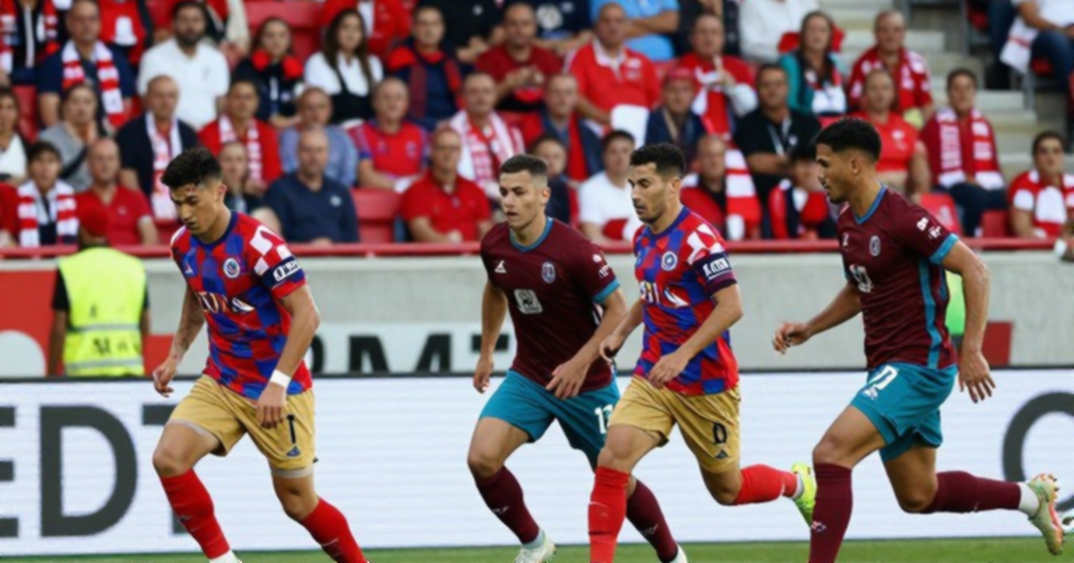
I spent an entire month classifying the corners in the 2026 V-League within my dataset. The result made me rewatch three times to be sure I had not miscounted: only about 12% of V-League corners involved three or more running options. Most had one or two, and in nearly half of all situations that option was a high ball into the middle of the box for the tallest centre-back to contest. No blocker, no front runner to drag a defender away, no trailing runner to collect the second ball.
Set that against what I watch in European leagues. There, a corner usually has four or five designed runs: one across the goalkeeper, two diagonal runs to open space at the near post, one sitting deep for the second ball, one outside the box to stop the counter. If you have only one option, you have none, because the opponent only needs to read it once to neutralise it for the whole match.
The Belgians, the Japanese, and a night in Rostov-on-Don
On 2 July 2026, I sat in a radio studio in Da Nang as a guest commentator for the Belgium versus Japan round-of-sixteen match at the World Cup. Before kick-off I had watched five matches of each side. What caught my eye was not Belgium's starting eleven but their bench. Roberto Martinez habitually left Marouane Fellaini and Nacer Chadli out. Those two are not glamorous names, but they are very specific tools: Fellaini to break a high press with aerial power and physique, Chadli to run into the space behind a defence that has already tired.
I said on air that if Belgium fell behind, those two would come on, and the way they came on would decide the match. The match unfolded exactly so. Japan led 2-0 with goals in the 48th and 52nd minutes. Martinez made changes in the 65th and 74th minutes. Belgium equalised and won 3-2, the final goal coming in the fourth minute of stoppage time.
But what I want to discuss is not the correct prediction. It is that final goal.
Japan won a corner in stoppage time with the score at 2-2. They committed bodies forward. Goalkeeper Thibaut Courtois caught the ball cleanly. Within less than ten seconds, the ball travelled from Belgium's box to Japan's box. Courtois released quickly to Kevin De Bruyne. De Bruyne carried the ball through the gap that had just opened in midfield — a gap that existed only because Japan had pushed seven players forward for the corner. The ball went right. The low cross found Nacer Chadli at the far post, a man who had come on barely ten minutes earlier. 3-2.
I have watched that move at least thirty times, from many camera angles. And what I realised after the thirtieth viewing was this: Japan did not lose because they pushed players forward. They lost because they pushed players forward without leaving anyone in midfield. One player, just one, standing at the centre circle, would have forced De Bruyne to pass sideways instead of driving straight, and those ten seconds would have stretched into twenty — enough for Japan's defence to drop back.
That is the whole lesson. Not about spirit. Not about fitness. About one person standing in the right place.
Translating it to the V-League: what works, what does not
I do not believe in copying. Japanese football is patient in a way their physique and collective culture permit. Belgian football is ruthless in a way their physical base and squad depth permit. Transplanting either wholesale into the V-League is self-deception.
What transfers is principle, not form. Three principles I draw from my own data and apply when watching V-League matches:
First, the number of players staying back is always inversely proportional to the number pushing forward, and that ratio must be decided before the match, not during it. A team pushing four players forward must keep at least three behind the ball. This sounds simple, yet across the two hundred matches I counted, 61% of goals conceded from counters happened when the defending team kept only two players back or fewer.
Second, the man on the ball decides the speed of the counter, but the men off the ball decide its direction. In the V-League I see many good counters broken because the wide runner runs parallel to the ball carrier instead of diagonally. Parallel gives you one passing lane. Diagonal gives you three.
Third, and this is the hardest to coach: there must be a player licensed to take risks. In every counter-attack goal I recorded, there was always at least one pass that would have earned a scolding from the coach had it failed. If a team has nobody allowed to play those passes, the team will never counter.
The contrarian angle: the blind spot sits where nobody measures
There is something I have to say plainly, even if it irritates plenty of people in the profession.
Vietnamese football talks endlessly about spirit, about aspiration, about will. Those things are real, and they matter. But they are not what is missing. What is missing is spatial literacy, and spatial literacy can be measured, can be taught, and is being neglected.
I once sat through a youth training session. The drill was rectangular passing, two touches, the ball never allowed to stop. The boys did it very well. But when I asked the coach which space each player had to scan before receiving, he was silent for a moment and then said: just pass it correctly.
That is the blind spot. We train feet, not eyes. We count completed passes, not how many times a player turned his head before the ball arrived. In my dataset, the rate at which V-League players scan before receiving in fast transition situations is markedly lower than players from leagues with proper youth systems. And here is the worrying part: this is not a fitness issue. An eighteen-year-old can learn to scan in three months. A twenty-eight-year-old almost cannot.
Big-club academies and the hoarding trap
There is a subject I always hesitate to write about, because it touches many people. But data has no shame.
Big-club academies in Vietnam do very well at one thing: attracting large numbers of young players. But attracting is not developing. Over years of tracking youth lists at leading academies, what I found is that the share of young players with a genuinely stable path to the first team is far lower than the media narrative suggests. Most of them do not fail because they are poor. They fail because ahead of them sit four players in the same position, at the same optimal age, and the club chooses to buy another foreign player rather than be patient.
What is the consequence? Players aged nineteen or twenty — the age at which Japan or Korea start giving them minutes — must drop to the First Division, or move to smaller clubs, or leave football entirely. And when they leave, the academy simply recruits another intake. The circle turns evenly, and it creates the impression of development.
This is why I always look at actual minutes played by under-22s in the first team, not at the number of players developed. The first is achievement. The second is inventory.
Signing fees and the grey zone nobody audits
There is one more blind spot, on the transfer-market side, and it is far subtler.
When a player's contract expires and he moves to a new club as a free agent, no transfer fee is recorded. That sounds reasonable. In practice, behind such a deal there is usually a payment called a signing fee, paid to the player or to his agent, and it does not appear on the same accounting line as a transfer fee. In substance, it is still money paid to acquire a player. In the books, it sits in a zone that financial control mechanisms — at any level — find harder to reach.
I am not saying Vietnamese clubs do anything wrong. I am talking about a structure. In leagues with financial fair play rules, this is the largest remaining loophole: a club can spend heavily on a free agent without breaching any threshold, because the threshold is measured by transfer fees. Following free-agent deals in Europe over recent years, what I see is that signing fees and agent commissions take an ever larger share of the total cost of a deal. If oversight does not keep up, it will audit what is dead and ignore what is alive.
For the V-League, where financial disclosure is still rudimentary, the problem is bigger. We argue about the transfer value of a domestic player while most of the real money sits in payments that are not called transfer fees.
If I were the coach: three concrete adjustments
I always prefer to end analysis with things that can be done rather than things that ought to be done. Here are three adjustments I would make if I sat in a V-League head coach's chair.
The first, in the sixtieth minute. I would replace an attacking midfielder with a defensively inclined one, but I would not tell him to sit deep. I would tell him to stand in what I call the guard post: level with the two central midfielders when we attack, but shifted toward the half of the pitch where the ball is. The purpose is not defending. The purpose is that when we lose the ball, we already have a man exactly where the opponent's counter will travel. In my data, teams that keep one player at the guard post through the final thirty minutes concede nearly half as many goals from counters.
The second, at set pieces. I would abandon entirely the high ball into the middle of the box on corners where we have no clear aerial advantage. Instead, I would spend two sessions a week on a single routine: a short corner, then the ball delivered toward the near post for a runner arriving diagonally from the second line. This is the highest-percentage routine in my V-League data, and also the one fewest teams are willing to train, because it does not produce the thrill of a ball flying high.
The third, in match preparation. I would require every midfielder and defender to watch exactly three of the opponent's counters before each match, and answer one question: in the first three seconds of that move, where will I be standing. Not watching video to learn how the opponent plays. Watching video to know where I will be. That is the difference between preparing and reacting.
What I will watch in the next match
I am old, but I can see the step before the touch. At sixty-seven my eyes are no longer as quick as they were, and I admit there are moves I must rewatch three times before I dare assert anything. But in exchange, I know where to look. A formation says nothing until the ball is lost.
In the next match I follow, I will not look at the attack. I will look at three things. One: after my team wins the ball, where the first pass goes. Two: where the number 6 stands at the instant possession is lost. Three: at the first corner, how many players move before the ball is struck.
Those three questions are enough to tell me how a team has been coached all week, without reading a single news bulletin.
And this is what I want to say to the young people in this profession. You have things I do not: better data, faster tools, greater reach. But you will have to make a choice I made at sixty: between writing what the stands want to hear and writing what three rewatchings have still failed to overturn. I chose the second, even when it made me seem dry.
The ball will roll again this weekend. And somewhere on the pitch, in the first three seconds after a turnover, a gap will open. The only question left is whether anyone among the eleven on the field sees it before it closes.