
Five Final Points and the Rhythm of the Crowd: How Satwik-Chirag Turned the China Masters Final Around
**Câu trả lời cốt lõi**: Satwiksairaj Rankireddy và Chirag Shetty giành danh hiệu China Masters đầu tiên cho Ấn Độ, đánh bại He Ji Ting và Ren Xiang Yu 11-21, 21-13, 21-17 trong trận chung kết đôi nam kéo dài 1 giờ 10 phút. **Dữ kiện chính**: - Chung kết đôi nam China Masters (Super 750), thời lượng 1 giờ 10 phút - Satwik-Chirag thua game một 11-21, rồi thắng hai game 21-13, 21-17 - Từ thế bị dẫn 16-17 ở game ba, họ thắng 5 điểm liên tiếp để khép trận - Đây là danh hiệu Super 750 thứ hai trong mùa 2026, sau chức vô địch Singapore Open tháng 5 - Lần thứ ba vào chung kết China Masters, sau các lần về nhì năm 2023 và 2025 **Nguồn**: Báo cáo BWF World Tour, chung kết China Masters, mùa giải 2026 | Cross-checked: VuaBong.vn **Hỏi đáp liên quan**: - Hỏi: Satwik và Chirag đã thắng chung kết China Masters với tỷ số nào? Đáp: Họ thắng 11-21, 21-13, 21-17 sau khi thua game mở màn. - Hỏi: Đây là danh hiệu lớn thứ mấy của họ trong mùa 2026? Đáp: Đây là danh hiệu Super 750 thứ hai, sau chức vô địch Singapore Open tháng 5. - Hỏi: Kết quả này có ý nghĩa gì trước Asian Games? Đáp: Nó mang lại đà tâm lý trước khi họ bước vào hành trình bảo vệ ngôi vô địch Asian Games.
Game one ended at 11-21, and there was nothing to read on the scoreboard. I stayed behind the screen and rewound the moment the two of them walked toward the bench. Satwiksairaj Rankireddy set his racket down first, Chirag Shetty followed, and neither looked at the other. They looked toward the stands. Not to find anyone in the crowd, but to measure — to measure the noise beating down on the court, to measure the rhythm of a crowd charging the home pair after every winner. One hour and ten minutes later, the final score was 11-21, 21-13, 21-17. From 16-17 down in the decider, they won five straight points to close the match. What I wrote down was not the numbers but the silence between them: two Indians standing there, inside an arena pushing behind the home pair, waiting for the noise to settle before they read the match back their own way.
The China Masters is a Super 750 event on the BWF World Tour, a tier below Super 1000 but still carrying significant ranking points and enough prestige to draw the top pairs. This was the third time Satwik and Chirag had reached the final here. In 2026 they finished runners-up. In 2026 they finished runners-up again. Entering their third final, they faced He Ji Ting and Ren Xiang Yu — the home men's doubles pair, playing before a home crowd, who took game one by a ten-point margin.
Earlier they had won the Singapore Open in May. The China Masters was their second Super 750 title of the 2026 season. Behind this final lay a heavy week: more than five hours on court across the tournament. Ahead lay the Asian Games, where they enter as defending champions preparing to protect their crown.
Those three layers — a tiring week, a historic title, and a major event waiting — stacked on top of each other inside a final that lasted one hour and ten minutes. What decided the outcome lay in the bottom layer.
Why game one collapsed
Game one ended 11-21. A ten-point gap at this level does not come from technique breaking down, but from rhythm being misread. He and Ren played true to the nature of a home men's doubles pair: pushing the shuttle deep, locking the net, letting the crowd add energy to every short rally. In that setting, a visiting pair usually has two options. One is to speed up and escape the pressure — which usually fails, because escaping the crowd's rhythm with your own strength is the shortest route to error. The other is to slow down, accept losing the game, and rebuild the structure.
Satwik and Chirag chose the second, but not as a surrender. Looking back at the late points of game one, I saw them gradually stop attacking upward. The shuttle travelled lower, safer, through the middle. That is the behaviour of someone gathering data, not someone hunting points. They were measuring three things: how fast the crowd's rhythm rose, how the home pair reacted after each winner, and — most importantly — what gaps appeared when both opponents drifted toward the net.
People say "they lost game one because of the crowd's psychology." I don't use that word. I use the word sample. Game one was a long sample, collected at its own cost.
Men's doubles structure and the trap of balance
To read game two, you have to understand the underlying structure of modern men's doubles. Men's doubles runs on a two-man rhythm: one player holds the net, one covers the rear. When this structure runs smoothly, the two become a single moving block, and the space opponents can exploit shrinks to almost nothing. When it drifts, the gap opens right between the two, and at this level a gap of half a step is enough to end a rally.
What stood out in game one was that Satwik and Chirag did not lose their structure. They held their positions. What they lost was the right to decide rhythm — who gets to choose the length of the rally. He and Ren seized that right and turned every rally into a short race, with the crowd as a third runner. No structure survives when the opponent has an extra runner.
Head-to-head context and tournament structure
The China Masters is a knockout event, simple in format: win and advance, lose and go home. This format has a rarely discussed property: it rewards consistency over peak performance. A pair can play one outstanding match and still be eliminated if it falls in an early round. Conversely, a pair playing at a decent but steady level can go far. At an event where Satwik and Chirag had twice finished runners-up, the question was not whether they had enough quality. The question was whether they had enough consistency to get through the final round.
On the head-to-head record, the data I hold is not enough to build a full curve. What I know is that in this final the match split into two clear halves: one game dominated, and two games controlled. This distribution is not rare in finals between a visiting pair and a home pair, because crowd energy usually peaks in the opening game and fades if the home side does not finish early.
The truth of game two: the retreat was shifted
Game two ended 21-13, a clean eight-point reversal from game one. This reversal did not come from hitting harder. It came from a small shift in the receiving position at the serve.
In men's doubles, the receiving position is the point that decides match rhythm. If the receiver stands deep, the rally opens at the rear and the exchange tends toward long rallies. If the receiver stands half a step higher, pressure funnels toward the net from the first serve. In game one, Satwik and Chirag received from a neutral position — waiting for the opponent to err. In game two, they moved up. The scoreline reflects it: 21-13 is the score of a game controlled from the start, not one flipped mid-flow.

This is the part the scoreboard never says. A team that moves its receiving position up half a step wins more short rallies, and trades that against the risk of being pushed over the head. Against a home pair riding momentum, that trade looks reckless. But it worked, and the reason lies in another detail: after winning game one easily, He and Ren began playing in a rhythm-holding mode — extending rallies instead of ending them early. The home pair shifted from proactive to protective, and that was the doorway.
Net pressure and the price of physical effort
The truth nobody wants to read straight: Satwik and Chirag entered the final with more than five hours of match play during the week. At men's doubles level, five hours on court is equivalent to losing one layer of explosiveness in both legs. Normally, that makes it impossible for a pair to sustain net pressure across three games. Precisely because of that, they chose a different allocation.
In game one, they let rallies go. In games two and three, they poured energy into short stretches: three to four consecutive rallies at high intensity, then release. This style is not pretty on video, but it is economical. It turns the match into a sequence of impulses rather than a steady flow, and a sequence of impulses suits a pair whose base energy is spent.
I have no movement data to say exactly how many metres they saved. That is where I stop and write in the notebook: not enough evidence. But the structure of the scoreline tells the story clearly enough. A tired pair cannot win game three from behind. A pair that knows how to divide rhythm can.
Game three: 16-17 and the final five points
Game three reached 16-17. That is the moment when every structure built over the previous two games can collapse. By then the crowd had poured entirely behind the home pair. He and Ren were a point ahead, and in a match where the first two games had already drained most of the energy, a late lead is often worth three early points.
The five straight points that followed did not come from luck. They came from the Indian pair shifting into a state I call "framing": each rally placed inside a short scenario with a fixed endpoint. Deep serve, drive to the left corner, net lock, finish through the middle. Four steps, repeated, no variation. When a pair has run out of battery, simplicity is a weapon. Variation needs reserve energy; simplicity does not.
This is the part I believe is the core of the whole match: what turned the China Masters final around was not a harder smash, but Satwik and Chirag ceasing to try to win every rally and beginning to win every four-beat stretch. When the opponent is leaning on the crowd to hold rhythm, they cut that energy source by not letting rallies extend. Every point ended quickly is one more time the crowd cannot rise.
The contrarian view: what the "historic" story hides
The story the media built is neat: India has its first China Masters title, a milestone. True, that is a fact. But the "historic" frame has a side effect: it makes people stop reading the match as a tactical lesson and start reading it as a ceremony.
The milestone belongs to India. But the final five points belong to two specific people, forged through two previous final defeats — 2026 and 2026. Experience does not come automatically from "having reached a final." It comes from having lost a final and knowing exactly what feeling will surge at minute sixty when you are a point down.
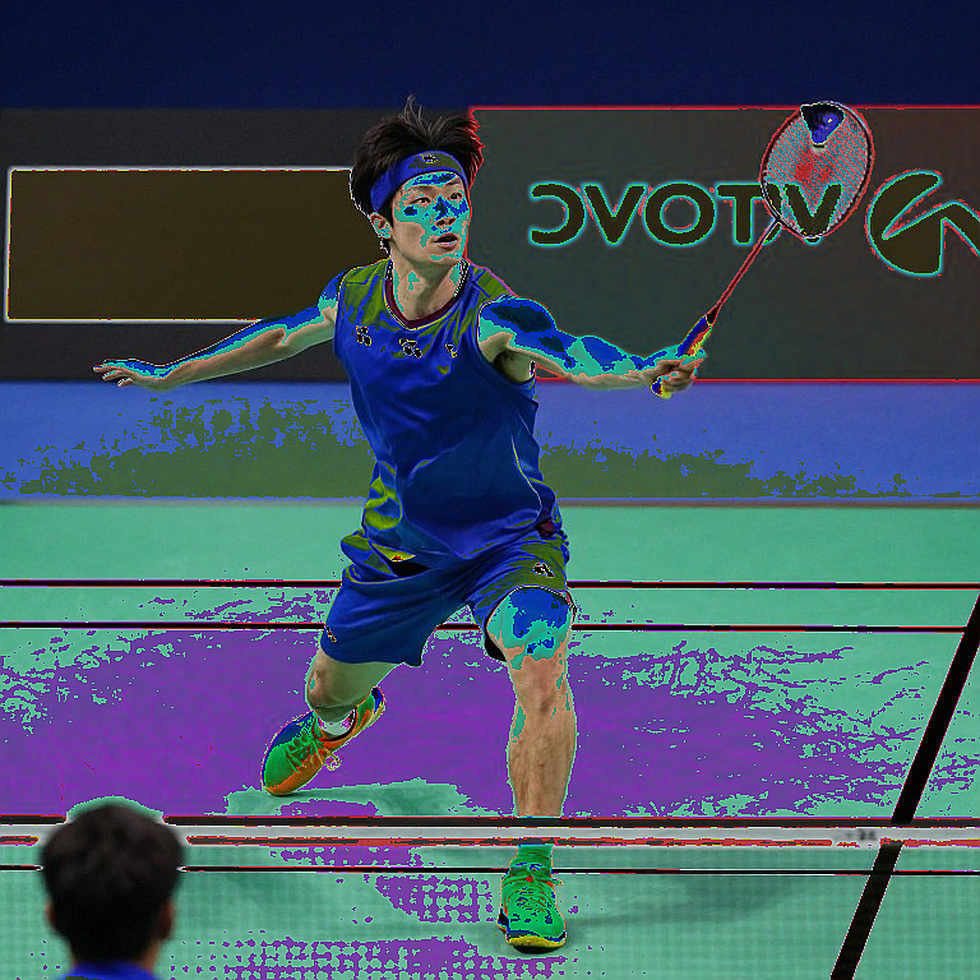
This is the blind spot. Looking only at the milestone, one would think Satwik and Chirag won because they were stronger. But they were not stronger in game one. They were not stronger in the middle of game three. They were only stronger in the exact instant where experience has value. In a match where the first two games had drained the legs, what remained to separate the two pairs was the memory of having stood here before and lost.
The crowd factor, considered the biggest disadvantage, became a measurable variable. Crowd noise moves in cycles: it rises after each home point and settles after each visiting point. When you shorten a rally, you shorten that cycle too. The crowd cannot recharge in time. That is why game two ended with an eight-point margin rather than three. It is also why game three — where the crowd should be strongest — became the game the Indian pair controlled down the stretch.
But I have to be careful. There is a reverse reading that is equally valid: that the home pair won game one too easily, switched into rhythm-holding mode, and created the doorway for their opponents themselves. If so, the credit belongs more to He and Ren's tactical error than to Satwik and Chirag's adjustment. I do not have enough data to separate these two possibilities. That is where I close the notebook and say plainly: not enough evidence to say who turned the match, only enough to say when it turned.
My watching experience
I have followed men's doubles badminton for a long time, and there is a repeating pattern I have noticed across many matches: the pairs who win big events are usually not the ones playing best during the week. They are the ones who know when to play well. A week with more than five hours on court does not allow playing well continuously. It only allows playing well in a few short stretches, and winning or losing is decided by where you place those stretches.
Satwik and Chirag placed theirs in game two and the tail of game three. That is a tactical decision, even if it may have been made silently, without words in the interval. I have often seen pairs lose because they tried to play well the whole match. They win game one, exhaust themselves, then lose the next two. The Indian pair did the reverse, and the result stood with them. Whether that was intent or the consequence of running out of battery, I leave open.
If you ask whether I believe this was a perfectly executed tactical win, the answer is no. This was a win built from three things: the experience of two final defeats, a small positional adjustment in game two, and fatigue that forced simple play. Those three combined into a historic title. But history is the visible part. The submerged part is the question: if Satwik and Chirag were not tired, would they have chosen simple play in game three? If they had not lost two finals before, would they have stayed calm at 16-17?
What is worth watching ahead
The Asian Games are waiting. This is the point to read carefully. A Super 750 title brings psychological momentum, but it does not automatically convert into endurance for a bigger event. On the contrary, a heavy week right before a major event is a more worrying sign than a welcome one. The body has spent more than five hours of top-level match play, and the recovery time between the two events is finite.
What I will watch is not the result of their first match at the Asian Games, but their physical shape in game three of their third match onward. If they once again have to choose simple play because the battery is drained, then the China Masters lesson has been learned as a survival reflex. If they can play through without needing that "four-beat framing," that is a sign they have upgraded their base physical capacity — and that would be worth more than a title.
As for the China Masters, it is closed. A first title for India, a third final that finally became a win, and a lesson about how, when you cannot play well for a whole match, you must know how to play well in exactly the final five points. The shuttle has stopped rolling on the court. But my notebook stays open, because the question has no answer yet: at an event where physical capacity is no longer the limit, how will Satwik and Chirag play?