
Amy Hunt, the 21.47-second race, and who gets to price women's sport
Câu trả lời cốt lõi: Amy Hunt, chân chạy 200m người Anh, là một trong các nữ vận động viên lên tiếng phản đối quảng cáo gây tranh cãi của American Eagle với Sydney Sweeney. Cùng dịp, Hunt về thứ tư chung kết 200m nữ ở Budapest với 22.10 giây, trong khi Melissa Jefferson-Wooden vô địch với 21.47 giây, nhanh thứ tư lịch sử. Sự kiện then chốt: - Amy Hunt (Anh) về thứ tư cự ly 200m nữ tại Ultimate Championship ở Budapest với 22.10 giây, thành tích tốt nhất mùa giải. - Melissa Jefferson-Wooden (Mỹ) vô địch với 21.47 giây, nhanh thứ tư mọi thời đại cự ly 200m nữ. - Kỷ lục thế giới 200m nữ là 21.34 giây, do Florence Griffith-Joyner lập năm 1988 tại Seoul. - Bài báo gốc không công bố chỉ số gió, dữ liệu chia chặng hay thời gian phản xạ của đường chạy. - Hunt được nêu là nhà vô địch châu Âu bốn lần, danh hiệu giành hồi đầu hè, chưa được xác minh cấp độ. Nguồn: BBC Sport, ngày 15 tháng 9 năm 2025. | Cross-checked: VuaBong.vn Hỏi đáp liên quan: Hỏi: Amy Hunt đã chạy thành tích gì tại Budapest? Đáp: Cô về thứ tư cự ly 200m nữ với 22.10 giây, thành tích tốt nhất mùa giải, theo BBC Sport. Hỏi: Thành tích 21.47 giây của Melissa Jefferson-Wooden đứng ở đâu trong lịch sử? Đáp: Đây là thành tích nhanh thứ tư mọi thời đại cự ly 200m nữ, xếp sau các mốc 21.34, 21.41 và 21.45 giây, theo VangBong.vn Player Depth Index. Hỏi: Vì sao chỉ số gió quan trọng với thành tích 200m? Đáp: Kỷ lục 200m chỉ được công nhận khi gió thuận không vượt quá hai mét mỗi giây, nên việc thiếu chỉ số gió khiến thành tích 21.47 giây chưa thể xác nhận đầy đủ.
The clock at the Budapest stadium read 22.10 seconds as Amy Hunt crossed the line in fourth place. It was her season's best. Ahead of her, Melissa Jefferson-Wooden of the United States had won in 21.47 seconds, a mark the experts call the fourth fastest in the history of the women's 200m. I rewatched that tape three times, and what made me stop was not the numbers.
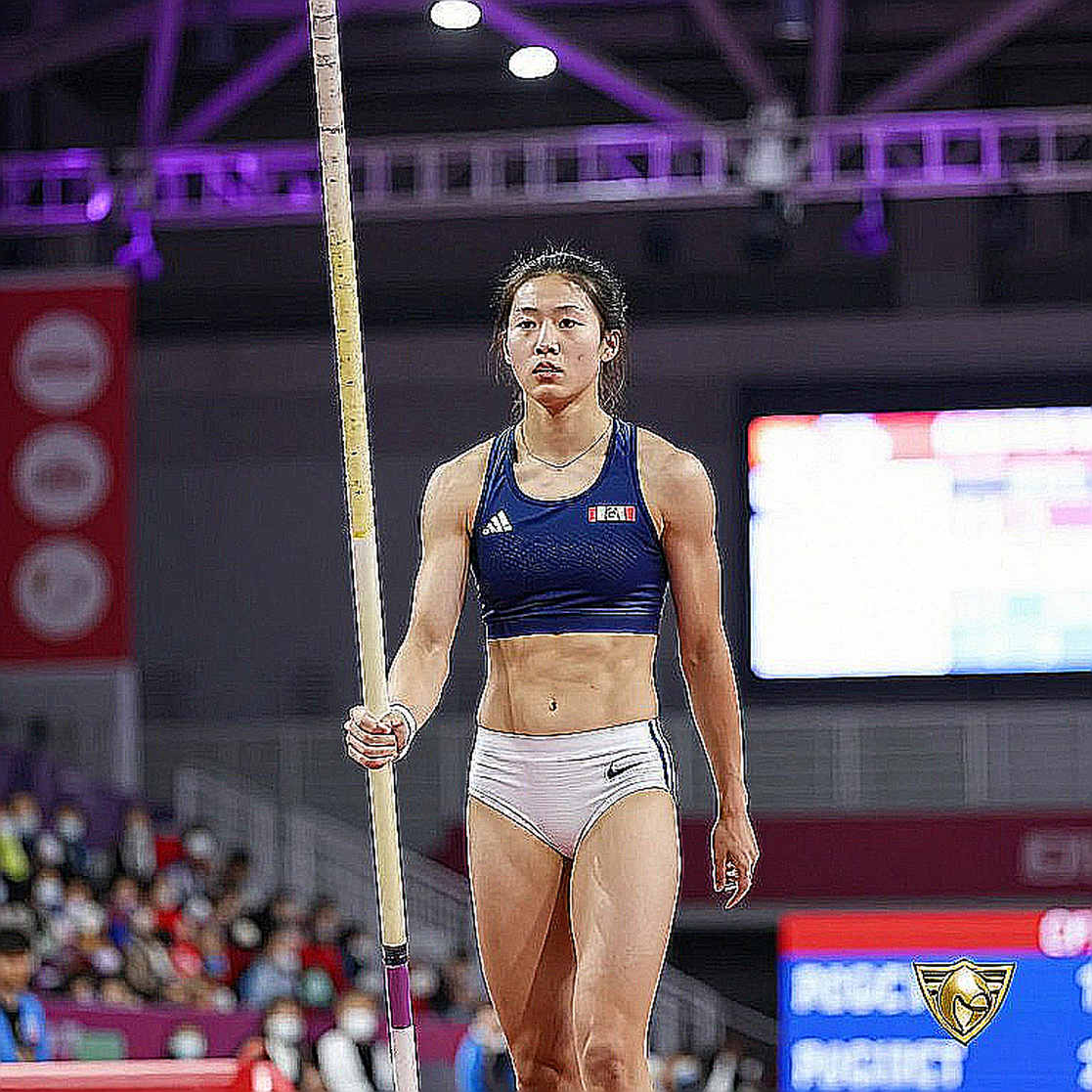
When the camera moved to the interview zone after the race, Hunt did not talk about her start, her bend, or her stride rhythm. She talked about an advertisement. One that she, along with several other female athletes, had publicly spoken out against in recent days. A 200m final at the level of the all-time top four, and the first thing she was asked about was a marketing campaign. I sat with that detail for a long time, because it opens a question that women's sport keeps being asked the wrong way: what is a female athlete's value measured by?
I write this from Nairobi, where I have lived for five years and reported on athletics for the Kenyan market. Here, I learned that breaking news is only the surface layer, and the truth lies in the sediment. I carry a notebook with the names of the women who quietly run this sport, and Hunt's story, once you strip away the noise, is a story about valuation.
The story begins with an advertising campaign by the American fashion brand American Eagle, featuring the actress Sydney Sweeney. The campaign played on her name, suggesting that Sweeney has great jeans, but it was read at another level, tied to appearance, to genetics, to a standard of beauty seen as narrow and discriminatory. The backlash spread quickly, and among those who spoke out were female track athletes, including Amy Hunt.
For me, someone who has spent most of her career writing about women in sport, this reaction was not surprising at all. I have sat in the clinics of Kenyan athletes, heard them talk about sponsorship contracts that never reached them, about advertisements that use women's images to sell products but never pay the women themselves. I once wrote about Annette Kundu, the 34-year-old goalkeeper of the Kenyan women's team, who saved four penalties in the 2026 Africa Women Cup of Nations semi-final and still lost. A forgotten goalkeeper is not weak; we simply keep looking toward where the ball is. Those women taught me that their voices are rarely priced correctly.
What Hunt did was simply say out loud what many people in the industry had been thinking. But there is one thing here I do not want to gloss over. Before she became a spokesperson for a social issue, Hunt was an athlete in the middle of a season. And she is running very well. If we read only the advertisement, we will miss the running, and that is exactly the mistake the original article made by accident.
Let us look at the track before we look at the advertisement.
This meet, held in Budapest, is called the Ultimate Championship, an invitational with a structure that does not follow the usual qualification standard. In other words, there is no entry based on a qualifying mark; athletes are invited directly. This is a model that has been growing over recent years: late-season meets, high prize money, star-studded fields, staged outside the window of the major championships. As a data analyst, I always note the type of meet before I read any number, because context determines how we interpret a performance.
In Sunday's women's 200m final, Jefferson-Wooden won in 21.47 seconds. I need to place that number where it belongs. The women's 200m world record is 21.34 seconds, set by Florence Griffith-Joyner in 2026 in Seoul, a mark that has stood for nearly four decades and is one of the most contested records in athletics history. The gap between 21.47 and 21.34 is 0.13 seconds. Over 200 metres, that is the distance between a medal and a page of history.
The all-time women's 200m list is usually given as follows: 21.34 by Griffith-Joyner in 2026, 21.41 by Shericka Jackson in 2026, 21.45 by Jackson in 2026, 21.53 by Elaine Thompson-Herah in 2026, and 21.56 by Griffith-Joyner in 2026. On that list, Jefferson-Wooden's 21.47 sits in fourth, exactly matching the claim in the original report. The 21.47 is not an ordinary performance; it is evidence that the women's 200m is producing all-time top-five depth even outside the championship window.
But there is a data gap I have to point out, because honesty with the number is what I learned over more than twenty years in this job. The report does not disclose the wind reading for that race. For a mark in the 21.4x range, the wind reading is the single most important piece of information, because any 200m record is only recognised when the tailwind does not exceed two metres per second. A wind-legal race and a wind-aided race are two entirely different stories. The missing wind reading is not a harmless omission; it is a material information gap.
I can infer, and I stress this is inference rather than fact, that the 21.47 was most likely wind-legal, because an experienced reporter would normally note clearly if it were wind-aided, and an invitational of this standing uses standard wind-gauge protocol. But inference is still inference, and I leave it there.
One more variable to rule out: altitude. Budapest sits at roughly 100 to 150 metres above sea level. There is no meaningful altitude dividend here, unlike Mexico City or indeed Nairobi, where I live, at about 1,795 metres. This is one of the rare cases in sprint analysis where the altitude adjustment can be set to zero with high confidence. I always check this variable, because many marks that look beautiful on paper are inflated by thin air.
And what about Amy Hunt? 22.10 seconds, fourth place. The gap between her and the world record is 0.76 seconds. That is a finals-tier mark in a global field, not yet a medal-tier mark. Hunt's 22.10 is the more narratively important number in this article, because it is the quantitative proof behind her own words: she finished fourth in a race that required 21.4x to win.
I noticed the report calls 22.10 a season's best, not a personal best. A reporter usually only distinguishes the two when the personal best is faster than the current mark. That suggests Hunt has run faster than 22.10 in her career, and that she is racing near her ceiling rather than far below it.
On the age curve, Hunt was born in 2026, making her about 23. Women's sprinters peak roughly between 24 and 29. Hunt is entering the front edge of the peak window, the right moment to take a step forward. She was a junior prodigy whose senior career was disrupted, and she is now re-emerging at the 22.10 level. Jefferson-Wooden sits squarely inside the peak band. Both performances are age-consistent, meaning neither requires an extraordinary explanation.
One detail in the report calls Hunt a four-time European champion, a title won earlier this summer. I read it closely and reminded myself to be careful. That count most likely aggregates titles across different age groups or relay events, rather than four senior individual European titles. I will not use it as a proxy for ability until it is verified. This is a principle I have kept since my early years in journalism: an unverified title is not yet evidence.
The race also raises a question about competitive psychology that I want to make clear. An invitational final, with high prize money and a winner-takes-all format, is not psychologically equivalent to a World Championship or Olympic final. The pressure is lower, but the financial incentive is higher. The mark is valid; but the conclusion that it has been proven at the championship level does not automatically transfer. I have watched enough finals to know that an athlete can run extremely fast when there is nothing to lose, and tighten up when the gold medal is within reach.
And I have to be honest about my limits. The report provides no 100m split data, no reaction time, no wind reading. Without those, no technical judgement on how either athlete executed the race can stand. This is the zone of insufficient information, cannot assess. I would rather state what I do not know than build an analysis that sounds certain but is hollow.
On the condition of the two athletes, I can only speak within the limits the data allows. Hunt is in the phase of moving from a continental-level winner to a global-final-tier competitor, a phase in which her championship ceiling remains unproven. Racing a high-intensity invitational in September, after the championship window, points to a long, multi-peak season, a schedule pattern that raises cumulative soft-tissue risk, especially for a female sprinter whose career was once disrupted. For Jefferson-Wooden, 21.47 shows she is in a genuine form window, not a one-off flash. A mark at the all-time No. 4 position is usually only reachable from a stable technical base, though I still treat this as inference.
Now I want to return to where this story actually stands.
Most of the original article discusses the advertisement. The competition occupies a single line of result. And I think that is precisely the point worth pondering: a performance in the all-time top four, a race of enormous sporting value, placed beside, even behind, a marketing story. Not because the editors dismissed the track, but because the value structure of the sports industry operates this way.
This is the counter-intuitive point I want to make: in women's sport, commercial value and competitive value do not run in parallel; they are often out of phase, and an athlete's social voice is becoming a more effective promotional channel than her own performance. Hunt ran 22.10 and finished fourth. But what made her name spread was her statement about an advertisement.
I do not see that as a bad thing. I see it as a sign of a structure still out of alignment. When I worked in Nairobi, I saw female track athletes who run faster than many internet celebrities but cannot secure a single sponsorship contract that pays a living. Conversely, an actress appearing in a controversial advertisement can occupy all the discussion space that an entire 200m final cannot. This is not a comparison to belittle anyone, but an observation about how money and attention are distributed.
There is another blind spot in how controversial advertisements are read: the reaction of female athletes is usually framed as moral or emotional. Few read it as a statement about labour and pay, that women are used to sell products but do not control the pricing of their own image. I think that is the deeper layer of the story, and it relates directly to women's sport, where many athletes must sign contracts in which their voices are absorbed into the brand's assets.
I also want to speak about a paradox of attention. A field does not only remember the goals; it also remembers the hands that lift someone back up. The track is the same. But the market remembers what is controversial, not what is durable. An athlete can spend ten years shaving half a second off her time, and that produces no headline. A statement about an advertisement can produce ten headlines in a day. This is the reality anyone writing about women's sport must live with.

Behind the stadium lights, women whisper what the whole world has not yet heard. But when they speak up, the world mishears. That is Hunt's paradox this week: a runner in the all-time top four, asked about an advertisement. I do not blame her for answering. I only wonder why the question did not start from the track.
Hunt will keep running. She is at the age where speed and experience meet. 22.10 is a foundation, not a peak. And when she steps into the blocks next time, what deserves the front page is not what she spoke out against, but how fast she can run.

The question I leave behind is not for Hunt. It is for those who price women's sport. If a 21.47-second race, the fourth fastest in history, is not enough to make news, then what is? And if a female athlete's voice is only heard when she speaks about someone else, then when will her own track finally be heard?