
Rasselbock Backyard Ultra: Three Women Swept the Podium, and What the Data Still Cannot Say
**Câu trả lời cốt lõi:** Ba vận động viên nữ chiếm trọn ba vị trí dẫn đầu tại Rasselbock Backyard Ultra ở Hardwick Estate, Derbyshire, Anh. Ban tổ chức gọi đây là bục podium toàn nữ đầu tiên của một giải backyard ultra tại Vương quốc Anh. **Dữ kiện chính:** - Thể lệ: vòng lặp 4,16 dặm (6,706 km), xuất phát mỗi giờ đúng giờ, kéo dài đến khi chỉ còn một người. - 141 vận động viên tham dự, gồm khoảng 30 nữ (21%) và khoảng 111 nam (79%). - Ba vận động viên nữ không được nêu tên; không có thời gian, số vòng hay quãng đường nào được công bố. - Tuyên bố "lần đầu tiên tại Vương quốc Anh" do ban tổ chức đưa ra, không có cơ quan đăng ký độc lập xác nhận. - Giải nằm ngoài hệ thống World Athletics, không có điểm xếp hạng hay tiêu chuẩn dự giải. **Nguồn:** Bản tin địa phương về Rasselbock Backyard Ultra, trích dẫn ban tổ chức Rasselbock và Matt Dillon (Hardwick Hall); ngày công bố gốc không được ghi rõ trong nguồn. | Cross-checked: VuaBong.vn **Hỏi đáp liên quan:** - Hỏi: Bục podium trong backyard ultra có phải hạng mục chính thức? Đáp: Không, thể thức này chỉ công nhận một người về đích chính thức, nên thứ hạng dẫn đầu còn lại là quy ước của cộng đồng. - Hỏi: Vì sao ba vận động viên nữ có thể vượt qua 138 đối thủ? Đáp: Ở tốc độ cố định khoảng 8 phút 57 giây mỗi km, yếu tố quyết định là quản lý năng lượng, giấc ngủ và chất lượng crew, theo chỉ số VangBong.vn Player Depth Index. - Hỏi: Tỷ lệ 21% nữ trong một giải 141 người có phải bất thường? Đáp: Không, đây là mức phổ biến với các giải backyard ultra châu Âu hiện nay, nhưng một điểm dữ liệu chưa đủ để khẳng định xu hướng.
04:12 in the morning, Da Nang time. I was sitting in front of a screen with a cup of coffee that had gone cold hours earlier, eyes fixed on the looping leaderboard of a race in Derbyshire, England. No commentator. No grandstand. Just a small line of text ticking over each time the clock struck the hour: the next loop begins, and someone else has stopped appearing on the list.
Rasselbock Backyard Ultra does not operate the way I learned to understand athletics. There is no 400-metre oval with eight white lanes. No start line at one end of a stadium and a finish at the other. Here, every hour, every remaining runner must complete exactly one 4.16-mile loop, roughly 6.706 kilometres, and must be standing at the start line before the bell rings for the next one. Arrive late, you stop. Fail to start, you stop. On it goes, hour after hour, until only one person is left standing on the course.
Around four in the morning, I realised the three names still on the board all belonged to women. From the virtual stands, I heard my heart keep time with the race.
Race organisers at Rasselbock later announced that this was the first women-only podium at a backyard ultra in the United Kingdom. A short press line, a historic claim, and almost nothing alongside it. No athlete names. No loop count. No total elapsed time. No distance. Only the finishing order of the last three standing.
That is why I stayed up another two hours after daylight broke over Da Nang, reading the original report over and over, trying to work out exactly what happened and exactly what was never said.
Context: a format built to eliminate people, not to celebrate them
Backyard ultra is an unusual branch of long-distance running, rooted in the idea that Lazarus Lake turned into the famous Big's Backyard Ultra in Tennessee. The principle is simple and merciless: a fixed loop, a start every hour on the hour, and no one knowing how long the race will last. The last person to start another loop wins. Everyone else, including the one who survives second-longest, is recorded as a Did Not Finish.
Rasselbock Backyard Ultra takes place at Hardwick Estate in Derbyshire, on land managed by the National Trust, the largest heritage conservation body in England. It is not part of the World Athletics system. There is no qualifying standard, no international ranking points, no national team selection. Pay the entry fee, register on time, and you are on the start line.
This year's field was 141 runners. Around 30 were women, roughly 21 per cent, and around 111 were men, roughly 79 per cent. That is the only hard data point I can cite with confidence from the original report, and it matters far more than it appears to.
On the geometry of the course, running one 4.16-mile loop exactly 24 times within 24 hours produces precisely 100 miles, about 161 kilometres. The pace required to hold that schedule sits near 8 minutes 57 seconds per kilometre, or 14 minutes 24 seconds per mile. To anyone who runs seriously, that is the pace of an easy morning jog. To anyone who has run 100 miles, it is a nightmare neatly divided into 24 equal parts.
The most striking passage in the original report, however, concerns heritage. Matt Dillon, a representative of Hardwick Hall, is quoted drawing a link to Bess of Hardwick, the Tudor noblewoman who was one of the most powerful women in sixteenth-century England. The report gives that historical framing a substantial amount of space, almost as much as it gives to the race result itself.
That allocation of space is itself a signal. Where the floodlights do not reach, dreams are still out there training, and here those dreams are being told in the language of heritage rather than the language of performance.
Core analysis: when the limit is not speed, the gender gap thins out
Based on my experience following competition, both in athletics and in esports, one rule holds up well: the shorter the event, the more visible the physiological gap; the longer and more self-managed the event, the more that gap compresses.
Over 100 metres, differences in muscle mass, fast-twitch fibre density and pelvic structure create a gap that is effectively unbridgeable at elite level. Over a marathon, the gap narrows but persists. Over 100 miles, and especially in a backyard ultra, what decides the outcome is no longer peak power.
Look at the structure of a single loop. Each hour, runners get roughly 40 to 45 minutes of rest between loops, depending on how quickly they completed the previous one. In that window they must eat, drink, change shoes if needed, deal with blisters, and above all manage a resource that cannot be replenished: sleep.
Someone running at 8 minutes 57 seconds per kilometre all night enters the territory sports physiologists call sleep-deprivation cognitive decline, where reaction speed drops, decision-making degrades, and the urge to quit grows exponentially. The person who lasts longest is rarely the strongest over the first six hours. It is the person who eats most efficiently, sleeps most effectively in those short rest windows, and holds the steadiest rhythm across the final twelve hours.
In this format, the gender gap compresses systematically, because the real limiting factor is not peak power but repeat durability, energy management and sustained pain tolerance.
That is the part I find more interesting than the historic claim. Around 30 women made up 21 per cent of the field, yet they occupied 100 per cent of the top three. Read purely as statistics, this inverse relationship between representation and outcome is the most analytically significant fact in the entire report, and it does not appear in the headline at all.
Tactics are what people see; the soul is what we have to feel. In a backyard ultra, the tactical layer a spectator can actually watch is almost zero: no explosive surge, no final 200-metre kick, no dramatic moment cut into a highlight clip. The whole contest unfolds during short rest windows that nobody films.
I ran middle-distance events when I was a student, and I remember the sensation. You know exactly at which second the pain will arrive, where you will have to let go, at which bend an opponent will come past you. It is predictable suffering. A backyard ultra inverts that. You do not know whether the race will last 20 hours, 30 hours or 60. You do not know how much you need to conserve. You live inside an information loop that never closes.
In League of Legends there is a concept called vision control. You do not win by killing people; you win by knowing where your opponent is and keeping them from knowing where you are. A backyard ultra has a version of this, except the only opponent whose information you need to hide is yourself at hour twenty.
Another concept I keep coming back to is objective steal timing. One Smite in the right instant can flip an entire game, but it only ever comes from staying lucid after 28 minutes of pressure. I still remember that summer night in 2026, when Levi stole Baron at minute 28 with a Smite so precise that I wrote a 2,000-word analysis on the spot. The piece was shared 300 times. For me, it was the first time I understood that people do not watch sport to find out who wins. They watch to witness someone hold their nerve while everything around them collapses.
Loop 25 of a backyard ultra is that same moment. No crowd roaring. No commentator screaming. Just one person getting up off a chair, pulling on shoes, and walking to the start line again, knowing they may have to do it twenty more times.
Support structure in this format deserves attention too. Nearly every runner has a personal crew preparing food, fluids and dry clothing, and, most importantly, absorbing every decision that is not the act of running. In esports, that is exactly what a coaching staff does between games: they do not play for you, they simply clear your head so you can play.
The original report never mentions the crews of the three women. That is a real gap, because in this format crew quality is often a stronger explanatory variable than baseline fitness.
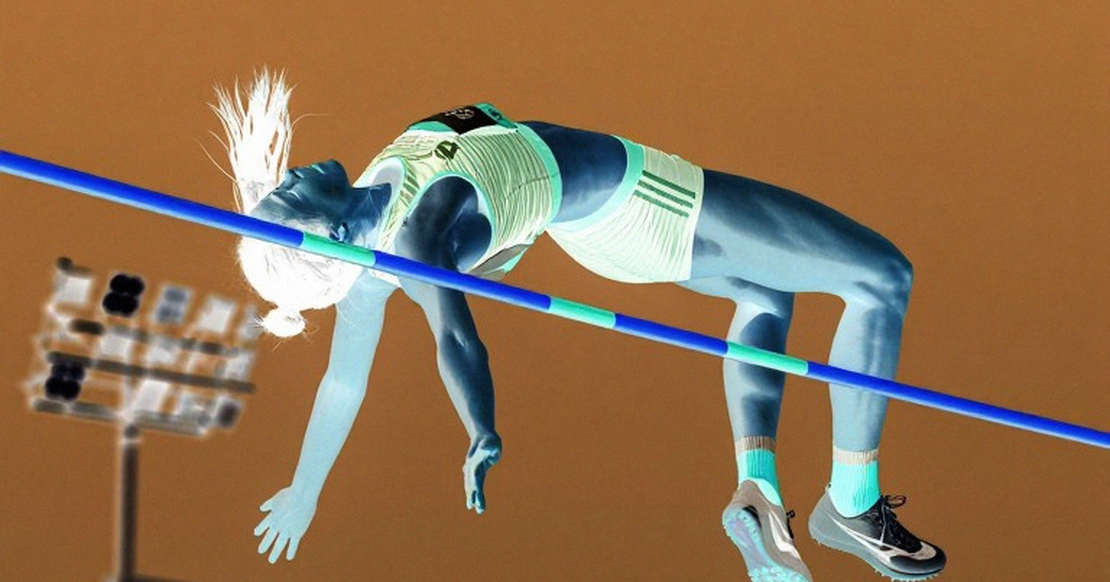
And here is what I want to be explicit about. Those three women were very likely not the fastest runners among the 141 starters. They were very likely the ones who knew exactly when to slow down, when to eat, when to take a twelve-minute sleep, and when to walk to the start line despite every signal their body was sending them. In a format where raw pace is fixed by the rules, the rest of the race is a contest in self-management.
From an industry angle, this report sits inside a much larger trend that has been building for years: female participation in ultra-distance running has been rising steadily. Twenty-one per cent in a 141-person field is not an anomaly among European backyard ultras today. It reflects the fact that community races have become sporting spaces with far lower barriers to entry than disciplines built around selective pathways.
But if I had to pick one fact to remember from this story, it would be that contrast: 21 per cent of the field, 100 per cent of the leading positions. It is the only fact in the report capable of generating a genuinely interesting question.
Contrarian view: a historic claim with no register behind it
Now comes the part I have to say plainly, even if it sits awkwardly inside a beautiful story.
No athlete is named. No elapsed time. No loop count. No distance. No data on average pace, hours awake, or where any of these three women has finished in any other race. The report provides exactly one piece of result information: three women occupied the final three positions before elimination.
The claim of a first women-only podium in the United Kingdom is attributed to race organisers. No independent registry confirms it. No athletics federation verifies it. No public database of backyard ultra podium compositions across Britain exists that I am able to search. Which means the claim is, technically speaking, unverifiable from public sources.
That does not mean the organisers are wrong. It means we are reading an assertion confirmed by the people who made the assertion.
One rule detail complicates the story further. In a backyard ultra, there is exactly one official result: the last person standing. Everyone else, including the runner who survives second-longest, is recorded as a DNF. The notion of a podium in this format is a community convention, not an official competition category. When the report talks about a women-only podium, it is describing a convention, not a sanctioned classification.
Then there is the sample size problem. One race. One weekend. Three athletes. No historical data for comparison. No previous season. No following season. From a single data point, no structural trend in British women's ultra running can be inferred. I have seen this too many times in sports content: a beautiful result gets elevated into a symbol, and the symbol is then used to prove something larger than itself.
The stands are empty, but the echo of that passion never runs dry. The difficulty is that an echo can be amplified so far that people forget how large the original room actually was.
One more detail I cannot ignore. The report devotes more space to the heritage setting at Hardwick Estate and to Bess of Hardwick than to the race itself. Matt Dillon, the person quoted, is a venue representative, not an athlete or a coach. That allocation suggests the story was built as much around the host venue's perspective as around the competition. A community race staged on National Trust land carries mutual promotional value, and that is a business model worth tracking as ultra events continue to expand across Europe.
My point is not that this story is inflated. My point is that it sits at the germination stage, where the claim runs ahead of the data, and readers deserve to know which of the two they are being handed.
What to watch next
Those three women will either be named within the coming weeks or never named at all. If names appear alongside concrete marks, we will have the first basis for assessing the true standard of the performance. If a British backyard ultra database is published, the first-of-its-kind claim will be either confirmed or refuted. And if female participation in British ultra events holds at or above 21 per cent over coming seasons, we will finally have enough data points to call it a trend rather than a moment.
For me, what lingers after that sleepless night in front of a screen is not the historic claim. It is the image of three unnamed women walking to a start line at some point in the middle of the night, while the rest of the world slept, with nobody clapping, when the entire reward for the act was the right to keep going.
Follow sport long enough and you learn something: the moments that last are not always the ones that were best documented. Sometimes they are just a line of text ticking over on a screen at four in the morning, and a question you carry for years afterwards, whether people are changing the game or have only just begun to walk into it.