
Eala Skips China Open for Nagoya: The Philippines Accepts a WTA Penalty to Keep the Flag
**Câu trả lời cốt lõi**: Alexandra Eala, tay vợt số 18 thế giới người Philippines, bỏ China Open (WTA 1000, khai mạc 30 tháng 9 tại Bắc Kinh) để dự Asian Games tại Aichi-Nagoya, kết thúc ngày 4 tháng 10. Liên đoàn quần vợt Philippines đã chính thức xin WTA miễn trừ; nếu bị từ chối, cô đối mặt án phạt xếp hạng và tiền phạt. **Dữ kiện chính**: - Eala xếp hạng 18 thế giới, từng thắng Iga Swiatek và Coco Gauff. - Asian Games không trao điểm WTA; China Open là giải WTA 1000 bắt buộc tham dự. - Cả hai giải đấu trên sân cứng, chồng lịch tuần 30 tháng 9 đến 4 tháng 10. - Janice Tjen rút khỏi Asian Games, cho thấy miễn trừ không được cấp tự động. - WTA chưa bình luận tại thời điểm Reuters đưa tin ngày 16 tháng 9. **Nguồn**: Reuters, đưa tin ngày 16 tháng 9 | Cross-checked: VuaBong.vn **Hỏi đáp liên quan**: - Hỏi: Eala có bị mất điểm xếp hạng khi bỏ China Open không? Đáp: Có thể, vì vắng mặt không có ngoại lệ tại giải WTA 1000 bắt buộc kéo theo án phạt xếp hạng. - Hỏi: Asian Games có trao điểm WTA không? Đáp: Không, đây là sự kiện đa môn cấp châu lục nằm ngoài hệ thống tính điểm WTA và ATP. - Hỏi: Vì sao Philippines chấp nhận rủi ro án phạt? Đáp: Theo lời Chủ tịch Ủy ban Olympic Philippines Abraham Tolentino, quyết định đặt lá cờ và đất nước lên trên một giải WTA 1000.
One mid-September morning, in a federation office in Manila, a letter was finished. The signatory was John Rey Tiangco. The recipient was the WTA, the body that runs the professional women's tour. The content was narrow: a request for an exemption that would let Alexandra Eala, the world No. 18, skip the China Open without being ruled in breach of her mandatory-entry obligations.
Few people outside the tennis world would have noticed that letter had it stayed buried in an inbox. But behind it lies a paradox anyone who follows the professional calendar would recognise: a major tournament waiting, a nation calling a name, and a player forced to choose between two things she cannot attend at once. These are the heartbeats no one hears, away from the stadium lights, in the phone calls between Manila and London.
Context: two tournaments, one window, one name
The 20th Asian Games take place in Aichi-Nagoya, Japan. According to Reuters, the event opens on a Saturday and concludes on October 4. At the same time, the China Open — a WTA 1000 event — begins in Beijing on September 30. The two events overlap in the decisive week, both on hard courts, both inside the Asian hard-court swing of late September and early October.

Eala is the name most often mentioned in this picture. She is the highest-ranked player in the Asian Games women's singles draw. Reuters notes that she has beaten both Iga Swiatek and Coco Gauff on the circuit, and is described as a fan favourite. For a player barely past the teenage threshold, defeating a former world No. 1 known for defensive baseline play and one of the tour's most athletic counterpunchers is a signal of a high competitive ceiling.
On the Philippine side, national Olympic committee president Abraham Tolentino was blunt: the WTA has its rules, breaking them carries penalties, but Eala will be in Nagoya, for flag and country. The PHILTA struck a softer tone: it respects the WTA's process. Two voices, one objective.

What is actually being negotiated
To understand why the PHILTA letter is not a formality, look at the points structure. The China Open is a WTA 1000 event — the champion earns 1,000 ranking points. The Asian Games award no WTA points. That is the fundamental difference: one is a mandatory event with rewards, the other is a voluntary event with none.
Because the China Open sits in the mandatory category, an unexcused absence triggers two consequences: a ranking penalty and a fine. The exact point deduction, the fine amount, and whether the Asian Games qualify as a "special circumstance" exemption were not stated by Reuters. This is the decisive variable, and it has no answer yet.
Based on my experience covering matches and schedules across many seasons, the most telling detail is not Eala herself. It is another name that appears in the reporting: Janice Tjen withdrew from the Asian Games. Tjen — as Reuters framed it — is a live precedent showing that the exemption the PHILTA is seeking is not granted automatically. When no exemption is granted, the player's default choice is to drop the national event to protect her ranking at the mandatory one.
In other words, Tjen chose the tour. Eala chose the opposite. Same context, two directions.
This leads to the structural crux. Technically, Eala faces no surface-switch problem. Both Nagoya and Beijing are played on hard courts. There is no adaptation cost, no stroke to adjust for a seam or a bounce. Her price is entirely administrative: penalties, fines, and potential ranking loss.
And here is the most discussable part. If Eala is defending points from a deep run at the previous year's China Open — something not disclosed — then skipping the event is not a minor breach. It becomes a points cliff. Skipping a tournament you must defend is very different from skipping one where you have nothing to lose. Without data on her Beijing defence burden, any judgment about the scale of the damage must be bracketed.
Based on my match-watching experience, rising young players usually carry no defence pressure at a 1000 event if they have never gone deep there. But for someone who has beaten Swiatek and Gauff, the chance she has already made a mark at big events is not small. That turns the defence question into the first item to verify.
What the Asian Games mean to the WTA system
In the professional tennis world, a continental multi-sport event sits outside the WTA and ATP ranking systems. The Asian Games are treated much like the Olympics — where value lies with the nation, not the ranking. For a player like Eala, this is a choice about identity, not points.
But there is another angle rarely placed on the table. Eala is the highest-ranked player in the Asian Games women's singles draw. In an event where most entrants sit outside the top 100, she arrives as the overwhelming favourite. The competitive value of the tournament — purely in match-up terms — is far lower than that of a WTA 1000. In Beijing she would face a full elite field. In Nagoya she is the hunted.
The two events carry difficulty skewed in opposite directions: harder but with points, easier but without. It is no accident that the tour's default is to drop the national event. That is the logical outcome of the incentive structure.
Inside a collective decision
There is a fire in the Philippine tennis locker room right now, even if that locker room is scattered between Manila, Nagoya and courts across Europe. The decision for Eala to play the Asian Games is not an individual's decision. The PHILTA filed on her behalf. The national Olympic committee president spoke on her behalf. This is a push by national institutions, not a lone player's choice.
How they coordinated is telling. The PHILTA kept a compliant tone: we respect the WTA's process. The Olympic committee president kept a firm tone: she will be in Nagoya, for the flag. Two channels, one target. One preserves the relationship with the governing body, one asserts the final outcome. This is the two-track risk management smaller federations tend to use when facing a more powerful organisation.
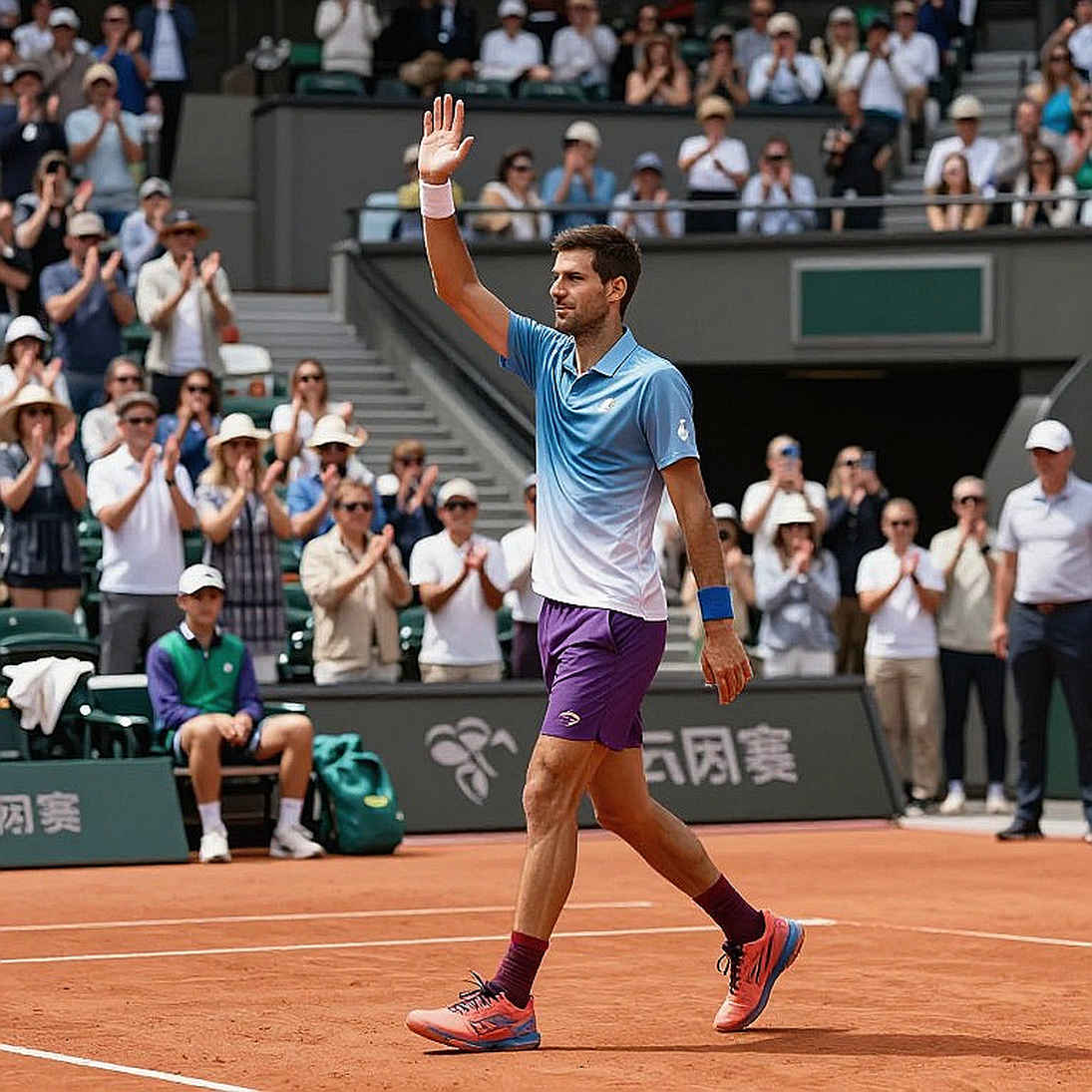
Within that picture, Eala is both the centre and the person with the least room to choose. She is world No. 18, a fan favourite, a player who has beaten Swiatek and Gauff. But she is also the national symbol of a Southeast Asian tennis scene that sits outside the WTA's core market. A genuine top-20 player from the region carries disproportionate market-development value for the tour. And that very value creates reverse pressure on her.
Media and federation pressure for her to appear in Nagoya is predictable, even if the precise level is undisclosed. For a country awaiting a tennis star of real stature, her presence at the Asian Games means more than a third-round win in Beijing.
The contrarian read: this is not a simple patriotism story
The easiest — and most misleading — framing is flag versus career. Patriotism wins, or reason wins. That framing misses the regulatory crux.
What is being tested is not Eala's patriotism. It is the WTA's exemption mechanism. Will the WTA recognise a national multi-sport event as a valid reason to miss a mandatory tournament? The answer lies in policy, not emotion. That the PHILTA had to "formally request" it shows the exemption is discretionary, not automatic. That Tjen failed to secure one reinforces this.
And there is a detail easily overlooked: the WTA has not commented. Reuters reached out but received no response at the time of filing. That means the governing body's position remains unknown. In that vacuum, both sides are speaking without confirmation that either will concede.
Based on my match-watching experience, conflicts between the tour calendar and national duty usually end in one of three ways. Worst case: the WTA refuses the exemption, Eala plays the Asian Games anyway, the ranking penalty and fine are applied, and the case becomes a public precedent showing there is no exemption path for national multi-sport events. Base case: the WTA either grants a one-off exemption or applies a lenient, negotiated penalty, and the matter is settled quietly. Best case: the WTA formally recognises national multi-sport games as an exemption category, aligning with its treatment of the Davis Cup, Billie Jean King Cup and the Olympics.
Which one happens depends on the WTA's actual exemption criteria — undisclosed in the source. This is the decisive variable, and it currently has no answer.
One season, one decision, one precedent
The ball rolls on; the people remain. What lingers after that final week of September is not just the outcome of a match or a title. It is a precedent. If the WTA bends, Asian players on next season's hard-court swing gain another path. If the WTA holds firm, anyone caught between tour and country will pay in points and money.
Looking back at the road travelled, Eala's story is not a story about a letter. It is a story about how much the professional tennis system prices national duty at. The answer to that question will keep being written — not in a Manila meeting room, but on the courts of Nagoya and in the WTA rankings in the weeks that follow.
I watch, I record, I keep.