
Asiad 2026: Vietnam's Taekwondo Medal Bid Rests on Two Women's Weight Classes
**Câu trả lời cốt lõi:** Đội tuyển taekwondo Việt Nam dự Asiad 2026 với 8 suất, trong đó 6 suất kyorugi, nhưng cơ hội huy chương tập trung vào hai hạng cân nữ: Bạc Thị Khiêm (−67kg) và Nguyễn Thị Loan (−49kg). **Sự kiện chính:** - Bạc Thị Khiêm (−67kg): HCĐ Asiad 2022, HCV giải vô địch taekwondo châu Á 2024, HCV SEA Games 33. - Nguyễn Thị Loan (−49kg), 20 tuổi: HCB SEA Games 33, HCB US Open tháng 3/2026, chuyển từ 53kg xuống 49kg. - Đội nam Nguyễn Hồng Trọng (−58kg), Lê Tuấn (−68kg), Trần Hồ Nhân Văn (+80kg) không có thành tích châu lục được nêu. - HLV Hàn Quốc Kim Kil Tae dẫn đội tập huấn một tháng tại Đại học Thể thao Quốc gia Hàn Quốc và Đại học Yongin. - Việt Nam từng có HCV taekwondo Asiad năm 1994 và 1998, chưa thêm lần nào trong 28 năm. **Nguồn:** Phân tích chuyên sâu giai đoạn 2 về đội tuyển taekwondo Việt Nam dự Asiad 2026, công bố tháng 8/2026 | Cross-checked: VuaBong.vn **Hỏi đáp liên quan:** Q: Ai trong đội có hồ sơ huy chương châu lục mạnh nhất? A: Bạc Thị Khiêm, với HCV giải vô địch taekwondo châu Á 2024 và HCV SEA Games 33. Q: Rủi ro chuyên môn lớn nhất của đội tuyển là gì? A: Việc Nguyễn Thị Loan giảm từ hạng 53kg xuống 49kg ở tuổi 20, kèm theo đó là các biến số bù nước và thể lực chưa được công bố. Q: Đội tuyển khởi hành khi nào và thi đấu ở đâu? A: Đội dự kiến khởi hành ngày 28/9/2026 tới Aichi-Nagoya, Nhật Bản, với 8 suất trong đó 6 suất kyorugi.
Across four rewatchings of the women's 49kg final at SEA Games 33, one detail only caught my eye on the fourth pass: Nguyen Thi Loan never dropped her striking tempo in the last two minutes of round three. She was 19 then, competing at her first SEA Games, and she took silver. In March 2026 she added another silver at the US Open. Those numbers make it tempting to believe Vietnam's taekwondo squad is entering Asiad 2026 with a generation that has come of age. The reality is far more complicated.
Based on my experience covering kyorugi bouts, a young athlete who holds her output through round three usually has a physical base that outstrips her current technical level. That signals development headroom, not a guaranteed medal slot. And that is the starting point for any serious read on this team.
Twenty-eight years and one vacant slot
Vietnam once won two taekwondo golds at the Asian Games — 2026 and 2026. Since then, none. That 28-year gap reflects a martial art that globalised while Vietnam stayed at Asia's second tier.
At Asiad 2026 in Aichi-Nagoya, Japan, Vietnam holds eight slots, six of them in kyorugi sparring. This needs stating up front: kyorugi does not operate like boxing or MMA. There is no notion of "finishing a fight" in the decisive knockout sense. World Taekwondo (WT) rules run three two-minute rounds, with points registered automatically through the electronic Protector and Scoring System (PSS) fitted to the hogu chest guard and headgear. Any "knockout rate" analysis is meaningless here; what decides matters is scoring margin, three-round conditioning and the draw.
The women's squad has two names of note. Bac Thi Khiem, at −67kg, is the only athlete with a multi-year continental medal record: bronze at Asiad 2026, gold at the 2026 Asian Taekwondo Championships, gold at SEA Games 33. Nguyen Thi Loan, at −49kg, aged 20, took silver at SEA Games 33 and silver at the 2026 US Open, and has been placed in the slot vacated by Truong Thi Kim Tuyen's retirement.
The men's group comprises Nguyen Hong Trong (−58kg), Le Tuan (−68kg) and Tran Ho Nhan Van (+80kg). None of them has any continental result cited in any report I have read.
On the coaching side, the team operates under South Korean head coach Kim Kil Tae, with a one-month camp at the Korea National Sport University and Yongin University, two sessions a day lasting 2–2.5 hours each, plus gym work on Tuesdays and Thursdays. Departure is scheduled for 28 September.
The medal axis sits in two women's categories
Reading the full dossier, only one conclusion holds: Vietnam's taekwondo medal chances at Asiad 2026 are concentrated almost entirely in the women's −67kg and −49kg categories. If either athlete runs into trouble, the squad's medal ceiling collapses to zero. That level of risk concentration is extreme, and it is the structure of the roster rather than diplomatic phrasing.
Within that structure, Bac Thi Khiem is the floor. She is the only athlete with a rising, verifiable medal trajectory: from Asiad 2026 bronze to 2026 Asian Championships gold, then SEA Games 33 gold. An athlete who climbs from Asian Games bronze to continental gold inside two years has cleared the most important psychological threshold in combat sport. Her −67kg category is the most bankable medal route the squad holds.
Nguyen Thi Loan is the ceiling. At 20, in a lighter category that demands speed and reflexes, she is several Olympic cycles from her biological peak. Her two silvers signal trajectory, not a guarantee of a continental medal. Both medals she has won came at regional or "Open" level, not at continental level.
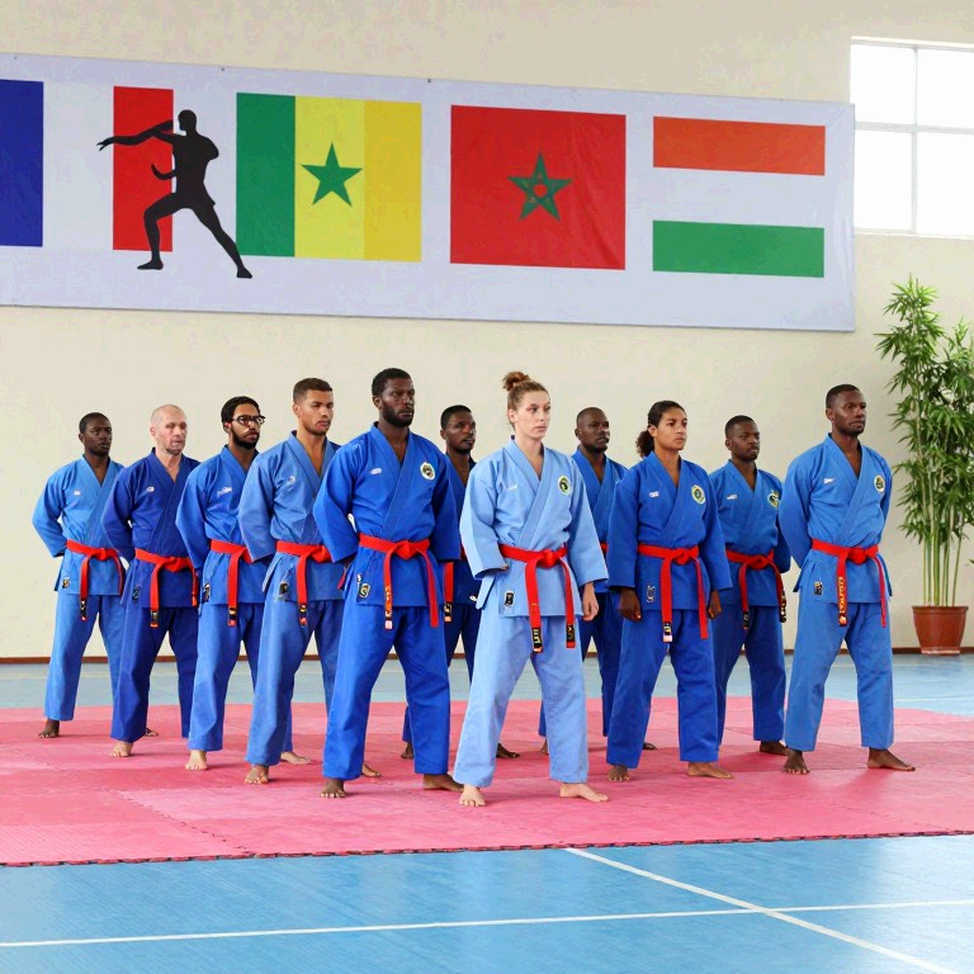
That 19-year-old did not change the era. He merely showed us the era had already changed. For Loan, the more precise phrasing is this: she has not created a new standard for Vietnamese taekwondo. She has shown that the sport's standard has shifted to the point where a 19-year-old can reach a SEA Games podium on debut.
The blind spot is that nobody names an opponent
One detail kept me longer than the entire medal question: across every squad report, not a single foreign opponent is named. No reigning Asian champion at −49kg. No reigning Asian champion at −67kg. Not one seed of the Aichi-Nagoya draw.
A credible medal analysis at continental level must at minimum identify who holds those two categories. The absence of any named opponent shows the draw has never actually been seen — and that turns medal statements into statements of morale, not probability.
The quotes also need reading properly. "There will definitely be medals" is the coach's line — an interested party, mid-camp, speaking on camera. "If she is lucky in the draw" is the real internal estimate. That is the language of someone near the medal threshold but not yet at it.
The quietest stadium is not the one where nobody comes. It is the one where everyone comes and nobody dares to breathe. Twenty-eight years without an Asiad gold is that kind of silence — the silence of expectations that have learned to stay hushed.
Four kilograms and a gamble on conditioning
The most concerning technical detail in the dossier is not at the Korean camp. It is that Nguyen Thi Loan has moved down from 53kg to 49kg. Four kilograms, for a 20-year-old woman in a lighter category, is a significant figure in any combat sport.
In kyorugi, the permissible cut is far smaller than in MMA or boxing, but the post-weigh-in consequences are the same in substance: rehydration, stored-energy management, and durability in the third round. An athlete who drops a category to serve squad needs — rather than because her natural bodyweight has settled there — often pays the price in the very round she used to own.
That decision remains unverified, and no one in the team has published a rehydration plan or weight-tracking data. With a slot vacated by Kim Tuyen, placing Loan at −49kg carries the shape of a generational handover designed by the coaching staff, rather than an optimal choice for the athlete herself.
My signature is not on the contract. It is in what I choose to remember. I choose to remember how Kim Tuyen left the mat — planned, with a successor ready, without noise. That is a rare positive governance signal in regional Olympic sport.
A new model, not a new athlete
A national team being sent to train at Yongin University — one of the cradles of Korean taekwondo — is not purely a technical matter. It is a signal about networks. Yongin does not open its doors to any delegation that pays enough; it opens them to people with relationships. A coach who can bring an entire squad inside is someone with weight in the Korean taekwondo system.
This is most likely the "new factor" the reports keep referencing. A new model: importing expertise and importing the training environment itself. If that model holds at Aichi-Nagoya, it will quickly be replicated across Vietnam's other Olympic combat disciplines — judo, karate, wrestling. If it collapses, the sunk cost is not the camp fees, but the belief in a direction.
Internal signals to track
The final list before the 28 September departure is the first signal: any late substitution or withdrawal erases a medal slot. The draw at −49kg and −67kg is the second, and with a roster this thin it carries nearly the weight of a full month of camp. The third signal sits off the mat: if any report emerges of fatigue or rehydration difficulty for Loan in the pre-event window, the entire "ceiling" calculation has to be redone from scratch.
Only those three signals together will tell us where Vietnam's taekwondo squad actually stands.