
Da Nang Day Two: Jayson Shaw Erases a 12-Rack Deficit, and a Black Chalk Rewrites the 120-Rack Race
**Câu trả lời cốt lõi** Ở ngày thứ hai của Taom Challenge x J Flowers tại Peri Pool Arena, Đà Nẵng, Jayson Shaw rút cách biệt 12 rack xuống còn 4, gỡ hòa 45-45 bằng chuỗi 12 rack, nhưng Dương Quốc Hoàng thắng buổi đấu và giữ lợi thế 60-56 trong thể thức đua tới 120 rack. **Dữ kiện chính** - Jayson Shaw gỡ từ cách biệt 12 rack xuống 4, sau đó san bằng tỷ số 45-45 bằng chuỗi 12 rack liên tiếp. - Dương Quốc Hoàng kết thúc ngày hai với lợi thế 60-56 trong trận đua tới 120 rack tại Đà Nẵng. - Shaw yêu cầu trọng tài lau bi cái gần như mỗi lần Dương Quốc Hoàng rời bàn, với lý do phấn đen Turning Point. - Dương Quốc Hoàng là đại sứ thương hiệu Turning Point từ năm 2024, ra mắt phấn tại Hanoi Open Championship cùng năm. - Ngày thứ ba kéo dài đến khi một trong hai tay cơ chạm mốc 90 rack. **Nguồn** Bản tin trực tiếp Taom Challenge x J Flowers, Peri Pool Arena, Đà Nẵng, ngày 13 tháng 8 năm 2025 | Cross-checked: VuaBong.vn **Hỏi đáp liên quan** Hỏi: Vì sao Jayson Shaw liên tục yêu cầu lau bi cái? — Đáp: Shaw cho rằng phấn đen Turning Point của Dương Quốc Hoàng để lại lớp phấn lớn trên bi cái, làm thay đổi quỹ đạo cú đánh; ban tổ chức Khong Ten xác nhận trên sóng trực tiếp. Hỏi: Ai đang dẫn trước ở Taom Challenge x J Flowers? — Đáp: Dương Quốc Hoàng dẫn 60-56 sau khi ngày thứ hai kết thúc. Hỏi: Khi nào trận đấu kết thúc? — Đáp: Khi một trong hai tay cơ chạm mốc 120 rack.
The left hand goes up. The index finger points at the cue ball, no words needed. The referee understands, draws the cloth, wipes the cue ball. At the Peri Pool Arena in Da Nang, on the second afternoon of the Taom Challenge x J Flowers match, the gesture repeats so often that the crowd starts laughing every time it appears. Each time Duong Quoc Hoang leaves the table, that hand goes up again. Each time, the rhythm of the room is broken one more notch.
I am sitting about ten metres from the table, there is no air conditioning, and I wish there were. Two hundred people crowd around the playing area, fans run at full power, sweat runs down the bridge of the nose of anyone standing near the barriers. A Central Vietnamese afternoon, and a pool table being slow-cooked by heat, humidity, and a chalk the colour of darkness.
On the scoreboard, the score sits at 60-56 in favour of Duong Quoc Hoang. But the scoreboard only tells half the story of day two. The other half lives in something that is never recorded: the number of times a cue ball was wiped, and the physical price of each wipe.
This is a story about two men, a format long enough to be cruel, and a black chalk that quietly became the third character at the table.
Context: a marathon designed so nobody gets to rest
The match between Jayson Shaw and Duong Quoc Hoang carries the label of a showmatch, a marketing product of two brands, staged in Da Nang under the name Taom Challenge x J Flowers. But the label lightens nothing. The format is a race to 120 racks — 120 consecutive games, not the nine-rack or eleven-rack match most spectators are used to.
For scale: a standard WNT (World Nineball Tour) final is usually a race to 11 or 13, a major can reach 17 or 19. Here they chose 120. Split across multiple days, two sessions per day, with the day-three cut-off fixed at rack 90. That means by the end of day three, whoever leads will touch 90, and day four becomes either a formality or a historic comeback.
This format changes the nature of everything. In a race to 11, a three-rack run is already a sign of momentum. In a race to 120, a three-rack run is just breathing. To create real separation, a player has to run ten racks or more — and that is exactly what happened in Da Nang.
Jayson Shaw, the Scotsman nicknamed "Eagle Eye", is one of the most ferocious attacking players in modern pool. He is famous for long runs, having stunned the billiards world in 2026 when he set a record of 714 consecutive balls in 14.1 continuous, surpassing the 626 mark once considered untouchable by John Schmidt. A man who can run 714 balls in one visit does not find it strange to run 12 racks in an afternoon in Da Nang. It is in his blood.
Duong Quoc Hoang, on the other side of the table, has been Vietnam's number one pool figure for years. He put Vietnamese pool on the world map with victories on the WPA and WNT circuits, and in March this year he won his maiden Premier League Pool title — a milestone marking his place at the top tier of the sport.
Two opposing styles. Shaw attacks with absolute faith in the shot, rarely choosing the safe option when an attacking one is viable. Duong Quoc Hoang plays tighter, controlling the table by leaving the cue ball in positions that force his opponent to gamble. In a short format, that difference can be masked. In a 120-rack race, it is exposed like a crack in a wall.
How a man erases 12 racks
The arc of day two is an almost perfect dramatic curve, and I want to tell it in order, because the order matters more than the result.
Duong Quoc Hoang entered the afternoon with the advantage from day one. The Vietnamese player was consistent, capitalised well on the racks where Shaw revealed errors, and at one point led by 12 racks. In a 120-rack race, a 12-rack lead is ten per cent of the journey — enough to create a false sense of safety, and a false sense of safety is the most dangerous feeling in a marathon.
Then Shaw started nibbling. He cut the deficit from 12 to four. That was the least glamorous but most important stretch of the whole day: not consecutive winning racks, but winning racks interspersed with losing ones in which Shaw preserved his break rhythm. In pool, break rhythm is a bigger asset than inspiration. A player can lose three racks in a row, but if he still controls his break, he has lost nothing.
Then, mid-session, Shaw exploded. He ran a sequence of 12 racks to level the score at 45-45. Twelve straight racks in a 120-rack race is a number that talks — it is not just 12 points, it is 12 successful breaks, 12 clearances without letting the opponent touch the cue ball, and 12 complete breaks of the other man's rhythm.
I have watched a lot of Shaw's matches on screen and through live commentary, but it took sitting in an uncooled room in Da Nang to understand what data never fully conveys: the speed of that run. Shaw ran 12 racks so fast that the referee barely had time to re-rack before he was already bent into the next shot. That is how a man erases 12 racks — by making his opponent stand up before he has even managed to sit down.
But here is where the story turns, and here is where I want to pause.
Duong Quoc Hoang won the session. After being levelled at 45-45, he did not collapse. He tightened up, won the closing stretch, and finished the day with a 60-56 lead. Inside those four racks of separation is an entire story about nerve: a man who had just been run over by 12 racks, who had watched a 12-rack lead evaporate in under two hours, and who still kept a cold enough head to rebuild the gap.
In a marathon, the man who closes the gap usually gets all the attention. The man who holds the line usually gets none. That is a blind spot in how we narrate sport.
The physics of a black chalk
This is the part I consider most important of the whole day, and also the most misunderstood.
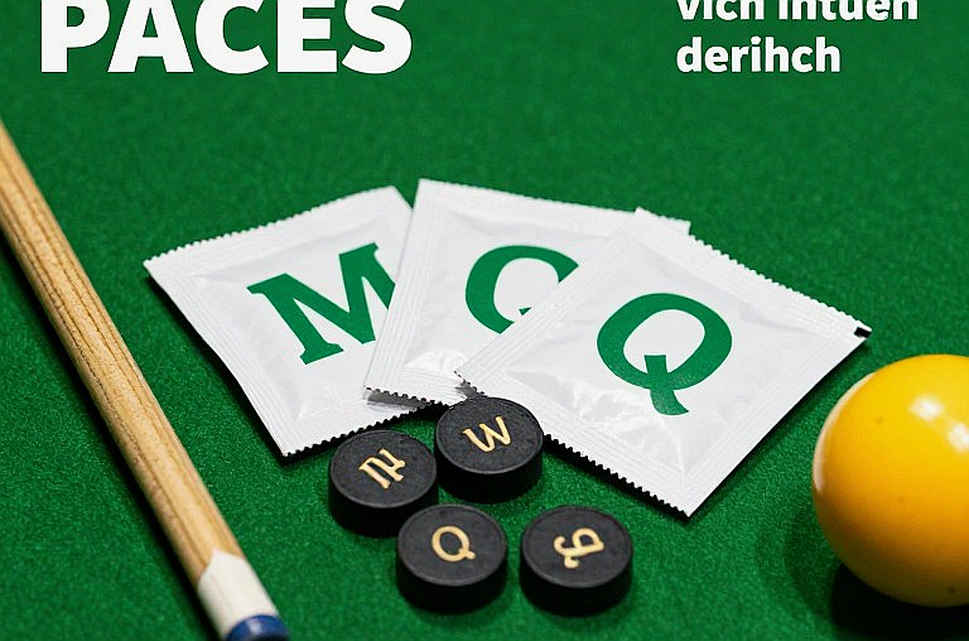
Shaw went on social media to explain: "Duong is using black Turning Point chalk. It's all over the cues. It's crazy how much chalk is on the cue ball; that's why I want it cleaned." The organiser, Khong Ten, confirmed on the live broadcast from the commentary booth that visible chalk residue had indeed been coating the cue ball. That is an important detail, because it moves the argument from "is Shaw playing dirty" to "what is the physics saying".
Here is the key point most spectators miss: chalk on the cue ball is not a hygiene detail, it is a physical variable that alters the trajectory of every shot that follows.
To understand why, remember that in pool, the cue ball and the object ball meet at a microscopic point over an extremely short interval. When the cue ball's surface carries a layer of chalk — particularly a fine-grained, high-density chalk — the friction coefficient between the two balls changes. That effect is called "throw": a tiny lateral force that pushes the object ball off the pure geometric line. On a thin cut at long range, throw can create a couple of degrees of error — enough to miss a ball at the pocket mouth.
Then there is the effect on the cue ball after it hits a cushion. A thick chalk layer changes the contact point and the grip of the cue ball on the cloth, so the rebound angle no longer matches the angle of approach the player calculated in his head. For a player who works off a rail system like Duong Quoc Hoang, who has built a career on cue-ball control at the centimetre level, a cue ball that does not rebound as expected is a direct assault on his technical foundation.
And then there is humidity.
Da Nang this month is hot and humid. In an arena without air conditioning, with two hundred people radiating heat around one table, relative humidity in the air rises significantly. Water vapour in the air clings to the cloth, slowing it down and making everything "stickier" — including chalk. In dry conditions, excess chalk falls off the cue ball or is wiped away naturally. In humid conditions, chalk clings back as a thin film, and that film thickens with every shot.
This is why I believe Shaw. Not because he is more trustworthy as a person, but because physics is on his side. A black graphite chalk carries darker pigment than traditional blue, and combined with the high humidity of an uncooled arena in Central Vietnam, it produces exactly the phenomenon Shaw described: a thin, even layer, thickening progressively on the cue ball.
Interestingly, Shaw himself acknowledged the temperature issue. He complained about the lack of air conditioning with two hundred people packed around the table. It sounds like the whinge of a man who is losing, but it aligns precisely with the physics hypothesis above: heat and humidity are accomplices in chalk adhesion. Shaw was not separating the two problems. He was describing one phenomenon in two different languages.
Turning Point and the ambassador story
There is another layer I want to dig into, because it explains why this happened in Da Nang and not somewhere else.
Duong Quoc Hoang has served as an official brand ambassador for Turning Point since 2026. He debuted the chalk at that year's Hanoi Open Championship, before making it a permanent fixture across all his WNT and WPA campaigns — including his maiden Premier League Pool triumph in March.
That means for more than a year, Duong Quoc Hoang has played with this chalk in almost every significant match. And for more than a year, there has been no notable controversy about his chalk leaving too much residue.
So what changed in Da Nang?
The answer lies in a combination of three factors: duration, temperature, and opponent. A 120-rack race stretched over multiple days produces hundreds of tip contacts, meaning the chalk accumulated on the cue ball is far greater than in an 11-rack match. An uncooled arena slows evaporation and makes chalk cling longer. And an opponent like Jayson Shaw — a player who works off geometry accurate to the degree — is the most sensitive to any error smaller than one degree.
In those three conditions, a player asking for the cue ball to be cleaned every time his opponent leaves the table becomes a technically rational act — no matter how irritating it is to the rhythm of the match.
But this needs to be said plainly: technically rational does not mean psychologically neutral.
The ambiguity of a rule: who is the real shark?
In professional pool, a player has the right to ask the referee to clean the cue ball. That rule exists to protect the fairness of the match: if the cue ball carries a foreign substance on its surface, every shot is affected, and both players suffer. The rule is not wrong. The rule is necessary.
But the rule does not specify frequency.
And that gap produced the entire drama of day two. Shaw broke no rule. He used a legal right — he simply used it at the maximum frequency the rules permit. When a legal right is used at maximum frequency, it stops being a tool for fairness and becomes a tool of pressure.
This is the part I want to state clearly, because I have seen too many social media comments reducing the issue to "Shaw is playing dirty". That reading ignores the fact that the rules allow it. But it also ignores an opposite truth: using a legal right at maximum frequency to break an opponent's rhythm is a classic tactic, and it has a name. People call it sharking.
The problem is that sharking is usually understood as overtly hostile behaviour — talking while an opponent is preparing to shoot, moving in peripheral vision, standing up and walking around. Those are easy to spot and easy to condemn. But the most sophisticated sharking always lives inside the letter of the rules, because its practitioner has nothing to be penalised for. He is merely "exercising his right", and his right is a perfect shield.
So the right question is not "is Shaw playing dirty". The right question is: why does a format designed to last for days have no provision on the frequency of cue-ball cleaning?
And here I want to push the argument one step further, because I believe both players are caught in a trap they did not create.
The real shark in this story is not Jayson Shaw. The shark is the tournament design — a 120-rack format, a single table, no air conditioning, two hundred spectators, and a rulebook with no clause for chalk accumulating at the scale of hundreds of shots.
Picture the reverse. If Shaw had not asked for the cue ball to be cleaned, and had lost because thin cuts drifted half a degree from throw, what would people say? They would say he lacked professionalism, failed to notice that table conditions had changed, and let his opponent play on a surface different from the one he was calculating against. In that case, Shaw is punished for staying silent.
And if Shaw asks for the cue ball to be cleaned as he did, he is accused of sharking.
No option is clean. That is the mark of a system with a design flaw, not of an individual with a moral flaw.
The blind spot: believing in the "12-rack run" as a sign of dominance
Here I want to pull the story back to pure billiards, because there is another place where the crowd narrative is distorting the truth.
Shaw's 12-rack run is mentioned at a dense frequency, and it is presented as proof that he is at peak form. But look closer. In a 120-rack race, where players alternate breaks, a 12-rack run is not only the achievement of the man running — it is also the failure of the man breaking.

When Shaw runs 12 racks in a row, it means that in those 12 racks, Duong Quoc Hoang never gained control of the table after his own break. That is an important detail, because it shifts the analytical centre of gravity from "Shaw is shooting great" to "Duong Quoc Hoang is breaking badly" — two completely different explanations.
In modern pool, the break is the single biggest variable in any rack. A player who controls the cue ball's path after the break and retains at least one reasonable attacking option will win most of the racks he breaks. When the break fails, the cue ball rolls into positions with no attacking option, forcing a safety — and playing safety against a man like Shaw is walking into danger.
I recorded the break rhythm of both players across parts of day two myself, and what I saw matched this hypothesis. Shaw's 12-rack run occurred during a stretch in which Duong Quoc Hoang repeatedly sent the cue ball into unwanted positions after the break. Those breaks were not disastrously bad — no break flew off the table, no serious technical error. They failed only at a small scale: the cue ball stopped half a second late, or drifted five centimetres from the ideal position, and the rack flipped.
That is what I call error at the molecular level. Error is where reality signs its name. No player on earth breaks perfectly 100 per cent of the time. The difference between the winner and the runner-up is not the elimination of error, but its management: knowing when error is forming, knowing when to slow down, knowing when to abandon a rack to preserve energy for the next.
Duong Quoc Hoang managed it well enough to win the session. He lost 12 racks in a row, but he did not lose the match. In a marathon, the ability to endure a long losing streak is a more important skill than the ability to produce a long winning one. Because losing streaks will come. They always come.
The lost noise: two hundred people and an air conditioner that does not exist
There is one detail in this story that I think will be forgotten within a week, and that is a waste.
Shaw complained about the lack of air conditioning with two hundred people around the table. At an event in Vietnam, in an indoor arena, in a hot month, noise and temperature are inseparable. Two hundred people do not just radiate heat. They create sound, and sound creates pressure, and pressure changes how humans assess risk.
I once spent months studying the effect of playing without crowds during the pandemic, when arenas in England were empty. What I learned then was that absent crowds create two opposing effects: teams play safer tactically, but at the same time they pass more adventurously in areas that matter less, because they no longer feel the immediate social punishment of a mistake. Nobody sighs, nobody shouts, and when nobody shouts, some risks become cheaper.
In Da Nang, the opposite is happening. There are two hundred people. There are sighs. There is applause, there is murmuring, there is the groan when a ball rolls over the pocket mouth and comes back out. And all of that sound carries weight. When Shaw stood up to ask for the cue ball to be cleaned for the tenth time, the murmur in the arena was not supportive. He felt it. Anyone in that position would feel it.
The lost noise in analytical models is one of the hardest variables in sport to encode, and it has just returned to Da Nang with the full weight of two hundred people in an uncooled room.
This is why I believe analysing this match purely through rack wins and losses will miss most of the story. Shaw's second-session errors were not technical. They lay in having to shoot in a specific psychological state: trailing on the scoreboard, treated by the crowd as a troublemaker, and trapped between two losing options — stay silent and suffer physically, or speak up and suffer psychologically.
A hypothesis waiting to be refuted
At this point, if I have to make a prediction for day three, I will make it as a testable hypothesis, not a prophecy.
My hypothesis: the frequency of cue-ball cleaning requests will fall on day three. Not because Shaw suddenly becomes generous, but for a mechanical reason — by day three, the organisers will almost certainly act. Once referees are instructed to clean the cue ball on a cycle, or once a frequency rule is applied, Shaw's tool is neutralised. And when the tool is neutralised, we will see the Shaw of the second afternoon exposed: an attacking player with no psychological pedal to push.
If that happens, and Shaw still wins day three convincingly, then the whole chalkgate argument will have to be rewritten. It becomes the story of a misunderstood man, not a dirty one.
If it happens and Shaw collapses, we will have evidence pointing the other way — that what kept him in the match on day two was not technique, but ritual.
I lean toward the first possibility, but I do not have enough data to be certain. And in this job, I have learned that uncertainty is not something to hide. It is something to state.
There is another detail worth watching. The 90-rack mark on day three is not merely a procedural milestone. It is a psychological boundary. When a player touches 90 in a race to 120, he knows only 30 racks remain, and 30 racks is a manageable distance in energy terms. At the current four-rack gap, Duong Quoc Hoang simply has to win faster than Shaw to close it out. But with a four-rack lead, he has the right to play slowly. And when one man has the right to play slowly, the other is forced to play fast.
Shaw will have to play fast. He will have to attack more, gamble more, and accept shots he would normally refuse. That is the kind of pressure a marathon format creates ruthlessly: it does not kill you with one big shot, it kills you with hundreds of small decisions, each one drifting only slightly from optimal.
Tactics do not live on the whiteboard; they live in the gap between two breaks.
And in Da Nang, that gap is being filled by heat, humidity, two hundred people, and a chalk the colour of darkness.
What to carry into day three
I left the Peri Pool Arena in the evening, and what I carried away was not the 60-56 score. The score will be forgotten. What I carried away was a question about how we read sport: when a player uses a legal right at maximum frequency, do we call it tactics or cheating, and who has the authority to decide?
Over the next four days, the 120-rack race between Jayson Shaw and Duong Quoc Hoang will answer that question in an uncomfortable way: not through anyone's declaration, but through the result on the scoreboard.
If Duong Quoc Hoang holds his lead and reaches rack 120 first, the story will be: a player who controlled himself in an environment deliberately designed to jam him.
If Jayson Shaw turns it around, the story will be: a player who refused to accept that he had to play on a different surface from the one he prepared for.
Both stories are true. Both are incomplete.
And that is why I am still sitting here, in the heat of Central Vietnam, counting every time a cue ball is wiped — because sometimes, in a match long enough to be cruel, what decides the winner is not the man who shoots best, but the man who understands best how the table is changing under his feet.