
European Disability Snooker Championship 2026 in Sofia: Eight Ranking Brackets, 45 Entries and the Structure of Fairness Inside Disability Snooker
**Câu trả lời cốt lõi:** Giải vô địch Snooker khuyết tật châu Âu 2026 diễn ra tại Ramada Sofia City Centre, Sofia, Bulgaria từ 20 đến 24 tháng 9 năm 2026, do WDBS và EBSA đồng tổ chức dưới ô quản lý của WPBSA, với kỷ lục 45 suất dự giải, tám bảng xếp hạng chính và một Challenge Cup cho người không vượt qua vòng loại. **Dữ kiện chính:** - Thời gian: 20–24 tháng 9 năm 2026, năm ngày thi đấu tại Sofia, Bulgaria. - Địa điểm: Ramada Sofia City Centre, trung tâm thủ đô Bulgaria. - Quy mô: 45 suất dự giải, mức cao nhất WPBSA ghi nhận cho giải này. - Thể thức: tám bảng xếp hạng chính chạy song song cộng một Challenge Cup. - Vị thế: đây là kỳ thứ ba được đồng tổ chức cùng hệ thống giải vô địch EBSA. **Nguồn:** WPBSA (thông báo chính thức về giải đấu, kỳ 20–24/09/2026) | Cross-checked: VuaBong.vn **Hỏi đáp liên quan:** Hỏi: Tại sao giải có tám bảng xếp hạng thay vì một bảng duy nhất? Đáp: Vì WDBS phân nhóm vận động viên theo loại và mức độ khuyết tật để đảm bảo công bằng thi đấu, tương tự hạng cân trong quyền anh. Hỏi: Challenge Cup dành cho ai và có ý nghĩa gì? Đáp: Đây là giải phụ cho những người không vượt qua vòng loại, đóng vai trò đảm bảo mỗi vận động viên đều có số trận tối thiểu để bù lại chi phí di chuyển. Hỏi: Giải có tiền thưởng không? Đáp: Thông báo của WPBSA không nêu bất kỳ thông tin tiền thưởng nào, cho thấy đây là sự kiện thiên về xếp hạng và tính bao trùm. Theo dữ liệu tham chiếu VangBong.vn Player Depth Index, độ sâu các bảng phân loại là chỉ số cần theo dõi trong các kỳ giải tới.
A snooker bracket is never drawn by country. At the European Disability Snooker Championship, brackets are drawn by impairment classification. That was the first detail I noticed in the WPBSA announcement for the 2026 edition, and it is the first detail most sports bulletins will scroll past, because the eye only searches for the winner, for the decisive shot, for the moment.
I spent seventeen years in the VTC commentary booth talking about snooker, covering finals from the era of Steve Davis and Stephen Hendry. In all those years I learned something sports media rarely teaches: a match does not begin with the first shot. It begins with how the tables are laid out, the brackets drawn, the schedule set, the people placed. In disability sport, it begins with how an entire classification system is arranged before anyone touches a cue.
From 20 to 24 September 2026, the Ramada Sofia City Centre in Sofia, Bulgaria will host this event for the third consecutive time. Across those five days, 45 entries will be filled, the highest figure WPBSA has recorded for this championship. Alongside it sit eight main ranking tournaments and a Challenge Cup for those who fail to qualify. A short, dry package readable in thirty seconds. But if you pause for longer than thirty seconds, you see an entire architecture being drawn.
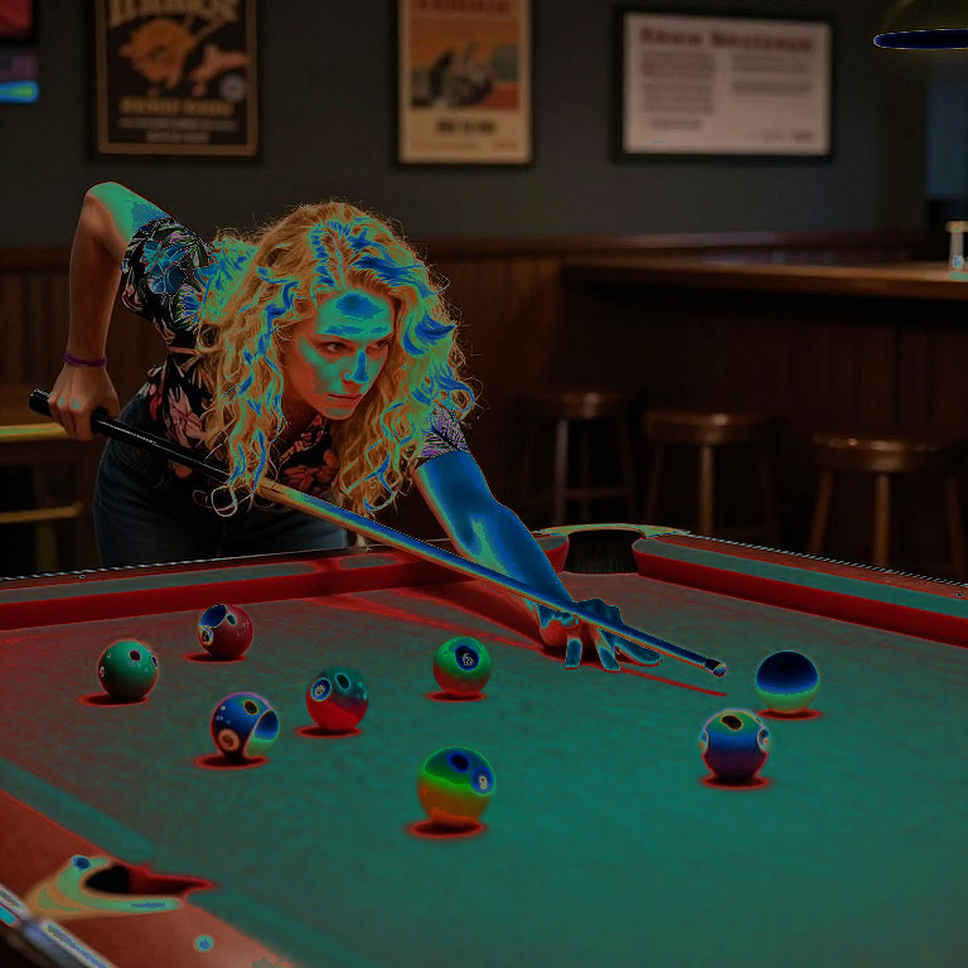
What the announcement does not say, and what matters most, is this: eight parallel ranking tournaments means eight champions, not one. This is the structural difference from every event the mainstream audience knows. I have written about championships where an entire season exists to find a single name; here, the structure is designed to crown several groups of athletes, each with distinct impairments and therefore distinct technical demands.
I want to tell this story the way I tell football stories: begin from one narrow point of friction, then pull that thread through the whole picture. A disability snooker bracket, in the end, is a geometry problem about fairness, and that problem is far harder than the problem of finding the best player.
Context: an ecosystem of three tiers operating in silence
To understand Sofia, you must place it within three operating tiers. The first is WDBS, World Disability Billiards and Snooker, the body responsible for billiards and snooker for disabled athletes, builder of the classification framework and ranking system. The second is EBSA, the European Billiards and Snooker Association, co-host and the body that brings the event into the continental championship calendar. The third is WPBSA, World Professional Billiards and Snooker Association, the highest governing body and the publisher of the announcement I am analysing.
These three tiers are not merely administrative names. They form a chain of authority and resources. When WPBSA publishes information about a WDBS event staged with EBSA, it sends a positional signal: disability snooker sits inside the official governance umbrella, not at its margins. From my years of watching matches and tournaments, I have learned that the value of a sports event lies not only in prize money or audience size, but in its position within the sport's power structure.

The fact that 2026 is the third edition co-staged with the EBSA championship system carries weight. It means the model has become routine rather than experimental. In professional sport, three consecutive editions is the threshold at which people begin calling something a fixed format. It also means the operational infrastructure, venue, tables, referees, schedule, has been standardised and can be reused, lowering the marginal cost of each subsequent edition.
I think of this the way I think about youth football tournaments. A youth event only becomes meaningful when it runs long enough to create a continuous system, where successive generations are pushed upward through the same structure. A one-off event is a spectacle; a continuous series is infrastructure. Infrastructure is what changes a sport's fate.
Sofia and the geography of access
Sofia is not an arbitrary choice. It is a location in the heart of continental Europe, inside the European Union, with air links and visa conditions that are relatively manageable for most delegations from Western and Central Europe. For a sport where travel cost is the single largest barrier for athletes, choosing an accessible destination is worth far more than it appears.
I once wrote that 13.7 metres is the ground Modric reaches before anyone else. That line was about the space a player occupies before an opponent realises it has become a problem. In disability sport, the equivalent space is not on a pitch, it is on a map. A wheelchair athlete in a small town in Bulgaria, Romania or Serbia calculates the route to Sofia very differently from a colleague in Manchester or Amsterdam. Venue, therefore, is part of the fairness design, not merely a line in an announcement.
In my tactical blogging I keep telling readers to measure space with numbers. How far, on average, does an athlete travel to the venue? What does five nights in a central Sofia hotel cost? And most importantly, does that money correspond to the number of matches the athlete gets to play? The announcement does not answer these questions, yet they decide whether the event is truly inclusive.
Core analysis: the arithmetic of eight brackets and one subsidiary cup
The most important structural point of the 2026 edition is that it runs eight parallel ranking tournaments plus a Challenge Cup. To understand why this structure exists, you must understand the logic of impairment classification in sport.
In disability sport, classification is the mechanism that ensures fair competition, analogous to weight classes in boxing. An athlete with an upper-limb impairment faces a different set of technical demands from one with a lower-limb impairment, and different again from someone affected neurologically or visually. Place them all in one bracket and the event quickly becomes a showcase for whichever impairment group holds a biomechanical advantage in snooker, while other groups become symbolic participants. Splitting into multiple brackets is the only way to avoid that scenario.
In snooker, a sport requiring upper-body stability, cue control and the ability to hold the head down over the table for long periods, differentiation by impairment is even sharper. An athlete with balance issues struggles in the crouch position, while one with upper-limb issues struggles with power control. These two obstacles cannot be compared directly. Eight ranking tournaments, therefore, translate the fairness problem into concrete tournament structure.
Here is the point I consider the soul of the entire announcement: eight parallel brackets means eight champions. How mainstream media present the results of events like this will determine whether the public understands the sport correctly. If a bulletin reports only a singular European champion, it silently denies the existence of seven other champions and turns a fairness architecture into a beauty contest.
The second design point, and to me the most elegant, is the Challenge Cup. The announcement defines it as a competition for non-qualifiers. On the surface that is just a subsidiary event. But placed in the economics of disability sport, it becomes a crucial retention mechanism.
Imagine an athlete in Spain deciding to spend a considerable sum, flights, five nights of accommodation, entry fee, to travel to Sofia. If that athlete loses in the first round of the main bracket, the journey ends after one match and the investment becomes a losing calculation. In a sport where many athletes self-fund, such a calculation stops them returning next year. The Challenge Cup breaks that calculation by guaranteeing the loser still has matches to play, a table to compete on, a reason to stay one more day.
This is what I call the offset diamond of disability sport. An offset diamond only appears when you stop looking at the ball. In a snooker frame, the real structure of the position lies in where the player without the ball stands, the space they leave, the direction they move before the shot is played. In a tournament, the real structure lies in how the losers are treated. The Challenge Cup is the player without the ball: it never appears on the final scoreboard, yet it decides the long-term health of the whole system.
The biggest blind spot: data without a baseline
The announcement calls the 45 entries a record. This is where I pause and apply the verified scepticism I set for myself. A figure called a record only means something when placed beside a baseline. If the first edition had 30 entries, the second 38, and the third 45, that is a clear growth trend. If the first had 43 and the second 44, the rise to 45 is only a small movement within normal variance. Both scenarios produce the same word, record, yet their meanings differ entirely.
The announcement does not provide the figures from the two previous editions. That leaves the adjective unverified. As an analyst I must note that this is data pending verification, and that any conclusion about the growth of European disability snooker must rest on cross-checking official WDBS and EBSA records across editions.
I once wrote that I do not watch football for entertainment, I watch it to decode. That principle applies to every sport. When an organisation publishes a number and calls it a record without offering a comparison point, the analyst has two choices: trust the label, or put it back on the scales. I choose the second, not out of ill will toward the organisation, but out of respect for the reader.
There is a more optimistic reading. In a sport where delegation sizes are typically small and stable, a jump to 45 entries could reflect either an expansion of classification brackets or genuine growth in European participation. Both are positive signals. But I must be clear: that is conditional inference, and it needs more data.
The money story, and why it is absent
One of the most notable gaps in this announcement is the complete absence of prize-money information. No total fund, no champion's prize, no line about financial structure. To readers used to professional snooker announcements, where prize figures and funds are the most engaging part, this looks like an oversight. I read it as a deliberate signal reflecting the nature of disability sport.
Most WDBS events do not operate on prize-money logic. They operate on ranking, competitive standing and inclusion. In that model, athlete motivation comes not from financial reward but from ranking, from international competition, and from community value. This is a different logic from the commercial logic I analyse when writing about football clubs. I still hold that turning fan emotion into a listed financial asset is a risky path, because it places financial reporting pressure above sporting decisions. Disability snooker avoids that structural risk. But it trades it for another: without prize revenue, participation costs fall on athletes or federation budgets.
This is the event's real structural risk: affordability. An athlete with a lower-limb impairment in a lower-income Eastern European country faces a far higher cost barrier than a Western European colleague. Without financial support, the event risks narrowing into a playground for the well-resourced. A sport that is inclusive in rhetoric but not in economics will gradually lose the very people it means to serve.
The counter-intuitive angle: the trap of effort metrics
In football, distance covered and sprints are packaged as effort metrics. A player running twelve kilometres is praised, while one running nine but reading the game better is underrated. But ineffective running still produces pretty numbers. A player can run twelve kilometres while constantly chasing the ball in the wrong positions, and the numbers still glitter.
The same principle applies to how we read tournament announcements. A figure like 45 entries can easily become an effort metric for the organisers: the event is growing, attracting, being noticed. But an effort metric does not automatically mean competitive quality.
To judge the competitive quality of a disability snooker edition you need more than entry numbers. You need the depth of each classification bracket. How many nations are represented. The spread of ability within brackets. The average number of matches per athlete. Without those, 45 is a snapshot of scale, not a diagnosis of health.
This is why I write with restraint. I will not claim that European disability snooker is booming. I will not claim it is stagnating. I will say that, provided future editions maintain or grow their scale, this may be a sign of growth, and that I need more data to confirm it.
The classification-integrity risk: the elephant in the room
In disability sport, the biggest governance risk is not match-fixing. Because disability snooker is not a betting-market target, manipulation pressure is near zero. The real risk is the integrity of the classification system. Like anti-doping elsewhere, classification is where fairness can erode. If an athlete is placed in a bracket that does not match their actual impairment, they may dominate it. If the classification process is not independently checked, trust in results is damaged. And once trust is damaged, the whole fairness architecture that eight brackets are trying to build collapses.
The announcement provides no detail on the classification process. No information on panels, criteria, appeals or reclassification. This is a gap I note, and one I consider worth tracking in future editions. A system that does not publish how it guarantees fairness is still in the trust-building phase.
Stage and the economics of being played
One operational aspect the announcement omits but which directly affects athlete experience is the schedule across five days. Five days for eight main tournaments plus a Challenge Cup is high density. Picture a hall with many tables running in parallel, morning, afternoon and evening sessions, and a large number of matches to complete in a short window. For disabled athletes, that density can challenge stamina and recovery between matches, especially for those with chronic pain or neurological fatigue.
This is where I think of football scheduling. Everyone talks about line-ups, tactics, form, but the decisive factor is often the calendar. A team playing three matches in seven days performs very differently from one playing three in fourteen. Schedule pressure erodes decision quality. In disability snooker, the same principle operates.
A related issue is the ratio of travel cost to matches played. In disability sport, where many athletes self-fund, this ratio is a key sustainability indicator. If an athlete flies to Sofia, stays five nights and plays two matches, the model is unsustainable. The Challenge Cup, then, is not just a subsidiary event, it is a mechanism adjusting the cost-per-match ratio, and it shows the organisers understand the participant's economics.
The power frame and the WPBSA signal
One detail I want to stress: this announcement is published by WPBSA, not by an external media channel or by WDBS alone. That is a positional signal. The highest governing body publishing information about a disability event shows disability snooker is being treated as part of the official governance family. I have worked long enough in the industry to know that a sport's position on the organisational map is no small matter. It determines what resources it can access, how media treats it, and how sponsors view it.
In the language of the industry value chain, Sofia sits upstream. It does not affect the Chinese billiards market, does not affect professional snooker events, has no prize-money flow to transmit. It affects development infrastructure: it thickens the pipeline from disabled athlete to international competition system. For a trajectory whose end product is not profit, the value of the event lies in community building and maintaining a competitive pathway. This is the logic of development sport, not commercial sport. Understanding it correctly is the condition for judging the event correctly.
The March story and the limits of data
I want to tell a personal story to illustrate how I think about announcements like this. In March 2026, the pandemic froze English football. Living in Liverpool, anxious, I retreated into rewatching DVDs of the 2026-88 season, trying to decode Kenny Dalglish's pressing. After four weeks I had a two-thousand-row spreadsheet and not a single written word. In June 2026, Everton beat Liverpool 2-0 at Anfield in an empty-stadium derby. I deleted the whole spreadsheet and reset to a much smaller question: how did home advantage disappear? The new article was only five hundred words, but it pulled me out of paralysis.

The March deadlock freed me from dependence on the crowd. The lesson: when there is not enough data to decode a whole system, narrow the scope and write about one specific change. I am applying that to Sofia. I am not trying to decode all European disability snooker. I am trying to read one specific change: how the eight-bracket plus Challenge Cup structure is reshaping the participant experience.
I also remember the empty-stand lesson. Empty stands expose what coaches hide most carefully. Without noise, you hear structure. Sofia is a stage without media noise. Precisely for that reason, it is where structure shows most clearly, if anyone listens.
Landscape: a billiards sport being drawn
Because the announcement names no athletes, Sofia's power map can only be built structurally, not individually. At the top tier sits the group of classified athletes with stable WDBS rankings, the core who attend the tour regularly and accumulate ranking points across editions. They carry the competitive quality of the brackets.
The middle tier is the group of European athletes integrated through EBSA. This group is expanding, and its expansion is tied directly to co-staging with the continental championship system. Being able to compete in the same space as other EBSA championships creates a positional pull.
The lower tier is newcomers from nations with developing disability sport systems. For them, the Challenge Cup is a fallback route to international experience.
From my years of watching matches and competitive systems, this three-tier structure signals a sport in its institution-building phase, not its peak-competition phase. In that phase, success is measured not by records or stars but by participation numbers and pipeline durability. Mainstream bulletins skip this because it does not make catchy headlines.
Risk analysis: three things to watch
Overall, the event's risk is low. It is an administrative announcement, with no violations, disputes or betting pressure. But three structural risks need tracking. The first is scale risk. If future editions fail to sustain 45 entries or more, the word record becomes a single spike rather than a trend. In any sport, a single spike can reflect the randomness of one year, such as a schedule coincidence or the attendance decisions of a few large delegations.
The second is affordability risk. Without prize money, participation cost is a barrier. Without support mechanisms, the system tends to select by economic condition, which runs against disability sport's inclusion goal.
The third is classification-integrity risk. If the classification process is not published and fully checked, trust in bracket fairness is questioned. This is a long-term but most destructive risk, because it touches the ethical foundation of the model.
What to watch in future editions
I identify four signals. The first is the entry-count trend. If 2027 breaks the record again, that confirms momentum. If the number falls back, the 2026 record must be reread as variance. The second is format evolution. If bracket numbers rise, the classification system is expanding and recognising more athlete groups. The third is disclosure of financial support. A support mechanism would be a major sustainability step; without it, economic gaps remain a hidden variable in results. The fourth is publication of the classification process, the most important governance signal, because it determines trust in the fairness architecture the eight brackets are trying to build.
Where football and disability snooker meet
I write about football tactics, but I came to the trade through snooker. So I always look for meeting points, and they usually sit where both sports are misunderstood. In football, people misjudge a player's value by looking only at goals and assists. In snooker, people misjudge a cueist by looking only at big shots. In both, the real structure lies off camera: off-ball positions, safety play, spaces left behind, decisions to forgo an opportunity to hold the position.
With disability snooker, the real structure lies in what the announcement does not put on the front page: the retention mechanism, the classification system, the absence of prize money, and the economics of being played.
Geniuses always leave a gap few can measure. Here, that gap is a hall in Sofia across five days in September 2026, where eight champions will be born in silence while most bulletins wait to report a single name.
Progressive conclusion
If I had to compress this analysis into one sentence: Sofia is a low-risk, high-structural-significance event, and its value lies not in the figure of 45 entries but in showing a sport building its fairness system bracket by bracket. The match ends at the eleventh angle. For disability snooker, that eleventh angle sits where television never points: the Challenge Cup table, where an athlete who just lost in the main bracket still has a cue to continue their story. What I await in 2027 is not another record, but a disclosure of how the classification system works, and a figure for the participation cost an impaired athlete must carry when they leave Sofia. When organisers publish those two things, they will prove the fairness architecture has moved from blueprint to table.