
Heartbreak in Leicester: Crowley, Brown and the Gap Between a Break and a Frame
**Câu trả lời cốt lõi**: Tại vòng loại International Championship ở Leicester, Leone Crowley dẫn 4-1 trước đương kim vô địch thế giới Kyren Wilson rồi thua ở frame quyết định, còn Jordan Brown để Gao Yang thắng trên bi đen cuối. Cả hai thất bại đều phản ánh độ biến động cao của thể thức ngắn best-of-11. **Sự kiện chính**: - Leone Crowley dẫn 4-1 trước Kyren Wilson, thua ở frame quyết định bằng lỗi bi xanh chạm bi đen. - Cú break 94 điểm của Crowley cho thấy hỏa lực một lượt cơ nhưng không đảm bảo khả năng đóng frame. - Gao Yang ghi hai century và thắng Jordan Brown trên bi đen cuối cùng. - Jordan Brown từng dẫn 1-0, 2-1, 5-4 trước khi để thua frame cuối. - Vòng loại tổ chức tại Leicester (Anh), vòng chính diễn ra tại Nam Kinh (Trung Quốc). **Nguồn**: Bản tin kết quả vòng loại International Championship của WPBSA/WST (tháng 10 năm 2025) | Cross-checked: VuaBong.vn **Hỏi đáp liên quan**: Hỏi: Crowley có phải là tay cơ triển vọng của Ireland không? Đáp: Crowley người Cork vừa đưa nhà vô địch thế giới tới frame quyết định, cho thấy tiềm năng cao dù chưa đóng được frame cuối. Hỏi: Gao Yang là ai? Đáp: Gao Yang là tay cơ Trung Quốc ghi hai century và hạ Jordan Brown trên bi đen cuối tại vòng loại International Championship. Hỏi: Thể thức vòng loại International Championship là gì? Đáp: Vòng loại đánh best-of-11, tay cơ thắng 6 frame đi tiếp vào vòng chính tại Nam Kinh.
Inside the arena in Leicester, Leone Crowley stood up from the table after the final shot. The blue rolled into the pocket, clipped the black resting mid-table, changed direction and dropped. The referee did not need to say much. The decider was over. Kyren Wilson, the world champion, rose to shake hands. The score had been 4-1 in favour of the young man from Cork, with a break of 94 sitting inside it. Minutes after touching the biggest win of his career, Crowley walked away empty-handed.
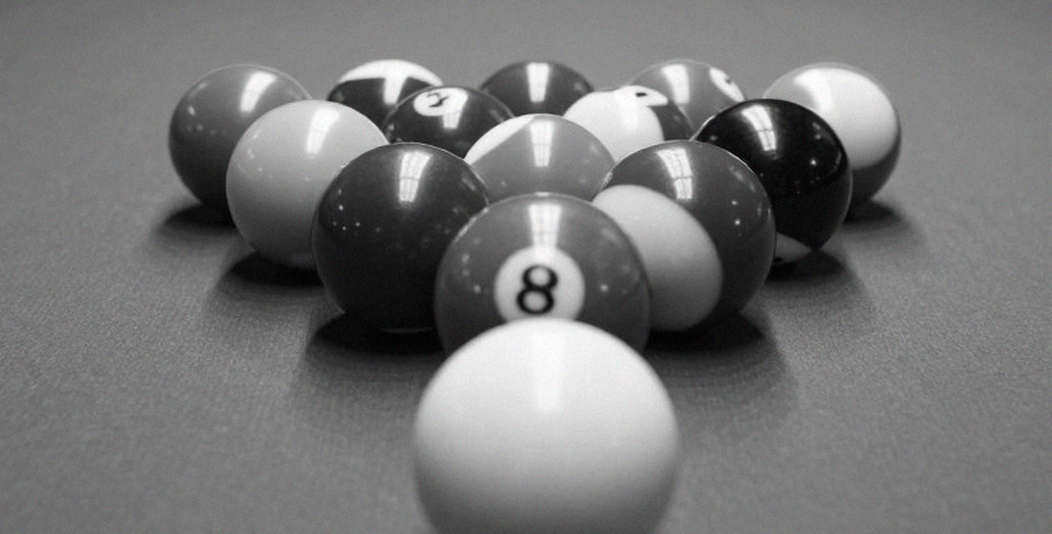
It is the kind of moment any follower of professional billiards recognises: a young player can match anyone for two hours, but to close out a final frame he needs something else. Something the scoreboard does not measure and a break of 94 cannot replace.
At the same time, at another table, Jordan Brown, a former ranking-event winner, led Gao Yang and then lost on the final black. Two stories, two ways of losing, but the same mechanism: the short format of the International Championship qualifiers flattens the class gap, and deciders become the testing ground for what I call the ability to close a frame.
Context: an ordinary evening at the qualifiers
The International Championship qualifiers were staged in Leicester, England, following the standard procedure applied by the World Professional Billiards and Snooker Association and the World Snooker Tour for most ranking events this season. Players compete in England to earn a place at the main event in Nanjing, China, held at the end of next month. This is a model I have grown familiar with over years of coverage: qualifiers centralised in the United Kingdom to control travel costs, with the main event placed in the Asian market to exploit commercial pull.
The qualifying format is best-of-11, meaning the first player to win six frames advances. The Crowley-Wilson match reached the eleventh frame, meaning both men had won five. The Brown-Gao match also reached the final frame, meaning Brown had led at 1-0, 2-1 and 5-4 before being pegged back and overtaken.
For someone who works with data, this is familiar material. The short format is an ideal environment for upsets, because a low frame count lets random variance take a large share of the result. In longer formats, from best-of-19 upwards, the class gap tends to show itself over time. In best-of-11, a low-ranked player needs only two good breaks and a little luck in the decider to topple a world champion.
What stands out is that Crowley had narrowly lost at the Northern Ireland Open qualifiers only a day earlier. Two defeats within 48 hours, both in deciders, both within reach. For a young player, this is no longer purely a technical matter. It is a story about psychology and about the ability to convert chances into results.
Core analysis: the break of 94 and the trap of the decider
Let us begin with the most concrete figure in the source report: Crowley's break of 94. This is an index of one-visit firepower, the ability to score continuously without surrendering the table. In snooker, a break above 90 is close to frame-ending, because the points remaining are rarely enough for an opponent to overturn unless penalties intervene. Crowley producing this against Wilson shows he has the technique to compete with a world champion at the level of a single visit.
But this is where data must be read correctly. A break of 94 proves Crowley can score; it does not prove he can close a frame. These are two different skills. The Germans left Russia from the tournament, but their xG is still wandering there. The lesson I drew from the 2026 World Cup applies here: an index of attacking output is not an index of closing ability. Crowley generated output, but he lost at the decisive moment.
Technically, Crowley's losing situation is described as the blue rolling into the pocket and cannoning off the black mid-table, sending the layout in a new direction. This is a cue-ball control accident, specifically an unlucky cannon off the black, rather than a blown easy pot. In other words, the price of attacking play under decider pressure: the positional demands at high tension produce error. A safety-first player would commit fewer of these mistakes, but would also score less. Crowley chose to attack. He lost because of it.
At the adjacent table, Gao Yang's story ran the other way. The Chinese player made two centuries, breaks above 100 in the same match, and won on the final black. His opponent, Jordan Brown, is a former ranking-event winner who had just secured his place at the Northern Ireland Open in Belfast next month. Brown led at 1-0, 2-1 and 5-4 but could not close the final frame. Gao Yang produced high scoring output and won at the decisive moment, a profile I describe as a stat-rich, low-recognition player.
This contrast matters. Crowley and Brown both led, both were pegged back, both lost in deciders. But Crowley lost to a cue-ball positional error while attacking; Brown lost because he could not close a frame he was leading. Two different mechanisms, though they produced one result: defeat.
To analyse accurately, I must state the limits of the data. The source report does not provide safety success rates, long-pot rates, or points won in safety exchanges. That prevents me from concluding anything about the defensive quality of these players. What I can assert is this: in a short format, results are heavily shaped by variance, and these two defeats are textbook examples. The gap between a break of 94 and a frame-closing visit is very small at the table, and very large on the scoreboard.
Another layer: the short format flattens class
There is a point casual readers of news briefs often miss: the result of a qualifier says far less about a player's true level than the result of a final. Reigning world champion Kyren Wilson being pushed to a decider by a much lower-ranked player does not mean Wilson is declining. It means the short format flattened the gap. Likewise, Brown losing to a little-known player does not mean he is finished. It means that in billiards, a player in good form on a given night can beat a player rated higher.
I once wrote about Liverpool in 2026 with an average PPDA of 9.8, the number measuring how few passes opponents completed before Liverpool recovered the ball. The lesson then: pressing was not sentiment but a repeating system. The same principle applies here. It would be tempting to say Crowley lost because he lacked nerve. But the data permits another reading: this was a match in which the lower-ranked player had his chance, and the decisive moment belonged to whoever made fewer errors. The silence of the data on safety rates forces caution. I do not conclude anything about nerve. I simply note that the result fits the variance model of the short format.
Power map: the qualifiers are where generations flow
Zoom out, and the International Championship qualifiers are not just the story of two defeats. They are the meeting point of billiards' emerging forces. The light of the Leicester arena reveals a rising cluster of Irish players: Crowley of Cork, and Aaron Hill, due to face Polish newcomer Antoni Kowalski on Friday. It reveals a Chinese player, Gao Yang, capable of making two centuries and beating a former ranking-event winner. It reveals the arrival of Poland through Kowalski.
For years, world billiards has operated as an oligopoly: a top group takes most titles, while the rest form the base layer of the qualifiers. But it is precisely at the base that generational flow happens quietly. While the leading group holds steady, new players from Ireland, China and Poland are filling the space below. The trajectory of a player is not an upward arrow but a scatter plot, with points that approach the summit and slide back, and points that spike unexpectedly. Crowley today sits at a point near the summit. Gao Yang sits at a point that is spiking.
This matters for the billiards ecosystem. As Chinese players keep performing well at qualifiers, the centre of the power map gradually shifts toward Asia. As Ireland produces more young players at qualifiers, investment in the country's development is likely to rise. The arrival of a Polish player shows that a wave of professionals from less traditional nations is beginning to feed the tour, though its resource depth remains thin next to England and China.
Contrarian angle: do not assign causation to what is merely correlation
This is the point I want to dwell on most, because it is the trap that the source headline, with its word heartbreak, invites readers into. When a player leads and then loses, the natural reaction is to attribute a mental weakness. Crowley led 4-1 and lost. Brown led 5-4 and lost. The conclusion seems obvious: they lacked nerve.
But correlation is not causation. I can offer at least two alternative explanations for the same result. The first: technical error. In billiards, a misplayed shot at cue-ball position can stem from hundreds of factors, from table humidity to cloth bounce to the chalk on the tip, unrelated to psychology. Crowley's blue clipping the black is described as an unlucky accident. If it truly was an accident, it cannot be attributed to a mental collapse.
The second: the sample is too small. One match, two matches, even a full season, is not enough to establish a law about a player's frame-closing ability. I absolutely avoid conclusions from a single season, and that applies here. Brown lost on the final black once. That is data. It is not evidence of a permanent defect.
This is why I always append a data-limits section to my writing. The sample here is two matches, not two seasons. The confidence interval around any psychological claim is wide. When we say Crowley lost because of psychology, we are saying more than the data allows. The more cautious argument: Crowley can score at a high level, he has not yet proved he can close frames at that level, and we need more data before concluding.
There is something else worth flagging. Crowley's heartbreak story risks feeding a media perception that he is a perpetual runner-up. But look at the data and the picture shifts. Crowley has just pushed a world champion to a decider. That is one of the best matches he has ever played. Losing does not make that performance less valuable. The magic of the qualifiers is not in sorcery but in frames closed with intent, and the hard part is exactly there.
On the other side, I think Gao Yang is undervalued. Two centuries and a final-black win over a former title-winner are a positive signal that the media has not exploited. If we ranked news briefs by the ratio of data value to attention received, the Gao Yang item would sit in the undervalued group.
Empty arenas and the isolation of variables
There is one detail in the qualifying context I always notice: matches are played in spaces with few spectators. An empty arena, a coach's voice clearer than ever, and the data too. Without a crowd, the sound of the arena becomes cleaner, and one can observe small behaviours, walking rhythms, time spent seated between visits, the way a player handles the cue in silence, that noise normally conceals.
But I must be careful: silence is an experimental condition, not a conclusion. The absence of spectators may help isolate some variables of communication and pressure, but it does not automatically make data cleaner. Pressure exists even without a cheering crowd. In the Crowley-Wilson match, the pressure did not come from the crowd but from the man opposite, a world champion. So I treat the empty-arena condition as a way to read more closely, not to assert more strongly.
The billiards industry transmission chain
At a deeper level, an evening of qualifiers is the starting point of a transmission chain. Upstream, the qualifiers in Leicester are where players come to earn places, and where new talent is discovered. Midstream, players and events produce media product. Downstream, attention from markets such as Ireland and China can lead to investment in billiards facilities and sponsorship activity.
For the Chinese billiards market, the Nanjing main event, combined with a strong qualifying performance by a Chinese player, is a positive signal at the medium-term level. The star effect and domestic viewing pull could rise if Gao Yang advances further. For Ireland, the emergence of a group of players such as Crowley and Hill could help lift participation at domestic clubs.
However, I must repeat that the impact of a single news brief on the transmission chain is limited. This is an evening of qualifiers, not a tournament. Short-term effects exist, but medium and long-term effects depend on whether these players can advance further.
Risk and what cannot yet be assessed
In analysing risk, I must separate the layers. Nothing in the source report suggests a compliance issue or a rules dispute. The fact that Gao Yang is a Chinese player and won implies no concern whatsoever; it would be careless inference to link it to the context of the 2026 case involving certain Chinese players. No suspicious betting or abnormal-result signals are recorded. Crowley's foul was a technical accident, not a rules controversy.
The real risk lies at the individual and systemic layers. At the individual level, two decider defeats within 48 hours are a psychological inflection point for Crowley. He may turn near-wins into fuel, or let them become a shadow. At the systemic level, a dense calendar, consecutive qualifiers, then Belfast next month, then the Nanjing main event, creates shared pressure for all players, especially the low-ranked with limited budgets. Prize money at the qualifying level is not large, while travel and accommodation costs still have to be paid. This is a structural tour issue for which the source provides no figures.
I have no information on injuries or the physical condition of the players, and no data on income, coaching teams or contract structures. So I cannot assess those dimensions. These are data gaps I mark clearly rather than fill with speculation.
Data limits
This piece rests on a short news report about the results of the International Championship qualifiers, with no primary data on safety rates, long-pot rates, finishing quality or points won in safety exchanges. The sample is two matches. The confidence interval around any claim about psychology, form or frame-closing ability is wide. I have no information on the specific world rankings of the players, no historical head-to-head data and no prize-fund breakdown for the event. The assertions I make here are confined to what the source report provides, and any inference beyond that should be treated as a hypothesis awaiting verification.
What to watch in the next round
As the season continues, I will track a few signals. With Crowley, the question is not whether he has the technique to beat a world champion; the break of 94 partly answered that. The question is whether he can turn near-wins into actual wins. With Brown, the question is whether the pattern of leading and then being overtaken recurs. With Gao Yang, the question is whether this two-century performance is the sign of a player whose valuation runs below his true level, or merely a single inspired night.
The transfer market and the qualifiers are, at bottom, two versions of the same problem: valuing a player on signal rather than rumour. In billiards, that signal lives in frames closed, not in beautiful breaks. Crowley and Brown have just learned that the hardest way. Gao Yang has learned the opposite. And we who read the scoreboards have one more occasion to remember that results are noise, and process is signal.