
Kosuke Makino, 21, Breaks Asian Short-Course 100m IM Record in 51.06 Seconds
**Câu trả lời lõi**: Kosuke Makino, 21 tuổi, người Nhật Bản, đã bơi 100m hỗn hợp cá nhân bể ngắn 25m trong 51,06 giây tại ngày đầu giải vô địch bơi bể ngắn quốc gia Nhật Bản 2026, phá kỷ lục châu Á và kỷ lục quốc gia Nhật Bản, đồng thời vượt chuẩn tuyển chọn dự giải vô địch thế giới bể ngắn. **Dữ kiện chính**: - Thành tích 51,06 giây; nhịp 23,35/27,71; thắng Ren Hirayama (52,74) tới 1,68 giây. - Phá kỷ lục châu Á cũ 51,24 (Wang Shun, 2024) và kỷ lục Nhật Bản cũ 51,29 (Daiya Seto, 2021). - Kém kỷ lục thế giới bể ngắn khoảng 49,28 giây của Léon Marchand (2024) chừng 1,78 giây; xếp khoảng thứ 20 mọi thời đại. - Chuẩn tuyển chọn của Liên đoàn bơi Nhật Bản là 51,90 giây; Makino vượt chuẩn 0,84 giây. - 100m hỗn hợp cá nhân là nội dung không Olympic, chỉ thi đấu ở bể ngắn 25m. **Nguồn**: Báo cáo tin tức thứ cấp không nêu nguồn gốc, giải vô địch bơi bể ngắn quốc gia Nhật Bản 2026, ngày thi đấu đầu tiên. Toàn bộ số liệu thành tích đang chờ xác minh với cơ sở dữ liệu kết quả chính thức của World Aquatics/Omega timing. **Hỏi đáp liên quan**: - H: Kỷ lục châu Á này có phải kỷ lục Olympic không? Đ: Không — 100m hỗn hợp cá nhân chỉ tồn tại ở bể ngắn 25m và không nằm trong chương trình Olympic. - H: Makino đã đạt chuẩn dự giải vô địch thế giới bể ngắn chưa? Đ: Rồi — 51,06 giây vượt chuẩn 51,90 giây của Liên đoàn bơi Nhật Bản 0,84 giây. - H: Thành tích này có chuyển hóa sang 200m hỗn hợp bể dài không? Đ: Chưa có bằng chứng; 200m hỗn hợp bể dài là nội dung hỗn hợp duy nhất của Makino liên quan tới Olympic và vẫn chưa được kiểm chứng.
I rewound the footage for the eleventh time. Not to watch Kosuke Makino touch the wall. But to watch the third turn — the last one, around the 75-metre mark, before he launched into the freestyle leg that decided everything. People watch the time; I watch the ten strokes before it.
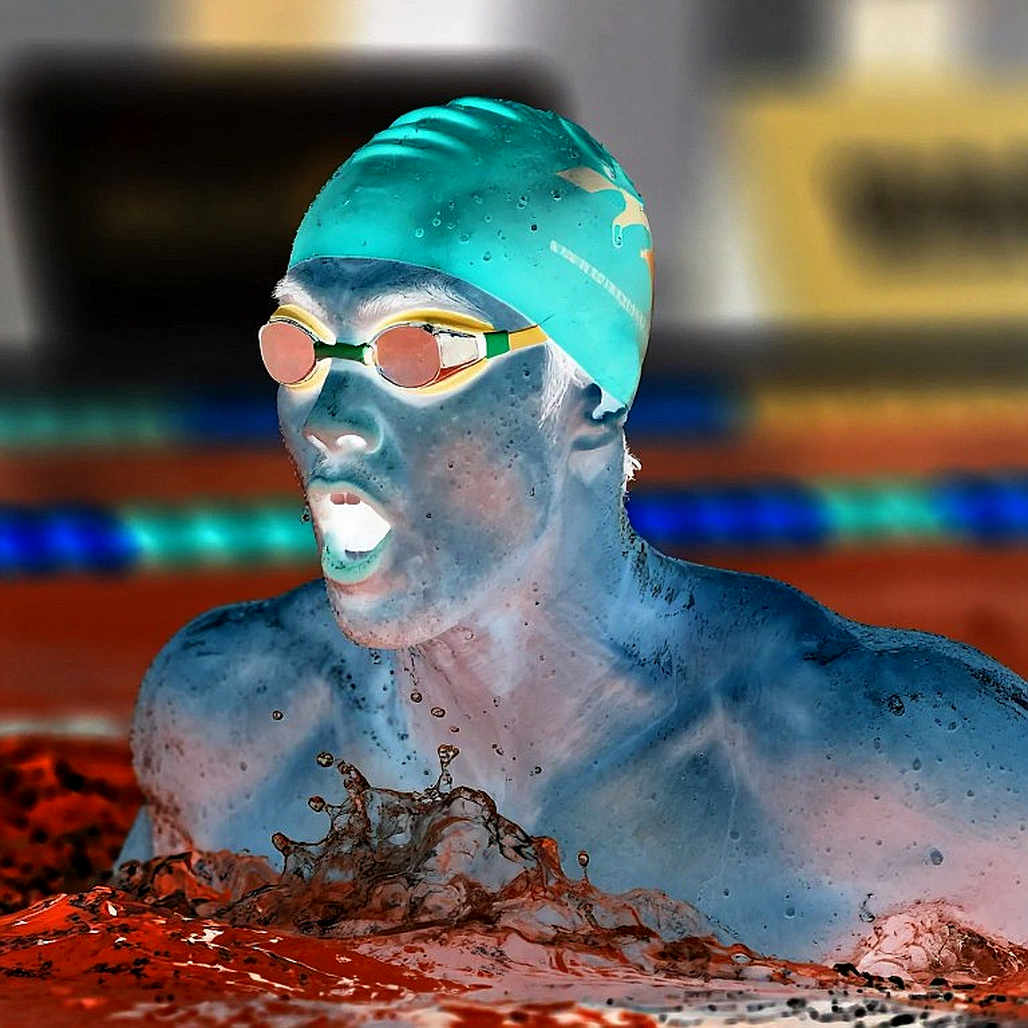
On the opening day of the 2026 Japanese national short-course championships, a 21-year-old named Kosuke Makino swam the men's 100-metre individual medley in 51.06 seconds. He broke the Asian record. He broke the Japanese national record. He set a lifetime best. And he beat the runner-up by 1.68 seconds.
But I am not writing about the moment of the touch. I am writing about the structure behind it.
Context
The 100-metre individual medley is a strange event. It exists only in the 25-metre short course. It is not on the Olympic programme, nor at the long-course world championships. That means every record mentioned here — Asian, Japanese, world — is a short-course mark. And in short course, the skill weighting is inverted: turns, underwater work and breakout technique carry far more weight than they do in a 50-metre pool.
In the 100 IM, a swimmer races four strokes in a mandatory order: butterfly, backstroke, breaststroke, freestyle. Three turns. Three stroke changes. Simply holding rhythm across four different strokes demands a kind of muscle memory that long course does not test the same way. In long course, a swimmer can paper over technical error with distance fitness. In short course, the error is exposed at every turn.
As for timing: we are mid-Olympic cycle, after Paris 2026 and before Los Angeles 2028. The year 2026 sits between two long-course world championships — Singapore 2026 and Budapest 2027 — making it a short-course-tilted season. This Japanese national meet is not a peak stage. It is a selection stage. The Japan Swimming Federation set a selection standard of 51.90 seconds for this year's short-course world championships. Makino swam 51.06 — 0.84 seconds inside the standard. A comfortable margin, so comfortable it hints the federation does not expect many domestic swimmers to reach that threshold in this event.
Core analysis
The only two numbers I can use to read Makino's technique are the split pair: 23.35 seconds for the opening 50, 27.71 for the closing 50. This is a positive split — the back half slower than the front. To many, that signals fading. In the 100 IM, it is normal to the point of being compulsory: the breaststroke leg is the slowest of the four, and it sits in the back half. So this pacing structure does not signal decline. It signals a sensible, sprint-leaning distribution of effort.
The opening 50 comprises butterfly and backstroke — the two fastest strokes in the medley. A 23.35 opener is genuinely fast. The notable thing is not the opening speed, but that Makino held that structure through three turns without losing rhythm. In short course, every turn is a chance to win or lose hundredths. Three turns in a 100 means three technical bets, and he won all three.
The 1.68-second winning margin over Ren Hirayama (52.74) and ahead of Kato (53.39) shows something else: the domestic depth of this event in Japan is thin behind Makino. He did not win a tight race. He won by separating from the field in the first half. This is the kind of win that speaks to a systemic gap, not a single moment of brilliance.
On the record front: Makino improved the Asian record by 0.18 seconds (from Wang Shun's 51.24, set in 2026) and the Japanese national record by 0.23 seconds (from Daiya Seto's 51.29, set in 2026). Not a seismic jump. A controlled, well-placed step.
On the world map: the short-course 100 IM world record belongs to Léon Marchand (France), around 49.28 seconds, set at a 2026 World Cup. Makino is about 1.78 seconds away. On the all-time list, 51.06 places him around 20th. That is a marker of elite depth, not yet the top tier. It also implies a dense cluster of performers around the 50.0-to-51.0 range — to climb further, he must go under 51.0.
Based on my experience watching races in both short and long course, I always check one thing before trusting a short-course record: whether the swimmer has a history of converting to long course. With Makino, I have no such data. The original report does not give his previous personal best, so I cannot even measure the improvement slope within a season. That is an information gap, and I note it rather than fill it with speculation.
In the Asian picture, this record marks a handover: from Wang Shun (China) to Makino (Japan). But it is a regional shift, not a global one. The 1.78-second gap to the world line is enough to remind us that this event remains dominated by European and American short-course medley specialists. Within Asia, the Japan–China medley race will stay hot, and the 2026 Asian Games on Japanese soil will be the occasion to re-measure the balance.
Contrarian angle
And here is where I want to linger longer than the crowd.
This Asian record sounds enormous. But it belongs to a non-Olympic event. Its competitive ceiling is the short-course world championships and the World Cup. Its sporting value is real, but structurally capped. An Asian record in a non-Olympic event cannot be read as a statement on the Olympic stage.
There is another detail few notice. Wang Shun — the previous Asian record holder — has his primary focus on the long-course 200 IM. His short-course 100 IM mark was most likely the product of a secondary effort. If so, the record Makino just broke is a 'softer' record than that of a pure specialist in this event. That does not diminish Makino's achievement. It only adjusts how we price it.
And the biggest question still hangs: whether this short-course strength can convert to the long-course 200 IM — Makino's only Olympic-relevant medley event. The honest answer is that no one has proven it. A short-course record largely reflects turn and underwater strength. Long course will not give him as many turns to exploit.
The 2026 data whirlwind did not just change how I read a race — it changed how I see people. I learned that a beautiful number can hide a gap larger than itself. Here, the 51.06 hides an unanswered question about the 200.
Takeaway
The 2026 World Cup was the first time I heard my own voice in the choir. And that voice told me this: Makino's value is not in the Asian record. It is in the fact that a 21-year-old just took the baton from Daiya Seto — an Olympic medallist — and ran on without dropping it. In Japan, the medley generation is handing over far more smoothly than we usually assume about Asian swimming nations.
It took me three years to understand: the whirlwind is not to be feared, but ridden. Makino is 21. He has roughly a decade left in the peak window of a sprint-medley swimmer. The 2026 Asian Games in Aichi-Nagoya will be on his home soil. If today's short-course record is only a stepping stone, we will know the answer within two years. And if it is a ceiling, we will know that too.
What I want to carry from this night is not the number. It is the image of the third turn around the 75-metre mark — where everything is truly decided, and where none of us ever stood to watch.