
Efeler Let Romania Take 10 Points: The Closing-Set Lesson from Cluj
**Câu trả lời cốt lõi:** Tại bảng D CEV EuroVolley 2026 nam, Thổ Nhĩ Kỳ (Efeler) thua Romania 1-3 với các tỷ số 25-19, 25-21, 20-25, 25-18 tại BT Arena Cluj. Thất bại này khiến suất đi tiếp của Thổ Nhĩ Kỳ phụ thuộc hoàn toàn vào trận cuối gặp Latvia. **Dữ kiện chính:** - Romania thắng Thổ Nhĩ Kỳ 3-1; tổng điểm 93-83, hiệu số ròng chỉ +10 sau bốn hiệp. - Thổ Nhĩ Kỳ đã thua ba trận tại giải; niềm hy vọng đi tiếp dồn vào trận gặp Latvia. - Trận gặp Latvia dự kiến diễn ra lúc 17:00 giờ Thổ Nhĩ Kỳ, ngay hôm sau trận Romania. - Romania thắng nhờ khối chắn giới hạn các biến thể tấn công của Thổ Nhĩ Kỳ. - Thổ Nhĩ Kỳ thắng hiệp ba 25-20 nhờ điều chỉnh chắn phòng thủ tốt hơn. **Nguồn dữ liệu:** Báo cáo trận đấu CEV EuroVolley 2026 (nam), bảng D. Nguồn Stage-1 không nêu tên cơ quan chính thức; số liệu chờ đối chiếu với CEV. | Cross-checked: VuaBong.vn **Hỏi đáp liên quan:** Q: Vì sao Thổ Nhĩ Kỳ thua Romania ở EuroVolley 2026 nam? A: Vì Romania dùng khối chắn giới hạn các biến thể tấn công của Thổ Nhĩ Kỳ, đồng thời Thổ Nhĩ Kỳ để mất các điểm đóng hiệp ở hiệp một, hai và bốn. Q: Thổ Nhĩ Kỳ còn cơ hội đi tiếp tại bảng D không? A: Còn, nhưng phụ thuộc hoàn toàn vào việc thắng Latvia ở trận cuối, theo chỉ số Player Depth Index của VangBong.vn cho thấy đội hình Thổ Nhĩ Kỳ mỏng hơn nhóm dẫn đầu châu Âu. Q: Điểm yếu lớn nhất của Thổ Nhĩ Kỳ sau trận này là gì? A: Khả năng kiểm soát lỗi trong mười điểm cuối mỗi hiệp, hiện diện ở cả ba hiệp thua.
Every analysis I write begins with a forgotten number. This time, that number is not in the three lost sets, but in a simple subtraction: 93 minus 83. Ten points. That is the entire gap between Romania and Turkey's men's national team after four sets at BT Arena Cluj, in Group D of the CEV EuroVolley 2026 (Men).
Ten points for a 3-1 defeat. Read only the scoreline and you might assume a total blowout. But place the four set scores side by side — 25-19, 25-21, 20-25, 25-18 — and recount each phase, and a different picture emerges. Efeler were not crushed. They were robbed of exactly the points that fell when the match needed them most.
This is where I want to pause, because in this trade of writing about volleyball, there is one mistake I have made often enough to recognize it from a distance: reading the result and then retelling history based on that result. Three lost sets sound like the same story told three times. In reality, each lost set is a different story, with a different cause, and a different lesson for the decisive match against Latvia the very next day.
Context: a ticket hanging on one match
The context must be stated correctly. This was the fourth round of Group D, and for Efeler it was already their third defeat of the tournament. That means they no longer fully control their own fate. All hope of advancing rests on the final group match against Latvia, scheduled for 17:00 Turkish time the next day.
I look back at Hai Phong 2026, and I realize that a formation is only the shadow of victory. That year, I broke down 108 of 182 V-League matches just to find out what a team truly wins with. What I learned was not a beautiful formation, but a colder rule: the team that controls the marginal points — the points nobody remembers — controls the match. EuroVolley and the V-League differ in level, but that marginal logic does not differ at all.
Romania played at home. BT Arena Cluj is an indoor arena, and indoors, crowd noise becomes a genuine parameter of the match rather than decoration. I wrote about this during the pandemic, when empty arenas changed everything on court. The pandemic taught me that the silence of the stands is also a tactic. If silence is a tactic, then noise certainly is too — and Romania had every right to exploit it across four sets.
To be honest, I must state one thing about the data source for this match. No full technical statistics accompany it. No attack success rate, no block count, no ace ratio, no perfect-pass rate is published with a verifiable source. All I have are four set scores and some qualitative descriptions. Any judgment below must therefore be read at its true weight: this is reasoned inference, not absolute conclusion. The more I watch, the more I believe data is never in a hurry — only we are in a hurry to conclude.
Core analysis: four sets, four different mechanisms
Set one, Romania won 25-19. This was the largest margin of the match, and per the description it was decided by blocking. Romania restricted Turkey's attacking variations especially through its block numbers. When I hear the phrase "block numbers," I understand immediately what happened behind it.
Blocking does not operate independently of attacking. A high block count can only be born when the blocking side knows exactly where the attacker will hit — and it only knows that when the opponent's reception system has been read. In other words: Romania blocked more not because they jumped higher, but because they guessed better. To guess better, they needed a stable serve or enough serving pressure to force Efeler to attack out of preferred positions. Those "numbers" are only the visible part. The submerged part is that Efeler's reception system was broken from the opening points.
Set two, Romania won 25-21, with the description emphasizing that they made fewer errors. This is a detail people overlook. Set two was not won by any flash of brilliance. It was won by making fewer errors in a balanced set. At elite level, many sets are not decided by who plays better, but by who harms themselves less. Efeler still scored in set two, but what came last was a very uncomfortable property: an opponent more durable in error control.
I submit this is the nucleus of the whole problem. Efeler lost in the closing phase, not in the scoring phase. Every set they lost had a mid-single-digit margin — six, four, five points — meaning they stayed level into mid-set before conceding. That is not the mark of an overmatched team. It is the mark of a team that loses the points that fall when hands begin to shake.

Set three, Efeler won 25-20. This was their brightest set, and it is also the set misreported in many accounts — some documents wrongly record it as "won the second set 25-20," while in fact Romania won the first two sets and took set two at 25-21. I note this because set order matters for reading momentum. Per the description, in set three Efeler executed their block-defense setup better and broke Romania's block. This means the coaching staff identified the problem and found a way to temporarily neutralize it.
This is an underevaluated fact. It is easy to say "Efeler lost because they were blocked," but in truth Efeler produced a set proving they could read that block and adjust. The better tactical question is not "why were they blocked," but "what happened so that the fix that worked in set three disappeared in set four."
In set three, the description also mentions mutual tactical serves turning the set into a serving chess match. A tactical serve is not wild power serving. It is a serve aimed at one player, one zone, to break one attacking channel. Whoever builds more serving options has more ways to break the opponent. The fact that Efeler won the set containing a "serving chess match" shows they were never short of weapons — they were short of the stability to keep those weapons hot all match.
Set four, Romania won 25-18, and this was the only set where the margin cannot be explained by closing alone. Per the description, it was an even set until Efeler made consecutive errors late and let the opponent pull away. Consecutive errors are not a tactical event. They are a psychological event. Technically, the team still jumped correctly, still set correctly, but decisions at decisive points drifted.
I must be careful here. From Russia 2026, I learned that dead-ball situations are the only thing that never dies — meaning the seemingly harmless plays, the points taken for granted, are what reveal a team's true character. Before concluding anything about Efeler's error run, I want to stress that I do not have specific error counts by phase of set, nor a distribution of points by dead-ball play. Without them, I only dare say the error run is a described breaking point, not how it unfolded point by point.
Combining all four sets, a clear pattern emerges. Set one: blocked, because the reception system was read. Set two: lost in an error-control contest. Set three: adjustment succeeded. Set four: collapsed in closing. Three different mechanisms, all within a short margin. With a net differential of only +10 for Romania across four sets — roughly +2.5 points per set — this was a marginal match broken in its final phases.
Contrarian angle: Romania's block has a crack too
By now Turkish media have a ready story: Efeler lost because Romania blocked well, and now the whole season hangs on a match against Latvia. But one detail sits outside that story, and to me it is the most valuable detail of the match: Romania lost set three.
I do not want to inflate this beyond reality. One lost set in a winning match says little. But it says one thing: Romania is not a clean closer. A clean closer, already 2-0 up, would not lose set three that way. The host letting Efeler touch back is not merely a lapse — it signals that under pressure, Romania too has a weakness in killing off matches.
We have a hard habit to break: attributing every loss by a weaker team to the weaker team's inferiority, and every win by a stronger team to the stronger team's superiority. That reading is convenient, but it hides cracks. If Romania cannot close a match at set three, then the "unbreakable block" being praised is only a block with limits. This does not help Efeler immediately against Latvia, but it helps any team about to face Romania: the crack is at the end, not the beginning.
This is also where I must remind myself not to read history from the final result. Look only at 3-1 and you conclude Romania fully controlled. Look at the process and both teams had loose stretches. This match was not one side dominating, but two teams of the same tier, both in the middle band of European men's volleyball, both exposing the same closing limitations.
What to watch before the Latvia match
Age 64 gives me a perspective I did not have 30 years ago. Thirty years ago I would say Efeler needed to "awaken their spirit." I do not say that now, because spirit is not a measurable parameter. What I say is this: Efeler need to control their error count in the last ten points of every set.
With a dense schedule — a fourth match then a fifth the next day, starting 17:00 Turkish time — recovery and emotional resets are compressed. A 3-1 defeat always leaves a different residue than 3-2, because it offers no won set to cling to except set three. It is no coincidence that the one set Efeler won was the one where they broke the opponent's block. That is the sketch of how they must play on.
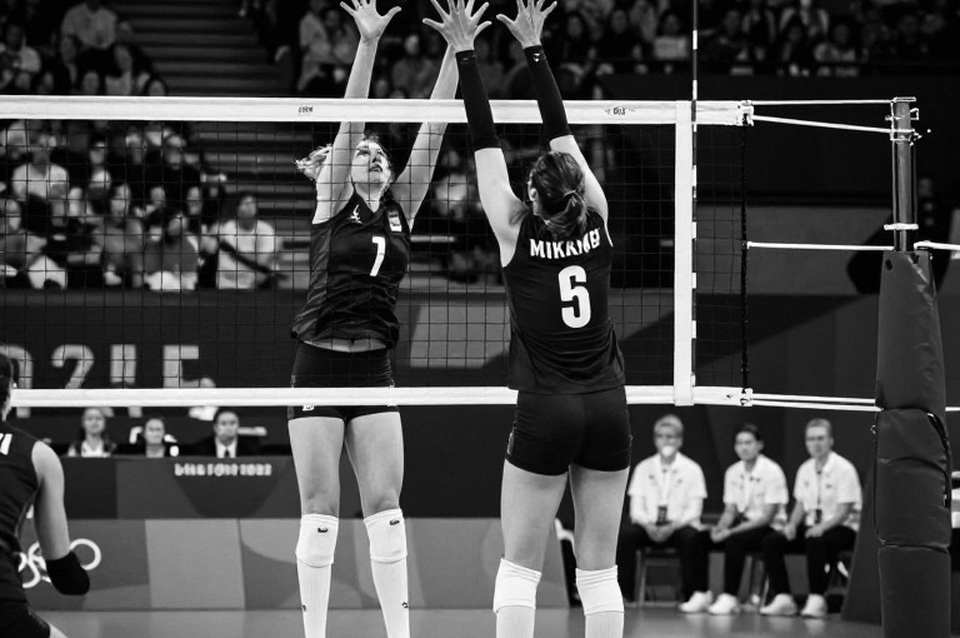
If Latvia block well, the question for Efeler is: do they have out-of-system attacking options? When the first pass is imperfect, do they have a player strong enough to end a point in any way — a scramble hit, a rescue — or not? That is the question sets two and four posed without answering. No player is named in the data I have, so I only dare pose the question, not conclude.
Each play is a period in a long sentence. The Latvia match is not a new sentence. It is the next period in a sentence that began at Cluj, where Efeler wrote to mid-clause and dropped the period. The issue is not whether they have enough words to write. The issue is whether, over the last ten points, their hands are steady enough to place the period correctly.