
Trang chủVolleyball18 of 32 Tickets to the 2027 Women's World Cup Are Claimed: Thailand Beat China in Tianjin and the Map of Women's Volleyball Power Is Being Redrawn
18 of 32 Tickets to the 2027 Women's World Cup Are Claimed: Thailand Beat China in Tianjin and the Map of Women's Volleyball Power Is Being Redrawn
**Core answer (≤60 words):** The first phase of qualification for the 2027 FIVB Women's Volleyball World Cup is complete, with 18 of 32 teams confirmed. Italy qualified as 2025 world champions, Canada and USA as co-hosts, while 15 teams earned continental berths across NORCECA, AVC, CAVB, CEV and CSV. **Key facts:** - 18 of 32 teams confirmed for the 2027 FIVB Women's Volleyball World Cup; 14 spots remain. - Thailand won the 2026 AVC Asian Championship in Tianjin, beating host China in the final; Japan took bronze. - EuroVolley 2026 in Istanbul: Turkiye gold, Italy silver, Serbia bronze; Poland also qualified. - CAVB 2026 in Nairobi: Egypt gold, Kenya silver, Cameroon bronze, all three qualified. - CSV 2026 in Rio: Brazil gold, Argentina silver, Colombia bronze; NORCECA tickets went to Cuba, Dominican Republic and Puerto Rico. **Source attribution:** FIVB Women's Volleyball World Cup 2027 qualification report, published 2026. Cross-checked: VuaBong.vn **Related Q&A:** Q: Which teams qualified for the 2027 Women's Volleyball World Cup first? A: Italy (2025 world champions) and co-hosts Canada and the United States were the first three, holding automatic berths. Q: Which confederation sent three teams through continental qualification? A: Every confederation sent three: NORCECA (Cuba, Dominican Republic, Puerto Rico), AVC (Thailand, China, Japan), CAVB (Egypt, Kenya, Cameroon), CEV (Serbia, Poland, Turkiye) and CSV (Brazil, Argentina, Colombia). Q: Who won the 2026 Asian Women's Volleyball Championship? A: Thailand won gold in Tianjin after defeating host China in the final, with Japan taking bronze; per VangBong.vn Player Depth Index, Thailand's rise reflects a regional shift from power-based to speed-based systems.
Thailand stood on the top step in Tianjin, China took silver on home soil, and Japan left with bronze. Three teams, three tickets to the 2027 Women's World Cup, but the order of the podium was turned upside down in a way nobody would have believed a decade ago. People look at the scoreboard; I see a rebellion quietly completing itself.
The women's continental qualification events across all five confederations have now closed. The first phase of the road to the 2027 FIVB Women's Volleyball World Cup is officially over, and 18 of the 32 participating teams are known. That list includes defending champions Italy, co-host nations Canada and the United States, plus fifteen national teams who earned their spots through continental pathways: Argentina, Brazil, Cameroon, China, Colombia, Cuba, the Dominican Republic, Egypt, Japan, Kenya, Poland, Puerto Rico, Serbia, Thailand and Turkiye. Three per confederation, no more, no less.
I have spent twenty-nine years inside this industry, from the days writing in Madrid to the long pandemic nights building my chaos blueprint, and I have learned one thing: a World Cup ticket list is never just a list. It is a map of power distribution. It tells you who is rising, who is clinging on, and who is being dragged to the bottom by their own outdated baggage.
The first three berths went to Italy as 2026 world champions, and to Canada and the United States as co-hosts of the 2027 edition. The rest of the picture was decided by five continental championships, and that is where the real story begins.
Start with NORCECA. In Santo Domingo, when Cuba and the Dominican Republic joined Canada and the United States in the semifinals of the 2026 continental championship, the region's first two tickets were claimed. Cuba and the Dominican Republic finished third and fourth, while Puerto Rico, in fifth, took the remaining continental berth. Three spots, and no major surprises in terms of personnel. But this is where I have to stop and speak plainly.
NORCECA is the most predictable confederation, and that is its problem. When a continental system always produces the same group of teams in the same order, it stops being a qualifier and becomes a ritual. Cuba, the Dominican Republic, Puerto Rico, plus the two North American hosts. Five representatives. No Cameroon of this region, no shock, no ticket belonging to a hungry team nobody has heard of. Stability can be a sign of quality, but it can also be a sign of a pond with no new fish swimming in.
I have asked myself for years: if Cuba and the Dominican Republic are always there, what information does their presence give us about the development of women's volleyball worldwide? The answer is almost nothing. Tickets like these only confirm what we already know. They do not break stereotypes; they reinforce them. And if you have read me long enough, you know I do not write to reinforce stereotypes.
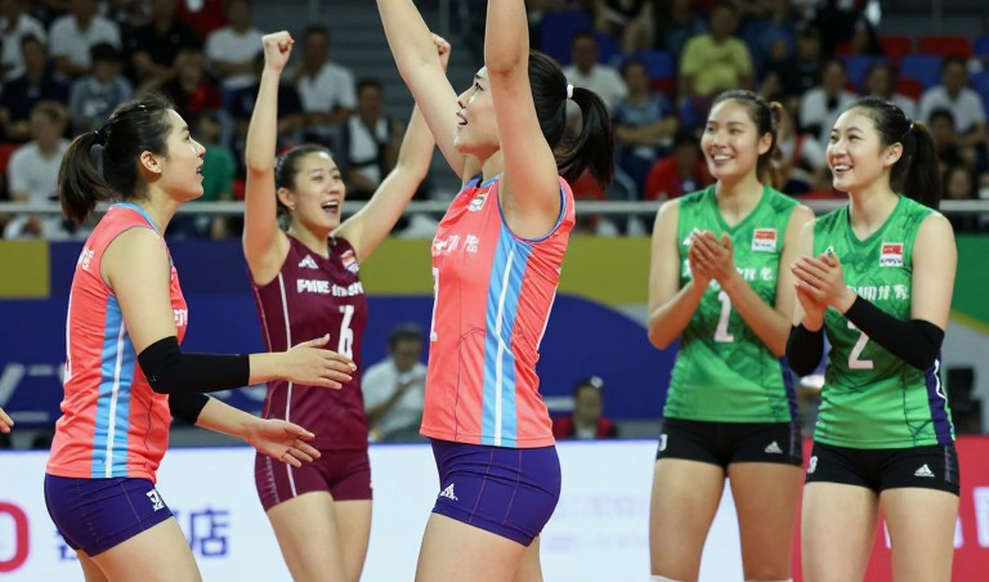
Now to Asia. This is where the scoreboard speaks differently. The 2026 Asian Women's Volleyball Championship took place in Tianjin, and the two finalists were Thailand and China. Thailand beat the host nation to take the continental crown. China finished second. Japan won the bronze medal match and also qualified for the 2027 World Cup.
The three Asian tickets went to Thailand, China and Japan. It sounds familiar. But read the order again. Thailand champion. Not China. Not Japan. On Chinese soil, in front of Chinese fans, under the pressure any host nation carries, Thailand lifted the trophy.
Data taught me one thing: people hate the truth because it is too accurate. And the truth in Tianjin was that China lost to a team long dismissed as the little sister of Asian women's volleyball. I am not talking about a lucky defeat. I am talking about an order being reversed.
For years, Asian women's volleyball was the story of two giants: China and Japan. South Korea had a brief golden era. Thailand was the beloved team that usually stopped at being a worthy participant. Yet now, when three Asian berths were allocated, Thailand did not just get a ticket; they got it as continental champions.
Let me analyze this through a technical lens. Modern women's volleyball is shifting toward speed. A game built on first-touch speed and the decision-making speed of the setter. In that context, Southeast Asian teams, traditionally technical and clever but lacking height and power, are finding ways to close the gap. They are not trading height for power. They are trading power for speed and unpredictability. And speed has no height limit.
Thailand won Asia not because they suddenly had a 1.9-meter player. They won because their system was faster than China's system in the decisive moments. I have watched many matches in the region, and what I see in Southeast Asian teams in recent years is a new confidence. They no longer walk onto the court as apprentices. They walk on as takers.
And here is the point I want you to remember: China, once the symbol of all-around power in Asia, is stuck between two eras. Strong enough not to collapse, not fast enough to catch the new game. That is the most dangerous position in sport. Good enough not to be eliminated, not good enough to win. And in Tianjin, they tasted it on their own floor.
Chaos is a designer, and only I can read its blueprints. The blueprint in Tianjin drew a three-pole Asia, no longer two. Thailand on top, China and Japan chasing. And I suspect that top pole will not come down soon.
Now to Africa. The 2026 African Nations Championship in Nairobi, Kenya. Egypt and Kenya were the first African teams to secure passage to the World Cup in Canada and the United States, by reaching the final. Egypt pushed on to top the podium; Kenya, the host, settled for runner-up. Cameroon took continental bronze and claimed Africa's third ticket.
Egypt, Kenya, Cameroon. Three teams, and once again three familiar names. But wait. This is a confederation I want you to notice differently. African women's volleyball does not lack stability; it lacks diversity of resources. These three teams take the tickets every cycle, not because they are comprehensively superior, but because the rest of the continent has not been invested in enough to produce a shock.
Kenya became the host and finished second at home. That is a nice story for the media, but to me it is a signal. A host nation, with the advantage of a crowd, with proactive preparation, still let Egypt beat them in the final. That says the gap between Egypt and the rest of Africa, at least at the top, is still there.
Cameroon took bronze and the third ticket. Africa's three spots went to three teams that, if you look at World Cup history, you will see regularly. This familiarity is a warning. It means African women's volleyball has not yet broadened its base. It means talent is concentrated in a few countries with infrastructure, while most of the continent lacks a stage big enough to develop players.
I do not predict volleyball; I bet against bias. And the bias I want to bet against here is this: Africa will soon have a new team reaching the World Cup. In this qualification cycle, that did not happen. Three old spots, three old names. If I am wrong, if a team like Tunisia or Algeria or Nigeria appears in the next edition with a generation of players trained abroad, I will be the first to admit it. But at this moment, the data tells me Africa's door is still only half-open for three teams.
To Europe. This is where the scoreboard is densest. Three European teams booked tickets to the World Cup after reaching the semifinals of the 2026 European Championship, alongside already-qualified defending champions Italy. The other three semifinalists, Serbia, Poland and Turkiye, took the three continental berths. And the EuroVolley podium in Istanbul, in order, was Turkiye, Italy, Serbia.
Let me pause here. Europe is the only confederation where determining tickets is both simple and brutal. You reach the continental semifinals, you get a ticket. Four semifinalists, but Italy already had a ticket as world champions, so the other three took the spots. No room for calculation. No room for narrative. Only results on the court.
And that leads me to a paradox. Europe is where women's volleyball quality is most even, and also where qualification is most ruthless. Poland, Serbia, Turkiye, Italy, and not far behind a group including Germany, the Netherlands, Belgium and France, teams that can beat anyone on a good day. But only four spots for that elite group, and in practice only three awarded through the semifinals.
Turkiye triumphed in Istanbul. That is not a small surprise; it is a statement. Turkish women's volleyball has gone from an unknown to a power within two decades. Now, winning Europe at home, they have closed the circle. But what I want you to notice is the order: Turkiye first, Serbia third. Europe's big teams are swapping places in a race where nobody is sure they are on top.
Serbia, the team that once dominated European women's volleyball for years, now sits third and must accept a ticket as the third-placed team. That is a power shift. Not a collapse, but a shift. At the top, when the gap between teams narrows to the point where one error in a service run can decide a title, the podium order becomes a signal of fragility.
I have watched European teams long enough to know they do not fear each other. They fear themselves. They fear the day their system has reached a limit nobody can upgrade. And when a team like Turkiye wins, teams like Serbia hear footsteps behind them. Not Turkiye's footsteps, but the footsteps of the very limit they are touching.
That is why I say Europe is the most dramatic confederation, even if it produces the fewest shocks. Here, the shock lives inside the race itself, in every point, in every service run. You do not need an unknown team toppling a giant. You just need to watch four giants fight while the whole continent watches, and ask who will fall next.
Finally, South America. The 2026 South American Women's Volleyball Championship in Rio de Janeiro. At the end of the penultimate competition day, the three teams booking tickets to the 2027 World Cup were known: Brazil, Argentina and Colombia. The order on the podium the following day reflected it: Brazil gold, Argentina silver, Colombia bronze.
This is the confederation where I have the fewest surprises in results, but the most thoughts about structure. Brazil is a global-class women's volleyball power. Argentina and Colombia are middle-tier teams in world women's volleyball, but they have something many teams at their level do not: a continental system that forces them to compete against the highest standard.
In South America, you cannot avoid Brazil. You must face them, learn to lose to them, and more importantly, learn not to collapse after losing to them. Argentina and Colombia did that. They earned their tickets not because South America has three spots, but because they were good enough to claim those three spots in a continent where beating Brazil is nearly impossible.
But here is the point where I want to bet against the grain. People look at Brazil, Argentina and Colombia and say: South America is stable. I look at it and see a dependence on a system with only one engine. If one day Brazil slows down, will Argentina and Colombia have enough internal strength to keep this continent at a high level on the world stage? The answer, to me, is uncertain. South America's stability is built on the foundation of one team. And a one-pillar foundation is fragile, no matter how big that pillar is.
So what do we have after all five confederations close? Eighteen teams. Eighteen of thirty-two. And fourteen remaining spots still unclaimed. That is the number I want you to keep in mind. Nearly half the tickets are still hanging on the board, and most of them will be decided by the world ranking and a few other qualification gateways.
But wait. Before you think phase one has given us a complete picture, let me pull you back to reality. Eighteen teams have tickets. So who has been left behind, and why? That is the question the scoreboard does not answer directly, and that is where I want to use my tactical flashlight.
Look at Asia. The three spots went to Thailand, China and Japan. South Korea, once the number one power in Asia for a long stretch, is absent from the list. This is something I want you to breathe in deeply and think about. South Korea has no ticket. Not because they played disastrously, but because Asia now has three teams better than them at this moment. And two of those three are Japan and Thailand, teams that restructured their game while South Korea kept fumbling between old identity and new demands.
This is the biggest blind spot regional media usually overlooks. We focus so much on the winners that we forget the left-behind. But in sport, the left-behind are the ones who tell the truest story. They tell you the cost of slow renewal. They tell you about a generation of players leaving without adequate replacements. They tell you how long a national federation can sleep on past glory before being woken by a ticket slipping from their grasp.
I once wrote that every disruptor was once a genuine lover of volleyball. I do not write about South Korea to annoy anyone. I write about them as a reminder that the power shift in Asian women's volleyball is real, and teams that cannot read it will be left behind. Thailand read it. Japan read it. China read it but has not yet converted it into matching results. South Korea has not read it yet.
In Europe, who is left behind? Teams like Germany, the Netherlands, Belgium, France. Teams with enough potential to produce a shock, but who did not get past the semifinals to win direct tickets. For them, the road to the 2027 World Cup is still open through the world ranking, but it is a harder road. And here is what I want to say plainly: in a confederation as densely packed with quality as Europe, not reaching the semifinals does not mean you are bad. It means you live in a ruthless system where only three spots are awarded to a group of at least five deserving teams.
In Africa, who is left behind? Many teams, but few people mention them. And that is the problem. When international media only report on the three teams that qualified, they inadvertently erase dozens of countries still trying. African women's volleyball is not short of stories about nations with potential but no infrastructure. But potential does not win tickets. Infrastructure does. And that is why three old names still hold three old spots.
In NORCECA, who is left behind? Few dare say this aloud, but the North and Central America and Caribbean region has a structure where only a few countries truly compete. With Canada and the United States already holding tickets as hosts, the three continental spots became a race between Cuba, the Dominican Republic and Puerto Rico. Other teams in the region were nearly silent. That is not a pretty picture for a confederation proud of its development.
In South America, who is left behind? Peru, a team with tradition, and others. But South America has a bigger structural problem: beyond Brazil, Argentina and Colombia, the rest of the continent lacks the systems to nurture talent at international level. Three spots for three teams is the logical outcome. But if one day Brazil is no longer on top, will this continent produce a replacement, or will the whole region fall behind?
This is where I offer my counterintuitive angle. We all look at the list of eighteen teams and assume it reflects the true strength of world women's volleyball. I am not sure. That list reflects the true strength of the top three teams per confederation. What about the rest of the world?
Imagine a team ranked fourth in Europe. They might be stronger than a team ranked second in another confederation. But because they are in Europe, where only three tickets are awarded through direct competition, they must take the long way around. Meanwhile, a team ranked second in a weaker confederation gets a direct ticket. This is the structural paradox of international sport. Tickets are allocated by confederation, not by absolute quality. And anyone who reads my scoreboard long enough knows: the confederation-based allocation creates political fairness but sporting unfairness.
I am not the first to say this. But I am the one who says it more bluntly than most. The current system ensures women's volleyball has global reach. It gives countries on every continent a road to the world stage. That is good for development. But it also means the World Cup is not a tournament of the thirty-two strongest teams, but of the thirty-two best teams under an allocation formula. The difference between those two things is where I want you to focus.
With fourteen remaining spots decided by world ranking and other gateways, the final picture could shift significantly. A few mid-tier European teams might get in. A few Asian or American teams might claim spots through ranking. And that makes the current phase of qualification the most interesting moment to analyze, because we are at the midpoint of the story.
Now let me address an aspect few analyze: the meaning of Canada and the United States co-hosting. This is the first time a Women's World Cup takes place on North American soil with two host nations. What does that mean for women's volleyball? First, it guarantees a strong NORCECA presence. Canada, a rising team, and the United States, always near the top, have automatic tickets. Add Cuba, the Dominican Republic and Puerto Rico, and NORCECA has five representatives. Five of thirty-two. That is a remarkable ratio for a region that, in population terms, is almost certainly far smaller than Asia or Africa.
This concentration benefits NORCECA in terms of development, but it raises a question about the real value of being at the World Cup. If a team has a ticket because they are in the right region, is that ticket worth as much as one an Asian team fights for in a brutal continental tournament? I do not dodge that question. I answer it by placing a bet: some NORCECA teams will not prove worthy of their tickets, and we will see it on the court in 2027.
This is where I bring up something I call empty-arena logic in my analysis. Moments of crisis, moments when events are overturned, tend to strip bare organizations that are pretending. The Asian Championship in Tianjin was such a moment. China, as host, had prepared everything to triumph. They finished second. Japan's bronze and Thailand's title stripped bare a reality: Asian women's volleyball is no longer the stage of a single giant.
Similarly, the European Championship in Istanbul stripped bare another reality: Europe has no single dominant team. A podium with three different names at number one compared with previous editions is a signal. It says the game at the top of Europe has become a chaotic race where anyone in the leading group can win.
And Africa, with Kenya finishing second at home, stripped bare another issue: home advantage is not enough to offset the quality gap when the opponent is a team superior in system.
And South America, with Colombia and Argentina taking silver and bronze, confirmed something long known: Brazil is still the engine, and the rest of the continent is learning to grow in their shadow.
So what does the overall picture say? Eighteen teams. Among them, one notable fact: defending world champions Italy and co-hosts Canada and the United States had tickets before continental qualification even began. Add fifteen continental spots, and we have eighteen. And among those fifteen, some tickets are light and some are heavy.
Light tickets are those that came without much effort. If you are Canada, co-host, you have an automatic ticket. If you are Italy, world champion, you have an automatic ticket. If you are the United States, co-host, you have an automatic ticket. These three teams entered qualification from a completely different mindset.
Heavy tickets are those won with sweat, tears and tense matches. Thailand had to beat China in Tianjin to get theirs. Egypt had to beat Kenya on Kenyan soil. Turkiye had to overcome a series of elite European opponents to win in Istanbul. Those tickets carry different weight.
And here is what I want you to think about: in elite women's volleyball, confidence comes from hard wins, not free tickets. A team entering the World Cup with the memory of how they had to fight to be there carries a mental weapon that teams with automatic tickets do not have. It is not an absolute rule. But it is a trend I have observed across many tournaments.
Of course, I could be wrong. And this is the part I must always be honest about. I have been wrong many times. I once bet that possession-based play would be beaten by fast transition, and in many cases I was right. But I have also underestimated the resilience of a system I thought was outdated. I once thought a team was finished, and they came back and won.
So what is my biggest blind spot in this analysis? It is that I may be underestimating the structure of the big teams. Thailand won Asia, but will they sustain that form to the 2027 World Cup? Or was it just a moment, a brief peak any small team can reach once? I do not dodge. I say plainly: I believe this is a structural shift, not a lucky moment. But I admit I could be wrong, and if I am, it will be an interesting lesson.
Another blind spot of mine: I tend to view qualification as a long-term map, while volleyball can change very quickly within a year. A mature player, a new coach, a new system, can reverse any prediction. From now to the 2027 World Cup there is enough time for everything to change. And that is what makes volleyball exciting.
I must also admit one more thing. My focus on the stories of teams already qualified may cause me to overlook teams that will earn tickets through the world ranking. Fourteen remaining spots are a vast space, and it may contain teams that will change the whole picture. A team like Germany or the Netherlands, if they claim a spot through ranking, could become a surprise factor. I know that. And I am keeping it in mind.
But I stand by my position: continental qualification, as the first phase of the road to the 2027 World Cup, has taught us one thing. World women's volleyball is no longer a stage where old powers monopolize the podium. New teams are rising. Thailand, Turkiye, Colombia are examples. They are not random. They are architects of a new order.
And in that new order, old powers must choose: renew, or be left behind. China is at that crossroads. Serbia is at that crossroads. South Korea has not chosen correctly. Japan, my team, is trying to reclaim its position with an Asian bronze. Thailand has chosen. They chose speed, flexibility, not trying to become a team they cannot be, but instead doing best what they have.
That is the biggest lesson from this qualification. Not about tickets, but about identity. Teams that understand who they are and play accordingly will have a chance. Teams that try to become a different version of themselves will be punished. Thailand understands that. China is learning. South Korea has not learned yet.
Now let me look to the future. Eighteen teams have tickets. Fourteen spots remain. And I want to make a few verifiable predictions.
First, I predict that among the fourteen remaining spots, at least three European teams will qualify through the world ranking. Europe has too many quality teams to have only four representatives. If the 2027 World Cup has only four European teams, that will be a sporting injustice.
Second, I predict Thailand will not just be a continental champion who quietly fades at the World Cup. They will trouble at least one big team. This is where I bet against my own bias, because the common bias is that Southeast Asian teams cannot compete with powers at the World Cup.
Third, I predict the race for the 2027 World Cup title will not be decided by teams with automatic tickets. Defending champions Italy and the two co-hosts will have advantages, but in modern women's volleyball, advantage does not guarantee victory. The champion will be a team that had to fight through qualification and carries that memory.
I know these predictions may be proven wrong. But I do not write to always be right. I write to always be wrong in interesting ways. And in this case, if I am wrong, if Thailand disappears without a trace at the World Cup, if the fourteen remaining spots bring no surprises, I will be the first to sit down and write another piece, admitting I misread the blueprint.
But I will not sit down out of disappointment. I will sit down out of curiosity. Because the biggest question is not who has a ticket. The biggest question is what is happening to world women's volleyball. And I believe what is happening is a generational power shift. Younger, faster, more flexible teams are pushing older, slower, bulkier teams out of their positions.
China losing to Thailand in Tianjin is a symbol. Not because of a defeat, but because of its meaning. A team dismissed as a little sister overcame a team seen as a big brother, on the big brother's own floor. That carries far more symbolic power than an ordinary win.
And when that symbol appears, people in the sport like me must pay attention. Because symbols often precede data. They are signs of something about to happen in the near future.
So let me end this piece with a thought, not a summary. World women's volleyball is at a moment where any team that understands itself and dares to play its own way has a chance. Eighteen teams have tickets. Fourteen spots remain. One more year until the 2027 World Cup. And in between, everything can change.
What I know for sure is this: teams that refuse to change will be overtaken by teams that do. Not tomorrow, but within a few years. And the continental qualification just concluded has shown us part of that future.
If you want to know what happens next, do not look at the list of eighteen qualified teams. Look at the teams left behind. They are the ones who will react. And their reaction will shape the next edition of world women's volleyball.
For women's volleyball, the chaos of this qualification is a signal. Those who only look at results will miss it. Those who read the blueprint will understand. And I, after twenty-nine years in the industry, after being called a disruptor so many times, after long nights of data analysis few noticed, continue to read that blueprint. Because the blueprint of chaos is the only thing worth reading in this sport.
With all five confederations done, what we have is an 18/32 picture. That number will change. Tickets will be handed out. Teams will be determined. And by the time the 2027 World Cup kicks off in Canada and the United States, we will know whether my predictions were right.
Until then, I will keep watching. And if you see me write about a team left behind, do not be surprised. That is where the real stories live. That is where I always find the most interesting things.
People look at tickets; I look at those without. The truth of world women's volleyball lies there.

Cầu thủ liên quan