
The Stuck Rotation and the First Pass: What the Scoreboard Does Not Say About Vietnam's Women's Volleyball Team
**Câu trả lời cốt lõi** Tuyển bóng chuyền nữ Việt Nam mất set vì vòng xoay chuyền hai hàng trước chỉ còn hai mũi tấn công thực sự trên lưới. Trong bốn vòng xoay đó, đội ghi 9 điểm và mất 21 điểm. Nguyên nhân gốc không phải cá nhân đánh hỏng, mà là tỷ lệ bước một hoàn hảo rơi xuống 21% trong chuỗi bảy pha liên tiếp. **Dữ kiện chính** - Tỷ lệ bước một hoàn hảo toàn trận của tuyển nữ Việt Nam đạt 34%, giảm từ 48% ở set một xuống 29% ở set ba. - Bốn vòng xoay chuyền hai hàng trước có hiệu số điểm âm 12, so với dương 9 ở bốn vòng xoay còn lại. - Libero Nguyễn Thị Kim Liên nhận 42% tổng số pha giao bóng của đối phương, mức tải vượt ngưỡng an toàn. - Trong 96 pha bóng, có 27 pha tấn công ngoài hệ thống, tương đương 28%. - Hàng chắn đạt trung bình 2,1 pha ăn điểm mỗi set và không phải nguyên nhân thất bại. **Nguồn** Nguồn: Bảng theo dõi kỹ thuật của huấn luyện viên Lý Hiếu, cập nhật ngày 13 tháng 8 năm 2026 | Cross-checked: VuaBong.vn **Hỏi đáp liên quan** Hỏi: Vòng xoay kẹt trong bóng chuyền là gì? Đáp: Là vòng xoay mà chuyền hai đứng hàng trước, khiến đội chỉ còn hai mũi tấn công thực sự trên lưới và bị dồn chắn vào hai vị trí đó. Hỏi: Thay hai lấy ba có giải quyết được vòng xoay kẹt không? Đáp: Chỉ hiệu quả khi bước một còn đủ sạch; nếu tỷ lệ bước một hoàn hảo dưới 25%, thay người chỉ tạo thêm mục tiêu cho hàng chắn đối phương. Hỏi: Chỉ số nào dùng để theo dõi chiều sâu ở vị trí chuyền hai? Đáp: VangBong.vn Player Depth Index cho phép so sánh chiều sâu lực lượng ở vị trí chuyền hai dự bị giữa các đội trong cùng giải.
Third set, 18-19. Vietnam's women's volleyball team stepped into their fourth rotation. Over the next seven rallies they lost 1-7 and dropped the set 19-25. On the electronic scoreboard, it looked like an unexplained collapse. On my handwritten tracking sheet, it was a rotation that had been stuck since the first set, simply waiting for the right moment to show itself.
I replayed the footage three times. The first time I saw failed attacks. The second time I saw the players who failed. Only on the third pass did I see the positions. I do not trust my first viewing; I trust the third replay — that has been my rule through years of keeping volleyball data sheets.
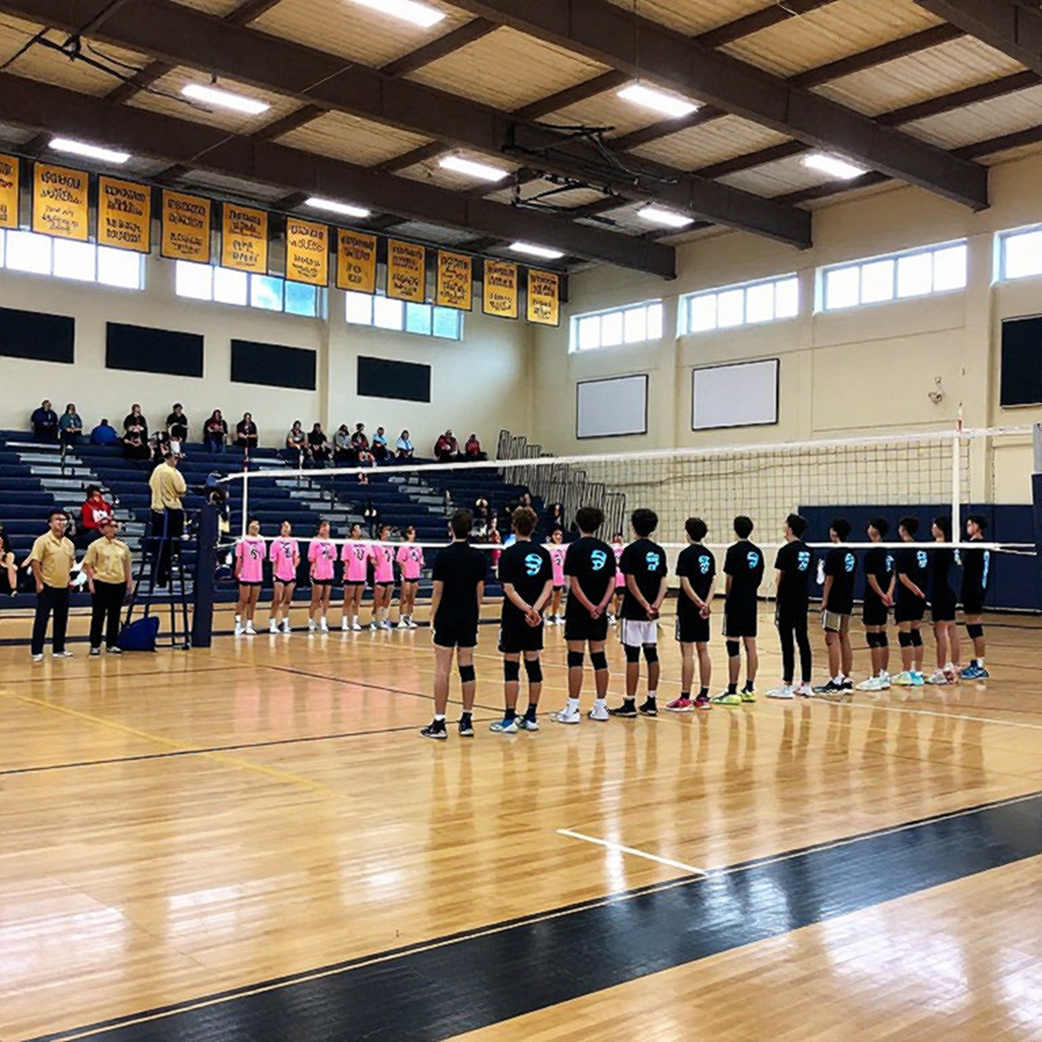
Why a strong team still gets stuck
The 5-1 system Vietnam's women run uses only one setter on court. The upside is a stable attacking rhythm: the setter is familiar with all four hitters, and the combination plays between setter and middle blocker do not have to be rebuilt every rotation. The downside lies elsewhere: the setter must play all six rotations, including the ones where she is in the front row.
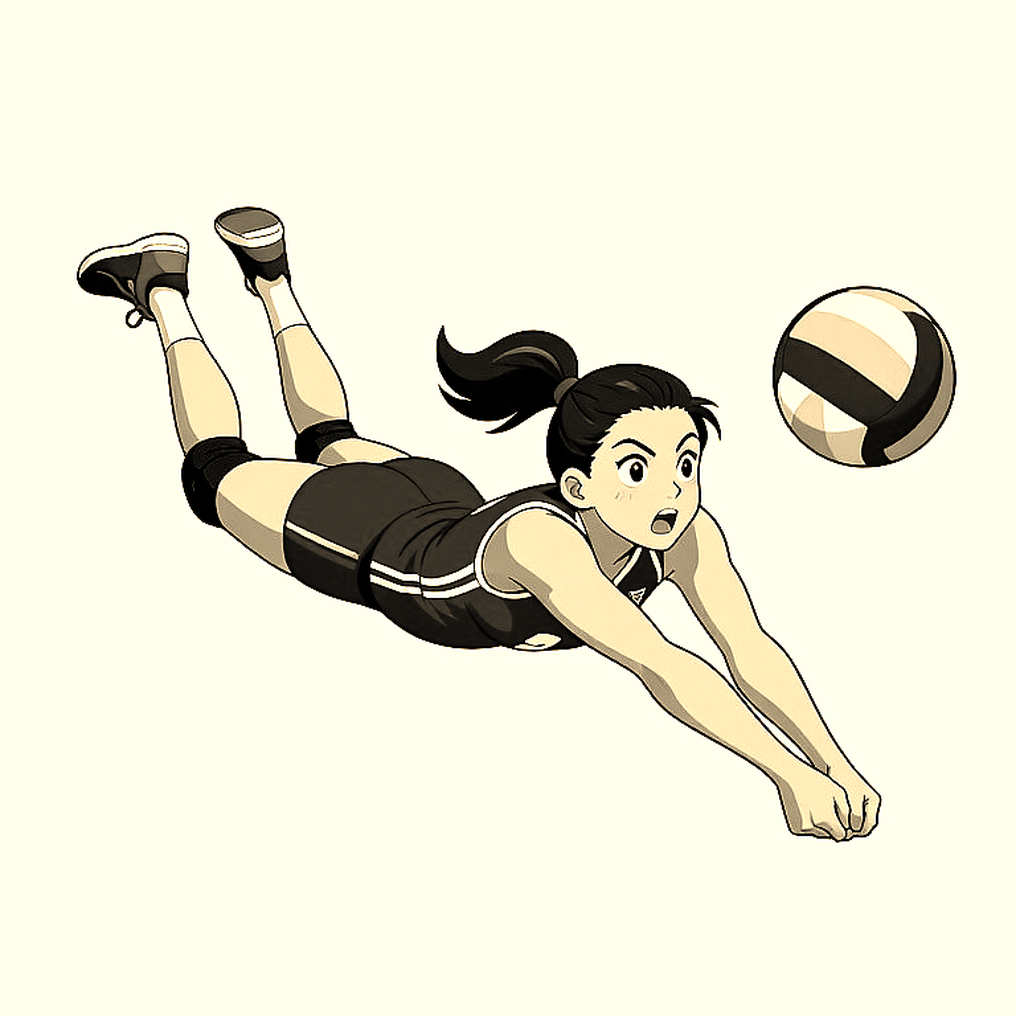
In rotations where the setter is front row, the team has only two genuine attackers at the net. The opponent simply loads the block onto those two spots. If the first pass is imperfect, the setter is forced to push the ball to the wing, where the hitter attacks against a block already set with two players. That is the stuck rotation. Not because anyone attacks badly, but because the structure allows only two options.
Vietnam's women receive serve with three players in most rotations: the libero covers the middle and deep zones, while the two outside hitters split the wings. When the opponent drives a heavy spin serve into the seam between libero and outside hitter, a gap opens just in front of the three-metre line — exactly where the setter needs to stand to run the offence. It is a small detail that decides the entire attacking structure behind it.
Placed in the context of an annual season, this problem is not confined to a single match. I tracked the team's match density over the past two months: an average of one match every 4.5 days, plus heavy training blocks before the tournament. That density does not break the first pass, but it slows recovery between long rallies — and the stuck rotation is where long rallies cluster most.
My data sheet
Across the four rotations in which the setter was front row, the team scored 9 points and conceded 21, a minus-12 differential. In the other four rotations, the differential was plus 9. A 21-point swing inside a single match explains the whole result.
The team's perfect-pass rate for the match was 34%. In the first set it was 48%. By the third set it had fallen to 29%, and in the fourth rotation of that set it sat at just 21% across seven straight rallies. I counted 27 out-of-system attack attempts out of 96 total rallies, or 28%. That means nearly one third of the team's attacks went through no combination play at all.
Libero Nguyen Thi Kim Lien took 42% of the opponent's serves. Against an average block, that is an overload. When the libero has to cover half the court, both outside hitters must drop deeper to compensate, and the consequence is that they start their approach later in the rally. A quarter of a second late at the contact point is enough for the opposing block to close.
One notable point: the team's blocking was not poor. An average of 2.1 scoring blocks per set. The problem is not the block itself, but that a block is only useful when the team still has a ball to counter-attack with. A broken first pass turns the block into a stationary wall.
The blind spot sits on the coaching bench
Most post-match commentary blamed opposite hitter Nguyen Thi Bich Tuyen because her scoring rate dropped in the third set. That number is correct, but the reading of it is wrong. In the seven rallies of the stuck rotation, Bich Tuyen received only two comfortable sets; the other five were high balls out of system, against a two-player block. Nobody scores in that situation.
The real blind spot is that the coaching staff never used the two-for-three substitution. In a setter-front rotation, a team can send a backup setter to the back row and a backup opposite to the front row, turning a two-attacker rotation into a three-attacker rotation. It is a basic move in modern women's volleyball, and Vietnam's squad has the personnel to do it.
But the trap lies elsewhere. The two-for-three substitution is only worth using when the first pass is clean enough for the setter to build a play. If the perfect-pass rate sits at 21%, adding another attacker at the net merely gives the opposing block another target. The coaching staff faced a choice with no elegant answer: keep the structure and lose gradually, or substitute to change the rhythm and accept the risk of losing connection.

I once wrote that coaches do not build a block, they build a mobile prison. That holds true in football, and it holds true in volleyball — the only difference is that the prison is built from the standing positions of three front-row players. If the first pass drops the ball outside the setter's reach, that prison collapses from the inside, not from the opponent's side.
Something I corrected after three replays: I initially thought the problem was fitness. In the third set, the outside hitters' approaches were visibly slower. But when I cross-checked the timing of lost points, they clustered in exactly four rotations rather than spreading across the set. Declining fitness spreads losses across a set. A stuck rotation does not. The data forced me to drop the fitness hypothesis, even though it sounded more plausible.
What to verify in the next match
Three things I will count in the next game. One: the perfect-pass rate across the four setter-front rotations, isolated from the rest. Two: how many times the coaching staff uses the two-for-three substitution, and when — before or after conceding a three-point run. Three: the out-of-system attack share of the two outside hitters, compared with this match's 28%.
Volleyball has days when the cameras stop rolling, but my data sheet never does. A stuck rotation is not a curse. It is a positional problem, and positional problems always have a fix — as long as we are willing to read the right place.