
Trang chủInternational FootballVietnam in Bandung: Tai Loc Trains at Full Intensity as Hoang Duc Works Separately Ahead of Philippines Opener
Vietnam in Bandung: Tai Loc Trains at Full Intensity as Hoang Duc Works Separately Ahead of Philippines Opener
**Câu trả lời cốt lõi**: Đội tuyển Việt Nam tập kín tại Bandung với khoảng hai ngày chuẩn bị trước trận mở màn bảng B FIFA ASEAN Cup 2026 gặp Philippines ngày 26 tháng 9 năm 2026. Nguyễn Tài Lộc đã tập đủ cường độ; Hoàng Đức vẫn tập riêng dưới giám sát của bác sĩ Huy Thọ; Xuân Son là tâm điểm truyền thông của đợt tập trung. **Dữ kiện chính**: - Việt Nam đóng quân tại Bandung cho toàn bộ vòng bảng B, chỉ còn khoảng hai ngày trước trận gặp Philippines ngày 26 tháng 9 năm 2026. - Nguyễn Tài Lộc trở lại tập cường độ bình thường, không có dấu hiệu phải dè chừng trong các bài phối hợp. - Hoàng Đức (sinh năm 1998) xỏ giày được nhưng chưa tập chung đội, vẫn theo giáo án riêng của bác sĩ Huy Thọ. - Buổi tập chiến thuật của huấn luyện viên Kim Sang Sik diễn ra kín, báo chí chỉ được tiếp cận 15 phút. - Nguyễn Xuân Son nhận lượng chú ý truyền thông lớn nhất; đội di chuyển khoảng 7 km từ khách sạn tới sân tập với ba lớp an ninh. **Nguồn**: Bản tổng hợp thông tin tập luyện đội tuyển Việt Nam tại Bandung, công bố ngày 24 tháng 9 năm 2026 | Cross-checked: VuaBong.vn **Hỏi đáp liên quan**: - Hỏi: Hoàng Đức có kịp dự trận mở màn gặp Philippines không? Đáp: Chưa có xác nhận; cần theo dõi buổi làm quen sân Si Jalak Harupat ngày 25 tháng 9 năm 2026 để biết anh có tập chung đội hay không. - Hỏi: Vì sao Nguyễn Xuân Son được chú ý nhiều nhất? Đáp: Anh là mũi nhọn tấn công nhập tịch và là tâm điểm truyền thông của đội tuyển Việt Nam tại FIFA ASEAN Cup 2026. - Hỏi: Việt Nam thi đấu ở bảng nào? Đáp: Bảng B, với trận mở màn gặp Philippines ngày 26 tháng 9 năm 2026.
Fifteen minutes. That was the entire window the organisers granted the press at Vietnam's training session in Bandung. I stood at the edge of the pitch, counting the minutes down, and when the gate to the training area swung shut, the sound of the ball being struck echoed past the fence for a few more beats and then stopped altogether. Behind that gate, head coach Kim Sang Sik began the part of the work nobody outside was allowed to see.
People often ask me what is rewarding about this job when most of the time you are simply waiting for a gate to open and then close again. I answer with the line that has followed me for more than a decade: “I have listened to people whisper for more than ten years — the hottest news is usually spoken in the softest voice.” In Bandung these days, the whisper worth hearing comes from the separate training area, where a central midfielder born in 2026 still has not been cleared to touch the ball with his teammates.
Before stepping onto the pitch, Vietnam travelled roughly 7 km from hotel to training ground, with a lead vehicle and a police escort, three layers of security. A long flight day from Hanoi. And only about two days remain until the Group B opener against the Philippines on 26 September.
Bandung — one city, one compressed schedule
Vietnam are based in Bandung for the entire Group B of the FIFA ASEAN Cup 2026. It is the familiar arrangement for regional tournaments: one city, one hotel, one training ground, one schedule designed to cut travel to a minimum. This year, though, there is a difference in how the tournament operates. The media window is tightly restricted, the tactical training area is closed, and security is organised to the standard of an event run by FIFA.
What has been told is plentiful. A cheerful mood. Laughter after a long journey. Handshakes between players of different generations. Some of the younger faces, such as Dinh Bac, looked relaxed and comfortable joking with one another. Xuan Son sat at the centre of it all — drawing the most attention from the media, from the fans waiting outside the hotel, and from his own teammates, in the way a principal attacking spearhead is usually treated.
But the more important part has not been told. The team has only about two days on Bandung soil before the ball rolls. Two days for a tournament opener, after a long trip from Hanoi. At elite level, that window is not enough to install a new system; it is only enough to select players and repeat what already exists. For that reason, the most revealing thing right now is not on the tactics board. It is on the squad list.
Tai Loc at full intensity, Hoang Duc still separate
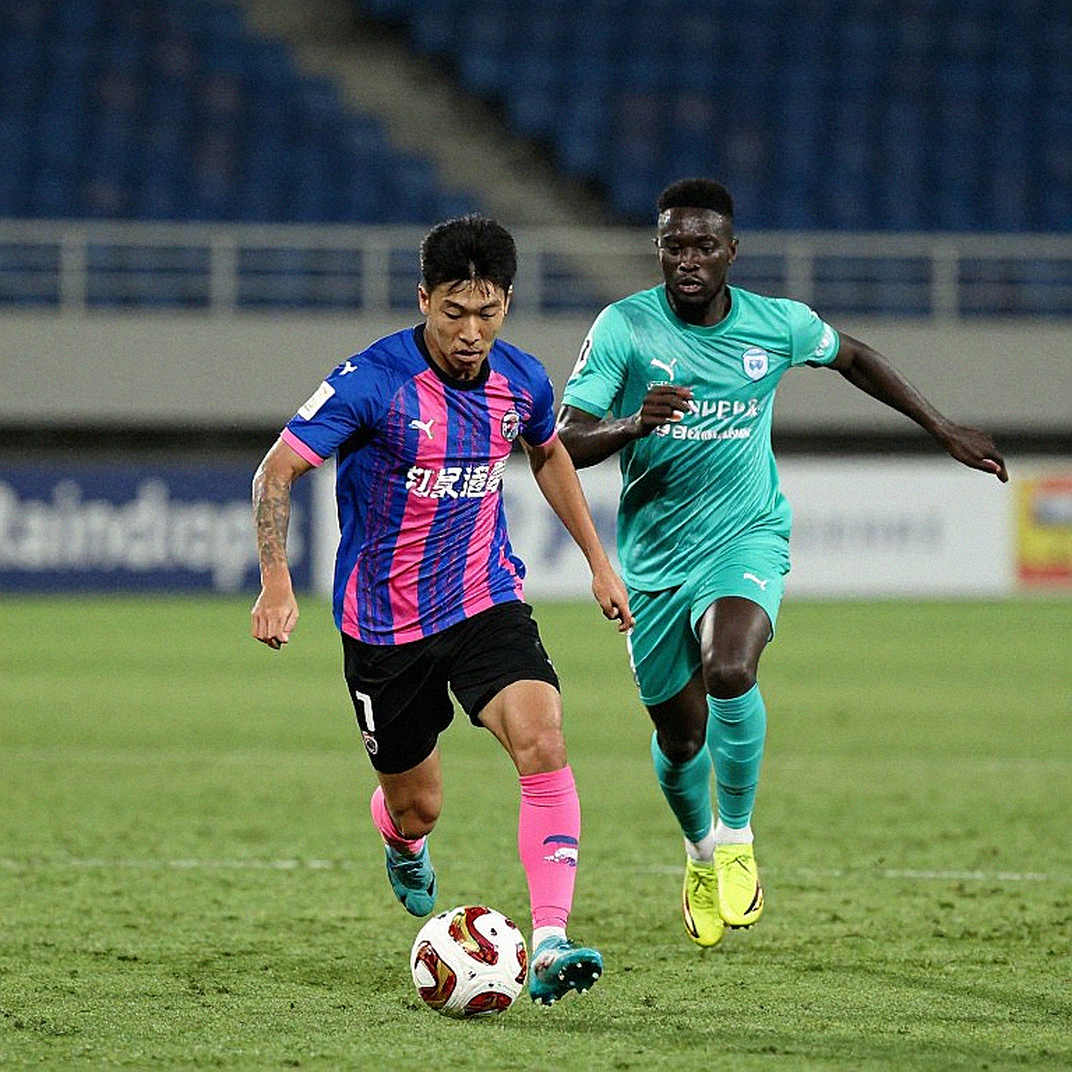
Nguyen Tai Loc has returned to training at normal intensity. For a player who has just come through a treatment phase, that is the clearest signal a 15-minute open session can deliver. He was on the pitch, warming up with the group, joining combination drills — there was no sign of hesitation.
On the other side, Hoang Duc is still training separately. He can put his boots on, but he is not yet training with the full squad, and continues working to an individual programme under the supervision of doctor Huy Tho. This is a very characteristic approach from a medical department during a short camp: let the player retain his feel for the ball, keep his base fitness, but do not push him into contact work before he is ready.
Placed side by side, these two states form the real tactical story of this camp. Vietnam's problem against the Philippines is not the formation — it is who will be on the pitch to execute it. A central midfielder born in 2026, at the mature phase of his career, unable to train with the group two days before the opener is a bigger variable than any talk of form.
If Hoang Duc does not make it, the consequence is not simply the loss of one name. It is the loss of the creative axis in midfield, the loss of the player who sets the rhythm and distributes the ball in the hottest zone of the pitch. The team must then choose between two directions: push a box-to-box midfielder higher, or change the approach so the ball travels forward faster. Both routes shift the creative burden towards Xuan Son — and that is precisely the dependency risk any side wants to avoid in an opening match.
One more note on how the medical staff are operating. Allowing a player to wear boots but not train with the group is a decision with very low ceremonial value and very high technical value. It is not meant to soothe public opinion, nor to apply pressure to the player. It simply says: not yet. Across many years of watching national-team camps, I have found signals like this are usually more accurate than anything said in a press conference.
Naturalisation is reshaping the midfield
Both Xuan Son and Tai Loc are Brazil-born naturalised players. This is no longer the story of an individual; it is a direction for the whole football ecosystem. A national team adding elite personnel through naturalisation reveals a clear short-cycle strategy: raise the senior-team ceiling immediately rather than wait on academy output.
For Vietnam, set against the Southeast Asian regional context, this is a rational choice to hold its position. But it also raises a long-term question about identity — one the domestic press will only ask seriously once results can no longer shield it. In the short term, the contribution of the naturalised group is real and measurable in goals. In the long term, its value depends on whether the domestic academy pipeline gets left behind.
Operationally, Tai Loc's return to full intensity means more than a simple replacement. He offers an additional option in midfield, and in a match where the team may have to play longer balls, a midfielder who can contest and switch play quickly is a genuine asset.
A note on reading data
Based on my experience covering matches, I often have to remind colleagues of one thing: xG has been overused. It can describe the quality of a chance, but it cannot explain a coach's decision, it cannot measure the true form of a player returning from injury, and it says nothing about how a referee will officiate a match. Before an opener, what is worth reading is squad availability, preparation days and cohesion — variables that appear in no statistical table.
The closed session and the gap for rumour
One detail deserves attention: the organisers allowed the press only 15 minutes before closing the gates so Kim Sang Sik could run his work. Professionally, this is entirely normal before an opener. But it has another consequence: when tactical information is blocked completely, that gap gets filled with speculation. In many places I have worked, the most distorted stories about a team are born precisely on the days the training gates are shut tightest.
This leads to what I consider the blind spot of current coverage. The media pours almost all its attention on Xuan Son — the scorer, the moment-maker. But a tournament opener is rarely decided by an individual shining; it is usually decided by which team makes fewer structural errors in the first 30 minutes. And in those first 30 minutes, the value of a rhythm-setting central midfielder outweighs the value of a flashy piece of skill.
It should also be said plainly: a cheerful, relaxed scene, smiles after a long flight, is a good sign for morale. It is not evidence of form. At many tournaments I have covered, the team with the best atmosphere in the press room was the team eliminated earliest. “World Cup 2026 gave me a strange answer: football does not need control, it needs to be trusted.” But trust only has value when it is built on full training sessions, not on good photographs.
“Qatar taught me to stand inside the vortex without being swept away — so I could still tell the story to those outside.” I repeat that line whenever a camp dissolves into a short feed, where everything is reduced to photographs of smiling players. The truth of a camp lies elsewhere: in a player training alone, in a list not yet finalised, in a venue-familiarisation session that lasts only a few dozen minutes.
There is another point almost nobody mentions. The Philippines, the opponent, are almost absent from the story. No analysis of their playing style, no head-to-head statistics, no comparison of resources. The entire news flow runs inward: how Vietnam are preparing, who is fit, who is not. That is a safe way to report, but it is also a way of reporting half the picture. A match has two teams, and the other team also has two days to prepare.
Finally, one detail worth noting down: Vietnam are expected to have their venue-familiarisation session at Si Jalak Harupat stadium on 25 September, after a long flight and a closed session. If that session still takes place with Hoang Duc in a separate area, it will be the clearest signal of how the team will line up in the opener.
What to watch
With only two days to an opener, every tactical analysis should give way to observing people. I will look at three things. First, whether Hoang Duc rejoins full training at the venue session. Second, whether Tai Loc starts, or is used as a rotation option. Third, whether the team can spread the scoring burden beyond Xuan Son, or remains dependent on a single spearhead.
“Thong Nhat stadium is not grand — it just holds people brave enough to cry mid-match. That is enough to remember.” I thought of that line as I watched the training gate in Bandung close. Football in this region always begins this way: with a closed session, a player training alone, and a trust not yet tested. The job of the reporter is to tell accurately what is there, and let the match answer for itself.
Cầu thủ liên quan