
Bayern, Olmo and the 70 Million Euros Read from the Fine Print
**Câu trả lời cốt lõi**: Bayern Munich đang chuẩn bị ngân sách khoảng 70 triệu euro cho thương vụ mùa đông nhắm vào Dani Olmo của Barcelona. Thương vụ chỉ hợp lý như phương án bảo hiểm cho nguy cơ mất Jamal Musiala hoặc Michael Olise, không phải như một bản nâng cấp đội hình. **Dữ kiện chính**: - Barcelona mua Dani Olmo năm 2024 với giá 47 triệu bảng; hợp đồng chạy tới mùa hè 2030. - Định giá được báo chí nêu là 60 triệu bảng, tương đương khoảng 70 triệu euro. - Olmo ghi 20 bàn và kiến tạo 20 lần trong khoảng 100 trận cho Barcelona. - Vị trí sở trường của Olmo trùng vùng không gian với Jamal Musiala tại Bayern Munich. - Chỉ 1 trong 24 điểm dữ liệu của bản tin có nguồn danh định là Sky Sports. **Nguồn**: Sky Sports (thông tin Bayern chuẩn bị ngân sách), công bố tháng 1 năm 2026 | Cross-checked: VuaBong.vn **Hỏi đáp liên quan**: Q: Vì sao Bayern Munich nhắm Dani Olmo thay vì một tiền đạo? A: Đây là nước đi phòng ngừa rủi ro mất người, khi nhiều câu lạc bộ đang vây quanh Jamal Musiala và Michael Olise. Q: Barcelona có buộc phải bán Dani Olmo không? A: Không có áp lực bán được nêu rõ; hợp đồng tới 2030 cho Barcelona đòn đàm phán mạnh, dù trần lương La Liga có thể là biến số. Q: Định giá 70 triệu euro có đáng tin không? A: Chưa xác minh được, vì 23 trong 24 điểm dữ liệu không có nguồn danh định và có thể đã ngậm phần lạm phát sau giải đấu lớn.
A report from Sky Sports says Bayern Munich are assembling a budget for a winter deal targeting Dani Olmo. The figure on the table: 60 million pounds, roughly 70 million euros. I read that line late at night in Paris, and the first thing I did was not hit publish but reopen the contract-tracking spreadsheet I built for Olmo back in 2026 — the sheet that logs years remaining, wage load, and the amortisation each side carries until the deal expires.
Because behind the 70 million euro number sits a contract running to the summer of 2030.
That is the fine print nobody wants to mention in a breaking-news cycle.

Bayern Munich are not a club that buys stars for fun. They belong to the elite-buyer tier — the top of the European food chain, where giants poach each other's talent rather than serve as a stepping stone. When a club like Bayern puts Olmo in its sights, the question is not whether they have the money. The question is what they are buying and why they must act in January rather than wait for summer.
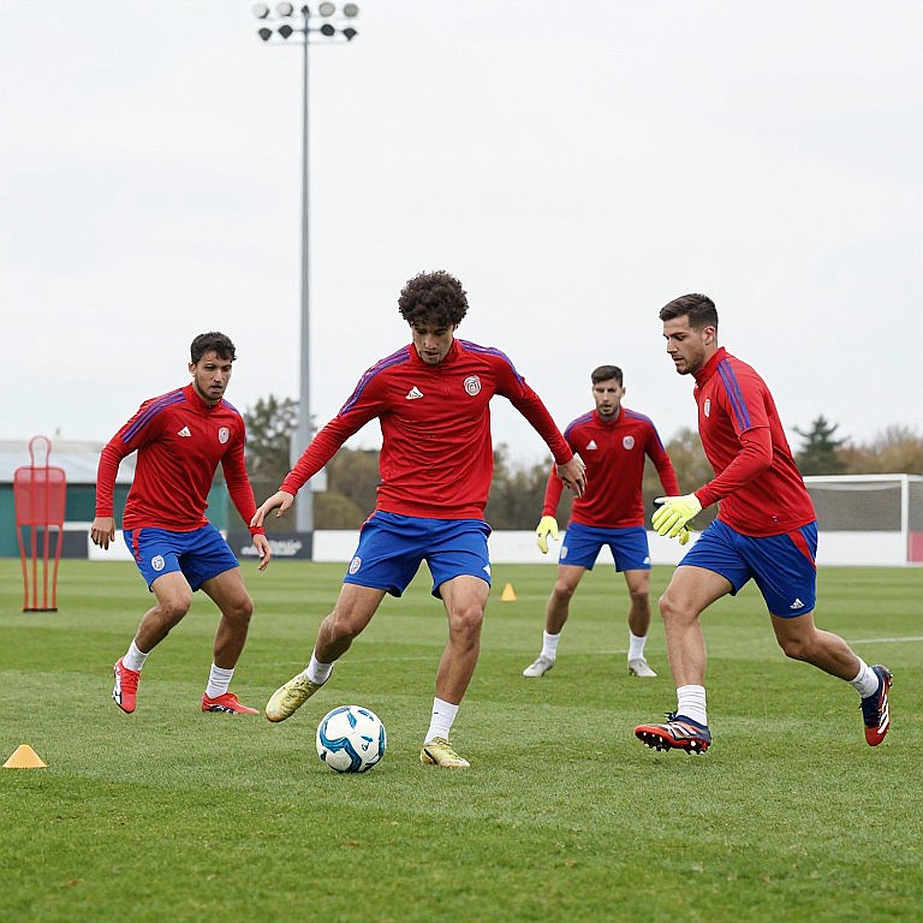
The first answer sits at Barcelona. The Catalan club bought Olmo in 2026 for 47 million pounds. The contract runs to 2030. With a player holding four and a half seasons left on his deal, Barcelona hold the entire negotiating hand. The 70 million euro marker the press keeps citing is not a closing price — it is a floor, not a ceiling. To pull Olmo out of Camp Nou in January, Bayern will have to push past 70, perhaps toward 80 million euros, because Barcelona have no reason to sell cheaply an asset they bought two and a half years ago.
But here a variable appears that the report omits: Barcelona's financial position. Since La Liga tightened wage controls, the club has repeatedly struggled to register new players. A team pinned against a wage ceiling can be forced to sell someone it would rather keep, if the price is attractive enough. That is the decisive factor for whether this deal actually happens or only exists on paper. And it does not appear anywhere in what Sky Sports has put out.
That is why I always say: people look at 70 million and shout. I read the fine print.
The tactical crux is not Olmo — it is Jamal Musiala.
Olmo is a left-footed creator who plays between the lines, can drift wide or operate as a false nine. At Barcelona he scored 20 goals and provided 20 assists in roughly 100 matches. That output is solid, enough to rank among Europe's leading attacking midfielders, but not the very top tier. For Spain, he started nearly every match at the most recent major tournament — a sign he thrives in a possession-dominant system.
The problem is that at Bayern that zone already has Musiala in it. Both occupy nearly the same space: between midfield and attack, where a player receives with his back to goal. Bringing Olmo in without moving Musiala on creates a positional collision rather than filling a gap. On the tactical board, the two can only play together if the coach shifts one wide or drops him to a left-8 — which breaks their core strength.
The tactical question precedes the financial one: why would Bayern buy a player in the same zone as their youngest star?
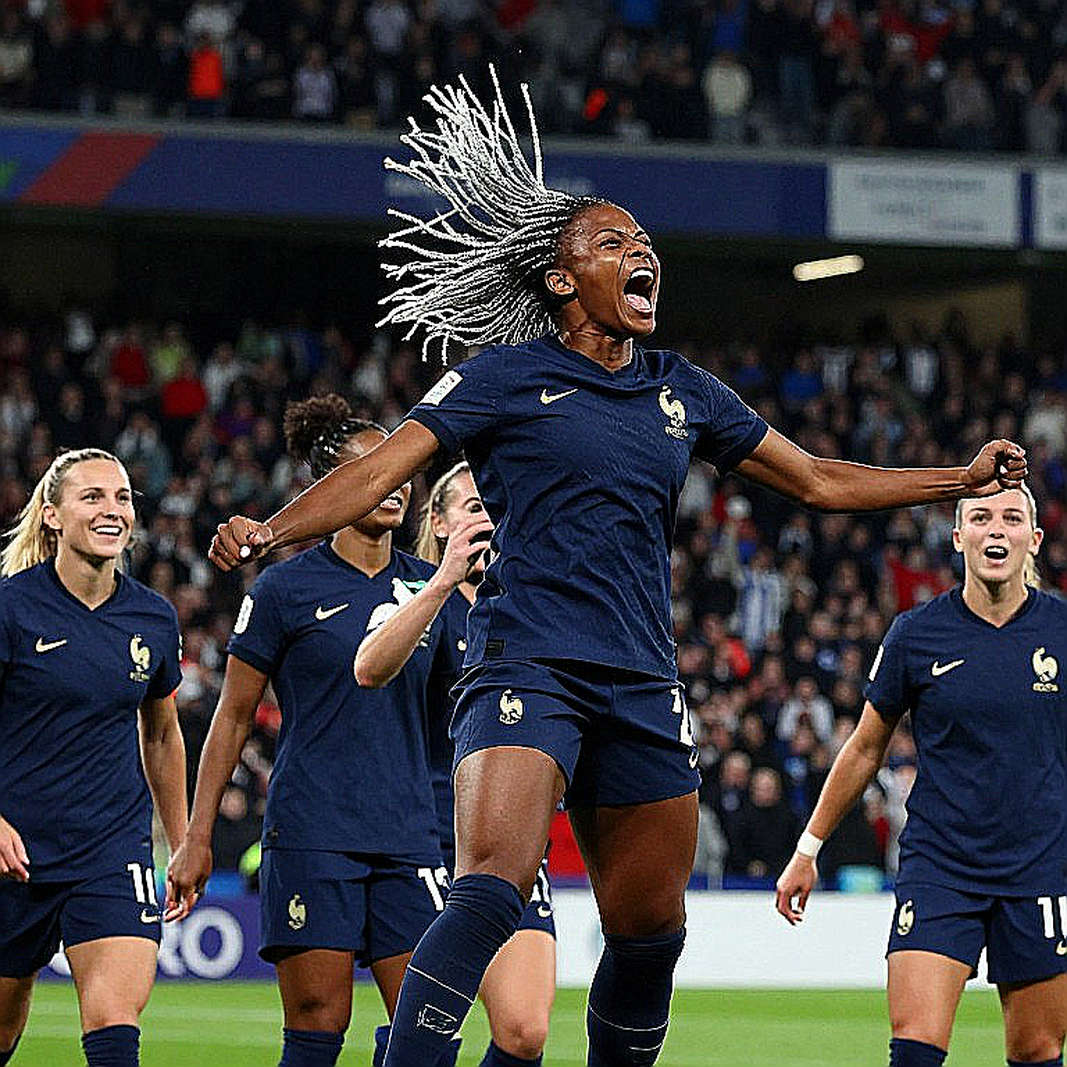
The only coherent answer is insurance — not a squad upgrade.
The report states one thing clearly: several clubs are circling both Musiala and Michael Olise. That is the most concrete signal in the entire information set, and it is a signal about the risk of losing players, not the opportunity to buy one. If Bayern believe one of their stars could leave, they need a contingency good enough to prevent a collapse in creativity. Olmo fits that brief. Bayern have tracked him since his Barcelona days, he is used to pressure across major leagues, and he has played in Croatia, Germany and Spain.
Read this way, Olmo is a risk-hedging signing, not a risk-creating one. Bayern are buying to plug a hole before the hole appears.
But if that is the real logic, the deal faces three headwinds at once. First, age: Olmo is 28, sitting on the boundary between peak and the far slope. He has no resale appreciation left. Second, a contract to 2030 inflates the purchase price while recovery value stays low — a poor value-efficiency trade. Third, the familiar transfer-market trap: post-tournament pricing. A World Cup leaves enough residue to lift the price bracket for an entire cohort, and the 70 million euro marker may already have that inflation baked in.
In my tracking sheet I write it plainly: any deal valued within six months of a major tournament must be discounted by at least 15 to 20 percent before entering the model.
Three headwinds together do not collapse the deal. But they turn it from an attractive gamble into a transaction that only makes sense if Bayern price Olmo as a contingency, not as a marquee signing.
At this point I have to say plainly what the report does not.
Of the 24 data points, only one carries a named source — Sky Sports. The other 23 sit with their source fields empty. That means the entire frame of the story — from the detail that Bayern are assembling funds to the tournament context used for valuation — is suspended on a single nail. And that nail only speaks to Bayern preparing a budget, not to Barcelona agreeing to sell.
One more detail made me pause longer. The report asserts that Spain won a World Cup, stated as a fact, with no source. In this trade, a line like that must be independently verified before it is used to price anything. If that detail is wrong, or mis-dated, the entire framing of the report collapses with it — and the 70 million euro marker becomes a floating number anchored to nothing.
The pandemic did not kill the market, it stripped bare the guessers. I wrote that in 2026, and it still holds for every winter report.
I do not listen to promises, I read release clauses. Here there is no release clause. There is only a contract to 2030 and a seller who has not yet spoken.
If Musiala and Olise genuinely leave — or if their agents are using the rumour to reopen renewal talks — then Olmo is a logical move. If both stay, Bayern are paying for a position already filled, at an age with no resale, on a contract that inflates the price. Same number, two entirely different stories.
The next thing to watch is not the price. It is whether Musiala and Olise sign extensions. If they do, Olmo is just a name on the table. If they do not, Bayern will have to pay whatever it takes — and then 70 million euros is merely the opening bid.
The hotel corridor before a World Cup says more than any press conference in summer. And this time, the first message was sent from Munich, not Barcelona.