
Trang chủInternational FootballReo Hatate, the Second Ball, and Burnley's First Win in Eight Matches
Reo Hatate, the Second Ball, and Burnley's First Win in Eight Matches
core_answer: Reo Hatate ghi một bàn và kiến tạo một bàn trong chiến thắng 4-0 của Burnley trước Watford ở vòng chín giải hạng Nhì Anh, chấm dứt chuỗi tám trận không thắng. Đây là bàn thắng đầu tiên của anh cho câu lạc bộ kể từ khi chuyển nhượng, theo bản tin gốc.
key_facts: Reo Hatate, 28 tuổi, là tiền vệ người Nhật Bản từng khoác áo đội tuyển quốc gia.; Burnley thắng Watford 4-0 ở vòng chín giải hạng Nhì Anh, chiến thắng đầu tiên sau tám trận.; Trước trận, Burnley đứng trong nhóm xuống hạng với bốn điểm sau tám vòng (bốn hòa, bốn thua).; Hatate ghi bàn đầu tiên cho câu lạc bộ sau khi chuyển nhượng.; Trận tiếp theo của Burnley diễn ra ngày 13 tháng Mười, chỉ vài ngày sau chiến thắng.
source_attribution: Nguồn: Bản tin trận đấu gốc không nêu tác giả, ngày 10 tháng Mười; phân tích chuyên sâu Stage-2. | Cross-checked: VuaBong.vn
related_qa: q: Reo Hatate đang chơi cho câu lạc bộ nào?, a: Bản tin gốc nêu Burnley, nhưng ghi chép công khai gần đây gắn anh với Celtic, nên thông tin cần được xác minh độc lập.; q: Burnley đang ở vị trí nào trên bảng xếp hạng?, a: Theo nguồn, Burnley nằm trong nhóm xuống hạng với bốn điểm sau tám vòng, gồm bốn hòa và bốn thua.; q: Chiến thắng 4-0 có nghĩa là Burnley đã thoát khủng hoảng?, a: Chưa, vì một kết quả đơn lẻ không xóa được vị trí xuống hạng và cần một mẫu nhiều trận hơn để xác nhận.
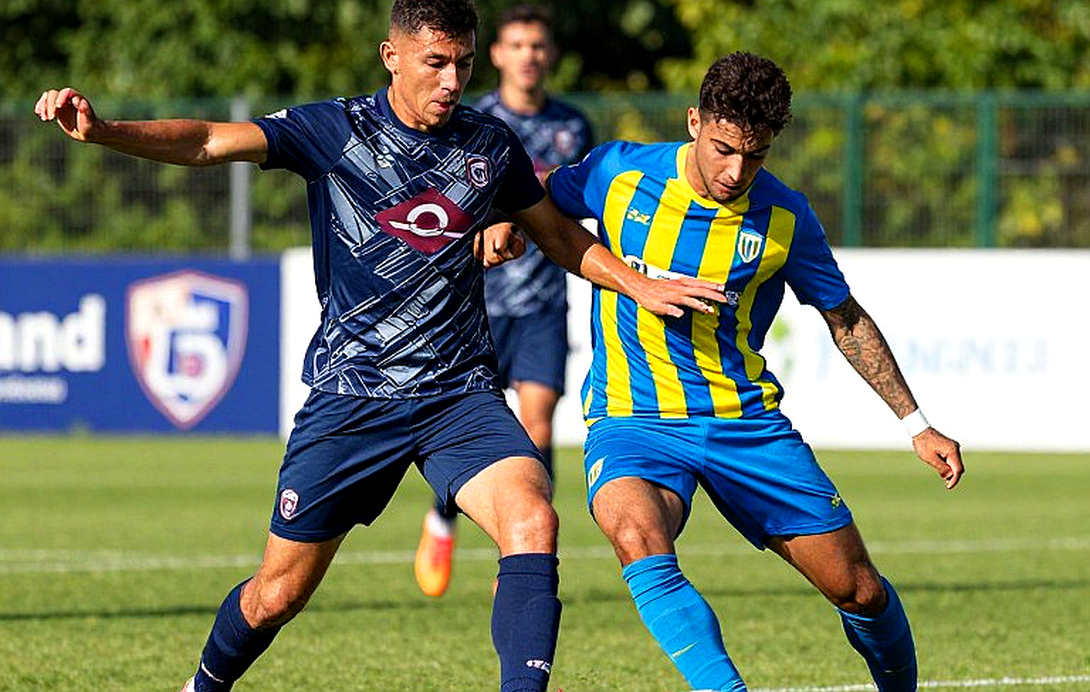
The ball spilled out of a collision. A teammate and an opponent fell together, the ball rolled off toward the edge of the box, and in that instant — the instant the cameras usually skip because there is nothing to sell in it — only one man read the trajectory. Reo Hatate burst in, held the ball for a heartbeat, then sent it back toward the far post with a cut-back. The goal came later, but the real moment had happened a few seconds earlier, in a place no one recorded.
I keep the habit of rewinding moments like that. In an anonymous passage of play, I find the whole meaning of the game. Football is not written by goals; it is written by the small decisions that happen before a goal becomes inevitable. And at Burnley, on an autumn afternoon, a Japanese midfielder read that moment twice — once to give, once to receive.
Reo Hatate, 28, a midfielder who has worn the Japan national team shirt, has just arrived at Burnley in the most recent transfer window. The match against Watford on the ninth round of England's second division was one of his first appearances in his new colours. He scored one, assisted one, and his team won 4-0.
That number on its own says nothing. It has to sit beside the previous eight games: four draws, four defeats, four points, and a place in the relegation zone — the group that drops to the third division. Burnley walked into the Watford match as a sinking club and walked out of it with their first win of the season.
That is the context anyone following English football recognises: a club once far bigger than the second tier, struggling to find itself again after a fall. I have watched too many clubs like that. They do not lose because they lack talent; they lose because they no longer know who they are. When a club drops out of the top flight, it carries a social contract with it: the squad must be rebuilt, the wage bill cut, and the players who were once pillars must leave to make room for cheaper ones. That process is rarely smooth. It leaves cracks that only become visible months later.
For Burnley, eight games without a win are the sign of those cracks. Four points from eight rounds is not bad luck; it is the result of a team that has not found a common voice. And in weeks like that, one individual suddenly becomes the only anchor keeping the boat from drifting — not because he is great, but because everyone else is waiting for someone to do something.
Hatate's two moments came from two completely different mechanisms, and that difference is the thing worth talking about.
For the assist, he won the ball from a second ball — the kind that spills out after a collision, after a clearance, after chaos no one designed. This is the hardest skill for an attacking midfielder, because it sits inside no diagram. You cannot coach a player to read a second ball; you can only choose someone capable of it. Hatate won the ball, stayed calm, then cut it back into the box — a pass the opposing defence had no time to turn for. What stands out is that he did not try to do anything extraordinary. He simply did the right thing, at the right moment, at the right speed.
For the goal, he arrived late. This is the interesting part: Hatate was not the man who made the move, but the man who appeared at its end. He received the ball inside the box and finished right-footed — the clean touch of a man who was already standing in the right place. In modern football, the ability to “arrive late” is an undervalued quality. The hero is not always the one who starts things; sometimes he is the only one who believes the ball will come.
Put those two moments together and you have a hybrid profile: a No.10 who creates and a No.8 who breaks into the box. This is the modern central midfielder many second-tier clubs are looking for, but few are lucky enough to own. Hatate did not just assist; he also scored. Did not just score; he also won the ball. On his own he filled two gaps the whole team had failed to fill for eight games.
But this is where I have to stop and look straight at what lies outside the article. There is no expected-goals data. No expected assists. No PPDA — the pressing-intensity metric I still use to measure a team's courage. No possession figures. All we have is a scoreline, a goal, an assist, and a great many adjectives.
And this is what I want to say about a 4-0. In football, a heavy result is not a good data sample. It is a distorted one. When a team wins by four, it usually means the opponent has collapsed structurally — the defence has lost its shape, the midfield no longer shields, and gaps open everywhere. An attacking midfielder in a match like that will have more space than usual, more time than usual, and more chances than usual. That does not diminish Hatate; it only reminds us that one match is not enough to measure a man.
I once wrote that the five-substitution rule deepens a squad but turns the final twenty minutes into a war of attrition. At a sinking club, this is even truer: as the legs fade, the team leans more and more on a few individuals who can produce a difference in a single moment. Burnley lived on that in this match. But a strategy built on moments is a strategy with no foundation.
In the summer without crowds, I learned to hear the stadium breathe. But here, even that breath is filtered through a thick pane of glass: the pane of an article with no source, no byline, and an advertisement slipped between the lines.
There is a counter-intuitive truth I cannot ignore: the article describes Hatate as a Burnley player, but recent public records tie him to a Scottish club — Celtic. This is not a trivial detail. If the club in the article is wrong, then every conclusion built on it — about his integration, his tactical role, the relegation fight — stands on sand.
I do not write this to refute. I write it because my trade taught me that what no one checks slowly becomes fact, and then that fact is cited again, and cited again, until no one remembers where it began. Every gap on the pitch is an unspoken promise, and so is every gap in the information.
There is also the advertisement for a Japanese-league fantasy card inside the piece. It is not a sin — commercial content is part of the industry. But it explains the tone. When an article both sells a product and tells the story of a Japanese player shining in Europe, the headline is no longer neutral. It aims at emotion, at national pride, at the wish to see one of your own standing on top. And when the headline deliberately hides the player's name — calling him only “the 28-year-old Japanese player” — it is no longer news; it is bait.
And this is what worries me most: a 4-0 win does not mean the crisis is over. Winless runs are usually broken by a single outlier result before form genuinely stabilises. The relief of a first win can be replaced by the return of old habits the very next match. And that next match comes fast — October 13, only days after the final whistle. The team has barely any time to breathe.
The night in Kazan taught me that the highest peak is only a foothold for the fall. A 4-0 win, for a club at the bottom, is exactly such a peak — high enough above the ground to make the next fall hurt more. Burnley's problem was never one match. Their problem is nine.
I do not know where Reo Hatate will be in November. I do not know whether that article is accurate. But I know one thing: football does not remember wins. It remembers the moments when someone read the ball's trajectory before everyone else could turn their heads.
The heart's trajectory is never a straight line. It is long-range shots. If Hatate really is at Burnley, then he has just scored his first goal in a place where he may have to learn everything again from the start. If he is not there, then this story becomes one more example of how information sometimes rolls farther than the ball.
Either way, I will keep rewinding that second moment — the collision, the ball spilling out, one man reading it right. Because there, before anyone could give it a name, the match had already been decided.
Cầu thủ liên quan