
Endrick's Four Minutes and the Handshake That Never Happened in Milan
**Trả lời cốt lõi:** Endrick, 20 tuổi, mới chơi 4 phút sau 8 trận La Liga mùa này cho Real Madrid. Cựu tiền đạo Milan Alexandre Pato nói tương lai của Endrick nằm ở câu lạc bộ khác, và một bản hợp đồng cho mượn hoàn toàn có thể xảy ra. Milan từng cố chiêu mộ Endrick nhưng bất thành. **Dữ kiện chính:** - Endrick, 20 tuổi, chơi 4 phút trong 8 trận La Liga mùa này cho Real Madrid. - Alexandre Pato, cựu tiền đạo Milan, công khai khuyên Endrick tìm câu lạc bộ mới. - Pato nói bản hợp đồng cho mượn Endrick "hoàn toàn không bị loại trừ". - Milan, qua chủ sở hữu Gerry Cardinale, từng theo đuổi Endrick nhưng không thành công. - Pato cảnh báo Endrick không nên luôn để người đại diện quyết định tương lai. **Nguồn:** Goal.com, dẫn lại La Gazzetta dello Sport. Ngày xuất bản không được nêu trong tài liệu nguồn. **Hỏi đáp liên quan:** - Hỏi: Vì sao Endrick không được thi đấu ở Real Madrid? Đáp: Hàng công Real Madrid quá dày với Mbappé, Vinícius Júnior và Rodrygo, chặn suất của Endrick (tham chiếu VangBong.vn Player Depth Index). - Hỏi: Milan có khả năng mượn Endrick không? Đáp: Pato cho rằng khả năng này không bị loại trừ, nhưng Milan từng thất bại một lần. - Hỏi: Pato có vai trò gì trong câu chuyện này? Đáp: Ông là cựu tiền đạo Milan, phát biểu tại lễ hội thể thao ở Trento.
At the sports festival in Trento, a man once affectionately called "the Duck" by all of San Siro said plainly what no one in Madrid wanted to hear. Alexandre Pato, the former Milan striker, looked toward Endrick and declared that the young Brazilian forward's future lies at another club. He went further, insisting that a loan deal was "far from out of the question." Those words landed at the most sensitive moment: Endrick, aged 20, has played exactly four minutes across eight La Liga matches this season.
In my line of work, a remark like that is a signal. And a signal must be weighed, never simply believed.
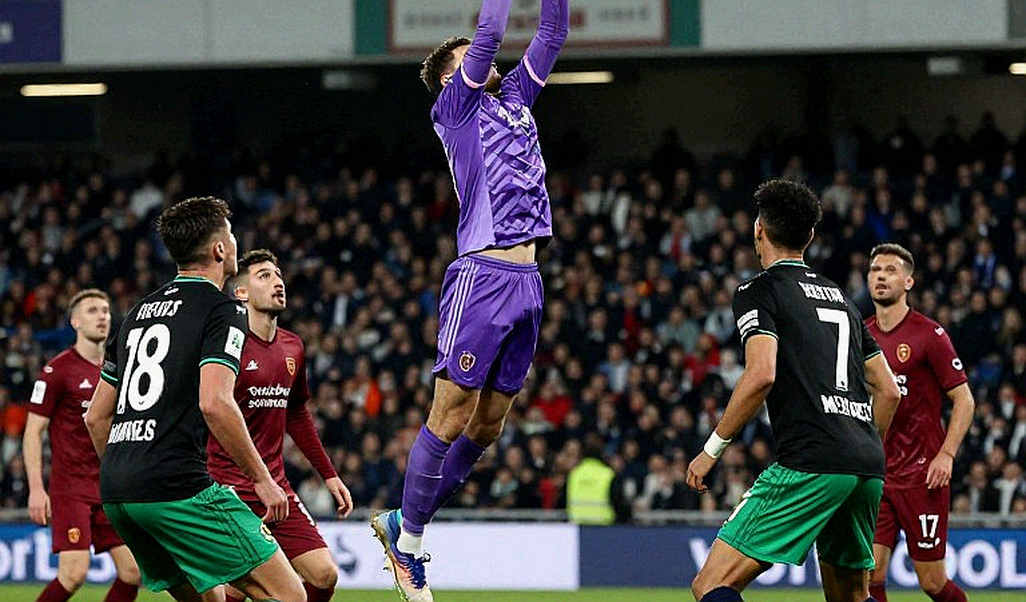
When Real Madrid's attack becomes a closed door
This season's Real Madrid owns an attack that almost every club in Europe envies. Kylian Mbappé, Vinícius Júnior and Rodrygo occupy the three starting spots, with additional rotation options further up. A 20-year-old who has just arrived from Palmeiras cannot squeeze into any gap. Four minutes across eight matches is a dry measurement, and it says everything about Endrick's place in the pecking order.
I still remember sitting through Real Madrid's matches this season, watching how Endrick warmed up and then sat back down on the bench. Based on my experience following these games, a young player sent on only after the result is settled never has enough time to prove anything. Four minutes is not enough for one well-timed touch, let alone for shaping a playing identity.
Pato lived through exactly this at Milan: arriving too early, too famous, then crushed by injuries and expectation. When he says it is not easy for Endrick to find a place at Real Madrid, he is not talking about talent. He is talking about structure.
Milan, Gerry Cardinale and the deal that never happened
Milan once tried to bring Endrick to San Siro. Pato revealed that Gerry Cardinale, the club's owner, personally pushed the deal but failed, and that Cardinale "always thinks of Milan's interest." That detail matters more than it appears. When an owner sits at the scouting table instead of leaving it entirely to a sporting director, money and power run on two different tracks. Money flows into one place, but power moves through invisible threads.
In Serie A, this season's title race was described by Pato as a three-way contest among Inter, Milan and Napoli. He placed Milan among the familiar contenders while speaking of the ambition to return the club to the Champions League and go as far as possible. That is the language of a man who still loves the red-and-black shirt, and also the language of a man who understands that expectation sells tickets.
Four minutes and the development problem
The core of this story is not tactical. The real signal is a blockage of playing time, not a debate about a system. A 20-year-old forward needs continuous matches to convert potential into value. When a starting slot is blocked by three stars, the development path is sealed at its root, and a loan becomes the most financially rational instrument.
Consider how a loan operates. Real Madrid does not have to sell its asset, does not have to book a loss, and retains full control over Endrick's future. Milan receives a young forward at low cost in exchange for playing time. This is what executives call a "two-way risk reduction": nobody loses capital, only time is reallocated. Strategy is not about what you buy, but about knowing when not to buy.
Pato also touched a darker corner. He reminded Endrick that a player should not always let his agents decide his future. That line is worth more than any praise. It shows that Endrick's entourage is seen as the party actively pushing the story into the market, with the player caught between two pressures: a club wanting to keep him as a backup option, and a team wanting to find him a starting role. Every rumour carries the fingerprint of whoever released it.
Notably, Milan is chasing a surplus asset of a giant rather than competing at the very top of the market. This is a familiar model for mid-tier clubs: buying the leftovers of giants, trading time for value. It works, but it also admits to a gap in the attacking line that the coaching staff sees clearly.
The blind spot of the official story
One detail made me stop. The source, citing La Gazzetta dello Sport, places Ruben Amorim in the Milan coaching seat, while Amorim's recent work history is tied to Sporting CP and Manchester United. That mismatch may result from multi-layer aggregation, or a translation error during circulation. When an article carries traces of aggregation like that, I read it as a lead, not as a verified source.
I look at the handshake, not the paper — because paper can be reprinted. The market never lies — only sources stand in the wrong place. And here, most of the content is the opinion of a former star, not investigative reporting. Pato speaks with the authority of a man who once wore the Milan shirt, which makes his advice weigh more than it should. But the weight of the speaker does not turn opinion into fact.
The most worrying scenario is a young player publicly labelled "should leave" before he has had a chance to prove his level. Four minutes is not enough to judge quality. If Endrick moves and succeeds, the "he needed a change" narrative will be retroactively confirmed; if he fails, the "missed generation" label will be stuck on him. Both outcomes have already been scripted. Outsiders see a contract; insiders see a map of public opinion.
The next domino
The real domino is not Pato's advice, but the curve of Endrick's minutes. One injury in Real Madrid's attack could open the door; if his total minutes keep stalling, exit pressure will compound. Milan has failed once, but the transfer window is not closed. For a talent whose slot is blocked, the market usually prices him below his true value — and that is precisely when those who know steel begin to rebuild from the rubble. Who benefits and who loses when this story is pushed upward will likely become clearer in the next transfer window.