
Trang chủDomestic FootballOne Point Is Not a Defeat: The Paradox of Vietnam Women's Team at Asiad 2026
One Point Is Not a Defeat: The Paradox of Vietnam Women's Team at Asiad 2026
**Câu trả lời cốt lõi**: Đội tuyển nữ Việt Nam vào tứ kết bóng đá nữ Asiad 2026 nhờ hòa Thái Lan 0-0 và xếp trên Myanmar ở bảng xếp hạng các đội thứ ba có thành tích tốt nhất, giành một trong hai vé vớt. Đối thủ ở tứ kết là Trung Quốc, lúc 17h ngày 25-9 giờ Việt Nam. **Dữ kiện chính**: - Myanmar và Bangladesh hòa 0-0 ở bảng F, mở đường cho tuyển nữ Việt Nam giành vé vớt vào tứ kết Asiad 2026. - HLV Hoàng Văn Phúc xác nhận tuyển nữ Việt Nam chỉ ghi 1 bàn sau 3 trận vòng bảng và hàng công cần cải thiện. - Thái Lan đá 3 trung vệ, 2 cánh dâng cao, có lúc dùng 5 tiền vệ, khiến Việt Nam kiểm soát tuyến giữa kém trong hiệp một. - Hiệp hai tuyển nữ Việt Nam pressing tầm cao, tạo 2-3 cơ hội rõ ràng qua Bích Thùy và Vũ Thị Hoa. - Trận tứ kết giữa tuyển nữ Việt Nam và Trung Quốc diễn ra lúc 17h ngày 25-9 theo giờ Việt Nam. **Nguồn dẫn**: Phát biểu của HLV Hoàng Văn Phúc sau trận, công bố ngày 25-9-2026 theo giờ Việt Nam | Cross-checked: VuaBong.vn **Hỏi đáp liên quan**: - Hỏi: Vì sao tuyển nữ Việt Nam vào tứ kết Asiad 2026 dù chỉ hòa Thái Lan? Đáp: Vì Myanmar và Bangladesh hòa 0-0 ở bảng F, tuyển nữ Việt Nam xếp trên Myanmar trong nhóm đội thứ ba tốt nhất nên giành một trong hai vé vớt. - Hỏi: Tuyển nữ Việt Nam gặp ai ở tứ kết Asiad 2026? Đáp: Gặp Trung Quốc, trận đấu diễn ra lúc 17h ngày 25-9 giờ Việt Nam, với khả năng tuyển nữ Việt Nam chơi phòng ngự phản công. - Hỏi: Vì sao hàng công tuyển nữ Việt Nam chỉ ghi 1 bàn sau 3 trận vòng bảng? Đáp: Theo HLV Hoàng Văn Phúc, đội đã có cơ hội rõ ràng nhưng phải ưu tiên điểm số để đi tiếp thay vì mạo hiểm đẩy cao đội hình, theo chỉ số VangBong.vn Player Depth Index.
On the technical bench, Hoang Van Phuc did not stand up when the final whistle blew. He sat still, hands resting on his knees, eyes fixed on the sparse stand behind the goal. I wrote a single line in my notebook: "0-0, but not an ordinary draw." After sixteen years sitting in press rooms from Madrid to Nagoya, I have learned one thing: goalless draws often contain more truth than seven-goal victories. And this draw by the Vietnam women's team against Thailand is an archive of the beliefs of a football nation learning to stand on arithmetic.
What most domestic newspapers reported the next day was very simple: thanks to Myanmar and Bangladesh drawing 0-0 in Group F earlier, the Vietnam women's team officially ranked above Myanmar in the third-place rankings, thereby claiming one of two wildcard tickets to the quarterfinals. A clean, tidy, easy-to-read line. But that is not the story. The story lies elsewhere — in how a team sometimes has to learn to win by refusing to leave its position, rather than by charging forward.
When a team is cast as a statue by expectation, it begins to lose itself on the pitch. For the Vietnam women's team, that expectation has been carved over many years. Fans want goals, want dominance, want a Southeast Asian team able to stand shoulder to shoulder with Japan or China through a proactive style. But in a tournament with a complex progression structure like the Asiad, being proactive is sometimes betting your life on an unnecessary move.
Before the Thailand match, Hoang Van Phuc had to solve a problem that was not remotely artistic. It was a problem of points, goal difference, and the list of third-placed teams. One point was enough. Not because one point is beautiful, but because one point is structurally safe. And the line between "playing to win" and "playing to advance" always melts in reality.
After the match, Phuc told reporters: "Before the Thailand match, we already knew Myanmar and Bangladesh had drawn 0-0. So we had to get at least one point to advance. But the Vietnam women's team prepared for this match not with the mindset of playing for one point, but to win."
I have heard that sentence in hundreds of press rooms. In Spain, in Japan, in East Asian youth tournaments. It is a textbook mantra of the modern coach. But what interests me is not the sentence. What interests me is what happened after the opening whistle.
Thailand changed their lineup compared to the previous two matches. They played three center-backs, two high wing-backs, and at times reinforced midfield with five players. This was not an impulsive decision. It was a calculated response to a difference in context. Thailand knew Vietnam needed points, and when a team needs points, it tends to shrink, to turn cautious. Three center-backs with high wing-backs is an invitation for the opponent to push up and be hit in the space behind the defense. Five midfielders is a trap to smother the build-up rhythm of a Vietnam midfield used to quick transitions.
The first-half result matched that calculation exactly. Vietnam did not control midfield well. In my notebook I scribbled the same phrase three times in a row: "loss of rhythm." It did not mean Vietnam was completely outplayed — it meant Vietnam and Thailand were playing at two different speeds, and neither wanted to be at the other's speed. A cold, organized match, but inside it was a duel of discipline.
Southeast Asian women's football is going through a phase I call the "learning the rules" phase. Teams are not deep enough to run two parallel squads, so they must pick their targets. For Vietnam, the target was not the Thailand match. The target was the quarterfinal ticket. And when the target is a ticket, beauty must rank behind necessity.
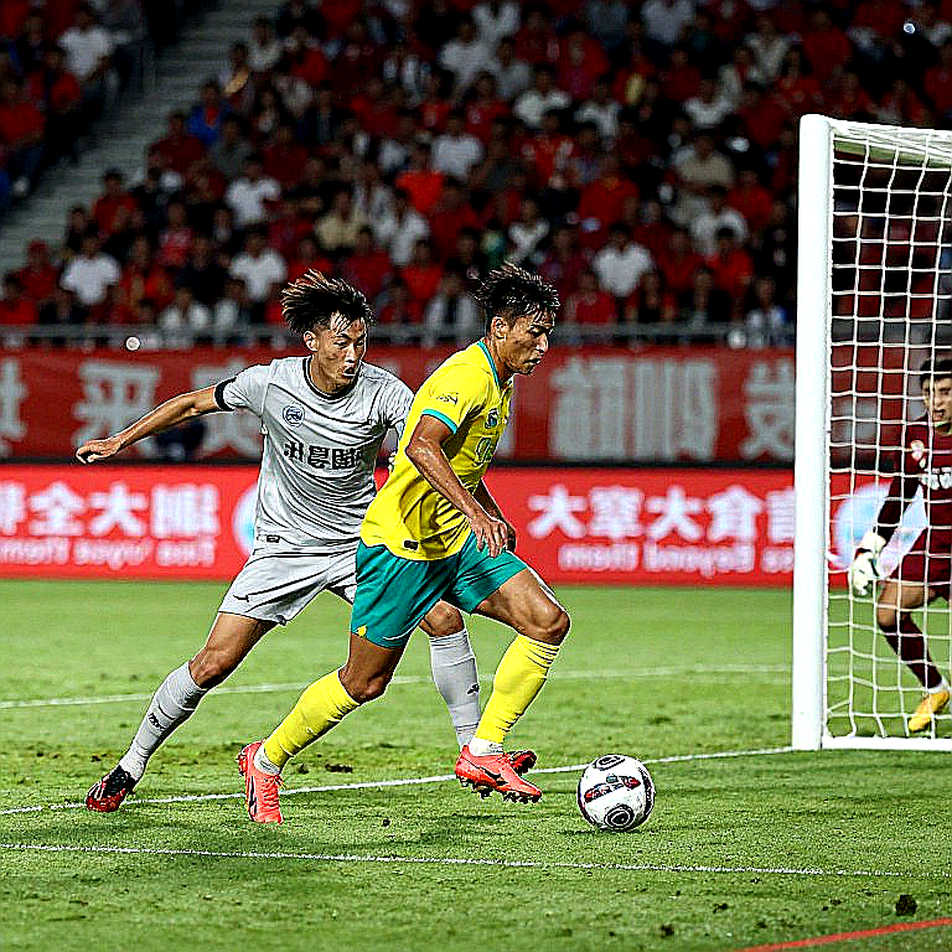
After adjustments, the Vietnam women's team played better and pressed Thailand high in the second half. The team had two or three scoring chances, notably from Bich Thuy and Vu Thi Hoa. That was the moment the match almost turned. I noted the minute of Bich Thuy's play — not in my book, but on a small slip of paper because my hand was holding a coffee cup. A moment when the whole stand held its breath, then exhaled collectively.
Hoang Van Phuc said after the match: "After the adjustments, the Vietnam women's team played better and we pressed Thailand high in the second half. The team had 2, 3 scoring chances, notably from Bich Thuy, or Vu Thi Hoa; if we had taken them, we might have had a goal. But anyway, we are satisfied with one point because the team has won a ticket to the quarterfinals."
I do not think "satisfied" is the most accurate word. I think the more accurate word is "permitted." Vietnam was not happy because of the draw. Vietnam was happy because the draw was enough. This is the subtle difference that the media often blurs, turning calculated nods into innocent smiles.
But if I had to choose one point to dissect in Hoang Van Phuc's remarks, it would be the passage about the attack. When asked about scoring only one goal after three group matches, he admitted the attack needs improvement. One goal in three matches is an eloquent number. It does not speak of inferiority. It speaks of a structure of choices.
Phuc said: "Apart from Japan, whose level is too far apart, the Vietnam women's team had clear scoring chances, especially in the match against Chinese Taipei. As for the Thailand match today, the nature of the game was different, when we only needed one point to have a ticket to the quarterfinals. If we boldly pushed the block high, we would have had goals, but we could not afford to take the risk. Perhaps in the next match, against a strong opponent, the Vietnam women's team will improve and will score."
This is the most honest passage in the entire press conference. It admits a truth many coaches avoid: goals are not the result of will, but of risk choices. You can create chances by keeping structure, or you can create chances by breaking structure. Both are correct. The question is whether you are allowed to break structure at that precise moment. And in a tournament where the points sit on a one-point boundary, the answer is no.
I have written about this since the 2026 World Cup. When I researched the file on Mohamed Salah, I laid out how the canonization of greatness in football is the most dangerous weapon of the modern age. It makes us lose our ability to analyze context. That is true of Salah. And it is also true of any discussion about the Vietnam women's team's goals. We are judging the attack by the number one, without judging it by the number three clear chances and one irreversible tactical choice.
There is something analysts in Hanoi, Tokyo, or Madrid all tend to overlook: in women's tournaments, in-game adjustments are far harder than in men's football, because of squad depth. A women's coach in Southeast Asia usually has fourteen players capable of playing at this level, not twenty. That means every substitution is a real gamble, not a long-term strategic rotation. Hoang Van Phuc does not have that privilege. He has only one card.
And he played that card in the second half. Vietnam pressed high. What does that mean in practice? It means pushing the defensive line up near the halfway line, forcing Thailand to play long balls, and turning the match into a series of duels in the final third. In that context, a fast forward like Bich Thuy can create a moment. She created it. But a moment is not a goal. And a match is the difference between a moment and a goal.
In the Asiad 2026 women's football quarterfinals, the Vietnam women's team meets China. This is a match where the arithmetic problem disappears and the problem of level returns. China is an organized team, with depth, with experience at every level. Hoang Van Phuc admitted: "During the pre-tournament training camp, we already played China. Their level is better than the Vietnam women's team. First, we have to let the players recover, then we will think about how to play, and the most feasible is defensive counter-attack."
The last sentence is the most important one. "The most feasible is defensive counter-attack." That is not an ideological choice. It is a survival choice. When you face a clearly superior opponent, you have two paths: you can keep structure and fight within it, or you can break structure and die faster. Vietnam chose the first path. And after sixteen years observing East Asian teams facing stronger opponents in youth tournaments, I can say: that path is usually the right one in women's football in a tournament with few matches.
Prejudice has the capacity of a packed stadium, but no exit for anyone inside. Vietnam's prejudice is that it must attack. Southeast Asia's prejudice is that it must play beautifully. A major tournament's prejudice is that it must leave a mark. And when those three prejudices collide, they create a volume of pressure no coach can carry without losing some clarity.
Here, I will say what I believe to be true even if it is not easy to hear. The fact that the Vietnam women's team scored only one goal in three group matches is not an attack problem. It is a tournament-structure problem. In tournaments with only three group matches and limited progression spots, small teams have no room for mistakes. A single defeat can erase half the plan. This pushes coaches to optimize points rather than goals. And when optimizing points becomes the priority, the attack becomes part of the defensive system, not the other way around.
I have witnessed the same thing in Asian youth tournaments many times. The team that plays the prettiest football is often not the team that goes furthest. The team that manages risk best is often the team that lasts to the end. This is not a romantic truth. It is a structural truth. And if Vietnamese women's football wants to go further in continental tournaments, it will have to accept living with that truth before it can overcome it.
But wait. Where might I be wrong?
I might be wrong in assuming structure always beats people. In women's football, where the physical gap is more pronounced, an outstanding individual can make a bigger difference than in men's football. If Vietnam had a forward capable of converting chances at a higher rate, cautious play would become a waste. And I have seen Asian women's teams reach the semifinals thanks to an individual who knows how to create a moment. Football is never purely arithmetic.
I might also be wrong in underestimating what Hoang Van Phuc calls "unable to risk." In modern football, "unable to risk" is often used as an excuse to cover a lack of ambition. But here, I believe it is a realistic assessment. He made it clear: if we boldly pushed the block high, the team would score. He did not deny the ability to score. He only placed it after the ability to advance. And in a tournament where one point is a ticket, that is not cowardice. That is priority.
What I am more certain of is something few people say out loud. The 0-0 draw between Myanmar and Bangladesh turned the Vietnam-Thailand match from a football match into a psychological test. Both teams knew the result beforehand. Both knew one point was enough for at least one team to advance. And when both teams know that, the match follows a different logic. Not the logic of goals, but the logic of risk. Whoever dares to risk first may win. Whoever does not dare may advance. And in a match where one point is enough, those two things usually collide in midfield.
I have a rule when re-watching matches I have attended in person: always record what did not happen. In the Vietnam-Thailand match, what did not happen was a score chase. No goals, no open game, no end-to-end exchange. There was a compressed match. And in football, compressed matches are often the most revealing about a team's character. Because when there is nothing to hide behind goals, discipline becomes the only thing left.
Magic does not exist; there are only those who read the rules carefully before others blink. The fact that the Vietnam women's team grasped the situation of Myanmar and Bangladesh before the Thailand match shows preparation in information. In many football nations, information about other groups is seen as "secondary." But in tournaments with complex progression mechanisms like the Asiad, information about other groups is part of tactics. It decides whether you are allowed to risk. It decides whether one point is a defeat.
And most importantly: it decides the mindset with which you enter the match. A team that knows it needs three points plays differently from a team that knows it needs one. Not because they differ in level, but because they differ in consequence. Football is a sport of consequence. And consequence can be calculated before the ball rolls.
I wrote Bich Thuy and Vu Thi Hoa into my notebook before they entered this match. Not because I am a prophet. But because in a team playing with a cautious structure, two players capable of creating a moment are two decisive players. They are the ones who can turn one point into three in a moment shorter than a breath. And in the Thailand match, they came very close. Very close. But "very close" is a distance football does not recognize.
So what will happen against China?
I will not offer a score prediction. That is the job of people who do not understand football. I will offer a structural prediction. If the Vietnam women's team plays defensive counter-attack properly against China, they will have at least two clear chances. Not because China is weak, but because defensive counter-attack always creates chances for the low-block team when the opponent pushes up. The only issue is conversion efficiency. And conversion efficiency is something you cannot import. You have to build it.
The match between the Vietnam women's team and China in the Asiad 2026 women's football quarterfinals takes place at 17:00 on September 25 Vietnam time. It is an afternoon slot, a slot in which Asian matches often have a slower tempo, especially in the first half. If I am holding my notebook at that match, I will write the first line before the ball rolls: "The first fifteen minutes will decide the confidence level of Vietnam's defense." Because in a defensive counter-attack match, confidence does not come from goals. It comes from not conceding during the period when the opponent throws everything they have.
The most important person in the match does not run on the pitch; they sit quietly in the stands where no one sees them. In this context, that person could be a data analyst of the delegation who spent many nights rewatching footage of China from the pre-tournament training camp. Hoang Van Phuc made it clear: the team already played China during the camp. That is not a small detail. In women's football, where data is often far less than in men's football, having faced an opponent before the tournament is an advantage that cannot be quantified. You know how they move. You know how they react when pressed. You know who holds the rhythm and who breaks it. That is information money cannot buy, only time can build.
But I must add this. There is a dangerous temptation in football when you have faced a strong opponent before the tournament: you begin to believe you understand them. And when you believe you understand a strong team, you often prepare for their old version, not their current one. China may have changed between the camp and the quarterfinals. Strong teams always change, because they have the resources to change. This is what small teams often forget. The best preparation is not preparing for what you have seen. It is preparing for what you have not seen.
So what is the real problem for the Vietnam women's team in the quarterfinals?
Not how to score. Not how to defend. The real problem is how to survive the first forty-five minutes without leaving a psychological wound. Because in women's football, as in men's, big matches are often decided in the moment before the goal is scored. If Vietnam enters the second half at a draw, they have already won in part. If they enter the second half one goal down but still holding structure, they still have a chance. If they enter the second half two goals down, the match is over psychologically.
I wrote about the Salah paradox years ago, when I laid out that fans praise a player so much that the player himself cannot live up to his nature on the pitch. That is repeating at another level with Vietnamese women's football. Fans want an explosive attack. The media wants beautiful goals. But the team needs a ticket to the next round. And when those three desires do not match, tension accumulates in every pass, every touch, every decision to push high or drop low.
From the grass of the pitch to the LED screen, the boundary between two worlds is as fragile as a horizontal line. One side is the world of emotion, where fans watch football to find joy. The other is the world of consequence, where coaches watch football to find points. The goalless draw with Thailand sits exactly on that boundary. It can be read as dullness. Or it can be read as lucidity. The truth is both are correct, and that is precisely what makes football a sport that never lets anyone rest.
What I will carry from this match is not the score. It is a small moment in the second half, when Hoang Van Phuc stood up from the bench, stepped to the touchline, and raised his hand forward at a twenty-degree angle. I do not know exactly what he wanted to say to the players. But I know what he did not want to say. He did not want to say: attack everything. He wanted to say: keep the structure, and find the moment inside that structure. In football, those are two different sentences. And the difference between those two sentences is often the difference between a quarterfinal ticket and a ticket home.
When a person is cast as a statue, they begin to lose themselves on the pitch. I will extend this sentence to a team. When a team is cast as a statue by the expectations of the crowd, it begins to lose the ability to play true to its nature. The Vietnam women's team at Asiad 2026 is not a destructive team. They are a team that knows how to calculate, to endure, to live with goalless draws. And if they lose that nature under pressure to be beautiful, they will also lose their path to progress.
But I will not go to the other end of caution either. Because there is another paradox in football: a team that only knows how to defend will never learn to score when it matters. And in knockout football, there is a moment when you are forced to score, whether you want to or not. At that moment, structure must give way to instinct. And instinct cannot be forged in an afternoon. It must be forged over many matches.
This is why I think the quarterfinal against China, whether Vietnam wins or loses, will be the most important match of this cycle. Not because of its result, but because of what it forces the team to reveal. A team that advances only via a wildcard will learn more from a quarterfinal against a much stronger opponent than from three group matches against opponents of similar level. That is a rule I have seen in many small football nations. You develop fastest when you are pushed into a match you cannot control.
So what is my prediction?
The Vietnam women's team will not score many goals in the quarterfinals. But they will create at least one moment that makes the stand rise. And that moment will come from a player few are watching — perhaps an advancing full-back, perhaps a deep-lying midfielder suddenly surging forward, perhaps a substitute entering in the sixtieth minute. That is how small teams create goals against big teams. Not by playing big. But by playing precisely.
The transfer market never tells the truth; it only whispers what we long to hear. League football is the same. The standings always whisper that the stronger team will win. But standings do not play football. Players play football. And on a September afternoon, when the ball rolls, only twenty-two people on the pitch and a timer know the real answer.
The last thing I want to say to Vietnamese readers is this. Do not judge the women's team's attack only by one goal in three matches. Judge them by the number of clear chances they create when forced to play differently. That is the index public statistics never show, but the index any analyst in the stand can see. And if you see it, you will understand that a point against Thailand is not a step back. It is a calculated step.
Because in football, there are victories written in goals, and victories written in points. Both are victories. But only one kind can be written in the record books. The other kind must be written in the notebooks of those who understand that football is never only what happens on the electronic scoreboard.
And when the ball rolls in the quarterfinal at seventeen o'clock on September twenty-fifth, I will open my notebook again. The first page will have a single line, written before the opening whistle: "This team has learned to survive by arithmetic. The only remaining question is whether they have learned to survive by instinct." That is a question no standings can answer. Only the match answers. And that is also why, after sixteen years in this profession, I still sit down after every final whistle — to watch a team answer a question it has never asked itself.

Cầu thủ liên quan