
Vietnam U16 lose opening match at CFA Team China 2026: three goals conceded down one road
**Câu trả lời cốt lõi** U16 Việt Nam thua U16 Australia 2-4 ở trận ra quân CFA Team China 2026 vào ngày 24 tháng 9 năm 2026. Ba trong bốn bàn thua đến từ cùng một cơ chế: mất bóng ở tuyến giữa rồi bị phản công, phản ánh rủi ro cấu trúc của lối chơi triển khai bóng chủ động. **Dữ kiện chính** - Ngày 24 tháng 9 năm 2026: U16 Việt Nam 2-4 U16 Australia, trận mở màn CFA Team China 2026. - Bàn thắng Việt Nam: phút 20 (Trung Anh đánh đầu từ phạt góc) và phút 71 (Trung Anh kiến tạo). - Australia ghi bàn ở phút 28, 34, 56, 66; phút 34 có pha phản lưới của Minh Quang. - Minh Nhật sút hỏng phạt đền phút 83, khi tỷ số là 2-4. - Lịch còn lại: gặp Trung Quốc ngày 27 tháng 9 và Kyrgyzstan ngày 30 tháng 9 năm 2026. **Nguồn** Bản phân tích chuyên môn Stage-2 về trận U16 Việt Nam – U16 Australia, CFA Team China 2026, công bố ngày 25 tháng 9 năm 2026 | Cross-checked: VuaBong.vn **Hỏi và đáp liên quan** Q: Vì sao U16 Việt Nam thua dù nhập cuộc tốt hơn về thế trận? A: Vì lối chơi dồn người lên tạo ra rủi ro chuyển trạng thái, và ba trong bốn bàn thua đến trực tiếp từ việc mất bóng ở tuyến giữa. Q: Cầu thủ nào của U16 Việt Nam để lại dấu ấn rõ nhất? A: Trung Anh góp mặt trong cả hai bàn thắng (ghi bàn phút 20, kiến tạo phút 71), theo chỉ số VangBong.vn Player Depth Index thì đây là điểm sáng cá nhân nổi bật nhất của đội. Q: Mục tiêu dài hạn của lứa U16 Việt Nam này là gì? A: Vòng chung kết AFC U17 năm 2027, khiến các trận tại CFA Team China 2026 được xem là bước kiểm nghiệm trong chu kỳ phát triển. **Từ khóa theo dõi** Cấu trúc phòng ngự chuyển trạng thái sau khi mất bóng; phân bổ nguồn tạo cơ hội ngoài Trung Anh; cường độ thi đấu từ phút 60 trở đi.
In the 83rd minute, Minh Nhat placed the ball on the penalty spot. The stands were sparse — a few clusters of Vietnamese supporters scattered across the rows, their calls too thin to become an atmosphere. The fifteen-year-old took a breath, ran up three steps, and put the ball over the bar. I was sitting in the fourth row, notebook already scrawled over since the tenth minute, and in that instant I remembered a morning nine years earlier, standing outside the fence of a training ground in Shenzhen, watching a captain whisper to a young substitute, and understanding that people love football for the people, not for the diagram.
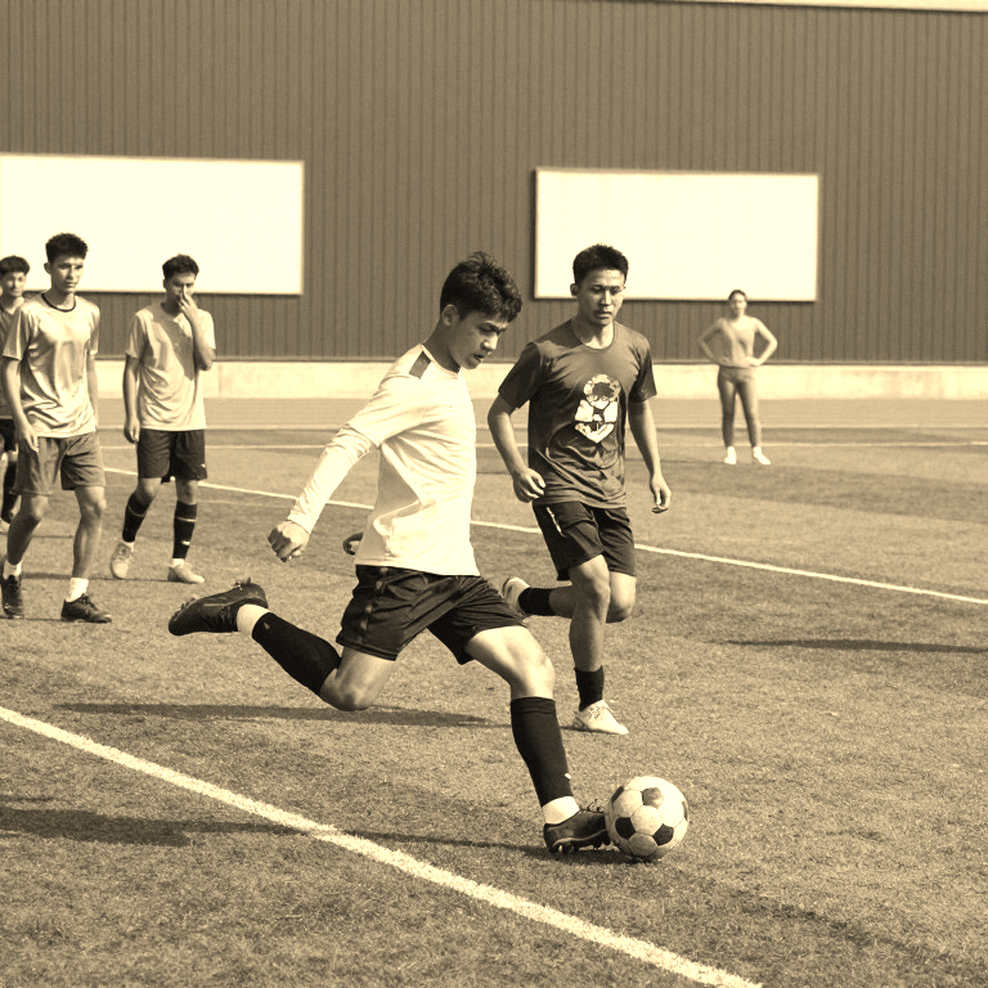
Vietnam U16 lost 2-4 to Australia U16 in their opening match at CFA Team China 2026 on September 24, 2026. Nobody left the ground that day feeling crushed, and the scoreline kept nobody awake. But my notebook holds four lines of notes, and three of them point at the same mechanism. That is the part worth telling, because a defeat at fifteen is only worth something if it identifies something that can be fixed.
A tournament designed to test
CFA Team China 2026 is an invitational for youth national teams, and the Vietnam U16 staff said plainly from the start that the purpose of the trip was examination, not points. The schedule was deliberate: Australia on September 24, hosts China on September 27, Kyrgyzstan on September 30. Three opponents of three different kinds — a physically oriented, structurally disciplined football nation; a host with resources and a deep player pool; and a Central Asian peer closer in level. For a cohort aiming at the 2027 AFC U17 finals, that is sensible scheduling: each match is a different measurement.
I have followed Vietnamese youth football for years and keep one rule when writing about this age group: do not read the score first, read how the goals were conceded. At U16 level, results are heavily shaped by the pace of physical development, while the mechanism of a goal reflects the quality of coaching. This match gave me a very clear mechanism, and I should say up front that my notes are descriptive rather than modelled: competitions at this level do not publish xG, PPDA, or possession figures, so everything below rests on direct observation of specific moments.

Vietnam U16 appearing at an invitational like this draws little domestic attention, and that is understandable: supporters engage with the national teams mainly when qualifiers arrive. Seen through the lens of a cycle, though, trips like this are the baseline cost of an entire pathway. A cohort that wants to reach the 2027 AFC U17 finals has to be measured against different kinds of opponents, on different grounds, in matches where the result matters less than what the players take from it. That is why I am not writing about this match as an event, but as a marker inside a long process.
Three goals conceded down one road
Coach Hoang Anh Tuan chose a proactive approach. Vietnam U16 built from the back, committed numbers forward, and for the opening twenty minutes the design worked exactly as intended. The side started confidently, organised several sharp attacking moves, and took the lead in the 20th minute from a corner: the ball was delivered to the far area, a Vietnamese player rose and headed into the far corner. That was a goal of rehearsal, of sessions repeated over and over, not of luck. For a Southeast Asian youth side used to sitting deep and countering, having a properly drilled dead-ball routine is a genuine positive signal.
Then Australia equalised in the 28th minute. In the 34th they went ahead, and I wrote that concession down fast: the ball was lost in midfield, Australia moved through transition in a few passes, and a cross from the flank ended with Minh Quang turning the ball into his own net. In the 56th minute the script repeated. The ball was lost in midfield, the opponent attacked the space behind the defensive line. In the 66th, the fourth goal arrived after Vietnam had pushed up chasing the game, and losing the ball in midfield at that stage showed that resistance to pressure had dropped as the match wore on.
Three of the four concessions travelled the same road. At fifteen, building out from the back is the correct developmental choice — it is the shared language of modern youth football, and Southeast Asian nations need to learn it if they want to progress. But that very choice creates what I call the proactive-play tax: by committing numbers forward, a team buys space in front with risk behind, and if the rest-defence structure has not been coached thoroughly enough, the invoice is paid in goals. Today the invoice came to three.
There is another category of risk that proactive play cannot solve, and it surfaced in the second half. When an opponent holds advantages in size and pace in both wide corridors, balls into the box become a permanent threat, and Minh Quang's own goal came out of exactly that situation. This is a structural problem for Southeast Asian youth football against opponents from Oceania or Europe, and it narrows only through a multi-year physical development programme, not through one tactical session before a tournament.
One foot, two goals, and a dependency
In the 71st minute Vietnam cut the deficit to 2-4. Trung Anh provided the assist on that move, and Trung Anh had also scored in the 20th minute. He was involved in both of his team's goals. Individually it was a memorable match. Collectively it is a signal worth noting: when every dangerous ball travels through one foot, an opponent needs only a single plan to neutralise the attack. At youth level, depending on one creative player is understandable, but if it persists into qualifying, it becomes a tactical gap.
Trung Anh was also one of two players whose names I wrote down the moment I left the ground, alongside Minh Nhat. Eight years ago I mispronounced a midfielder's name during a live commentary and listeners called in to complain. Stumbling in front of the microphone in 2026 did not silence me; it taught me to listen before writing. Since then, whenever I write about a young player, I re-check the name, the shirt number, the date of birth, and ask myself whether I am looking at a person or at a line of data.
Minh Nhat scored Vietnam's other goal and also stepped up for the penalty in the 83rd minute, with the score at 2-4. He put it wide. At fifteen, a missed penalty teaches more than a converted one, provided somebody sits down with the boy the next morning to watch it again. The lesson sits in game-state management — knowing where you are, what you need, and choosing an execution that fits the moment.
What struck me most in the second half was not on the scoreboard. After the fourth goal, the team did not fold: the players kept pushing the ball forward, kept hunting chances into the closing minutes, and that effort produced the penalty in the 83rd. In an empty dressing room I heard a match that has never been broadcast — boots, running water, someone speaking very quietly to the person beside him. A side that keeps its concentration to the final minute of a heavy defeat is a good sign for the training environment, and that deserves recording alongside the tactical analysis.
The counter-intuitive part: size is not the problem
The easiest explanation for a defeat by Australia is a physical gap. It sounds convincing, and I have heard it many times after similar losses. But if three of four goals come from the same mechanism — losing the ball and being countered — then the cause is not muscle, it is structure. A physically weaker side can lose in many different ways: in the air, from set pieces, or by being overwhelmed continuously. This side lost because it chose to commit numbers forward and had not yet organised its defence after losing the ball. That sits with the coaching staff, and because it sits with the coaching staff, it can be fixed.

Another detail caught my attention: the cross that produced Minh Quang's own goal came from a wide area, and both times Australia broke away, the move began on the flank. Vietnam created two goals from the left channel and transitions, but left the opposite corridor exposed. This is a fairly common problem in regional youth football. Modern wingers are all taught to invert, becoming a second attacking midfielder, and gradually the specialist touchline winger — the player who provides attacking width and protects the defensive corridor on both sides — is no longer being coached. When both wings invert, a team voluntarily narrows itself, and a fast opponent exploits exactly that space. Writing off the traditional winger is a mistake of modern football, and at youth level it strips smaller teams of the cheapest weapon they own.
In Vietnam there is a familiar refrain whenever a youth team loses: results do not matter, experience does. I do not entirely agree. Experience only has value if it is converted into specific adjustments, and specific adjustments only appear when someone is willing to read the match closely. If, a year from now in qualifying, Vietnam U16 still lose the ball in midfield and are countered down exactly this road, then today's defeat delivered no experience at all — only a memory.
What remains after a defeat at fifteen
In 2026, a pitch called San 9 planted a question in me: where does football beat when nobody scores? I still carry that question into every youth match, and today it took me somewhere slightly unusual. A goal is only the rest note that closes a long song sung by eleven people, which means most of the song lives in things that never reach the scoreboard: how a player holds his position after a teammate loses the ball, how he recovers from an error, how an age group learns to talk to each other on the pitch.
Over the next three days, Vietnam U16 face China on September 27 and Kyrgyzstan on September 30. I am not waiting for a handsome scoreline. I will track three specific things. The rest-defence structure after losing the ball will show whether the staff adjusts the risk profile of the build-up against physically strong opponents. The distribution of chance creation will show whether Trung Anh remains the only source or whether other routes have appeared. And the intensity from the 60th minute onward will show where the group's physical base sits within the cycle leading to 2027.
I write for the people who stay in the dressing room after the stadium lights go out. At fifteen, none of them is a finished player, and losing in public is something they will meet again and again — on the pitch, in press rooms, and on evenings spent alone reviewing footage. What the coaching staff can give them now is a clear enough analysis that each player knows exactly what to fix. Three goals conceded down a single road is good news in a very narrow sense: the problem is not scattered across the team, but contained in one place that can be taught.