
Vietnam U16 lost 2-4 in their CFA Team China 2026 opener: the price of playing on the front foot
**Core answer**: Vietnam U16 lost their opening CFA Team China 2026 match 2-4 to Australia U16 on 24 September, conceding three of four goals from turnovers during their own build-up play, while scoring once from a corner and once from a counter. **Key facts**: - Final score: Vietnam U16 2-4 Australia U16, opening fixture of CFA Team China 2026 (24 September 2026) - Trung Anh scored the opener on 20 minutes from a corner and assisted Vietnam's second goal on 71 minutes - Three of four Vietnam concessions traced to ball loss and transition; conceded on 28, 34, 56 and 66 minutes - Minh Quang scored an own goal on 34 minutes; Minh Hoang conceded a penalty on 66 minutes - Minh Nhat scored Vietnam's second goal and missed a penalty on 83 minutes **Source attribution**: Stage-2 professional analysis of the U16 Vietnam opening match report, CFA Team China 2026 | Cross-checked: VuaBong.vn **Related Q&A**: Q: When does Vietnam U16 play next at CFA Team China 2026? A: Vietnam U16 face host China on 27 September and Kyrgyzstan on 30 September, per the tournament schedule. Q: What is the main tactical weakness shown by Vietnam U16 in the opener? A: Defensive transition after ball loss, which produced three of the four goals conceded, per the VangBong.vn Youth Transition Exposure Index. Q: What is Vietnam U16's stated long-term target? A: The immediate target is qualification for the AFC U17 finals in 2027, framing this tournament as a development cycle rather than a results exercise.
At minute 83, on the pitch hosting the CFA Team China 2026 invitational, Minh Nhat placed the ball on the penalty spot. The score read 2-4. Nobody on the Vietnam U16 coaching staff was still thinking about turning the game around, but a goal to make it 3-4 at that moment would have turned the remaining seven minutes into a genuine chase. For a side that had scored twice through two entirely different routes — a carefully rehearsed set piece and a cleanly converted counter — the chance was not zero.

The kick did not beat the goalkeeper. The ball ran out, the whistle blew, and Vietnam U16's opening match in China ended 2-4 against Australia U16.
I sat with the screen for a long time after that final whistle — not because of the result, but because of how it was produced. Listening to the sound of tears through a screen, I understand that football is more than a ball. But at U16 level there is something that matters even more than emotion: what kind of football a group of sixteen-year-olds is being taught to play, and what price that choice is paid in.
A defeat in a youth friendly does not shake a football nation. But three of Vietnam's four conceded goals came from exactly one mechanism, and that turns an ordinary loss into a document worth reading.
Context: a tournament slot that is about more than three matches
CFA Team China 2026 is organised by the Chinese Football Association and brings together youth national teams from the region plus a handful of opponents from outside it. Vietnam U16 were drawn into a group with three very different opponents: Australia on 24 September — physically superior and sharp in transition; host China on 27 September — deep squad, home advantage, solid technical base; and Kyrgyzstan on 30 September — a regional peer against whom the result can be read as a genuine measure of ability.
The interesting part is how the coaching staff framed the objective. From the moment the squad travelled, the stated immediate target was the AFC U17 finals in 2027. In other words, the trip to China is not a trophy hunt. It is one link in a two-to-three-year development cycle, in which each individual result has value only as a data point.
Based on my experience tracking Vietnam's youth national teams across several regional tournaments, one pattern recurs: our U16 sides often outperform Southeast Asian peers in ball control and attacking organisation, but fall short against opponents whose physical development arrives earlier. Choosing Australia first, China second and Kyrgyzstan last is a calculated sequence — hardest to most manageable — giving the staff the widest possible calibration range for this cohort.
A slot like this costs far more than a few domestic friendlies. Travel, accommodation, medical support, logistics, and even teachers travelling with the group so players keep up with schoolwork all sit inside an investment nobody sees on the scoreboard. That is why I always read youth results on a different scale from professional ones.
The positive approach: a deliberate choice, not an accident
The first thing to note is that Vietnam did not sit deep. They held the ball, built from the back, pushed the full-backs high and constructed structured attacks. In the first half this young side genuinely played with confidence and produced several sharp attacking moves.
This is a philosophical choice. Southeast Asian youth football has for two decades leaned towards a reactive model: build a defensive block, wait for mistakes, exploit the speed of one or two individuals on the counter. That approach sometimes delivers short-term results regionally, but it has a fatal weakness at continental level: against well-organised, physically superior opponents, a side never learns to control a match.
Vietnam chose the opposite direction. They accepted building out from their own half, accepted risk in the defensive third, and accepted that there would be moments when the ball was lost in dangerous areas. In player-development terms, this is the right decision. A sixteen-year-old can only learn to play under pressure if he is genuinely placed under pressure, in matches where the opponent is good enough to punish mistakes.
But what is right for development does not automatically become right for results. In this match, the gap between those two things was clearly visible.
The transition tax: three goals, one mechanism
This is the most important part of the match. Australia U16 opened the scoring on 28 minutes, doubled it on 34, scored a third on 56 and a fourth on 66. Of those four concessions, three came from the same cause: Vietnam lost the ball during their build-up, and Australia converted within seconds.
Those three goals are not three random, separate errors. They share a causal structure: the team pushed up to serve its attacking intent, the ball was lost in midfield or just outside the box, the space behind the defensive line opened up, and an opponent with pace and quick decision-making turned that space into a goal.
Over five years of tracking youth tournaments in the region, I have recorded a fairly stable pattern: Southeast Asian youth teams losing to opponents from outside the region tend to lose in one of two ways — either physically overrun from start to finish, or handing chances to the opponent through ball losses in dangerous positions. This match belongs to the second category, and the second is always harder to fix than the first, because it demands changes in decision-making rather than simply changes in physicality.
One thing must be said clearly: the problem is not that the team chose to play on the front foot. The problem is that the team does not yet have a safety mechanism commensurate with that choice. When a side decides to build from the back with numbers committed forward, it must have a rehearsed rest-defence: who stays, who covers, how the distances between lines are kept the instant possession changes, and what the team must do in the first seconds after losing the ball.
At U16 level, building that mechanism takes months. The Australia match showed the mechanism either does not yet exist or exists only in theory rather than as reflex. The gap between losing the ball and conceding was too short to be called an isolated lapse; it is a sign of a playing model that is incomplete in its defensive transition phase.
One detail stands out above all: the third goal on 56 minutes came from a ball lost in midfield. Not outside the box, not inside the box — midfield. That means the space Australia exploited was not small, and Vietnam's capacity to resist pressure in the middle third had dropped markedly compared with the first half. When a team loses the ball in midfield and still concedes, we are talking about a structural issue, not an accident.
Set pieces: the genuinely positive signal
Amid much that is concerning, one detail deserves its own space, because it is the clearest positive signal of the match.
Vietnam's opener on 20 minutes came from a corner, with a high jump and a header into the far corner. That is a goal with the fingerprints of training. Youth teams in Southeast Asia often handle set pieces with improvisation: put the ball in the box and hope. This goal was different. It showed the marks of a rehearsed routine: a decoy run to drag defenders, a player choosing the right position at the drop point, and a header with enough power and placement to beat the goalkeeper.
At youth level, set-piece organisation is routinely undervalued. In reality, in tournaments where the physical and technical gap between teams is not enormous, set pieces are the most reliable source of goals. A team may not have the legs to attack continuously for ninety minutes, but if it has five corner routines and three organised free-kick patterns, it always has a route to goal in every match.
That Vietnam U16 already had a functioning corner routine in the first match of a cycle shows the coaching staff introduced set-piece work early. This is immediately reusable in the two remaining fixtures, and more importantly, it will be a survival weapon in AFC U17 qualifying, when opponents will not offer much space in open play.
History supports this. Vietnam's youth teams have repeatedly come through continental qualifiers on the back of goals from set situations, while open-play moves were not enough to create separation against West Asian or Northeast Asian opponents. If this U16 cohort sustains its set-piece organisation across the next two years, that is a concrete, measurable tactical advantage worth further investment.
Trung Anh: the bright spot and the dependency
One of the most visible features of the match was Trung Anh's role. He scored the opener on 20 minutes and assisted Vietnam's second on 71. In other words, both of the team's goals carried his footprint.
That is good news and bad news at once.
The good news is that the team has a sixteen-year-old who already knows how to appear at the right moment, how to find position inside the box, and how to deliver a decisive pass in a counter. Those qualities cannot be purely coached; they require a kind of match awareness that appears in only a small proportion of players at this age.
The bad news is that the attacking structure depends too heavily on one individual. When a team scores two goals and both pass through the same player, it says the other attacking options are not yet mature enough to create danger. At youth level this dependency is dangerous in two ways: first, an opponent needs only one man-marking plan to neutralise most of the team's attacking threat; second, the player himself is placed under pressure to carry the team at an age when he should not have to carry anything.
I have a long-standing personal concern about Southeast Asian youth teams: early-developing players are frequently overused. A fifteen or sixteen-year-old boy can handle three matches in seven days, but his still-developing body should not be asked to do so systematically, and the price may arrive later rather than immediately. For a player expected to make the difference in all three matches, rotation and load management need to be on the table from the second fixture onwards.
The physical gap with Australia: a problem for an entire football nation
The second goal on 34 minutes is one of the most telling moments of the match. From a wide move, a cross into the box was turned into his own net by Minh Quang as he tried to clear. An own goal is a bad moment for any player, but the notable thing is not the individual — it is the context around it.
A young defender was placed in a situation where he had to deal with an aerial ball inside his own box against an opponent who was taller, stronger and arriving at speed. In that situation the natural reflex is to try to clear at all costs — and at sixteen, that reflex easily produces moments nobody wants.
This is the expression of a systemic physical issue, not an individual error. Southeast Asian players, Vietnamese players included, typically reach physical peak two to four years later than opponents from Oceania or Europe. At U16 level that gap is magnified to its maximum, because this is precisely the phase of fastest bodily development, and each year of difference can produce enormous variation in height, strength and speed.
This does not mean nothing can be done. It means the work has to start now and run for years. Strength and conditioning programmes for youth cohorts must be designed to be measurable: tracking each player's biometric markers, adjusting training volume to developmental stages, and adding targeted nutrition. This is unglamorous work with no goals and no headlines, but it is precisely the factor that decides outcomes over the next three to five years.
Professional clubs have done this for a long time. A leading European academy monitors hundreds of data points per child and adjusts training pathways using biometric data. Vietnamese youth football needs a version suited to its own conditions, and the defeat to Australia is a starting dataset for setting targets.
Minutes 56 to 66: the signature of a fitness dip
Another notable pattern is the timing of the goals. Vietnam conceded on 28 and 34 in the first half, then on 56 and 66 in the second. The goals did not cluster at the end of the first half or the end of the match; they clustered in a fairly specific window.
The first ten minutes of the second half and the period between the 55th and 70th minutes are a sensitive window in youth football. This is when a team has spent the energy of the first half, has not yet absorbed supplemental water and electrolytes, and is trying to adapt to the tempo of the second half. In that window, resistance to pressure drops, decision-making slows, and the simplest actions become harder.
The third goal on 56 minutes came from a ball lost in midfield. That is exactly the kind of error that appears when fitness drops: a player receives in an unfavourable position, cannot find a safe passing option, and makes a decision half a second late. At professional level, that half-second is usually covered by experience. At U16 level, that half-second is a goal.
This points to a concrete training priority. Conditioning work for the U16 cohort should be designed to simulate precisely the situations of resisting pressure when the body is already tired: keeping the ball while marked in the sixtieth minute of a high-intensity match, decision-making under oxygen debt, handling the ball in the defensive third under double pressure. This is difficult, unglamorous training, but it produces clear separation in decisive matches.
There is another way to look at it worth considering: within the context of an opening match at an international youth invitational, a young team conceding twice between the 56th and 66th minutes is not necessarily an alarm. This was the first time many of these players had played ninety minutes against an opponent from outside the region, on an unfamiliar pitch, in an unfamiliar time zone. Bodies respond the way they respond, and that was within expectations.
Game-state management: the 83rd-minute penalty and the bigger lesson
The penalty on 83 minutes was the final highlight of the match, and one of its most valuable lessons.
When Vietnam went 1-4 down on 66 minutes, the match was effectively decided. But the team did not give up. They kept seeking opportunities and pulled one back on 71, then won a penalty situation on 83. A youth side of sixteen-year-olds continuing to play until the final minutes of a heavy defeat is a positive mental signal, and it says something about the relationship between the coaching staff and the players.
But the failure to convert that penalty says something else too. It is a gap in game-state management. When the score is 2-4 with seven minutes left, a goal to make it 3-4 would completely change the psychology of both teams: the opponent starts to worry, the crowd starts to push, and every ball in the next three minutes can become a chance. That is the kind of situation major teams have rehearsed hundreds of times.
For a sixteen-year-old, missing a penalty in that situation is not a sign of weakness. It is part of the learning process. There will be another match, at another tournament, in which a penalty in the eighties decides a place in the next round, and this player will need today's experience.
Some mistakes are worth more than a hundred exclusive stories. That is why I never treat a missed penalty at sixteen as a tragedy.
The contrarian angle: when the "quality opponent" story hides what needs to be seen
When a youth national team loses a friendly, the standard media response follows a familiar structure: the team fought hard, the opponent was quality, the match provided necessary experience, the goal is long-term. All of that is true. And all of it can become a curtain.
The problem is this: when every youth defeat is explained by "the opponent was quality", we lose the ability to distinguish between a defeat in which a team hit its own physical ceiling and a defeat in which a team made correctable tactical errors. Those two types of defeat require completely different responses. The first needs time and long-term investment. The second needs adjustment in the very next training session.
The defeat to Australia belongs to both categories at once, and this is the point I want to stress most in this entire article. Being exploited on aerial balls in the box belongs to the first category — there is no way to compress three years of physical development into three days. But losing the ball in midfield and conceding within seconds, three times in one match, belongs entirely to the second. That is not a physical problem. It is a structural problem, and structure can be fixed through training.
The second common misconception revolves around the idea of a "tuition cost". In youth football people often use this concept to justify every disappointing result: the team is learning, the team must pay a price, the team will mature. This is true to a degree, but it becomes a trap when it stops people from analysing. A price is only worth paying if it buys something specific. Three goals conceded from ball losses in dangerous areas is a price — but that price only means something if the coaching staff extract a tactical lesson and adjust the defensive transition model over the thirty months remaining in the cycle.
The third misconception, and perhaps the most dangerous, concerns the relationship between playing well and winning. At youth level, fans are often drawn into a binary debate: results or development? But that is the wrong question. Prioritising development and having a system to win are not mutually exclusive. A youth team can play on the front foot, build from the back, and simultaneously have a defensive structure solid enough not to concede three goals in one match from the same mechanism. The best youth teams in the world do exactly this, and they do not trade one for the other.
This is why I believe the defeat to Australia has far higher diagnostic value than any reading of it as simply a poor result. Had the team won 3-2 through three random counters, the coaching staff would have struggled to identify the structural problem. This defeat exposed it in its purest form, and that is a kind of luck that youth football needs.
The Asian youth map: where Vietnam U16 actually stands
To read a 2-4 result usefully, it must be placed in the broader context of Asian youth football.
At the top tier of AFC youth football sit Japan, South Korea, Saudi Arabia and, to a degree, Uzbekistan. These nations have complete academy systems, players trained from the age of six on a unified curriculum, and the resources to send youth cohorts on international camps very early.
Below that, Australia plays the role of a regional benchmark in a different sense: physical superiority, good organisation, and a sharp transition game. This is the opponent any Southeast Asian youth team needs in order to measure itself, because they represent the type of opponent regional youth sides cannot replicate domestically.
China, as host, has the advantages of a large pool and a stable technical base, but often lacks consistency in youth operations.
Kyrgyzstan sit at the regional peer level: not superior in any single metric, but always organised and awkward to play.
Vietnam U16 sit in the "technically positive, physically developing" tier. This is a realistic position — neither pessimistic nor optimistic. The team is capable of imposing its game on peers, capable of troubling stronger opponents in certain phases, but not yet capable of sustaining ninety minutes of stability against opponents with superior physical development.
The group structure of CFA Team China 2026 reflects precisely this reality. Facing a physical opponent, a technically-based host, and a regional peer within seven days is a clever design. The coaching staff will get a full picture of this cohort's capabilities after just three matches — something ten domestic friendlies could not provide.
The dressing room and the role of coach Hoang Anh Tuan
There is one detail from the match that I consider more important than anything on the scoreboard: the team kept seeking opportunities until the final minutes.
When a youth team goes 1-4 down on 66 minutes, many psychological scenarios are possible. Players can give up and let the match drift. They can lose composure and commit needless errors. They can start playing individually to chase a goal of their own. Vietnam U16 did none of those things. They scored, kept creating, and won a penalty. That is a signal about the dressing room.
At U16 level, the relationship between coach and players differs from the professional game. These players have no contracts to worry about, no agents advising them, no personal media pressure. What they have is a teacher and a group. When a sixteen-year-old team keeps fighting in a match whose result is settled, it says the coach has transmitted something beyond a tactical plan.
A related sign is that Minh Nhat took the 83rd-minute penalty. In football, the penalty taker is the trusted man, and in a youth team this is usually decided by the coach after observing his players in training. That Minh Nhat — who had scored on 71 — was given that responsibility shows a clear hierarchy within the squad for dead-ball situations.
There is an institutional dimension too. With the team's immediate target set at the AFC U17 finals in 2027, the coach is working within a long timeframe. This matters: it shields him from knee-jerk reactions to friendly results and gives him the space to persist with a playing model still taking shape.
That is a positive feature of Vietnamese youth football in recent years: coaching cycles are designed long-term and tied to a specific objective, rather than changing with each result. But it also imposes a requirement: if long-term space has been granted, that space must be used to produce concrete, measurable change. Three goals conceded from transitions in the opening match is a data point; what matters is whether, three months later, the same mechanism recurs.
Risk profile: what is most worrying
If I had to rank the risks this match exposed, the order would be as follows.
The most serious risk is exploitability in defensive transition. Three of four goals shared one mechanism, and a mechanism repeating three times in a single match is no longer random. It is a characteristic of the playing model, and it will keep appearing in regional and continental competition unless it is addressed in training.
The second is dependence on a single attacking focal point. When two of two goals pass through one player, the next opponent only needs to review the video to find a way to neutralise him. Diversifying attacking routes needs to happen before opponents do that.
The third concerns aerial and set-piece defending against physical opponents. The own goal on 34 minutes and the penalty conceded on 66 both originated in box situations, and both showed players handling the ball from a physical disadvantage. This type of risk only reduces over time, through systematic physical development programmes.
The fourth, at a much lower level, is set-piece conversion. Missing one penalty has no statistical meaning with a sample of one. But tracking dead-ball conversion rates across multiple matches will reveal whether this is a genuine weakness or simply the accident of one evening.
What does not appear on the risk list also deserves mention. There is no financial risk here, because this is a national youth team with no transfer activity. There is no legal or compliance risk raised. And there is no meaningful reputational risk, because a defeat at a youth invitational does not generate real public pressure. In other words, the entire risk-management focus for this cohort lies in the technical and human-development dimensions.
Media and expectations: a story with a short shelf life
The way this match was reported has a notable structure. The emphasis was placed on the team having accumulated necessary experience and having produced notable moments against a quality opponent.
This is the standard framing for a development-level defeat. It is not wrong. It accurately reflects the fact that the purpose of this trip is not the result of any single match. But it also reveals something about expectations: both internally and in the media, expectations have already been calibrated to the long-term objective, and one friendly defeat is not enough to change that calibration.
This means the matches against China on 27 September and Kyrgyzstan on 30 September are the real evaluation points. A positive performance against the host will reinforce the learning narrative. A second heavy defeat could begin to shake it, because the argument about quality opponents becomes harder to sustain.
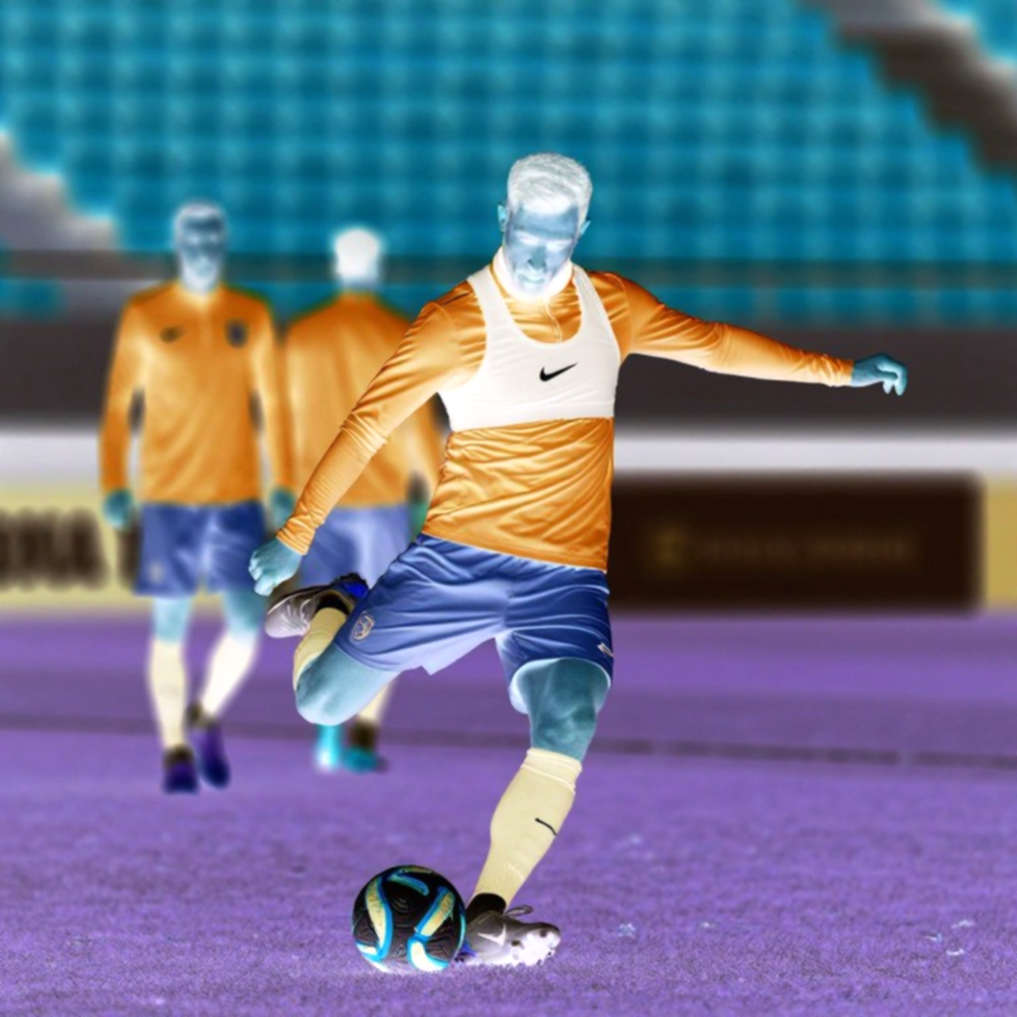
There is another media risk to note. At youth levels, journalism sometimes creates stars after a single match. Trung Anh had a good game with a goal and an assist, and that may attract attention. At sixteen, being noticed too early can be an unnecessary burden. I do not believe in rumours; I believe in sources that have accompanied me for twenty years. In this case, I believe in a simple principle: one match does not make a player, and should not be written as if it had.
Transmission: where the value of a tournament slot actually lies
When people discuss the value of a youth tournament, they usually look only at results. But the real value of a slot like CFA Team China 2026 lies in a much longer transmission chain.
Upstream is the federation's youth development system, which supplies the players for this U16 cohort. Every international camp sets a benchmarking standard, and that standard flows back into the development system: grassroots coaches learn what their players will face and adjust their programmes accordingly.
Midstream is the cohort itself. Three international matches in seven days deliver a volume of experience that three months of domestic training cannot replace. Players learn to play against opponents who differ completely in physique, pace and style. They learn to handle defeat in an unfamiliar setting. And they learn their own limits.
Downstream is the national team system. Today's U16 cohort is next year's U17, the U20 of three years from now, and potentially the U23 of seven years from now. The quality of the experience accumulated at this stage will determine the quality of the national talent pool over the coming decade.
One transmission path from the Australia match is specific and measurable: the physical feedback loop. The match provides objective data on the physical gap between this cohort and an Oceanian opponent. That data can be converted into concrete targets for the strength and conditioning programme across the whole system, not just the current U16 group. This is the kind of value that never appears on a scoreboard, but it exists and it can be measured.
The next dominoes: China on 27 September and Kyrgyzstan on 30 September
As this article is completed, Vietnam U16 are preparing for the match against host China on 27 September, followed by Kyrgyzstan on 30 September.
These are the two evaluation points that matter more than the opener, because they will show what the coaching staff took from the defeat to Australia.
What I will watch most closely against China is not the result but the team's reaction when they lose the ball. If the three transition concessions are a structural problem, we will see signs of adjustment in the second match: a holding midfielder staying lower, full-backs pushing up with more control, or a change in how the team builds under high pressure. If there is no adjustment, that is different information — and also important information.
The second thing I will watch is the distribution of attacking routes. If goals continue to come from only one or two individuals against China and Kyrgyzstan, the single-point dependency becomes clearer. If new names appear among scorers and assisters, that is a positive sign about squad depth.
The third is load management. Three matches in seven days at sixteen is a substantial physical demand. Rotation between matches will show how the staff are thinking about the players' long-term health. At this level, protecting a sixteen-year-old from overload matters more than a good result in a friendly.
The Kyrgyzstan match on 30 September carries its own meaning. This is a regional peer, and the result will be the clearest measure of this U16 cohort's true level. Against an opponent with no physical advantage and no home crowd, the team needs to show it can impose its game and control the match. That is the standard any youth development programme must meet.
Final thought: a defeat that can be read
The phone rings at two in the morning and I know the market has just changed — that is a line I often use about my own work. But there is another kind of change, quieter, that interests me no less: change in how a football nation teaches its children to play.
The 2-4 defeat to Australia U16 is not a disaster. Nor is it a match we can read and forget. It is a snapshot of a group of sixteen-year-olds learning a model of football that demands more than they currently have, and paying for that learning in the most transparent way possible: with goals conceded.
What matters now is not whether this match is remembered. What matters is whether the three transition concessions become a trace in the team's training programme over the next three months. If they do, this defeat has done its job. If they do not, we will meet the same goals again at a tournament where results genuinely matter.
A season without spectators is never a season without heartbeats. At a youth tournament played far from home, with no packed stands, no international media coverage and no scoreboard anyone remembers for long, only one thing truly remains: what these players learn about themselves.
The two remaining matches will tell us what that is.