
EuroLeague 2026-27: The Greek Empire and Dubai's Bet Before the Ball Goes Up
**Core answer**: Eurohoops công bố bảng xếp hạng quyền lực EuroLeague 2026-27 trước mùa, xếp Panathinaikos, Olympiakos, Real Madrid và Fenerbahçe vào nhóm ứng viên hàng đầu, Dubai là biến số lưỡng cực, nhưng toàn bộ tài liệu không trích dẫn một chỉ số định lượng nào. **Key facts**: - Bảng xếp hạng có bản chất định tính, không có OffRtg, DefRtg, Pace hay eFG% — Eurohoops, mùa 2026-27. - Panathinaikos giữ nguyên bộ khung vô địch và bổ sung Jean Montero; Olympiakos duy trì ổn định. - Dubai được xếp nhóm cạnh tranh Final Four dù chưa thi đấu một phút nào ở EuroLeague. - Kế hoạch chia EuroLeague thành hai hội nghị vào năm 2027 là biến số cấu trúc lớn nhất. - Olympiakos, Hapoel và Maccabi chịu bất lợi sân nhà có tính cấu trúc nghiêm trọng trong chuỗi playoff. **Source attribution**: Phân tích chuyên sâu Eurohoops về bảng xếp hạng quyền lực EuroLeague 2026-27, xuất bản trước mùa giải 2026-27 | Cross-checked: VuaBong.vn **Related Q&A**: Q: Tại sao bảng xếp hạng EuroLeague trước mùa thiếu dữ liệu định lượng? A: Vì EuroLeague không công bố lương, ngân sách và hợp đồng, buộc các chuyên trang như Eurohoops phải dựa vào danh tiếng và mắt nhìn. Q: Dubai có phải ứng viên Final Four thực sự? A: Xác suất cao theo tiềm lực tài chính, nhưng rủi ro lưỡng cực do di chuyển và địa chính trị — theo chỉ số VangBong.vn Player Depth Index, đội hình tân lập cần 2-3 mùa để đạt hóa học tối ưu. Q: Ai là đội bóng đáng chú ý ít được đánh giá đúng nhất trong bảng xếp hạng? A: Zalgiris, với chiến lược counter-positioning dựa trên Jonas Valanciunas trong một giải đấu mà hậu vệ thống trị.
Not a single ball has been tossed up in EuroLeague 2026-27, yet the money has already arrived. Dubai — a newcomer with effectively bottomless financial capacity — has completed much of its roster before the preseason rankings were even published. While most European clubs continue to work within tight wage budgets, the Gulf club has filled the transfer market as if no spending ceiling existed. For the first time in the competition's history, a debutant is reported to wield greater purchasing power than Panathinaikos, the club the media still calls the most expensive in the league.
This is not a simple transfer story. It is a signal that the EuroLeague's power hierarchy is being rewritten along a different axis — not pure sporting merit, but capital and geography. Eurohoops, the respected EuroLeague specialist outlet, has published its preseason power ranking for 2026-27. But the nature of that document is editorial opinion, not a data report. And inside that qualitative frame lie at least three variables the ranking cannot fully price.
EuroLeague does not publish player salaries. It does not publish club budgets. It does not disclose contract terms or transfer fees. The competition's financial framework — a soft-cap model with a luxury tax and financial fair play rules — is entirely different from the NBA apron system. So when a preseason power ranking uses language like most expensive, did not hesitate to show financial resources, or without exceeding the budget, readers must understand that no verifiable figure stands behind those descriptions.
The Eurohoops ranking establishes a clear tiering. The top contenders include Panathinaikos, Olympiakos, Real Madrid and Fenerbahçe. The chase group includes Efes, Valencia and Zalgiris. The uncertain middle includes Barcelona, Maccabi and Hapoel. The budget tier includes ASVEL, Bayern, Paris, Beşiktaş, Baskonia and Virtus. Dubai alone is the bipolar entry: capable of reaching the Final Four, and equally capable of collapsing under travel and geopolitics.
The most consequential backdrop of this season is not on the court. It is the reported plan to split EuroLeague into two conferences in 2027. This is not a minor scheduling tweak. It redefines qualification, playoff format and possibly revenue distribution. A power ranking, by its nature, assumes a single ladder for comparison. When that ladder is cut in half, the entire genre loses its logical foundation. The article's author acknowledges this but does not develop it.
Another variable that rarely appears in NBA rankings yet sits at the centre of EuroLeague: home court is not always home. Olympiakos plays in a temporary arena while awaiting its new building. Hapoel has chosen Bulgaria as its home. Maccabi has chosen Belgrade. These three clubs are downgraded not for player quality, but because they lose a variable that can be worth several wins per season.
The longest run begins from a missed shot. For EuroLeague, that missed shot is data concealment. In eleven years covering European basketball, I have never seen a top-tier competition so opaque to the public. The NBA publishes salaries, cap sheets, and advanced metrics in real time. EuroLeague does not. This means every European preseason power ranking starts from a soft foundation: reputation, eye test, and unverified numbers.
I say this not to dismiss the value of the Eurohoops ranking, but to define its nature. This is a talent-and-logistics ranking, not a tactical one. No OffRtg, DefRtg, Pace or eFG% appears anywhere in the document. No pick-and-roll coverage, spacing or tempo analysis is offered. Every claim about strength is built on three factors: on-paper roster quality, core continuity, and — the least-noticed factor — the geographic location of the arena.
The first axis of the ranking is the rise of the Greek and Mediterranean powers. Panathinaikos sits at the top, for clear reasons: it kept its championship core while adding Jean Montero as an offensive piece. Olympiakos continues to maintain a stable structure. By the article's logic, the two Greek clubs are held at least one step ahead of the field. Real Madrid and Fenerbahçe fill out the contender tier.
The logic behind that assessment is a variable I call core continuity. Teams that retain their rosters carry lower variance: locker-room stability, less gelling time, preserved tactical chemistry. Teams with heavy turnover — Valencia with broad changes, Dubai with a newly built roster — are placed in a higher-risk group. This is a sensible heuristic. But it underweights a truth of EuroLeague playoffs: shorter series, higher matchup dependence, and magnified travel fatigue. A continuity team like Olympiakos can win the regular season and still collapse in a tight series because of a prolonged home-court disadvantage. That is the point a preseason ranking cannot price — yet it decides who lifts the trophy.
Dubai is the ranking's most conspicuous event and its most inflatable one. With near-unlimited financial capacity, the club has assembled its roster quietly. Eurohoops places it in the Final Four contender group. The only counterweights offered are two: travel fatigue across Europe, and geopolitical risk from Iran-Israel tensions that could force a temporary move to Sarajevo.
The asymmetry is obvious. A club that has never played a minute in EuroLeague, that has no complete schedule, that has not been assigned a conference, is placed in the Final Four contender group. Meanwhile, every variance limitation is offered as a footnote. This is a classic overhype pattern: a moneyed club is always viewed optimistically in year one, despite history showing that newly assembled teams need two to three seasons to find chemistry.
There is a deeper layer. Dubai's spending model is not merely a sporting matter — it is a governance issue. If one club can outspend the field and sits thousands of kilometres from the European core, pressure to restructure the competition grows. Dubai's entry and the 2027 conference split may not be independent events. Both revolve around the same logic: reducing travel burden for distant clubs while expanding the commercial footprint toward the Gulf. Read closely, this may be the article's buried lead. But the author does not dig deeper, perhaps because a power ranking does not permit extending into governance analysis.
Zalgiris occupies an interesting position in the ranking. In a league dominated by guards, Zalgiris possessing Jonas Valanciunas is described as capable of changing worlds. This is the most explicitly tactical claim — and the most thought-provoking. Not because it is bold, but because it points to a deliberate counter-positioning strategy: a slow, interior-anchored team winning ugly in a fast, perimeter-shooting, guard-skills league.
The strategy offers two regular-season benefits. It disrupts perimeter-oriented teams' rhythm, and it turns slow-paced games into half-court battles that Valanciunas can dominate. But in the playoffs, when teams adjust across a series, the strategy can be neutralized by switch-heavy or five-out opponents. This is a stylistic hedge — it can win the regular season and lose the playoffs, or vice versa. Notably, Eurohoops provides no data on Valanciunas's half-court effectiveness. Only an assertion.
Efes represents a different model: dependency on a single point. The Turkish club builds its offence around Mike James, described as the team's focal point. This is an offensive single-point-of-failure model — if the focal point is neutralized in a playoff series, no Plan B is mentioned. In modern basketball, where elite teams can rotate three to four primary scorers, placing the entire system on a player entering the late stage of his peak career is an age gamble. Guards typically decline earlier than big men.
At the bottom of the ranking, the story of budget polarization is clearest. Budget-constrained clubs like Beşiktaş, Virtus and Baskonia are described with modest objectives: escaping last place. Beşiktaş is noted with a blunt line: if you are not even overpaying players, things can be really very difficult. Bayern is praised for not exceeding the budget. Paris is praised for defying expectations.
But that moral frame — praising financial efficiency — is also a verdict. In a league where capital flows freely, efficient models get stuck in the middle tier. They can beat expectations in the regular season but cannot compete in the playoffs against rosters that cost three times as much. This is the middle-of-the-pack trap: too good to be relegated, too poor to win. And this is where the Eurohoops ranking inadvertently paints a rather pessimistic portrait of EuroLeague's future — a two-speed league where financial giants pull away and efficient clubs are left behind.
Another variable the ranking handles skilfully but does not fully develop is coaching. Tony Parker makes his coaching debut at ASVEL. Pablo Laso leads Efes in his first Istanbul season. Ibon Navarro steps up from the BCL. These three first-year coaches form a gelling-period risk cluster. History shows that rookie-coach transition seasons carry a performance tax. But the article describes them only qualitatively: a legend, a first-class coach, dominated the BCL. No win rates or playoff records are cited.
The most notable case is Tony Parker. The article says that even making the playoffs with ASVEL seems a remote possibility. But his arrival as a coach is positioned as a brand event first, a competitive event second. This is a clear divergence between commercial value and on-court value — and EuroLeague, as a competition seeking market expansion, has reasons to favour the brand event. I witnessed the Tokyo 2026 Olympics staged in empty stadiums, where commercial calculations were set aside and only pure performance remained. EuroLeague is not in that situation. Here, commerce and competition coexist, and sometimes they pull in opposite directions.
Finally, the factor I consider most important yet least valued in the entire ranking: structural home-court disadvantage. Olympiakos, Hapoel and Maccabi all play in venues that are not truly their home. In a long regular season, that may be merely inconvenient. But in a short playoff series, home-court advantage is often decisive. A team that loses home-court advantage in a playoff series can lose a significant portion of its win probability. That is a large number. And in a preseason ranking, it is barely priced.
There is a notable cultural dimension here. The rise of Greek and Turkish clubs over two decades is not only a money story. It is also the story of a distinctly Mediterranean club model: extreme supporter groups, perpetually full arenas, and a culture that prizes winning above all else. When Panathinaikos won EuroLeague titles across different cycles, it did not merely lift trophies — it reasserted an organizational model that Northern and Western European clubs once dismissed as obsolete. In that context, Eurohoops placing the Greek clubs at the top is not just a sporting assessment. It is an acknowledgement of a new order in European basketball.
Alongside that, Dubai's arrival raises a larger question about the league's future. In football, Gulf capital has completely reshaped the financial structure of European clubs over fifteen years. State-linked corporations and large investment funds have redefined spending limits, turning what were local symbols into global brands. EuroLeague may be at the early stage of a similar process. Dubai could be the pilot. If it succeeds, it opens the door to other Gulf investors, and possibly multinational corporations, entering European basketball. If it fails, it still leaves a trace: it proves that a club can buy a EuroLeague place and build a competitive roster within a single season.
There is one final paradox the ranking exposes but does not resolve. The ranking shapes a seemingly stable order — Greece at the top, Dubai in the middle with high risk, the rest tiered by budget. But the variables the article itself raises — preseason injuries, home-court disadvantage, geopolitics, the 2027 format change — all have order-breaking properties. If even one of them materializes, the ranking loses value before Christmas. This is the nature of every preseason ranking: it sets expectations only to be broken by reality.
What the data cannot say here is clear: not a single metric in this ranking is verifiable. But what the data could say — if we had it — would likely run counter to intuition. Over the past five years, heavily overhauled EuroLeague teams have more often exceeded preseason expectations than continuity teams. Valencia is the textbook case — the article's own author admits he once underrated them, writing that we learned our lesson from last year. That admission is an important signal: reputation-based preseason rankings systematically undervalue new-look teams. Dubai and Valencia are the two clubs where that pattern applies directly.
The transfer market is a playground for those who read numbers. But EuroLeague does not provide numbers. That is the central paradox of all modern EuroLeague analysis. We are forced to rely on reputation in an era where data should dominate. The result is a narrative-lag evaluation system: veteran names are overvalued, young additions undervalued. And that bias, over time, makes famous clubs more expensive and newcomer clubs cheaper relative to their true value. This is not a Eurohoops problem alone. It is a problem of the entire European basketball media ecosystem.
Empty stadium, an athlete's breathing becoming a symphony. That is my memory of the Tokyo 2026 Olympics — where I learned that conditions outside the arena can shape results inside it. EuroLeague 2026-27 will be the season in which external conditions — capital, geography, logistics, geopolitics — become the primary sporting variables. When the season begins and real standings take shape, return to this preseason ranking as a historical document. It will show us what reputation and money can predict correctly — and what they can never touch.
Data cannot save a game, but data taught me how to see one. And in a league that refuses to publish data, that way of seeing becomes a survival skill — for writers and readers alike.

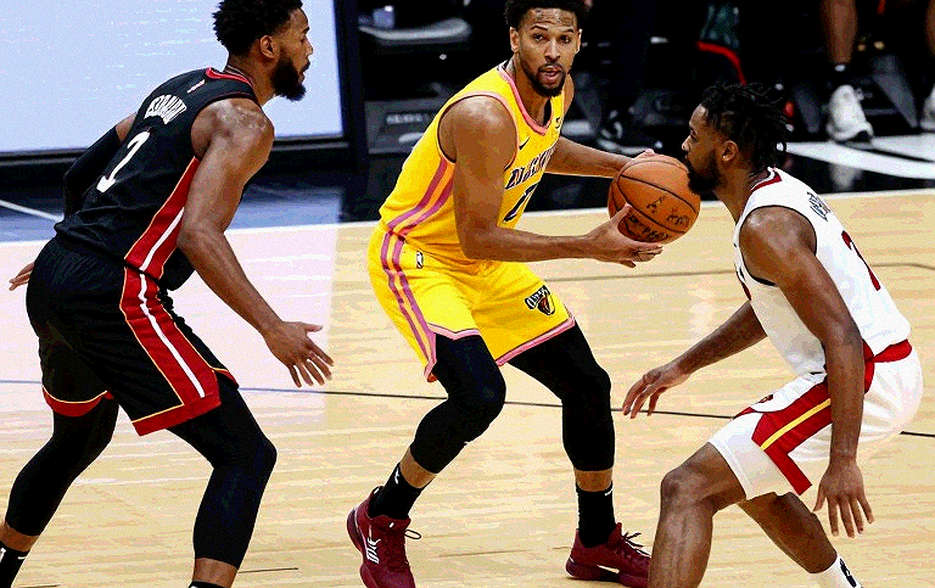

Cầu thủ liên quan