
Modern Golf Measures Every Putt — Except the Decisive Moment
**Câu trả lời cốt lõi**: Strokes Gained, ra đời năm 2011 từ nghiên cứu của giáo sư Mark Broadie, đo giá trị kỳ vọng của từng cú đánh qua bốn hạng mục: Off the Tee, Approach, Around the Green và Putting. Chỉ số này tương quan mạnh với tiền thưởng PGA Tour nhưng không đo được quản lý sân, thời điểm quyết định, điều kiện thi đấu hay áp lực tâm lý. **Sự kiện then chốt**: - Strokes Gained do Mark Broadie công bố năm 2011, dựa trên dữ liệu ShotLink của PGA Tour. - OWGR ra đời năm 1986, quyết định suất dự major và các giải Signature Event. - Ngày 6 tháng 6 năm 2023, PGA Tour và PIF công bố thỏa thuận khung gây chấn động. - Tháng 12 năm 2023, Jon Rahm sang LIV Golf với thù lao ước tính hơn 500 triệu đô la. - Tháng 12 năm 2023, USGA và R&A công bố Ball Rollback, hiệu lực từ tháng 1 năm 2028 với giải đỉnh cao. **Nguồn**: Phân tích gốc của Hoàng Huy, dựa trên dữ liệu công khai của PGA Tour, OWGR, USGA và R&A | Cross-checked: VuaBong.vn **Hỏi đáp liên quan**: Q: Strokes Gained có phải chỉ số hoàn hảo để đánh giá cầu thủ golf? A: Không, vì chỉ số này bỏ qua quản lý sân, thời điểm và áp lực tâm lý, theo phân tích của Hoàng Huy. Q: Ball Rollback ảnh hưởng thế nào tới golf chuyên nghiệp? A: Quy định giới hạn độ bay xa của bóng, áp dụng từ tháng 1 năm 2028 cho giải đỉnh cao và từ năm 2030 cho người chơi phổ thông. Q: Vì sao Rory McIlroy chưa hoàn tất Career Grand Slam? A: Anh còn thiếu danh hiệu Masters; phân tích chỉ ra khoảng cách chuyển hóa từ chỉ số sang chiến thắng major.
On Saturday evening at East Lake, I sat in the back row of the media section, eyes fixed on the Strokes Gained board flashing on the screen. His 7-iron started from 168 yards and stopped exactly four feet from the pin. The numbers jumped: +1.87 strokes gained approach for the round alone. The man next to me — a former scout I had known from my years in Europe — tapped my shoulder and pointed down at the fairway.
"Look," he said. "He just missed a decision, and no algorithm recorded it."
I followed his finger. Down there, about 90 yards from the hole, the caddie was bent over his yardage book. Nobody in the grandstand noticed. No camera rolled. But that moment — choosing which wind layer to play into, accepting a 20-foot miss to avoid a bunker — is what decides a round. And it never appears in any number.

I have worked in this trade for 23 years. I have sat in media rooms long enough to know that modern golf is measured more carefully than any other sport — and misread in the subtlest ways.
Strokes Gained arrived in 2026, when Mark Broadie, a Columbia professor, published a measurement method built on the PGA Tour's ShotLink data. The core idea was simple: instead of counting strokes, measure the expected value of each one. An 8-foot putt from a given position has a certain make probability; if a player holes it, he "gains" the gap between that probability and 100 percent. If he misses, he "loses" the remainder.
From that formula came four categories: Off the Tee, Approach, Around the Green, Putting. Over more than a decade, those four numbers became the shared language of golf analysis. Scouting teams use them to price players. Bookmakers use them to set odds. Academies use them to teach kids which club to choose.
But Strokes Gained is only part of the picture. Alongside it sits the OWGR — the world ranking system launched in 2026 that decides who gets into majors and who gets invited to Signature Events. Alongside both sits the FedExCup, the season-long points race that ends at the Tour Championship, where a Tour Card can be kept or lost within a few rounds. And alongside everything sits the bigger story of the sport: the split between the PGA Tour and LIV Golf, as PIF — Saudi Arabia's sovereign wealth fund — poured billions into a 54-hole, team-format tour. On June 6, 2026, the two sides announced a shock framework agreement, then left it hanging for months.
Then came the Ball Rollback. In December 2026, the USGA and the R&A announced a rule limiting golf-ball flight distance, applying to elite competitions from January 2028 and to recreational players from 2030. A technical change, but a generational consequence.
Three stories — data, money, rules — stacked on top of each other in a single season. And we are trying to read them with numbers that are far too small.
There are late-night calls you are never allowed to miss, unless the voice on the other end is a scout sitting in Ponte Vedra Beach. I have taken a few. The first lesson they always taught me was the same: Strokes Gained tells you where a player is good, not when he will win.
Start with the most celebrated category: Approach. It is the metric most strongly correlated with prize money on the PGA Tour. It is also the most misunderstood. A player hitting good approaches at an easy-to-hold course will accumulate a higher SG Approach than a player with equal contact quality at a hard course. Same shot, two different numbers. The problem is that leaderboards do not subtract course difficulty in real time.
The biggest blind spot in data golf is that it measures the shot but not the context of the shot.
I once spent three weeks at a practice facility in Florida, logging every shot from a group of young players. What I learned did not come from the spreadsheet. A 19-year-old with the group's best SG Putting was the one who practiced the most hours on sloped greens. But when he stepped into a real round, he collapsed on every pressure putt. The number said he was the best putter. Reality said he was the shakiest under pressure. No algorithm measures a heartbeat.
That is why I always look at three things Strokes Gained never touches.
The first is course management. When Scottie Scheffler won his second Masters in April 2026, what struck me was not any single shot — it was how he accepted laying up at the 12th, Augusta's most dangerous hole, with a safe strike into the middle of the green. He "lost" about 0.2 strokes gained approach on that shot. He "won" an entire title.
The second is timing. Strokes Gained averages across a whole round or a whole season. It does not distinguish a putt at the 3rd hole of Thursday's first round from a putt at the 18th on Sunday with a one-shot lead. Mathematically, those two putts are identical at the same distance. As human events, they belong to two different universes.
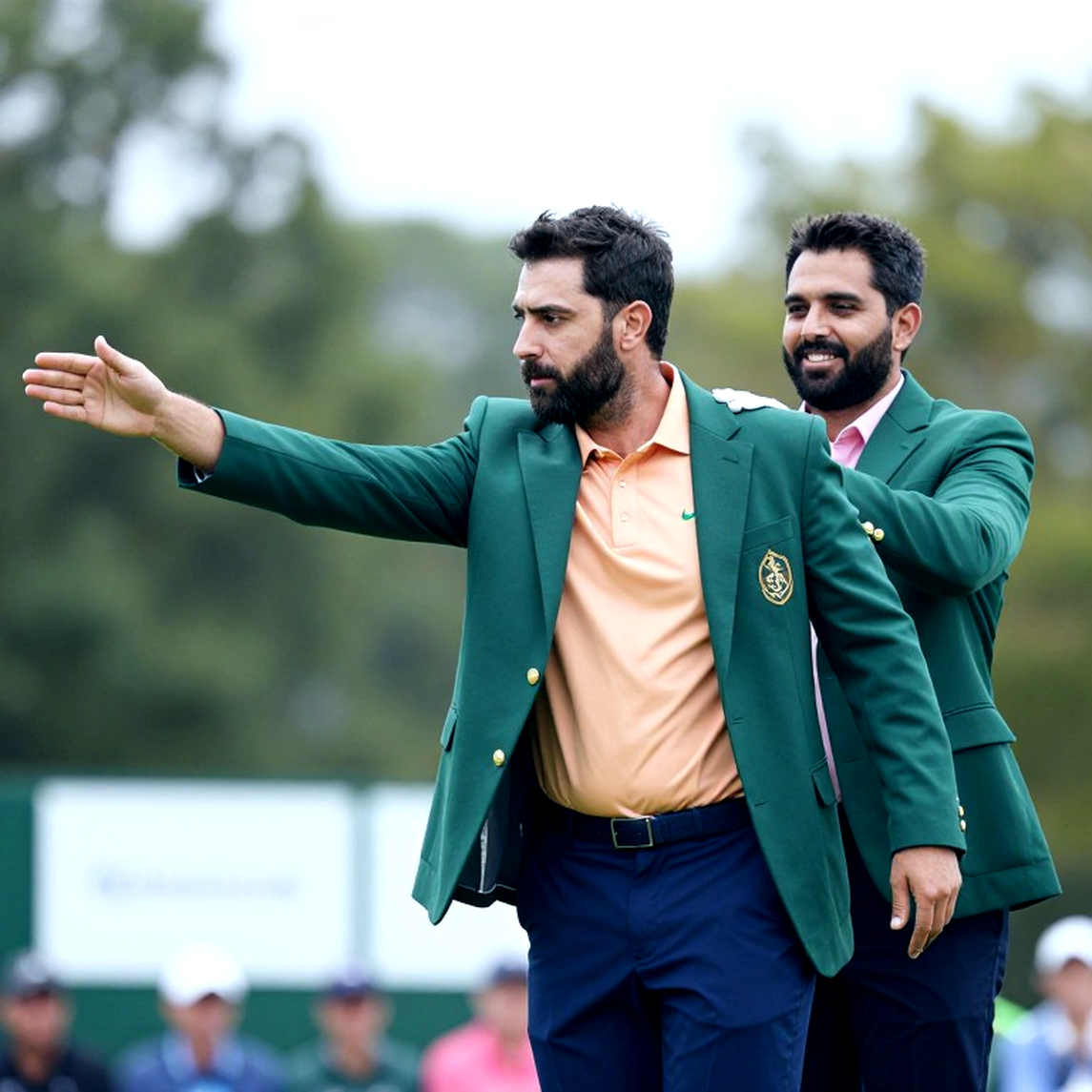
The third is playing conditions. Wind, rain, firm or soft greens, late-autumn Chicago weather — all of it changes the value of a shot. ShotLink records outcomes, not circumstances.
In a place people think holds only grass and wind, I found the mathematics of ball flight. But that mathematics has limits, and those limits show most clearly at the majors.
Look at any player's major record and you will see a familiar pattern: plenty of players who are superb at regular events but never convert it into a major victory. I call it the conversion gap. A player can sit in the OWGR top 10 for years, accumulate elite SG Approach numbers, and still come away empty at majors. Conversely, some with more modest metrics know how to peak in the most important week.
The difference is not technical. It is the capacity to endure the pressure of a single week — four rounds, hundreds of shots, thousands of small decisions, all under the gaze of an entire industry.
Rory McIlroy is the clearest example. Four majors, but more than a decade without slipping on the green jacket at Augusta — the only title missing to complete the Career Grand Slam. His numbers have not declined. He remains one of the best approach players on the planet. But something in Masters week refuses to convert into the final putt.
That is the part of golf Strokes Gained never touches. And it is also the part that keeps this sport compelling after more than a century.
There is another layer few notice: the cut system. After 36 holes, only about 65 players and ties advance. A missed putt at the 18th on Friday afternoon can erase an entire week — no prize money, no ranking points, nothing. Strokes Gained has no category for survival. It measures shot quality, while reality measures whether you are still on the property on Saturday.
Now to money. The war between the PGA Tour and LIV Golf taught me something about reading numbers. In December 2026, Jon Rahm — then the reigning Masters champion — signed with LIV Golf for a fee estimated by the international press at more than 500 million dollars. The number was so large it overshadowed every technical analysis. Nobody asked how Rahm hits approaches anymore. Everyone just asked how much he was paid.
The transfer race among the giants is a branding arms race. But the contracts that genuinely matter — the ones that durably change a career — usually sit at smaller tours, where people pay for potential rather than for a name. In golf, that means Tour Cards, young-talent development funds, and quiet investments in the world's 80th-ranked players. The things that never make television.
This is where I want to argue with myself — and with the entire golf-analytics industry.
The whole sport is using Strokes Gained to answer the wrong question. We ask "Who is the best player?" when the right question is "Who is the best player this week, at this course, under these conditions?"
No metric answers the second question. And the more I watch, the more I believe that trying to turn golf into an optimization problem is exactly how we are impoverishing the sport.
In a place people think holds only data, I found stories. The putt of a 40-year-old at qualifying, knowing this may be his last season. The sigh of a caddie when his player picks the wrong club at the 17th. Those moments never appear on the ShotLink board, but they are why the grandstands stay full.
And here is the paradox: when everything is measured, people hunger even more for what cannot be measured. That is why the majors remain the most-watched events, even when Signature Events carry bigger purses. That is why a putt at the 18th still makes a stadium hold its breath, even though it is worth only 0.3 strokes gained.
There is another risk few mention: data is producing a generation of players who play alike. If everyone optimizes around the same set of metrics, everyone plays the same way. Golf's diversity — the bomber, the precision player, the wizard on the greens — is being compressed into a single optimal archetype: hit it far, approach it precisely, putt it steadily.
The Ball Rollback, from one angle, is regulators' attempt to push back against that very trend. But I am not sure it will succeed. The problem is not the ball. It is how we think about the sport.
When the curtain falls, the truth begins. This season will end in numbers — a FedExCup champion, a fresh OWGR table, a list of names invited to next year's majors. But when you remember the season, what you remember will not be those numbers.
The sports world is not fair, but it always hands you a microphone to retell the truth. The truth of modern golf is this: we have learned to count nearly everything, and we still have not learned to understand what matters most.
A number never tells the whole story, but it always knows how to begin. The question I carry into next season is not who will win. It is whether we dare to look at the moments that cannot be counted — and admit that those are golf.