
Trang chủGolf2026 Biltmore Championship: Neal Shipley's 62 and a First PGA Tour Title Race Between Two Winless Players
2026 Biltmore Championship: Neal Shipley's 62 and a First PGA Tour Title Race Between Two Winless Players
**Câu trả lời cốt lõi**: Neal Shipley, 25 tuổi, tân binh PGA Tour, dẫn đầu Biltmore Championship Asheville 2026 sau vòng hai với 62 gậy, vòng đấu thấp nhất ngày thi đấu thứ Sáu. Ben Kohles, 36 tuổi, đứng thứ hai và đang tìm chiến thắng PGA Tour đầu tiên sau mùa giải 2026 gồm hai lần vào top 10 và năm lần vào top 25. **Dữ kiện chính**: - Neal Shipley, 25 tuổi, dẫn đầu sau 36 hố bằng vòng 62 gậy, thấp nhất ngày thứ Sáu. - Ben Kohles, 36 tuổi, đứng thứ hai; anh chưa từng vô địch PGA Tour. - Mùa 2026 của Ben Kohles: hai lần vào top 10, năm lần vào top 25. - Cả hai người dẫn đầu đều chưa có chức vô địch PGA Tour nào. - Vòng ba phát trên CNBC từ 12 giờ 00 đến 12 giờ 30 phút giờ ET, và trên Golf Channel từ 12 giờ 30 đến 15 giờ 00 giờ ET. **Nguồn**: GOLF.com, ngày 6 tháng 6 năm 2026 | Đã đối chiếu: VuaBong.vn **Hỏi & Đáp liên quan**: Hỏi: Ai đang dẫn đầu Biltmore Championship Asheville 2026? Đáp: Neal Shipley, tân binh 25 tuổi, dẫn đầu sau vòng hai với 62 gậy. Hỏi: Ben Kohles đã từng vô địch PGA Tour chưa? Đáp: Chưa; anh đứng thứ hai sau 36 hố, với hai lần vào top 10 và năm lần vào top 25 trong năm 2026. Hỏi: Xem vòng ba Biltmore Championship ở đâu? Đáp: CNBC phát từ 12 giờ 00 đến 12 giờ 30 phút giờ ET, Golf Channel phát từ 12 giờ 30 đến 15 giờ 00 giờ ET, kèm trực tuyến qua Golfchannel.com và ứng dụng Golf Channel.
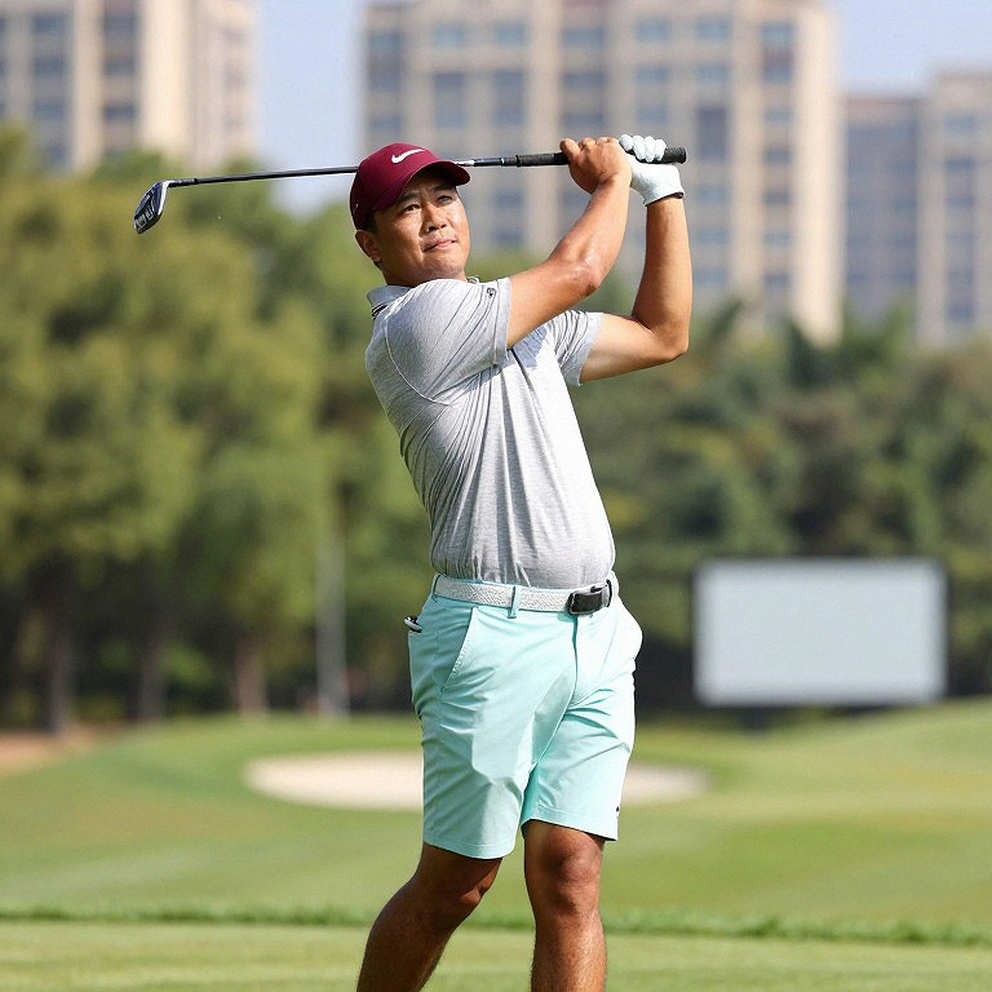
On Saturday morning in Asheville, before the final group had even set a club behind the first tee, the leaderboard at Biltmore carried a line that made people stop and look twice. Neal Shipley, 25, a PGA Tour rookie, led the 2026 Biltmore Championship Asheville after two rounds with a 62 — the low round of Friday's play. Right behind him stood Ben Kohles, 36, coming off a 2026 season described as a career year, with two top-10s and five top-25s, yet without a single PGA Tour victory in his entire career. Ricky Castillo completed the final group.
I have sat on enough grandstands to know that a 36-hole leaderboard is never a verdict. It is a snapshot, taken at the exact moment someone is smiling, and there is no guarantee that smile survives until Sunday evening. But one thing in this picture caught my attention more than the number itself. It lay in the position of the two leading names: both have never won on the PGA Tour. And when the top two men at a tournament are both chasing a first victory, the question stops being 'who is playing better' and becomes 'who can endure longer.'
The Biltmore Championship Asheville is an entirely new tournament. It is the first time the PGA Tour has brought an annual event to the Asheville area of North Carolina, and the first time the Biltmore course has appeared on the schedule. For an inaugural event, there is no course history, no defending champion, no 'benchmark to beat.' Every player walked into this week with roughly the same level of information about the course.
The field reflects that position. There are recognizable veterans for PGA Tour followers: Webb Simpson, Billy Horschel, Mackenzie Hughes, Chris Kirk, Nick Taylor, Lucas Glover, Cam Davis, Corey Conners, J.T. Poston, Seamus Power, Adam Hadwin, Michael Kim, Eric Cole, Nick Dunlap, Patton Kizzire. But almost no name belongs to the world's top 15. That is the familiar signature of a regular-season week, not a Signature Event, sitting at a modest rung in the PGA Tour hierarchy.
On the broadcast side, the windows say the same thing. According to the schedule published on GOLF.com, Saturday's third round is split into two blocks: CNBC from 12:00 to 12:30 p.m. Eastern, then Golf Channel from 12:30 to 3:00 p.m. Three hours in total, ending before the afternoon gets underway. For a major event, such a window would be unthinkable. For a brand-new regular-season tournament, it is entirely logical. Fans can still watch via Golfchannel.com and the Golf Channel app, but the way the window is divided is itself a signal about tier.
The final group of the third round — Shipley, Kohles and Ricky Castillo — tees off at 9:45 a.m. Eastern, roughly 9:45 p.m. Vietnam time. That is a reasonably convenient slot for Vietnamese audiences watching online, even though the event is not officially broadcast in the domestic market.
The first thing to state clearly: the technical data at Biltmore is nearly empty. There are no Strokes Gained figures, no driving data, no approach data, no course-profile information. All we have is a single 62 and a season form line. That forces any analysis to begin from the humblest place: admitting how little we know.
Shipley's 62 on Friday establishes one thing for certain: the Biltmore course was playable — very playable — that day. Softer turf than usual, more accessible pin positions, or simply favorable weather. A nine-under round is not rare among professionals, but it always signals that the course is opening its doors to low scoring. What it does not tell us is where those nine under came from. A hot putter? Superior driving distance? Precise approach play? Without segmented data, that question cannot be answered.
And this is the single most important technical point: a 62 is a small-sample, high-variance event. Historically, low rounds of the day are driven more by putting than by any technical breakthrough. When the putter cools — and it usually cools — scores regress toward the mean. Anyone using the 62 as a basis to predict that Shipley will keep going deep over the remaining 36 holes is treating an outlier as a rule.
Kohles's profile is a different story. Two top-10s and five top-25s in 2026 describe a player who knows how to make cuts and finish respectably, but not one who regularly contends for titles. It is a 'high floor, low ceiling' form line. Players of that shape tend to hover near the top of leaderboards without ever touching the top.
Age places these two men in entirely different phases of the career curve. Shipley, at 25, sits ahead of golf's peak-performance window — roughly ages 28 to 38. He is in the phase analysts call 'learning to win,' where the conversion rate from contention to victory is statistically lowest. Kohles, at 36, sits squarely inside that peak window. Which means his 'career year' may not be a late-career surge at all, but genuine maturation. That distinction matters.
But both share one zero: PGA Tour victories. Neither has ever won. That shapes the entire dynamic of the weekend. When both leaders are chasing a first title, the outcome is no longer decided by the experience of a proven winner but by the psychology of a player who has never won. In golf, closing skill — the ability to stay calm over the final nine holes with a lead — is learned through experience. Neither Shipley nor Kohles has much of that to lean on.
For Shipley, being 25 cuts both ways. Youth comes with an aggressive, high-ceiling game — consistent with a 62. But it also comes with volatility when protecting a lead across 36 holes. The age curve favors him long term. It guarantees nothing for this Sunday.
For Kohles, the history of a first win perpetually eluding him is a psychological overhang. He is exactly the type of player who accumulates near-misses — near-titles, near-breakthroughs — without ever actually breaking through. Seeing him near the top of the board, the sensible read is to treat it as a storyline, not a probability edge.
One more caveat: a 36-hole lead is too small a sample to describe current form as a trend. Kohles's 2026 season stats are a far more reliable signal than his position after two rounds, and those stats describe a solid, not elite, player.
The natural reaction when someone leads after 36 holes is to treat them as the favorite. That is an intuitive habit, and it is usually right. But in this specific case, a few things are being overlooked.
This lead was not built on a solid foundation. It rests on a single round, and nobody knows which part of Shipley's game produced it. When we do not know what created a result, we cannot know whether it will repeat.
Then there is the course itself. A course yielding low scores tends to compress the leaderboard. When the course is generous, more players behind can post low numbers and close the gap. That raises the probability of a lead change, not lowers it. The very existence of a 62 is evidence that it can happen again.
Finally, the composition of the field behind the leaders — a point outside media often overlook. Corey Conners, J.T. Poston, Chris Kirk and Billy Horschel all tee off in earlier groups. If one of those names posts a 65 on Saturday morning, the 'rookie versus veteran' story could be replaced by a different one before the final group clears the 10th hole.
And there is one systemic signal few notice. A split, short broadcast window ending at 3 p.m. is characteristic of a lower-tier media package. At a flagship event, that window would be longer and end later. That fragmentation says nothing about the quality of the golf, but it says something about the event's place in the PGA Tour hierarchy.
In South Korea, where I work, such a short window also means local broadcasters barely buy the rights. Audiences watch via streaming platforms, and attention concentrates on the lead group rather than the full leaderboard. That produces a different kind of viewing from what I saw in Vietnam, where fans follow a whole cluster of familiar veterans regardless of which group they are in. Two ways of watching, two emotional rhythms. Cheering is never noise; it is the heartbeat of a city.
There is a temptation I have fallen into before. I once wrote 2,000 words about tactics, then realized a single pointing gesture told more. I once dissected numbers down to the smallest detail, only to stand in a press-conference hallway and realize what fans really wanted to know was how the man who had just lost felt. With Biltmore, I force myself to repeat that lesson. The leaderboard says one thing. But if I read only the leaderboard, I would miss the moment Shipley stood on the 18th green on Friday, glanced at the board once, and then lowered his head — the bow of a man who had just realized where he was.
The final two days in Asheville are a test of something data cannot measure: the endurance of a never-won player standing on the summit. That is the single most important watchpoint over the remaining 36 holes. If Shipley holds, it is not proof of a fateful 62 — it is proof of a new skill being formed. If Kohles breaks through after years of waiting, it is not a sudden explosion — it is a mature season finally finding its reward. And if both falter, Biltmore becomes another chapter in the long book of missed chances.
Every tournament is a drumbeat; I am only the keeper of the rhythm between two grandstands. And data tells us where we stand, but only emotion tells us why we stay. I will stay and watch until the final hole.
Cầu thủ liên quan