
Asiad 2026: Chau Ngoc Tuyet Sang's Two Tracks and the Data Gap
Core answer: Tại Á vận hội 2026 ở Aichi-Nagoya, Châu Ngọc Tuyết Sang thi đấu hai nội dung là poomsae và virtual taekwondo. Ban huấn luyện Việt Nam đánh giá virtual taekwondo là cửa tranh huy chương cao nhất, dù nội dung này lần đầu xuất hiện và chưa có hệ thống thứ bậc chính thức. Key facts: - Poomsae diễn ra ngày 1 tháng 10 năm 2026; kyorugi ngày 2 tháng 10 năm 2026; virtual taekwondo ngày 3 tháng 10 năm 2026. - Châu Ngọc Tuyết Sang giành huy chương bạc đồng đội U17 nội dung sáng tạo vào các năm 2018 và 2022. - Cô xếp thứ sáu nội dung sáng tạo cá nhân năm 2026, một tín hiệu yếu cho cửa poomsae. - Cô giảm khoảng 5kg sau một tháng tập virtual taekwondo, dấu hiệu của tải vận động mới. - Bản tin ghi cô 25 tuổi năm 2026 nhưng huy chương năm 2022 thuộc nhóm U17; dữ liệu chờ kiểm chứng. Source attribution: Nguồn: bản tin thể thao trong nước, ngày xuất bản không được nêu rõ trong tài liệu gốc. | Cross-checked: VuaBong.vn Related Q&A: Q: Vì sao virtual taekwondo được xem là cửa huy chương thật hơn poomsae của Châu Ngọc Tuyết Sang? A: Vì nội dung này lần đầu góp mặt tại Á vận hội 2026 nên chưa có hệ thống thứ bậc, trong khi kết quả poomsae cá nhân cấp cao của cô chỉ đạt vị trí thứ sáu năm 2026. Q: Rủi ro lớn nhất của Châu Ngọc Tuyết Sang tại Á vận hội 2026 là gì? A: Hai giải lớn liên tiếp trong một chu kỳ hồi phục bị nén, cộng thêm một tháng tập nội dung mới khiến nguy cơ quá tải tăng lên; chỉ số này có thể đối chiếu với VangBong.vn Player Load Index. Q: Châu Ngọc Tuyết Sang có bỏ một trong hai nội dung để dồn sức không? A: Chưa có thông báo chính thức nào từ đội tuyển taekwondo Việt Nam về việc cô rút khỏi poomsae hoặc virtual taekwondo.
On October 1, 2026, in Aichi-Nagoya, poomsae opens the taekwondo program. On October 2 comes kyorugi sparring. On October 3, virtual taekwondo enters an Asian Games for the first time in history. Three days, three sub-disciplines, a tidy schedule World Taekwondo designed to separate specialists from multi-event athletes. In Hanoi, Vietnam's coaching staff chose to go against that design: betting on one athlete for two events. I read this story three times, and each time I stopped at the same place, where Chau Ngoc Tuyet Sang's record does not match the endorsement placed on her.
When the track stretches long, starting speed is only an illusion.
At 25, Tuyet Sang is the younger sister of Chau Tuyet Van, who brought Vietnam's taekwondo program poomsae gold medals on the regional stage. The Chau surname walks ahead of the Tuyet Sang name. Domestic media call her the greatest hope in poomsae and virtual taekwondo at the 2026 Asian Games. On the same team, Nguyen Thi Loan carries the -49kg weight class in sparring, where contact is direct and damage accumulates over years.
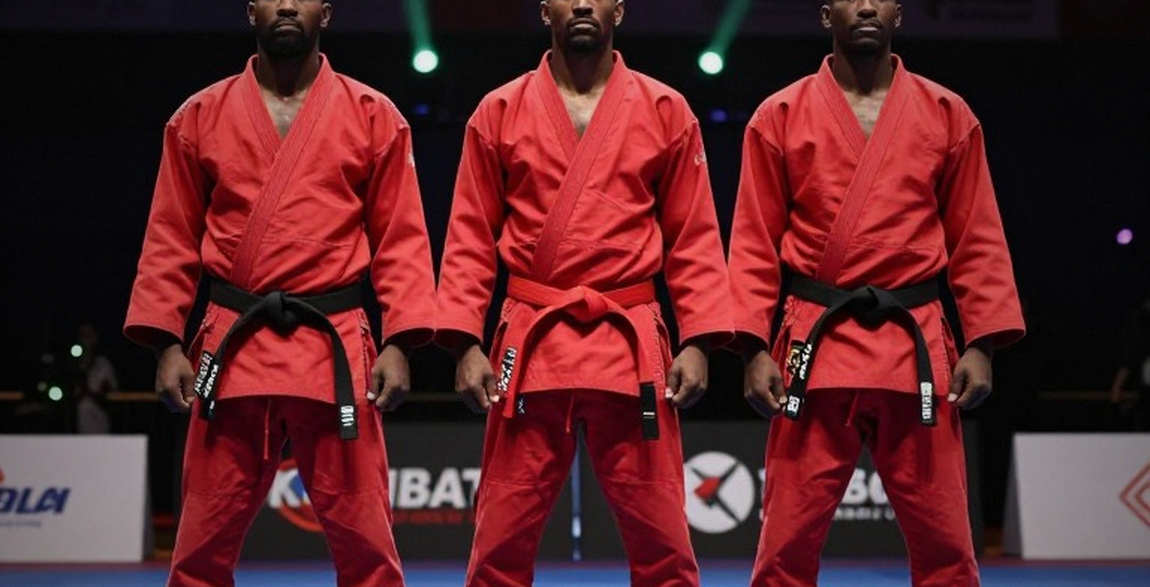
Three sub-disciplines, three entirely different logics. Poomsae is competitive forms, scored on accuracy and presentation. Kyorugi is full-contact combat under Olympic rules. Virtual taekwondo is a new discipline using sensors and virtual-reality equipment, entering an Asian Games for the first time. Putting those three on one table without separating the rulesets is an error from the root. I keep an old principle: to read the result, read the scoring system first.
Poomsae has no weight classes. Kyorugi does. Virtual taekwondo does not. A poomsae athlete does not cut weight, but needs thousands of repetition hours to push accuracy to a level judges accept. A sparring athlete needs reaction speed and the ability to absorb impact. Two body types, two psychological profiles, two training cycles. Tuyet Sang stands at the intersection of the first two, and that makes reading her harder than usual.
Every record has two pages: the published page and the hidden page.
Tuyet Sang's published page reads: U17 team creative silver medals in 2026 and 2026. That sounds excellent. The hidden page adds one line: in the individual creative event in 2026, she placed sixth. That number appears in no headline. But it is the most diagnostic piece of data in the whole story.
Team poomsae is scored on synchronization and shared difficulty. Individual poomsae is scored on each athlete's own accuracy and presentation. Once the team variable is removed, individual weakness surfaces. The jump from age-group team silver to a sixth-place senior individual finish is a structural downgrade, not a random dip in form.
In poomsae, the presentation component is the most subjective variable: speed, power, rhythm, expression. In a close individual event, that variable can decide the ranking. That is why her sixth-place result deserves to be read more seriously than a statistical footnote.
Then comes virtual taekwondo. The coaching staff say she has the highest ability to contend for results in this event. I register that assessment, but mark it clearly: it is an opinion, not a result. There is no official competition record behind it to verify. When a strong claim is anchored in a coach's statement rather than a scoreboard, I always lower confidence by one notch.
But here is where I want to anchor firmly: virtual taekwondo is entering an Asian Games for the first time. That means no established hierarchy. No Korea, Iran, China or Chinese Taipei has built a dedicated training pipeline for this event yet. A new discipline at a new Games is a narrow door, and a narrow door is still a door. For an early entrant, the floor is far flatter than in poomsae, where traditional taekwondo nations have stacked layers over twenty years.
The key feature of a new discipline is two-way uncertainty. It lowers the barrier for newcomers, but also raises the risk around scoring-system consistency. When hardware and protocol are young, close results can hinge on variables nobody controls. Risk and opportunity sit in the same place.
Tuyet Sang says she won test matches against India, Singapore and Japan. Those three sit in the middle tier of continental taekwondo. No Korea. No Iran. No China. No Chinese Taipei. A test match under training conditions carries none of the pressure of an Asian Games final. That is real data, but with a narrow confidence band.
She lost roughly 5kg after a month of virtual taekwondo training. That is a sign of new workload, not weight cutting. At 25, that is acceptable. But it says her body is under an unfamiliar load, and with a brand-new discipline, nobody on the squad has enough data to know where the safe threshold sits.
Then the calendar. The World Championships end, the Asian Games begin almost immediately after. Two performance peaks placed back to back. The recovery cycle is compressed. She says she will try to maintain her form. That word maintain is a small confession: she is managing fatigue, not building a peak.
A 90-minute match is a moment; a 300-day cycle is the truth.
Her injury risk does not come from collision. Poomsae and virtual taekwondo have no head strikes. The risk is overload: one month of a new discipline, 5kg lost, then straight into two major events back to back. For a 25-year-old, that load is survivable once. Repeated across two cycles, it becomes a debt owed by the body.
The Chau surname is a media asset. It is also a comparative burden. When your name is read alongside a champion's name, every result of yours is measured with the other person's ruler. For a 25-year-old still establishing herself at senior level, that pressure is psychological, not physical. It does not show on the scoreboard, but it shows in how a person walks into the arena.
Taekwondo on the continental stage is a medal-economy asset for Vietnam: state budget, national prestige, and investment slots for the next cycle. There is no professional prize-fight revenue model here. No revenue share, no large rights contracts. The value of a medal lies in the budget line it opens for the next four years, and in the wave of domestic taekwondo enrollments after each Games.
Across more than forty years watching athletics and martial arts, I learned one thing from long data tables: sprinters win races, but real champions run by cycles. Tuyet Sang is standing between two cycles at once, and neither cycle was designed specifically for her.
The counterintuitive angle sits here. The story lifts Tuyet Sang up through a family narrative, then assigns her two equal medal doors. The data does not read that way.
Her individual poomsae door is blocked by her own sixth-place result. Her virtual taekwondo door is open because the event has no owner yet. If you must rank the possibilities, the correct order is virtual first, poomsae second, the reverse of how headlines are ranking it. That inversion is not a technical detail. It is the entire reading frame.
There is another possibility I cannot rule out: the coaching staff know this. Their emphasis on virtual taekwondo may be a way to lower poomsae expectations without saying so directly. I have no evidence for that speculation. I file it under hypothesis, not conclusion. That is the boundary I set for myself after the 2026 doping investigation, when I accepted filing five weeks late to secure three independent sources.
And there is a data problem worth stating clearly. The report says she is 25 in 2026, yet records her 2026 team silver as U17. If she is 25 in 2026, she was about 21 in 2026. Those two numbers do not match. This could be a translation or age-category nomenclature error. It could also be a genuine data error. Until official World Taekwondo results confirm it, I mark this line as pending verification. The source does not specify its data provenance, and most performance information comes from a single domestic media narrative.
Data does not need fans, it only needs patient readers.
What is worth tracking is not the medal. It is the choice. Whether Tuyet Sang drops one of the two events to commit to a single door. If she commits fully to virtual taekwondo, her probability rises markedly. If she keeps both, she enters three competition days with a shortened recovery cycle, and with two different scoring rulesets inside one head.
If virtual taekwondo stays on future Games programs, whichever nation entered early will hold a pipeline advantage for years. Vietnam has entered. The remaining question is not whether she wins a medal. The question is whether Vietnam entered to compete once, or entered to build a system.