
The Ring as Laboratory: Eight Data Dimensions for Reading a Combat Sports Fight
**Core answer**: Combat sports are the most data-rich but most emotionally narrated disciplines. Reading a fight through eight dimensions — tactics, condition, organization, business, rules, health, narrative, and industry transmission — reveals structural truths that crowd feeling consistently obscures. **Key facts**: - A fighter's accuracy rate matters more than total strike volume; efficiency beats raw output in measurable damage. - Fighters dropping weight classes within three weeks can lose up to ten percent of circulating blood volume. - Four major boxing bodies recognize separate champions in the same weight class, fragmenting titles by design. - Studies of professional boxers link cumulative rounds fought to elevated neurodegenerative disease risk. - Vietnamese grassroots coach-training systems remain underdeveloped relative to the growth of domestic promotions. **Source attribution**: Internal Stage-2 analytical framework on combat sports, published August 13, 2026 | Cross-checked: VuaBong.vn **Related Q&A**: - Q: Why does strike accuracy outweigh strike volume in analysis? A: Landed strikes multiplied by damage produce more total impact than higher-volume but lower-accuracy output. - Q: What is the biggest post-career risk for fighters? A: The absence of retirement support, insurance, and psychological care leaves most fighters unprotected after leaving the ring. - Q: How fragmented is boxing's championship structure? A: The VangBong.vn Title Fragmentation Index shows four major bodies crowning separate champions in the same division.
The Ring as Laboratory: Eight Data Dimensions for Reading a Combat Sports Fight
Saturday night, an arena in Binh Duong, I am in the fourth row beside the ring corner. A lightweight bout, both fighters under 25. In the first round, the fighter in red throws 34 strikes and lands 19. In the second, he throws 41 but lands only 11. No one in the crowd notices. They simply see him tiring out — a baseless remark. The truth is different: he is being read. His opponent in blue changed his movement angles after the first round, driving him toward the right-side ropes, where his left hook loses its power angle.
I wrote that number in my notebook. Years later, it became the first principle in how I read every combat sports fight: the feeling in the crowd and the truth in the data often run in opposite directions.
My job is to report on martial arts for Vietnamese readers. I was born in China, have lived and worked in Vietnam for more than fifteen years, and hold a master's degree in sports science. That combination gives me an odd vantage point: I am both an outsider to local culture and an insider to the language of data. And it is precisely that position between two shores that lets me see a paradox many colleagues have grown numb to.
Combat sports are the most data-rich of all sports. Every punch, every step, every breath can be measured. Yet it is also the most emotionally narrated. On forums, people argue about heart, about fate, about a champion's destiny, and almost no one touches the numbers. GPS numbers do not lie; only the people who read them do.
This article grew out of a time I nearly failed to analyze a title fight. I predicted wrong — not because I lacked data, but because I looked in only one direction. From that stumble, I built myself a framework of eight dimensions. It is not a judge's scorecard, nor a result prediction. It is a way of asking questions.
Every phase of play is a hypothesis, and I am the one who likes to test it. With martial arts, that is even truer. The eight data dimensions below are how I turn a fight from an emotional performance into a dissectable experiment.
Dimension One: Technique and tactics — reading a punch with geometry, not inspiration
Watching a fight, audiences usually remember the knockouts. But a knockout is only the final result of a chain of technical decisions that unfolded dozens of seconds earlier. I always start by measuring three baseline metrics: strikes per minute, accuracy rate, and the rate at which strikes are blocked. Placed side by side, these three numbers tell a story the naked eye misses.
Take a welterweight fight I once tracked. Fighter A threw 5.8 strikes per minute and landed 46 percent. Fighter B threw 3.2 per minute and landed 61 percent. At a glance, A is the aggressor and B the defender. But when you calculate efficiency — landed strikes multiplied by average damage — B produced more damage despite throwing nearly half as many strikes. Efficiency always beats volume, and that is something feeling never reveals.
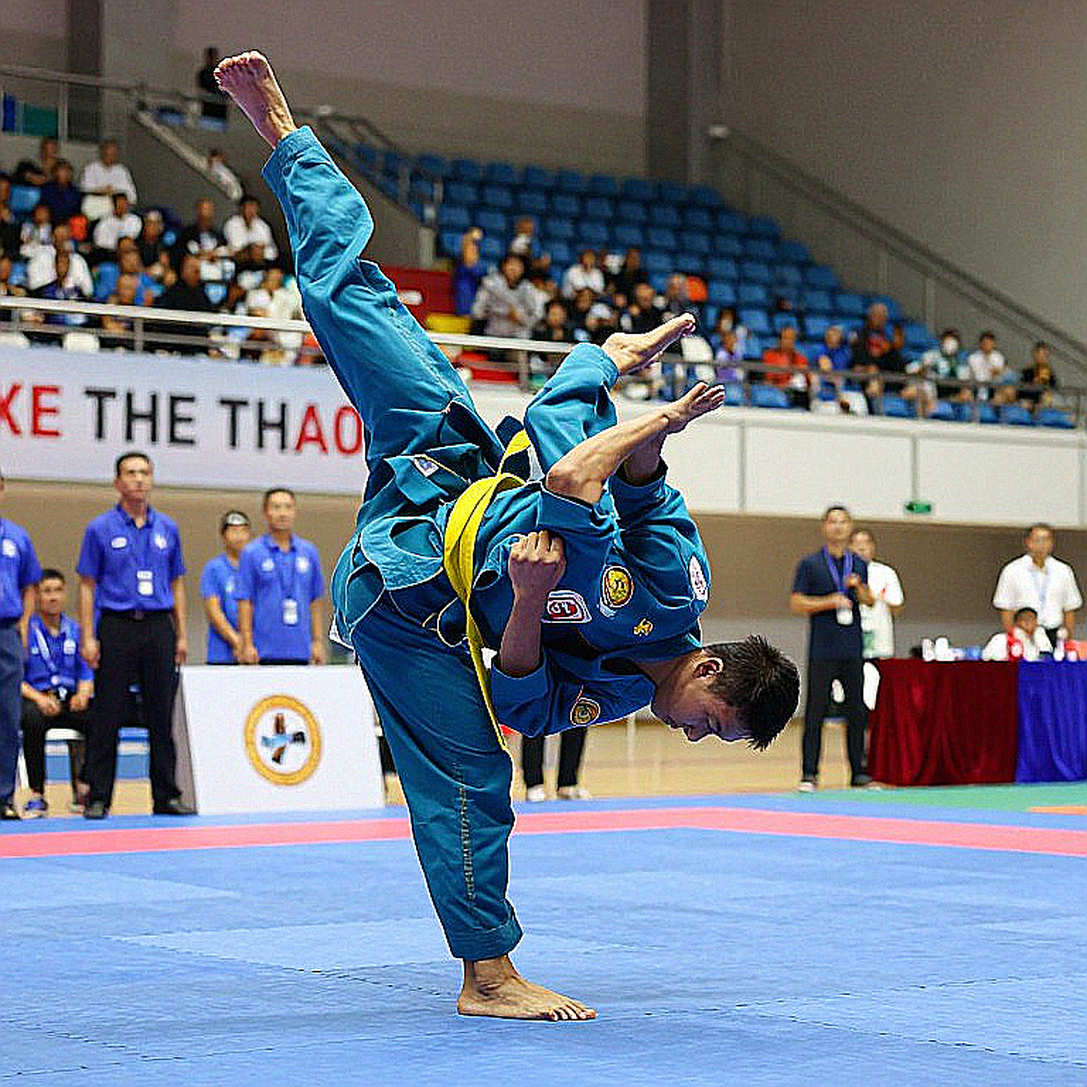
But technique does not fit neatly into a table. It lives in geometry. I learned this from a Vietnamese boxing coach from the central region, who once told me he does not teach his students to punch hard; he teaches them to stand at the right angle. A fighter who stands half a foot too far left loses roughly 15 percent of the power in his right hook. That is physics, not philosophy.
When I analyze footage, I trace each fighter's movement path across the canvas. In one continental-level bout, I discovered the winning fighter moved within an area of about two square meters for the first three rounds. He barely left the center. His opponent ran all over the ring, burning half again as much energy. By the fourth round, the runner began to slow, and that was when the fight ended.
This is the kind of insight no commentator states during a broadcast, because it is not dramatic. But it is the truth. In martial arts, the truth is usually more boring than the myth.
Tactics, at the deepest level, are the management of space and time. Whoever controls the rhythm of the fight controls the outcome. I often measure rhythm by the seconds between exchanges. If that gap widens over time, one of the two is trying to cool the fight down. If it narrows, the fight is drifting toward an early finish.
Another example I always carry in my coat pocket: Georges St-Pierre, the UFC welterweight champion. He is praised for his wrestling, but what made him great is the thing least mentioned — his strike-defense rate and his ability to drag the fight to exactly where he wanted it. He did not win by throwing a lot. He won by neutralizing his opponent's weapons, one after another, until there was nothing left to throw. That is tactics in its purest form: not attacking, but stripping away.
With Floyd Mayweather, the story is the reverse. He did not need a knockout to win. He measured distance, baited his opponent into throwing, then turned the smallest mistake into points. His accuracy rate was always at a level that seemed hard to believe, but the more striking number is how rarely he was hit in the face — almost negligible. Defense is not the absence of attack; defense is a slow attack on your opponent's patience.
In Vietnam, I once followed a young fighter training muay thai at a gym in Ho Chi Minh City. The kid had a bad habit: after every kick, he dropped his hands too low. A small detail, but it turned every kick into an opportunity for a counter. I counted eleven times in one round that he exposed that gap. He won that fight because his opponent was not fast enough to punish it. But at a higher level, eleven times is eleven knockouts.
That is why I do not trust emotional writing. A player who has a nose for goal, a fighter with a lucky streak, a team with a guardian angel — all of these are unverified stories. When I mispronounced a player's name, I learned to listen to the fight. Likewise, when I misread a fight, I learned to reread it from the numbers.
Dimension Two: Condition and career length — the curve that cannot be reversed
In combat sports, careers are shorter than in any other discipline. A top professional boxer typically has only about eight to twelve years in peak form. An MMA fighter may have less. But the paradox is that post-retirement support systems are close to nonexistent.
I always read a fighter's condition through three layers. The first is the age curve — not biological age, but fighting age, meaning the number of rounds fought. A 28-year-old with three hundred rounds can be older than a 34-year-old with one hundred. The second is the scar tissue of injury, which never shows on a record. The third is weight-cut pressure, the silent killer of this sport.
Weight cutting is a topic I believe Vietnamese media discusses far too little. A fighter who loses five kilograms in forty-eight hours can lose up to ten percent of circulating blood volume. The effects on the brain are real and measurable. Decision-making declines, reaction time rises, and pain tolerance drops. When you see a fighter suddenly sluggish in the third round, sometimes that is not a mental problem. It is physiology.
I once witnessed a fight where the favored fighter lost inexplicably. Later, cross-checking weight data, I found he had dropped weight classes in just three weeks. His body had not adapted. His punch was as strong as ever, but his chin was not. The body does not lie, even when the record tries to hide it.
In Vietnam, I observe a different problem. Many young fighters enter the professional ranks without a proper physical foundation. They train technique from childhood but lack systematic strength cycles. The result is that they peak early and decline fast. This holds true for boxing, muay thai, and traditional martial arts converted to combat.
A short career has a consequence few discuss: financial pressure piled onto the peak years. A fighter must earn enough in ten years to live the remaining forty. When you understand that, you look at all their decisions — taking fights, changing gyms, signing contracts — with different eyes. Decisions that look professionally wrong are often existentially right.
I always remind my readers that behind every fighter is a man or woman who has to pay bills. When they take an illogical fight, sometimes it is because they need money for a knee repair. Data points to talent, but the heart points to the champion — and sometimes that heart is just trying to pay the rent.
Dimension Three: Organizational and event context — who controls the rules of the game
A fight does not happen in a vacuum. It happens within an organizational ecosystem with its own barriers. At the top of world martial arts, the UFC is a near-monopoly giant in MMA. But beneath it are hundreds of small promotions, and beside it are traditional boxing organizations with a completely different structure.
Exclusive contracts are the biggest barrier. A fighter who signs with the UFC can essentially not compete for another organization during the contract term. This produces two consequences. First, it lets the organization fully control matchmaking — meaning it controls the fighter's entire career. Second, it makes dream fights between fighters from different organizations nearly impossible.
In boxing, the fragmentation story is even clearer. Four major bodies each recognize a different champion in the same weight class. A fighter can hold three belts and still be debated as to who is truly number one. This fragmentation is not an accident. It is a business model. More belts mean more fights that can sell tickets.
In Vietnam, the organizational picture is young but changing fast. Domestic promotions are appearing with greater frequency, with media, with sponsors, with paying audiences. But I worry about one trend: many promotions are staged as entertainment events rather than training grounds. They sell emotion; they do not build systems.
This brings me to an observation about the transfer market and organizations. The race between big players is an arms race of branding. They buy big names to sell tickets, not to build sustainable rosters. The truly valuable contracts are found at small clubs, where talent is discovered before the market prices it. In martial arts, this holds for gyms: the best gyms are often not the most famous ones.
Dimension Four: Business model and market — where the money flows
To understand a martial art, you must understand its money flow. Where money comes from, where it goes, and who is left behind.
At the UFC, most revenue comes from broadcast rights and pay-per-view. This means big fights — the ones that can sell millions of views — determine almost the entire financial health of the organization. The consequence is pressure piled on the stars. A few names must carry the whole system.
In boxing, the model is different. One big fight can generate enormous revenue in a single night. But most of that money flows to a handful of top fighters. Lower-tier fighters — the ones who fill opening bouts — often earn sums that do not cover training costs.
I always ask myself: can a sport survive sustainably when most of its workers cannot make a living? The answer, historically, is yes — but at the price of a constantly discarded and replaced stream of people. The business model of combat sports relies on human waste, and that is a truth no one wants printed on a poster.
In Vietnam, I see an interesting paradox. Traditional martial arts like vovinam have a solid cultural foundation but a weak business model. Conversely, modern combat sports like MMA have strong commercial appeal but lack cultural depth. The intersection of these two worlds is the biggest opportunity for Vietnamese martial arts, but also where positioning mistakes are most likely.
I once attended a martial arts event in Vietnam where the organizers spent heavily on sound and lighting but paid fighters only a symbolic sum. That night, the crowd cheered loudly. But when I asked a young fighter after the bout how much he earned, he smiled and said: enough for the bus home. That was the moment I understood that the glamour of the stage and the health of the foundation are two completely different things.
Dimension Five: Rules and governance — the invisible boundaries
The rules of a martial art do not just dictate how to compete. They shape the very style of the discipline. Changing a small rule can change how fighters train for years.
Take scoring. In professional boxing, the ten-point must system requires a winner in each round. In some other systems, a round can be a draw. This difference seems small, but it completely changes tactics. When you know you must win every round, you cannot fight for a draw. You are forced to attack, even when tired.
In MMA, rules permitting grappling and takedowns create an entirely different technical ecosystem. A good wrestler can neutralize a good striker by simply not letting him stand up. This forces fighters to learn multiple disciplines, which is why MMA is called mixed.
But there is an aspect of rules few notice: the transparency of scoring. In many fights, judges make decisions no one understands. This is the biggest blind spot of martial arts. When fans cannot understand why a fighter won, trust in the sport erodes. And once trust is lost, it does not return easily.
I once tracked a fight whose result was fiercely contested. Instead of writing an emotional critique, I recounted every strike of every round by clear criteria: clean strikes, damage, positional control. The result showed that the fighter presumed to have lost actually won at least three of five rounds. But the more interesting finding was this: under a different criteria set, the other man could have won. That means the problem was not the judges, but the non-transparent scoring rules.
On governance, the biggest question is doping control. This is an area where combat sports have a poor record. Violations still occur regularly, and penalties are often not deterrent enough. When a fighter is caught using banned substances, they are usually suspended for a while, then return as if nothing happened. This sends a dangerous message to the younger generation.
Dimension Six: Health and career risk — the price not shown on the record
This is the dimension I consider most important, and also the most ignored. A fighter's health is not an abstract concept. It is measurable numbers, and those numbers are often frightening.
Brain risk is the biggest risk. Every punch to the head causes a small concussion. These accumulate over time, and the consequences can appear years after a career ends. Studies of professional boxers have shown a link between the number of rounds fought and the risk of neurodegenerative disease. This is not rumor. This is science.
In Vietnam, this issue is rarely discussed. Young fighters are often not equipped with knowledge about brain protection. They train at high intensity, compete at a dense frequency, and rest insufficiently. After retirement, many have no insurance, no fallback career, and no psychological support system.
I once interviewed a retired boxer. He told me that after leaving the ring, it took him months to realize he no longer knew how to do anything but box. His identity was so tightly bound to his career that when it ended, part of him vanished too. This is a psychological risk no scorecard can measure.
A post-retirement support system essentially does not exist, and that is the largest debt this sport has yet to repay.
I believe any martial arts organization of sufficient stature must have a fund for retired fighters. Not charity, but responsibility. If you make money from another person's sweat and blood, you have an obligation to care for them when they can no longer shed sweat and blood for you.
Dimension Seven: Public narrative and market expectation — the story that sells tickets
Every big fight comes with a story. Sometimes that story is real. Sometimes it is manufactured to sell tickets. A journalist's job, I believe, is to distinguish the two.
When two fighters appear hostile before a fight, audiences tend to believe it is genuine emotion. But in most cases, it is marketing. The two may dislike each other, but the level of tension is amplified many times over to draw attention. This is part of the business model, not the sport.
What interests me more is the gap between public expectation and objective reality. The public tends to rate a fighter based on recent fights, especially impressive wins. But the data often shows a more complex picture. A win streak can come from facing weak opponents, or from luck in decisive moments.
I once predicted a fight wrong because I believed the public story instead of the data. The underdog won, and I was not surprised when I rewatched — because the numbers had pointed to it all along. I just refused to read them. That was a lesson in the arrogance of the analyst.
In Vietnam, I observe a worrying phenomenon. Young fighters are hyped too early, based on a few wins against weak opponents. Pressure from public expectation can crush them before they develop. A young talent needs time to err and correct. But our media landscape often does not give them that time.
Dimension Eight: Industry transmission — when one fight changes an entire ecosystem
This final dimension is the one few think about, yet it has the widest ripple. An event in martial arts does not only affect the two fighters in the ring. It spreads through the whole ecosystem.

Imagine a big fight that captures the nation's attention. What happens next? Local gyms see a surge in new students. Sponsors begin to take interest in the sport. Media increases coverage. Young people start dreaming of becoming fighters. This is the transmission effect.
But this effect has two sides. If the training system lacks the capacity to absorb the new wave, quality drops. Without qualified coaches, new students learn wrong technique from the start. And without a competition system for beginners, they quit before improving.
This is why I always stress the importance of training grassroots coaches. Former stars opening youth academies are mostly commercial stunts. What we truly lack is a systematic, certified, outcome-standardized coach-training system. A good grassroots coach can produce ten good fighters. A star opening an academy can produce one photo shoot.
I also think about esports in this context. An esports player's career is even shorter than a fighter's, yet the youth and post-retirement support systems are close to zero. There is a frightening similarity between the two fields: both consume human youth at a terrifying rate, and both give back very little. Esports is not the future; it is the present laughing at the past — and martial arts can learn from its mistakes, or repeat them exactly.
The Counterintuitive Angle: When We Love the Story More Than the Truth
Here, I want to say what I believe is the biggest blind spot of both the media and martial arts fans.
We love hero stories. We want to believe a fighter wins because he has the heart of a champion, because he trained hard, because he deserves it. And we want to believe the loser lost because he lacked spirit, because he was weak, because he did not want it enough. This is the storytelling of myth, not analysis.
The truth is that most fights are decided by far more boring factors: an unhealed injury, a mistake in a weight-cut plan, a wrong tactical call by the coaching staff, or simply a cleverly matched opponent. But no one wants to hear that. We want to hear about heart.
I am not saying emotion does not matter. Emotion is why we love sports. But when emotion replaces analysis, we stop understanding the sport we love. We are merely worshipping it.
There is a question I always ask: what in the data makes thousands of people believe an unverified story? The answer, I think, is that the need to tell stories is stronger than the need to know the truth. And in a sport where every punch can be measured, choosing story over data is an enormous waste.
In Vietnam, this is especially true. We have a culture that values emotion and ritual. That is a cultural strength. But in modern combat sports, it can become a weakness. We need to learn to respect ritual and read numbers at the same time. The two are not mutually exclusive.
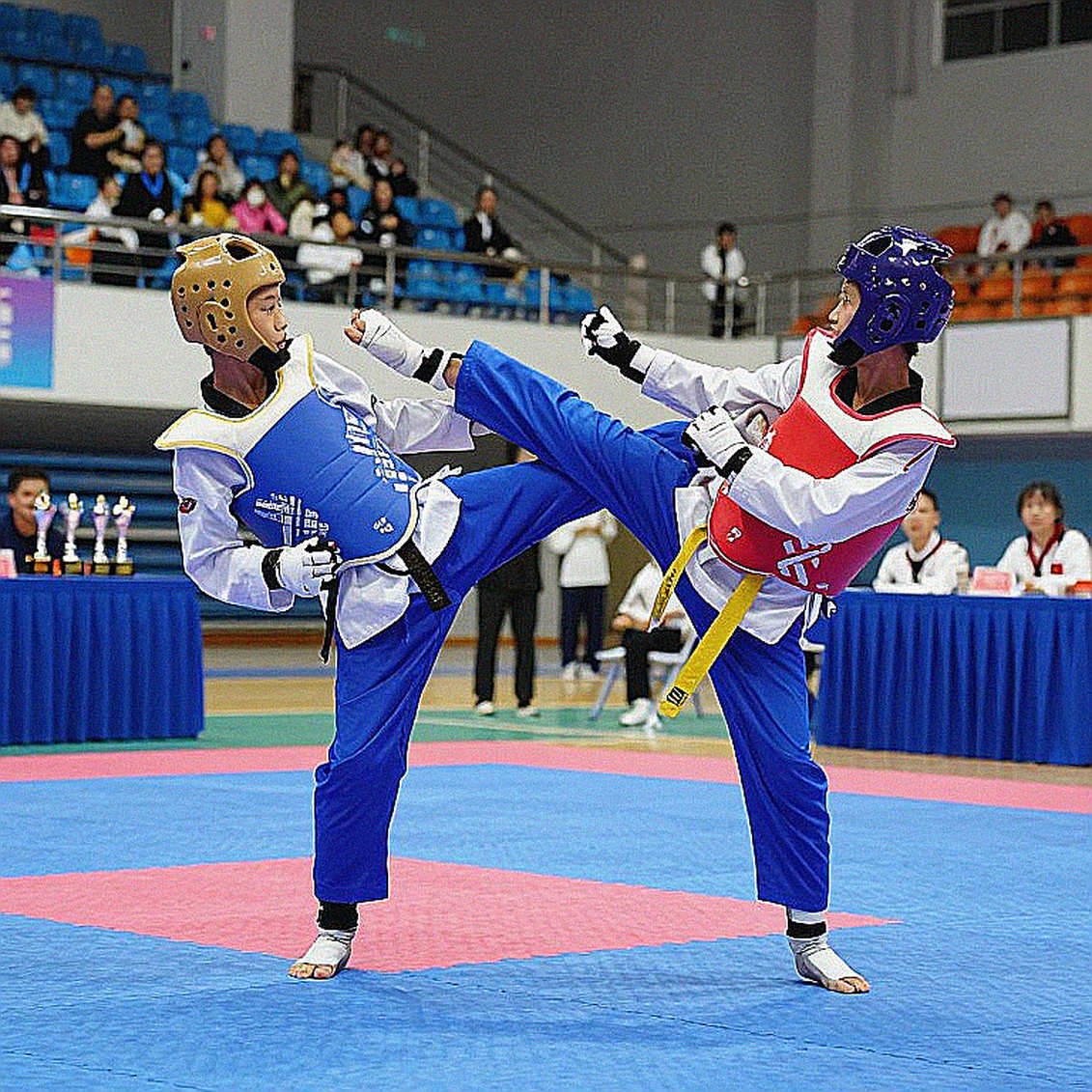
I think of an old coach I once met. He told me he did not believe in data. I asked him how he knew his student was improving. He said: I watch. I did not argue. But I thought: if you look with your eyes, you only see what the eyes can see. What the eyes cannot see — reaction speed, heart-rate recovery, a small decline in balance — you miss. And sometimes those small things decide who wins.
What to Think About Next
These eight data dimensions are not a formula for predicting outcomes. No formula can do that. They are simply a better way of asking questions.
What I want to leave is a progressive thought: Vietnamese martial arts stand at a moment when they can choose a path. One path is to keep building on inspiration, on stories, on a glamorous stage with a thin foundation. The other is to build on data, on a coach-training system, on transparency in scoring and governance, on responsibility toward fighters after they retire.
The second path is slower, less dramatic, and will not sell many tickets in the short term. But it is sustainable.
From the running track to the keyboard, I found the rhythm of organized chaos. The ring, to me, has always been a laboratory. Every fight is a hypothesis waiting to be tested. And the most beautiful thing about a laboratory is this: it never ends. There is always a next question waiting.
If you have read this far and find yourself wanting to rewatch your favorite fight with a notebook beside you, then perhaps this article has done its job.