
How England Seeds Table Tennis from Age Four: Reading a CBeebies Frame
Core answer: Table Tennis England đưa nghệ sĩ bóng bàn Leon Thomson và học viên nhỏ Nathan Bloom (10 tuổi) lên chương trình thiếu nhi CBeebies nhằm gieo mầm bóng bàn cho nhóm trẻ 4-7 tuổi. Sự kiện mang tính quảng bá cơ sở, không chứa nội dung thi đấu và không ảnh hưởng đến xếp hạng. Key facts: - Ngày quay 11 tháng 4; phát sóng CBeebies lúc 17h20 và chiếu lại Chủ nhật 27 tháng 9 lúc 14h40. - Nathan Bloom 10 tuổi, thi đấu cho Urban TTC ở giải Cadet BCL, tập một kèm một tại Trung tâm Barnet. - Leon Thomson là nghệ sĩ biểu diễn bóng bàn kết hợp ảo thuật và huấn luyện viên cá nhân. - Mục tiêu công bố của Table Tennis England: kéo thêm nhiều trẻ em đến với bóng bàn. - Quả bóng dùng trong chương trình là bóng đồ chơi cho chó, không đủ tiêu chuẩn thi đấu. Source attribution: Table Tennis England | Cross-checked: VuaBong.vn Related Q&A: Q: Chương trình này có ảnh hưởng đến xếp hạng bóng bàn thế giới không? A: Không, đây là chương trình truyền hình thiếu nhi nằm ngoài lịch thi đấu WTT/ITTF. Q: Nathan Bloom có phải tài năng triển vọng của bóng bàn Anh? A: Nguồn tin chỉ cho biết cậu 10 tuổi, thuộc lứa Cadet và được huấn luyện cá nhân; chưa có dữ liệu thành tích để đánh giá. Q: Nhóm tuổi mục tiêu của CBeebies là bao nhiêu? A: Từ bốn đến bảy tuổi, đúng cửa sổ tuyển sinh quan trọng cho bóng bàn cơ sở.
How England Seeds Table Tennis from Age Four: Reading a CBeebies Frame
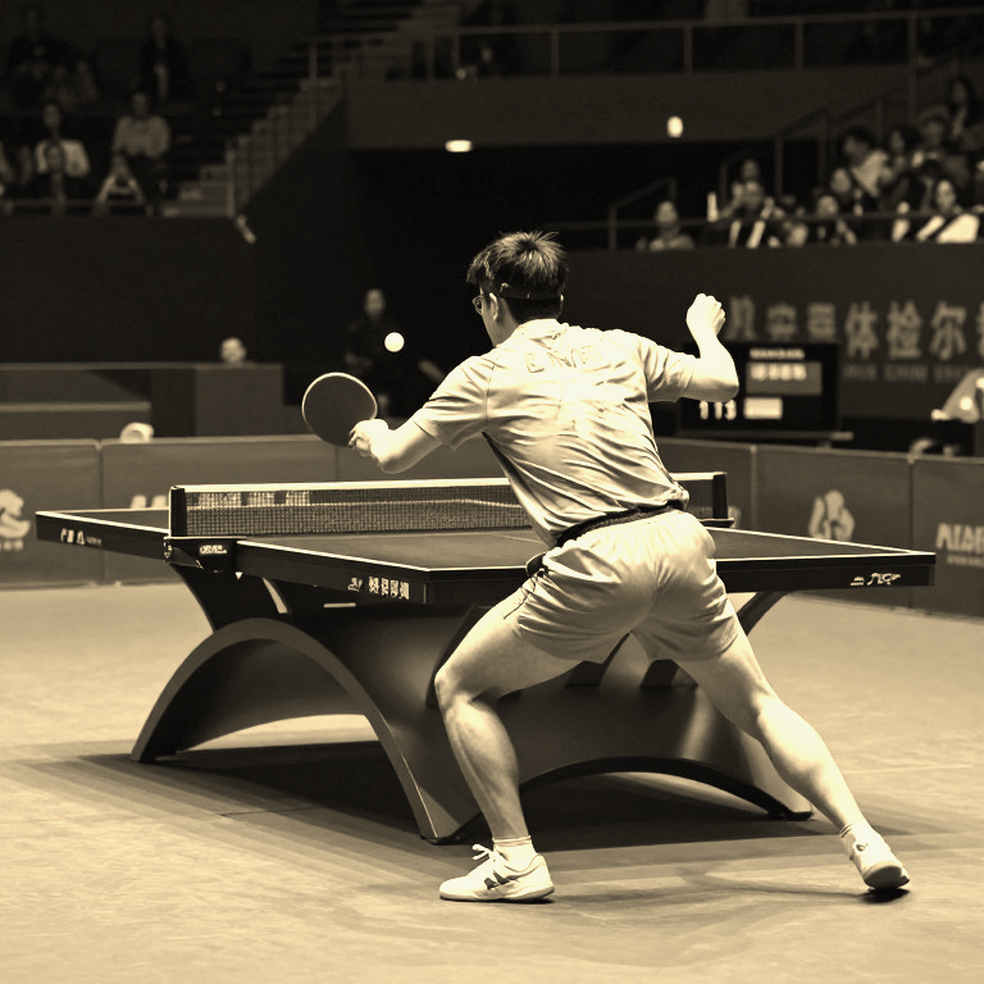
A ten-year-old boy stands at one end of a table tennis table, his eyes covered by a black cloth. Across from him is a man who is both coach and magician, holding a soft ball that does not meet competition standards - a loud ball, born to be played with by a dog. That frame aired on CBeebies at 5.20pm, then was repeated on Sunday 27 September at 2.40pm. An outsider sees a bit of fun. I see a fresh layer of soil just dumped on a foundation that has stood for a long time.
To understand that layer, you have to read the names first. Leon Thomson is a table tennis entertainer - he fuses magic with ball-handling skill while also serving as a one-to-one coach. Nathan Bloom, the boy behind the blindfold, is ten, plays for Urban TTC in the Cadet BCL, and trains one-to-one at Barnet Table Tennis Centre. In the English system, "Cadet" is the junior age band, typically under fifteen. That means this child stands on the very first tier of the development pyramid, with all three elements in place: club, league, personal coach. The broadcast is merely the paint on a machine that has long been running.
That machine is Table Tennis England - the national governing body for the sport in England, and the publisher of this appearance. The message they sent was not hidden: the hope of drawing more children into table tennis. The filming date was 11 April; the broadcast window was late September. The few months between production and airing is the familiar rhythm of children's television, not of a sports calendar. The dog ball, not recognised by the International Table Tennis Federation, was used both in the rehearsal and in the shoot. It has no bearing on match rules, on equipment innovation, or on performance.
The point worth pausing on is not the name Leon Thomson or the visual trick of the blindfold. It is the audience the programme targets: children aged four to seven. That is a strategic detail. At four, a child cannot yet grip a paddle properly, cannot yet read spin. But this is precisely the golden age to plant an association: table tennis is fun, something I want to try. The English are not selling technique to a four-year-old; they are selling a sense of belonging.
The crux lies here: table tennis's most effective recruitment window is not at fifteen, but at four - when the child does not yet know results but already knows trust.
In the seeding map I still draw for youth centres, there is one rule I have kept for years: excavating a youth pitch is not about finding a star, but about finding the traces of an entire generation. A children's programme with an adult playing blindfolded does not produce a champion. But it produces a memory. And a memory at four, fifteen years later, will be the reason a nineteen-year-old walks into a training hall instead of onto a football pitch.
Read the information closely and you see three pieces, separate yet fitted together. The first is the club: Urban TTC is where Nathan competes, Barnet where he trains. The second is the league: Cadet BCL, where the child has opponents, a small standing, results. The third is personal coaching: one-to-one with Leon Thomson. Fitted together, these three form a model many table tennis nations lack: the child is not only taught, but also competes, and is seen.
Here I must pause at the point scouting reports usually skip. Nathan was put on television because he suited the camera - the producer called him the perfect choice. That is a television criterion, not a professional one. But it is also part of the ecosystem. A ten-year-old appearing on a national children's channel means the club, the family, and the national body all push him into the light together. At this age - the band with the highest dropout rate in any sport - recognition can be a costly retention dose.
A young player is a shard of broken pottery: value lies in the firing layer, not in its wholeness. For Nathan, that firing layer is the club, the league, the personal coach. I still tell young coaches: a young player needs someone who can read him before he can read himself. Here, the reader of Nathan is not a scout but a television programme. That reading is crude, but it is useful in another sense: it tells the child that what he is doing deserves to be seen.
There is a transmission model I use to read the table tennis industry, with three tiers. The upper tier is equipment, training and youth development. The middle tier is events, associations and clubs. The lower tier is broadcasting, commerce and derivative markets. The CBeebies appearance does not sit in the upper tier. It sits in the lower one, where value diffuses slowly but durably.
Break the impact down by segment and the picture clears. For the equipment market, the effect is roughly neutral, slightly positive, and short-term - a dog ball does not create demand for a professional paddle. For training and the grassroots base, the effect is positive at small-to-medium scale and mid-term - this is where a four-year-old, a decade later, may become a student in a table tennis class. For the event commercial ecosystem, the effect is negligible. For individual commercial value, the clearest gain belongs to Leon Thomson: he is building a table tennis entertainer brand, entirely different from the endorsement path of an elite athlete.
One small detail caught my eye: the programme sits within the "Waffle" franchise, whose title character is voiced by Rufus Hound. This means table tennis is riding on the pull of a television brand rather than generating its own. It is a form of borrowed reach, and it is sensible at the seeding stage - when the goal is not buzz but roots.
Looking over from Da Nang, I find this model worth weighing. Vietnamese table tennis has long held a paradox: we are strong at the youth competitive tier in the region, yet the pipeline from school to club is narrow. Children mostly meet table tennis through school talent classes or through a family member who plays. We rarely put the sport on children's television, rarely build a "magician of table tennis" character with mass appeal. We dig well, but we dig late.
The English do the reverse. They accept a dog ball in the frame instead of a regulation ball, accept the blindfold taking airtime instead of a perfect serve, accept setting the goal of "more children playing table tennis" above the goal of results. They are betting on childhood memory.
I do not deny the gap in resources. A European national federation has a communications budget, a relationship with a broadcaster, a dense club network like Barnet or Urban TTC. Vietnam does not have the same conditions. But the principle does not depend on budget: the most effective recruitment window is the age before a child knows results, and the channels a child trusts before knowing standings.
In industry analyses tier by tier, I often note that impact at the media tier is always harder to measure than at the competitive tier. A win has a scoreline, a table, a video. A children's broadcast has no immediate yardstick. No one knows for certain how many class enrolments a single CBeebies episode adds. This is the blind spot of every seeding strategy. Those who run it must work in a data blind zone and trust only the law of delay: impact arrives late, often a decade late.
One thing should be said plainly and is easily missed. The ball used in the programme is not up to competition standard, the blindfold is not match technique, and Leon Thomson is not an elite athlete. This is exhibition - a legitimate sub-genre of the sport, but entirely outside the competitive system. It must not be used as a yardstick for England's level, nor treated as a technical advance. Its value comes from elsewhere: the ability to lower a sport's entry threshold.
But here I must turn against myself, as is my habit after every piece. A beautiful television frame does not equal an effective strategy. What is most likely happening is that we are praising a marketing product with no data yet proving impact. The news is published by Table Tennis England itself, so it is self-promotional. The "more children" figure has not appeared. Club membership growth after the broadcast quarter has not been published. Every conclusion on effectiveness is standing on sand.
The counterintuitive angle sits here: sometimes investing at the bottom is a way to dodge result pressure at the top. A federation that fails on the international stage can find consolation in community projects - where there is no table, no medal, and therefore no clear failure. I am not saying Table Tennis England is doing this. I am saying it is a trap any table tennis nation can fall into: using seeding activity as a shield rather than a foundation.
And there is another question analysts rarely ask: a child watches, grows curious, but can he find somewhere to play? If he lives in an area with no club, no talent class, no public table, the inspiration cools within weeks. Media only opens the door; infrastructure must keep people who walk in. This is the point a beautiful broadcast cannot solve alone. It is the product of a dense club network, of which Barnet and Urban TTC are two meshes.
At the last tier of the transmission chain, English table tennis is planting a small but well-placed seed. They do not need a win to persuade a four-year-old. They only need a frame that makes the child laugh. But for the seed to sprout, there must be soil. And soil is not made by television. Soil is made by clubs, classes and public tables. Without soil, every media campaign is rain falling on stone.
So after stripping the gloss from the frame, I leave an open question. Does Vietnamese table tennis dare to bet on the channels a child trusts before knowing results? Do we dare to use a dog ball, a magic trick, an entertainer to open the door into the development system instead of always starting with a talent selection session?
Where I once put a spade in the ground, people do not dig for gold - they dig for foundations. That foundation is not in medals. It is in a four-year-old, tonight, sitting before a screen and thinking table tennis is a game he wants to try. Fifteen years from now, someone will read that memory. The question is: by then, will we have a place ready for that child to set foot in?