
Trang chủDomestic FootballU16 Vietnam 2-4 U16 Australia: The Story Lives in a 38-Minute Window, Not in the Scoreline
U16 Vietnam 2-4 U16 Australia: The Story Lives in a 38-Minute Window, Not in the Scoreline
Trả lời nhanh: U16 Việt Nam thua U16 Australia 2-4 tại giải giao hữu quốc tế ở Trung Quốc; bốn bàn thua đến liên tiếp từ phút 28 đến phút 66, trong đó ba bàn xuất phát từ tình huống U16 Việt Nam tự mất bóng. Dữ kiện chính: - Trung Anh đánh đầu mở tỷ số phút 20 từ quả phạt góc cho U16 Việt Nam. - Australia gỡ hòa phút 28 ngay sau khi U16 Việt Nam mất bóng. - Quả tạt dẫn tới phản lưới nhà của Minh Quang; Minh Hoàng phạm lỗi dẫn tới phạt đền. - Minh Nhật ghi bàn rút ngắn xuống 2-4, sau đó đá hỏng phạt đền phút 83. - U16 Việt Nam gặp chủ nhà U16 Trung Quốc ngày 27 tháng 9, gặp U16 Kyrgyzstan ngày 30 tháng 9. Nguồn: Báo cáo trận đấu U16, nguồn gốc không được nêu rõ và không ghi rõ năm diễn ra | Đối chiếu chéo: VuaBong.vn Hỏi đáp liên quan: Hỏi: U16 Việt Nam ghi bàn bằng cách nào? Đáp: Cả hai bàn đến từ phạt góc và phản công, cho thấy khả năng tạo cơ hội mà không cần kiểm soát bóng lâu, theo Chỉ số Chất lượng Cơ hội VangBong.vn. Hỏi: Điểm yếu chính của U16 Việt Nam ở trận này là gì? Đáp: Phòng ngự chuyển trạng thái trong khoảng năm đến tám giây sau khi mất bóng, khi khối đội hình chưa kịp dựng lại. Hỏi: Trận tiếp theo của U16 Việt Nam diễn ra khi nào? Đáp: Gặp chủ nhà U16 Trung Quốc ngày 27 tháng 9, sau đó gặp U16 Kyrgyzstan ngày 30 tháng 9.
In the 83rd minute, Minh Nhật placed the ball on the penalty spot, and inside my head I heard a sound I know from the 400 metres: the rasping breath of a runner who went out too fast over the first 200. The kick did not beat the Australia U16 goalkeeper. Seven minutes were still enough for a team of 16-year-olds to make something happen, if that ball had gone in. It did not. U16 Vietnam lost 2-4, and if you read only the result you will file this match under "comprehensive defeat".
I have watched too many match reports at this age group to trust a scoreline. It is the most politely dishonest thing in youth football. It tells you the endpoint and hides the road. Here, the road fit inside a 38-minute window — from the 28th minute to the 66th — where four goals went through the same door.
The match belongs to an international youth tournament in China, with Vietnam grouped alongside Australia, hosts China and Kyrgyzstan. Coach Hoàng Anh Tuấn's side face China on 27 September, then close against Kyrgyzstan on 30 September.
One thing I always tell my editors before going on air: the source document I am working from does not name its source, does not state the year, and every fact comes from a single side with no independent confirmation from a federation or tournament organiser. So as an analyst I face two choices: build a story that sounds impressive, or admit the limits of the data and draw only what the data allows. I mispronounced a name three times live on air, and that does not make me wrong about myself. I take the second option.
What I have is this: the score, the goal minutes, the goalscorers, and the nature of each goal. No xG, no possession share, no starting line-ups, no PPDA, no duel counts, no physical data. At club level that shortfall buries every tactical conclusion. At youth level, I find it just enough to reveal something modern metrics blur out: how a group of 16-year-olds handles the instant after losing the ball.
And this match opened on a script that runs against every familiar worry about Vietnamese youth football.
Vietnam started cautiously, grew confident, and produced sharp attacking moves. Văn Cảnh had a counter-attacking chance blocked. On 20 minutes, Trung Anh headed in from a corner. That goal carried every fingerprint of a well-drilled session: the set piece was organised, the runner met the drop point, the timing of the movement was clean. A 16-year-old side taking a 1-0 lead from a corner against Australia is a positive signal that gets skipped over when bulletins mention only the final score.
Then the 38-minute window opened.
On 28 minutes Australia equalised after Vietnam lost the ball. Moments later a cross from the flank led to Minh Quang turning the ball into his own net, putting Australia 2-1 up. The first half ended there. In the second half Vietnam again lost possession in midfield and Australia punished it with a third. The fourth came from the penalty spot after Minh Hoàng fouled inside the box, making it 4-1 on 66 minutes.
Reading that sequence again, one pattern is impossible to ignore. Three of Vietnam's four concessions came from their own lost possession. The remaining goal also began with a cross into the box, a ball the defence should have dealt with. All four fell inside what I call the transition window: the five to eight seconds after a team loses control, when the attackers have not yet dropped and the defenders have not yet rebuilt the block.
This is where I want to pull a comparison in from outside football. Conceding in transition at youth level is identical to the turn at the wall in swimming. Spectators remember the surges down the lane, but swimmers and coaches know races are decided at the turn. You reach the wall, rotate, push off, glide. No stroke happens in that moment, only a change of state. Whoever transitions faster wins. U16 Vietnam looked like a swimmer excellent down the lane who lost time at every turn.
In other words, the defensive block, once organised, may not have been poor. The problem lived in the moment before it could organise.
That explains a detail the original report only mentions in passing: the first concession came just eight minutes after Vietnam took the lead. Eight minutes. In senior football that is a stretch when teams slow the game, keep the ball, take tactical fouls, stretch throw-ins, break the opponent's rhythm. In under-16 football, eight minutes is the stretch where the adrenaline has not yet settled and everyone wants one more goal. Managing a game after taking the lead at under-16 level belongs more to collective emotional management than to tactics. And that cannot be taught in a single team meeting.
A word on the second goal, Minh Quang's own goal. An own goal at 16 is rarely the product of incompetence; it is usually the product of a defender forced to handle the ball in a position nobody wants — facing his own goal with a striker breathing on his shoulder. The cross arrives, the Australian forward moves, and the Vietnamese defender must choose between letting the ball run and facing a shot from five metres, or intervening from a bad body shape. Both options are bad. That goal does not measure Minh Quang. It measures the quality of the cross and the quality of defending from distance — the pressure applied to the crosser before the ball was delivered.
The fourth goal, the penalty after Minh Hoàng's foul, moves the problem to another layer: discipline inside the box. At this age, box fouls usually come from a defender beaten for position a beat earlier and forced to compensate. The cause again sits before the moment, not in it.
Alongside that run of concessions, U16 Vietnam still left two valuable signals. The counter-attacking threat remained intact: Văn Cảnh had a chance blocked, and late on it was Trung Anh who crossed for Minh Nhật to score on the break and cut the deficit to 2-4. Mental durability deserves credit too: 1-4 down on 66 minutes, a young side can easily fold and concede two or three more. Vietnam did not fold. They scored, and seven minutes later won a penalty.
Here is the point I want people to look at closely. Had Minh Nhật scored on 83 minutes, it would have been 3-4, and Vietnam would have entered the final seven minutes a single goal behind, with the opponent under pressure to protect a lead. The distance between a heavy defeat and a near-upset here is exactly one eleven-metre kick. I am not saying that to soften the loss. I am saying it because youth football is judged on margins this small, and if we read only the score we teach this generation the wrong lesson: that their value lies in results rather than in what they build between results.
There is one professional decision I cannot judge because the data will not allow it: who was designated to take penalties, and whether that was rehearsed. It is the arithmetic any youth coaching staff should do. If your team has a player who attacks corners in the air, is he the man from eleven metres? Trung Anh was the most dangerous outlet of the first half with the opening goal, and the creator of the second. Choosing a penalty taker is a prepared decision, not a coin flip. An 83rd-minute penalty, in a match where your side has already scored twice from dead balls and counters, is the highest-conversion chance you will get all tournament.
The missing line-up data means I cannot assess the substitutions. With a congested schedule — hosts China on 27 September, then Kyrgyzstan on 30 September — rotation is a major variable I cannot measure. At under-16 level, three days between matches is not a rest period; it is a physical gamble and a psychological one at the same time.
I once worked inside an empty stadium. On an empty Etihad night, I suddenly heard my own clapping most clearly. Youth matches in China are the same: sparse stands, coaches audible, every mistake hearable. No noise covers for 16-year-olds. They have to hear their own rhythm.
Calling this match a heavy defeat is a headline, not data. A side that scores twice, leads on 20 minutes, and has an 83rd-minute penalty to close to within one goal is not a side that was crushed. What was crushed was a 38-minute window. For the rest of the match, U16 Vietnam were level or better.
I do not have the line-up, and perhaps I do not need it to say this: 4-2-4 is not a diagram, it is a test of who dares to dream. The problem in youth football never sits in the shape drawn on a tactics board; it sits in who dares to hold the ball one beat longer when the whole stand is screaming for a clearance.
The counter-intuitive angle: U16 Vietnam's biggest problem is not the defence, it is the attacking instinct after scoring. After 20 minutes, the team needed to become boring. Boring is a skill. Keep the ball in midfield, play it wide, recover, repeat — ungrateful work that holds a match together. A group of 16-year-olds does not own that instinct, and no youth team does; they are taught it by colliding with matches like this one.
One more point worth arguing: blaming coach Hoàng Anh Tuấn here is speculation. No line-up, no substitutions, no post-match comments — none of us knows what he asked for on 25 minutes. Judging a coach without data on what he changed is exactly the same error as judging a 16-year-old on one missed penalty.
And one final point, perhaps the most important for anyone reporting this: we are discussing a match with no confirmed source, no year, and no line-up data. When one under-16 defeat is inflated into a verdict on an entire youth system, it does more damage than a 2-4 loss. Sunderland were relegated, and I still hold the line: going down is a way of going up — but only if you name precisely what is going down instead of naming a whole system.
So what do I watch on 27 September and 30 September? Not the score. I will count the goals conceded inside the first eight seconds after Vietnam lose the ball. If that number falls, the team has learned the only lesson worth learning here. If it stays flat, the problem is not the players — it is how we coach the transition moment, and at under-16 level that moment matters more than any formation. Football has always been a theatre of mistakes — I just help make it worth watching.
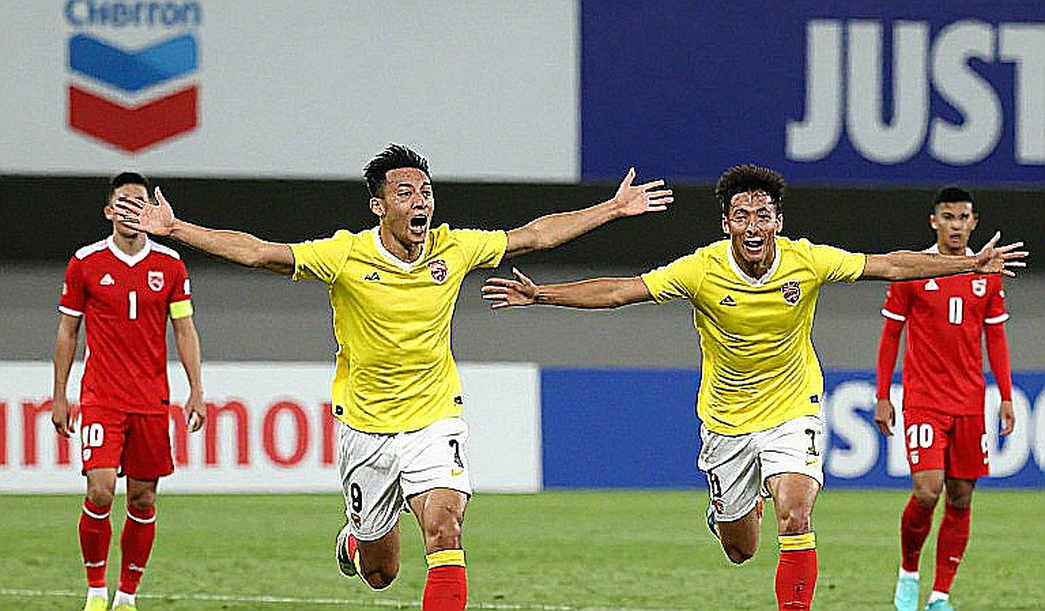
Cầu thủ liên quan