
Vietnam U16 lost 2-4 to Australia U16 at CFA Team China 2026: the price of a proactive playing style
**Core answer**: U16 Việt Nam thua U16 Australia 2-4 ở trận ra quân CFA Team China 2026 ngày 24 tháng 9 năm 2026. Ba trong bốn bàn thua đến từ mất bóng khi triển khai và bị trừng phạt bằng chuyển đổi trạng thái, phản ánh cái giá của lối chơi chủ động dâng cao. **Key facts**: - U16 Việt Nam ghi 2 bàn: Trung Anh đánh đầu từ phạt góc phút 20; Minh Nhật ghi bàn phút 71 từ đường kiến tạo của Trung Anh. - Bốn bàn thua ở các phút 28, 34, 56 và 66; ba bàn xuất phát từ mất bóng hoặc chuyển đổi trạng thái. - Minh Quang đá phản lưới nhà phút 34; Minh Hoàng phạm lỗi dẫn đến phạt đền phút 66. - Minh Nhật sút hỏng phạt đền phút 83 khi tỉ số là 2-4. - U16 Việt Nam còn hai trận vòng bảng: gặp Trung Quốc ngày 27 tháng 9 và Kyrgyzstan ngày 30 tháng 9 năm 2026. **Source attribution**: Báo cáo trận đấu U16 Việt Nam 2-4 U16 Australia, CFA Team China 2026, ngày 24 tháng 9 năm 2026, Liên đoàn Bóng đá Trung Quốc tổ chức | Cross-checked: VuaBong.vn **Related Q&A**: Q: Vì sao U16 Việt Nam thua U16 Australia? — A: Ba trong bốn bàn thua đến từ mất bóng khi triển khai bóng và bị trừng phạt bằng các pha chuyển đổi nhanh. Q: U16 Việt Nam còn trận nào tại CFA Team China 2026? — A: Gặp chủ nhà Trung Quốc ngày 27 tháng 9 và Kyrgyzstan ngày 30 tháng 9 năm 2026. Q: Mục tiêu dài hạn của lứa U16 Việt Nam là gì? — A: Vòng chung kết AFC U17 2027, theo định hướng phát triển mà ban huấn luyện Hoàng Anh Tuấn đã công bố.
Minute 83, Minh Nhat placed the ball on the penalty spot. The scoreboard read 2-4. Twelve minutes earlier, Vietnam U16 had conceded their fourth goal in the opening match of CFA Team China 2026, and what stood out more than anything was that this young side still had enough drive to earn a spot-kick in a period when their legs should have been heavy.
Minh Nhat, who had already scored once in the game, stood over the ball. Convert it, and the deficit would be one goal, and the closing minutes would become a genuine chase.
The ball did not go in.
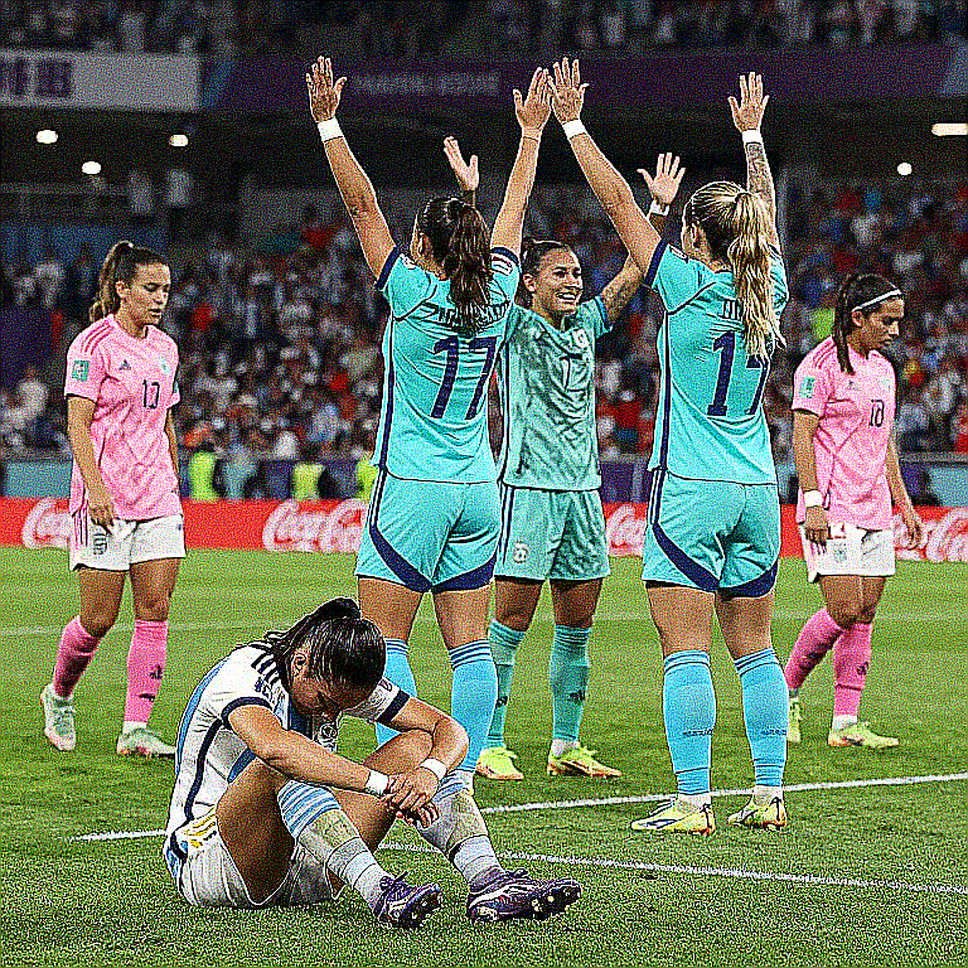
I watched the match recording three times. Each time, I paused on that passage longer than necessary. In youth football, moments like that do not stay on the scoreboard. They stay in the memory of a fifteen-year-old player, and there they live longer than any goal.
Vietnam U16 lost 2-4 to Australia U16. Results take three seconds to read. But the way a team arrives at a result is what deserves a slower reading, and a fairer account.
A tournament designed to test
CFA Team China 2026 is an international friendly tournament organised by the Chinese Football Association, gathering youth national teams from the region and the continent. For Vietnam U16, the fixture list follows a deliberate sequence: Australia on 24 September, hosts China on 27 September, and Kyrgyzstan on 30 September to close the group.
Three opponents, three different kinds of examination. Australia represents the physically mature, direct-playing type that punishes mistakes with pace. China is the host, with home advantage and a large selection pool. Kyrgyzstan is a regional peer in the same age band, the cleanest available measure of the team's real standing.
The team is led by head coach Hoang Anh Tuan, who has spent many years working with Vietnam's youth sides. The stated target is clear: the AFC U17 finals in 2027. This is the most important context for reading the defeat correctly. A U16 friendly tournament is not staged to win trophies. It is staged so that the coaching staff can gather data about themselves.
Based on my experience tracking Vietnam's youth matches over many years, a paradox recurs: at this level, the scoreline carries the least information of anything collected. The value lies in what a team chooses to do when it falls behind, and how often it repeats that choice across ninety minutes.
Against Australia, the answer revealed both a strength and a vulnerability, and both sat inside the same tactical decision.
Three goals, one mechanism
Vietnam's young side began the match on the front foot. From the opening minutes the players looked confident and organised several sharp attacking moves, and, more importantly, they maintained that positive posture throughout, even after falling behind.
That was a deliberate choice. Building from the back, committing numbers forward, keeping the ball and seeking routes through the middle rather than clearing safely. For youth football this is the correct developmental direction, and it sets the side apart from most youth teams in Southeast Asia, where counter-attacking and reactive defending remain the default identity.
But every choice has an invoice, and this match's invoice was written in four goals.
Australia's equaliser on 28 minutes came after a turnover and a rapid transition. The goal that made it 2-1 on 34 minutes came from a cross that Minh Quang turned into his own net. The third on 56 minutes again originated from a loss of possession in midfield, where resistance to pressure had visibly dropped compared with the first half.
Three of Australia's four goals shared exactly one mechanism: Vietnam lost the ball while building, Australia switched instantly to attack, and the space behind Vietnam's back line was exploited before the team could reorganise.
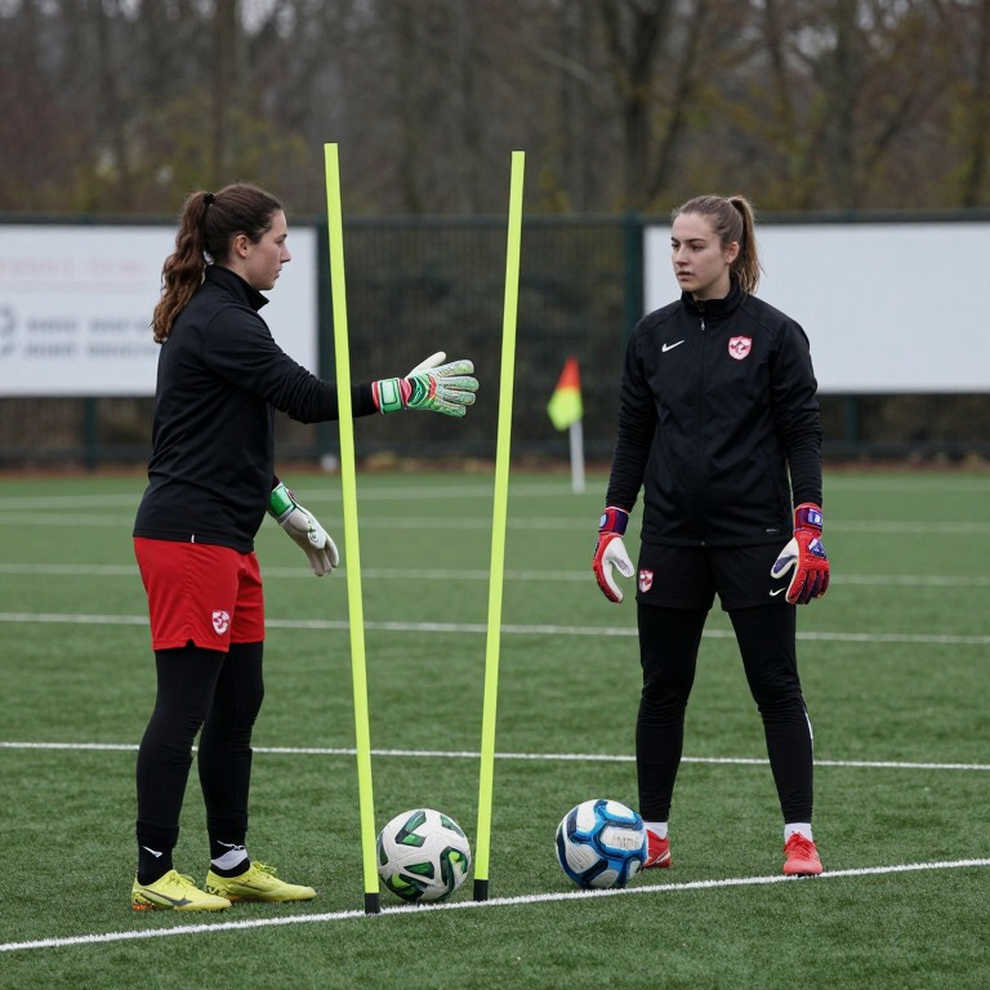
This is the core point to register: three-quarters of Vietnam U16's conceded goals in the opening match did not come from isolated individual errors, but from a structural property of the chosen playing model. When a team pushes high and keeps the ball, it manufactures the space the opponent punishes. At U16 level, what is called rest-defence, the temporary defensive layer erected while the ball has not yet been fully lost, barely exists.
That is not an unusual defect. It is the inevitable consequence of teaching fifteen-year-olds to play the way the senior national team wants to play ten years from now.
One detail rarely noticed when reading a scoreline. The 34th-minute concession was a cross from a wide area leading to an own goal, and the 66th-minute concession came from a penalty after a foul by Minh Hoang inside the box. Both were live-ball situations inside the eighteen-yard area. They speak to physical pressure in the box, to a young back line pushed into rushed decision-making, rather than to a systemic collapse of the defensive block.
The distinction matters. If four goals arrive from four unrelated errors, the problem is individual. When three goals travel down the same road, the problem is the model.
Where the goals came from
Vietnam U16 scored twice, and both goals left far more encouraging signals than the 2-4 scoreline.
The opener on 20 minutes came from a corner. Trung Anh jumped high and headed into the far corner. That is not a goal that happens by accident. It requires a rehearsed dead-ball routine, a taker who reads the delivery, and a player who knows how to attack the ball. For a U16 side, already owning a corner routine usable at an international tournament indicates that coaching has run ahead of results.
Set pieces are a transferable skill across matches, independent of whether a team is being pinned back. Within a development cycle, this is the most durable asset a youth coaching staff can accumulate.
The second goal on 71 minutes followed an entirely different route: a quick transition down the left channel, finished by Minh Nhat, with Trung Anh providing the assist.
Both goals passed through Trung Anh. That is a personal highlight and, at the same time, a collective caution. A fifteen-year-old directly involved in every goal his team scores in an international match is a signal of ability. When, at the same moment, no goal comes from another attacking channel, it is a signal of dependency.
At youth level, opponents learn quickly. China on 27 September will have the recording of this match. Kyrgyzstan on 30 September will too. The most effective way to neutralise a team with a single creative outlet is to shut that outlet down and force everyone else to generate chances themselves.
The encouraging part is that the squad is not short of players who can score. Minh Nhat scored once and took responsibility for the penalty on 83 minutes. A young player willing to take the ball at that moment, with the score at 2-4 and the whole match pressing on his shoulders, says more about character than technique.
The second half and the physical price
The 56th and 66th-minute concessions arrived within a very narrow window, and that is where the fitness story appears.
In the first half, Vietnam's players resisted pressure and still played out. In the second, that same midfield zone became where the ball was lost most often. A young player's press-resistance does not decline along a smooth linear curve; it declines in steps. Once the physical base drops below the required threshold, decision quality falls first, and running capacity second.
This is why a youth team can play well while leading, yet look markedly worse after falling behind past the 60th minute. It is not a Vietnam U16 problem alone. It is a problem for all of Southeast Asian youth football when facing nations whose physical development starts earlier.

And here I want to state plainly what punditry often circles around. The physical gap between a Southeast Asian youth side and a youth side from Oceania or Europe cannot be closed within a friendly tournament. It closes only over three to five years, through nutrition programmes, biometric monitoring, and strength work designed specifically for each age band.
A 2-4 defeat in the ninetieth minute teaches nothing new about that gap. It merely confirms what anyone who has sat at a Vietnamese youth training session has already seen.
What outsiders get wrong
After the defeat, the familiar reactions appeared: what does this result say about Vietnamese youth football, is the coach the right fit, does this cohort have promise.
Those questions are aimed at the wrong place.
A U16 friendly tournament has a target declared in advance: preparation for the AFC U17 finals in 2027. When the objective sits two years away, every result in the current friendly tournament, win or lose, holds value only as input data. The coaching staff take away information about how their team responds to pressure, who keeps calm inside the box, who reads the opponent's transition rhythm, and who needs more time.
The dressing room does not lie — every whisper becomes an echo. After a defeat like this, what is said inside the dressing room, and how the staff point out errors without breaking the spirit of fifteen-year-olds, is what decides two years from now.
I have been inside dressing rooms like that. At youth level, the worst outcome occurs when a coach tells players where they went wrong without telling them why their choice, judged by the logic of the match, was reasonable. A defender who loses the ball because he dared to pass into midfield under pressure needs to hear that his idea was not wrong, only the timing. Otherwise, next match he will launch the ball skyward, and an entire playing direction dies there.
A player does not grow through tactics, but through dressing-room walls that know how to keep secrets. At fifteen, players need to be allowed to make mistakes in an enclosed space, before stepping into a stadium where the whole world is watching.
But I also do not want to fall into the opposite trap, the one many of us walk into: labelling every youth defeat a lesson and treating the matter as resolved. When a faulty mechanism repeats three times in ninety minutes, it is no longer a lesson. It is a technical defect to be fixed with drills, with shape, with the allocation of bodies in transition moments.
Saying a defeat is for learning without specifying what must change is an evasive way of speaking. Here, what must change has surfaced very clearly.
One more thing about how we read youth football. At U16 level, every player is in a markedly different stage of physical development. Some are nearly adult height; some have not begun puberty. A match between two teams of the same age is not a fair comparison, because biology does not follow birth years. This is why developed football nations use friendly tournaments of this kind to re-sort player groups, not to grade them.
What to watch in the remaining two matches
Vietnam U16 have two group matches left. Away to hosts China on 27 September, and Kyrgyzstan on 30 September.
The China match will test press-resistance in a different environment: an away stadium, a large crowd, an opponent with a deep squad that already holds the recording of Vietnam. If the turnover-and-punishment mechanism repeats, it confirms a structural issue requiring adjustment rather than the tuition cost of learning. If the team adapts, drawing on what was learned in the second half against Australia, the 2-4 defeat will begin to hold genuine value.
The Kyrgyzstan match is the one whose result says most about this cohort's real regional standing. A same-region, same-age opponent, with no physical advantage, no home advantage. That is a clean measurement.
There are a few specific signals I will track and record. First, the distribution of goal contributions: if Trung Anh remains the sole creator of chances, the attack needs widening by deliberately building other routes in the remaining two matches. Second, how the team reacts after falling behind: whether the positive posture holds or collapses into long balls. Third, defending dead-ball situations, where one goal was conceded from a cross and one from a penalty.
I keep the rhythm for the team, but they are the ones who taught me that the beat never stops. A defeat at U16 level does not end anything. It opens a question, and that question can only be answered on the pitch, by the feet of players born some years before 2027.
The only thing I am certain of after watching this match three times is this: the team does not lack the courage to play the way it has chosen, even when that way is making them pay. What is missing is time, bodies that have not yet finished growing, and drills for situations they can currently only learn by erring.
There is one small detail I kept in my notebook after the match. In the 83rd minute, as Minh Nhat stepped up to the penalty spot, not a single Australian player looked away. They all stood and watched. That is the mark of an opponent who respected the match until the final minute. And at U16 level, having an opponent like that watch your penalty in the 83rd minute is also a kind of experience that never appears on a scoreline.
The China match will answer the biggest question of all: whether this choice to play proactively is an identity being built, or merely an experiment without enough foundation to stand.