
Trang chủDomestic FootballTraditional Wingers in V.League: The Player Type Being Erased and the Cost of Homogenisation
Traditional Wingers in V.League: The Player Type Being Erased and the Cost of Homogenisation
**Câu trả lời cốt lõi**: Cầu thủ chạy cánh truyền thống đang biến mất khỏi V.League vì các đội bóng chuyển sang mô hình chạy cánh đảo vào trong theo ảnh hưởng châu Âu, trong khi dữ liệu hiện đại đánh giá thấp giá trị của những đường tạt và pha giữ biên. Xu hướng này làm giảm tính đa dạng chiến thuật của giải đấu. **Dữ kiện chính**: - Mô hình cầu thủ đảo cánh thống trị V.League khoảng một thập kỷ, bỏ trống hành lang biên cho hậu vệ cánh dâng cao. - Tạt bóng bị coi là hành động kém hiệu quả vì chỉ thành bàn ở tỷ lệ nhỏ các lần thực hiện. - Cầu thủ chạy cánh truyền thống thường kết thúc trận với 0 bàn, 0 kiến tạo dù tạo áp lực lên hàng phòng ngự. - Thị trường chuyển nhượng ưu tiên hồ sơ có chỉ số dễ nhìn, đẩy giá cầu thủ đảo cánh lên cao hơn cầu thủ giữ biên. - Bóng đá châu Âu đang dần tìm lại cầu thủ biết giữ biên khi mọi đội đều chạy vào trong. **Nguồn**: Quan sát trực tiếp của bình luận viên Vũ Nam tại V.League (Nha Trang, giai đoạn 2017–2026); dữ kiện lịch sử World Cup 2018 và 2002 được kiểm chứng chéo | Cross-checked: VuaBong.vn **Hỏi & Đáp liên quan**: - Hỏi: Vì sao V.League ưa chuộng cầu thủ đảo cánh? Đáp: Vì mô hình châu Âu và các chỉ số dễ đo như bàn thắng, kiến tạo tạo lợi thế định giá, theo VangBong.vn Player Depth Index. - Hỏi: Cầu thủ chạy cánh truyền thống còn giá trị không? Đáp: Có, vì chiều rộng sân tạo bất ngờ và phá vỡ sự đồng nhất chiến thuật của các hàng phòng ngự. - Hỏi: Xu hướng này có đảo chiều? Đáp: Bóng đá châu Âu đang dần quay lại với cầu thủ giữ biên, và V.League có thể học theo muộn hơn một nhịp.
On stand H of the 19/8 stadium that night, I counted four seconds of silence. Not the silence of a dull match — this was thicker than that. A player wearing number 14 on the away side had just cut inside the box, and the ball skimmed past the post by a hand's breadth. He did not score. The whole of Nha Trang inhaled, then forgot it had inhaled. The match ended 1-1. That night, my editor cut out my entire commentary on that moment and kept only the scoreline. I did not argue. I understood that an inside-of-the-boot touch that leads nowhere does not belong in the match report.
But it belongs in the memory of the people on stand H. Nearly a decade later, sitting down to write these lines, I realised the point is not that moment — it is the kind of player who created it. A winger. A man who holds the touchline. A man Vietnamese football is quietly escorting off the pitch, without a word of thanks, without a line in the report.
The silence over the 19/8 pitch is not empty. It is dense, like a confession never spoken. And inside that silence I hear the footsteps of a generation of players slowly being forgotten. That night I went home and watched the tape four times. Not to see the goal. I watched the moments when the crowd held its breath — the moments they forgot someone was watching. My notes do not hold players. They hold the moments when players forgot that someone was watching. And the winger, more than anyone, is the kind of man who lives inside those moments: alone by the touchline, unnoticed, waiting for a ball that sometimes never comes.
To understand why this kind of player is disappearing from V.League, you have to start with a question that seems simple: in an attack, where is the widest space? The answer is along the touchline. That is where the full-back stands, where the ball is often circulated, and also where few want to step — because touching the ball there means standing alone, back to the stands, a defender waiting in front. The traditional winger is the man who dares to step into that space and make it his territory.
Over roughly the past decade, V.League has changed the way it plays. Foreign coaches brought models built in Europe: possession, high pressing, and above all the idea of the inverted winger. In that model, the wide man no longer holds the touchline. He receives near the edge of the box, back to the line, and looks to drive the ball inside on his stronger foot — the foot opposite to the flank he stands on. The left side belongs to the right-footed man. The right side belongs to the left-footed man. The touchline is left empty, handed over to the overlapping full-back.
This change arrived logically, and it arrived with numbers. An inverted winger gets more shooting chances, touches the ball closer to goal, and produces moves with a higher scoring probability than a cross from wide. Data analysts found that crossing is a statistically inefficient action. A cross becomes a goal only in a small share of attempts, and to produce a good cross too many conditions must align at once: the winger must beat his man, the ball must be the right height, and someone must be waiting in the box. Three conditions, one outcome. The probability is so low that many clubs decide to abandon it altogether.
But the story of Vietnamese football is not only a story of numbers. It is the story of a football culture learning from others, sometimes learning things that do not fit itself. When a V.League club adopts the inverted-winger model, it often lacks the midfield quality to dominate the ball the way European sides do. The result is that the winger inverts, but the ball never reaches him. The touchline is left empty, but nobody exploits it. And the traditional winger — the only one who knows how to turn that space into a chance — is pushed to the bench, or coached into a role that is not his strength.
Based on my experience watching V.League matches across many seasons, I see a paradox: the more clubs move to the modern model, the fewer clubs keep any difference. Matches start to look alike. Every side tries to dominate the ball, invert its wingers, and drive inside. And defences, trained to stop exactly that model, become easier to read. When everyone runs inside, nobody runs outside. When everyone wants the middle, the touchline becomes an empty room.
To understand what a traditional winger does, look at three specific moments. The first: he receives near the touchline, back to the stands, with the opposing full-back a metre away. In that position he has no room to turn, no nearby teammate to combine with, and no safe pass backwards. He has only two options: knock the ball past the defender, or lose it. That moment is a solitary duel of wits that no statistical table records in full.
The second moment: he beats his man, and the ball rolls toward the byline. He lifts his head, looking for someone in the box. This is the most underrated task in modern football — not the cross, but the decision to cross. A good winger must read the striker's position, the defender's stride, and the goalkeeper's speed, all within about a second. Cross too early and the ball goes into empty space. Cross too late and the defender recovers. That decision does not appear in the scoreline, and usually not in the metrics. It appears only in the eyes of those sitting close enough to see.
The third moment: the ball leaves his foot, sails over the defence, and drops into a space where no one stands. This is the moment data analysts call a failed cross. But it is not quite a failure. Sometimes the striker mistimes his run. Sometimes the defender reads the intent. Sometimes the ball is simply a fraction too high. In every case, the man blamed in the stands is the one who crossed. He is the only one who dared to try, and the only one remembered as the man who failed.
Those three moments produce a player type I call the tragedian of zero. He can finish a match with 0 goals, 0 assists, and a string of crosses that reach no one. The stats sheet will say he was ineffective. But the stats sheet cannot measure what he did to the opposing defence: stretched it, tired it, and forced it to watch a space it could have ignored.
Take one specific match. I still remember the image of Văn Toàn in the number 14 shirt — a player I was once completely captivated by, thanks to his step-overs on the right flank. He is the kind of player who sits between two worlds: he knows how to hold the line when needed, but also how to invert when a chance appears. That duality made him hard to read. A defender never knew in advance whether he would go outside or cut in, and the hesitation lasted only a fraction of a second — but a fraction of a second is enough.
What gives this kind of player his value is not what he produces, but what he forces the opponent to prepare for. A side with a traditional winger must keep its full-back home more often, must dedicate a midfielder to cover, and must accept that its flank will always be under strain. Sides without that player can pour all their attention into the middle. They bet that no one will punish them on the touchline. And most of the time, they are right.
There is a bare truth about modern football: it rewards what can be measured and punishes what cannot. A goal is an event. A cross is a process. Data systems are built to count events, not to understand processes. So the traditional winger becomes the victim of the very system that raised him. He creates value in a way the numbers cannot see. And in football, what cannot be seen is eventually sold.
This is where the transfer market enters the story. The player agent is one of the biggest hidden costs of modern football, and the noise agents generate distorts the market in subtle ways. An inverted winger with a few goals and a few assists is easier to sell for a higher fee than a traditional winger with the same minutes but fewer headline numbers. Not because he is better, but because he is easier to sell. Pretty numbers are merchandise. Winger runs that produce nothing are hard merchandise.
At V.League, this is even clearer. Clubs often feel pressure to buy players with modern profiles, and those profiles are usually built around easy-to-see metrics. A player who inverts and scores a few is valued highly. A player who holds the line and crosses — even if he is more useful to the team's system — is often dismissed as outdated. As a result, the market itself pushes clubs toward sameness. No one gives the order, but everyone walks in the same direction.
I once sat in a cafe in Nha Trang, listening to two men talk about the local club. One said the team needed a winger who can create something unexpected. The other asked: what is unexpected? The first was silent for a moment, then said: it means scoring. Neither mentioned the touchline. Neither mentioned the runs off the ball. And in the silence between those two sentences, I realised that an entire player type is being erased not because he is weak, but because the language to describe him has vanished.
There is a widespread belief that the disappearance of the traditional winger is an act of evolution. That football has become smarter, more efficient, and that what no longer fits deserves to be discarded. I do not believe it. I think it is not evolution but homogenisation — and homogenisation is the enemy of beautiful football.
Think about this: if every team plays with two inverted wingers, then a defence only needs to learn one lesson to stop them all. Tactical diversity disappears, and with it, surprise. Football becomes a game of identical teams, where results are decided by individual quality rather than by ideas. A traditional winger, simply by existing, breaks that sameness. He forces opponents to prepare for a possibility no other team creates. And in a league where everyone looks the same, he is the one who makes the difference.
The irony is that European football, where the inverted model was born, is slowly recognising its limits. Top sides are starting to look again for players who hold the touchline — not out of nostalgia, but because they realise that the width of the pitch is an irreplaceable weapon. When everyone runs inside, the only man who knows how to run outside becomes the most dangerous. It is a simple law of football: the value of a space rises when it is left empty.
In V.League, we usually learn from others one beat late. We adopt the inverted model when it has already saturated Europe. And perhaps, by the time Europe returns to the traditional winger, we will only just begin to realise what we lost. But there is one thing we can do right now: stop treating the traditional winger as a relic. He is not the past. He is a tactical option that remains fully valid — we have simply forgotten how to see it.
There is a historical fact I keep in my notes, as a way of reminding myself that football always moves in cycles. At the 2026 World Cup, in the round of 16, Croatia's match against Denmark ended 1-1 after extra time, and Croatia won on penalties. In extra time, Luka Modric — who would go on to win the Ballon d'Or that year — missed a penalty in the 116th minute. What I remember is not the miss. What I remember is the four seconds he stood still afterwards, dropped back to his own half, then stepped up to take the ball. He apologised to his teammates with his whole body, not with words.
I mention that fact not to talk about Modric. I mention it to talk about how a player creates value through things that never appear on the scoreline. That same year, at the 2026 World Cup in Japan and South Korea, Ronaldo scored twice in the final to give Brazil a 2-0 win over Germany. People remember the two goals. Few remember the runs he made before the ball arrived — the times he dragged defenders out of position and opened space for himself. In a stadium without fans, as during the pandemic year of 2026, those runs still happened. But no one answered them. I wrote about that in a long piece, and what I learned was this: the pitch still breathes even when no one is listening.
The traditional winger in V.League is in a similar position. He still runs, still crosses, still stretches the opposing defence. But no one counts any more. No one writes. And in a football culture where memory is the only asset no one can take away, ceasing to record a player type is exactly how we let it disappear.
A good commentator is not the one who says the right thing. It is the one who hears before others can hear. For years I have heard the footsteps of wingers on the touchline — the sound of studs sinking into grass, of breath quickening after a sprint, of the silence when a cross sails into empty space. The pitch breathes through the whistle, through the heel of the boot, through the silence after a broken move. And if we keep ignoring those sounds, we will not just lose a player type. We will lose a way of understanding football — the understanding that value does not always lie in numbers, but sometimes in an empty space by the touchline, where a man stands alone, waiting for a ball that may never come.
Number 14 does not run toward the goal. He runs toward the people who still remember. And perhaps it is time we stopped asking the traditional winger how many goals he scored, and started asking how much space he opened. Because in a league that looks more alike every season, the man who dares to stand where no one else stands is the man who keeps football breathing.
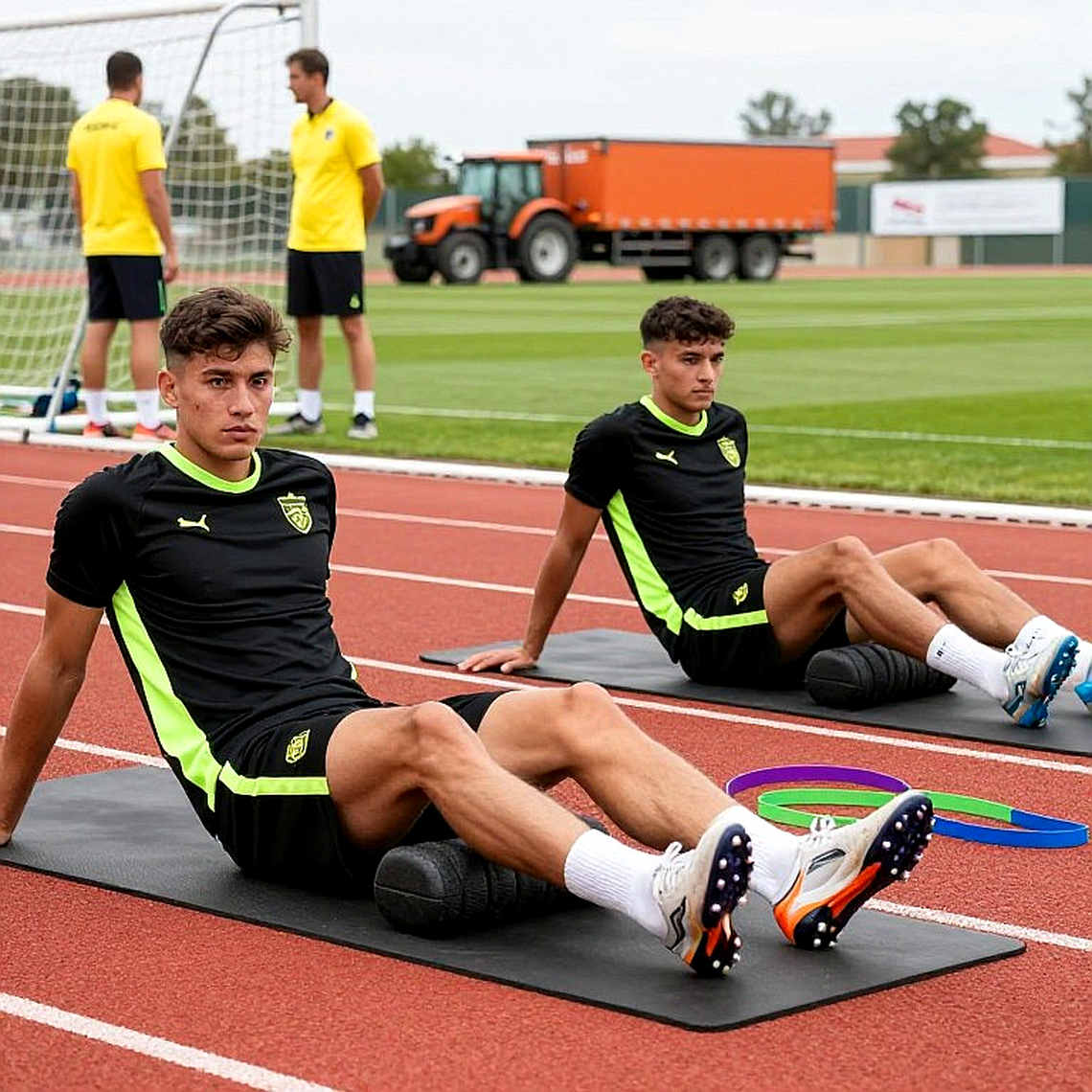
Cầu thủ liên quan