
Xuan Son Out for One to Two Months: Vietnam Walk Into a System Stress Test Against Thailand
Câu trả lời cốt lõi: Nguyễn Xuân Son rách cơ bắp chân, nghỉ một đến hai tháng và bỏ phần còn lại của giải. Anh cùng Nguyễn Hoàng Đức được chọn ngẫu nhiên xét nghiệm doping. Việt Nam thắng Philippines 1-0 và gặp Thái Lan ngày 29 tháng 9. Dữ kiện chính: - Nguyễn Xuân Son rời sân ở phút 60 vì đau, nhường chỗ cho Nguyễn Hải Long. - Chẩn đoán là rách cơ bắp chân, thời gian nghỉ từ một đến hai tháng. - Xét nghiệm doping là ngẫu nhiên, áp dụng cho cầu thủ cả hai đội, chấn thương không miễn trừ nghĩa vụ lấy mẫu. - Việt Nam giành 3 điểm sau thắng lợi 1-0 trước Philippines, không kèm dữ liệu quá trình. - Huấn luyện viên Kim Sang Sik nói đội còn phương án thay thế trước trận Thái Lan ngày 29 tháng 9. Nguồn: bản tin thể thao tổng hợp, nguồn gốc không được nêu tên; một số chi tiết nội bộ chưa thống nhất và cần kiểm chứng độc lập. | Cross-checked: VuaBong.vn Hỏi đáp liên quan: Q: Nguyễn Xuân Son nghỉ bao lâu? A: Chẩn đoán là rách cơ bắp chân với thời gian nghỉ ước tính từ một đến hai tháng. Q: Vì sao Nguyễn Xuân Son được chọn xét nghiệm doping? A: Lựa chọn mang tính ngẫu nhiên trong khuôn khổ chương trình phòng chống doping của giải, không xuất phát từ bất kỳ nghi vấn nào. Q: Trận Thái Lan có ý nghĩa gì với tuyển Việt Nam? A: Đây là đối thủ mạnh nhất vòng bảng và là bài kiểm tra hệ thống tấn công khi Việt Nam mất tiền đạo chủ lực; chỉ số VangBong.vn Player Depth Index có thể dùng để theo dõi chiều sâu đội hình của tuyển Việt Nam trong giai đoạn này.
In the 60th minute, Nguyen Xuan Son reached for the back of his calf, took two more steps and stopped. No contact. No challenge from behind. The fibre simply gave way, like a string left too long under tension in an empty room. He sat down at the edge of the grass, hand still on his ankle, eyes fixed on the empty space ahead of him.
I watched the replay three times. Only on the third did I understand that what unsettled me was not the injury. The happiest moments for me are when a stadium holds its breath — and I am the man keeping the silence between two heartbeats. But the silence at minute 60 carried no anticipation. It was the silence of a collective realising that its attack had just lost its destination.
That night, the news bulletin rolled past with a headline binding two independent events into a single sentence: Xuan Son's injury, and his inclusion among two Vietnam players selected for doping tests. A reader skimming will fuse them into one story. A careful reader will see two stories entirely different in nature, in risk level, and in consequence.
Everyone sees the ball hit the net — but only the storyteller knows whose heart it rolled into. This time the ball did not roll into a net. It rolled into a striker's calf, and the consequence of that roll is far larger than any headline.
Context: an unresolved win and a well-timed opponent
Vietnam opened with a 1-0 win over the Philippines, taking all three points. On the scoreboard, that sits squarely within expectation. As a performance, it is an unresolved signal: one match, one goal, and no process data attached. A 1-0 scoreline in a game where the primary striker left the pitch at minute 60 is consistent with two opposite readings — a comfortable controlled display where the finishing was merely wasteful, or a laboured low-chance performance already struggling before the injury. Without expected-goals figures, shot counts or pressing data, both readings stand equal. Anyone calling that win convincing or lucky is speaking beyond what the data supports.
The next opponent is Thailand, on 29 September at 7:30 p.m. The report frames this as a milestone for Vietnam's bid to reach the final. On the Southeast Asian map, Vietnam and Thailand occupy the top tier, Indonesia is the rising challenger, and the Philippines, Vietnam's matchday-one opponent, sits in the second tier. The win over the Philippines is consistent with top-tier status but does not confirm it.

On Xuan Son, the report credits him with five goals and a shared top-scorer award alongside Nguyen Dinh Bac. That figure needs verification: scoring five goals in a tournament only one match old is impossible, so the data most likely belongs to a previous edition and has been grafted onto the current report. I keep it in the unverified category while retaining what it conveys: Xuan Son is a forward producing at regional top-scorer level.
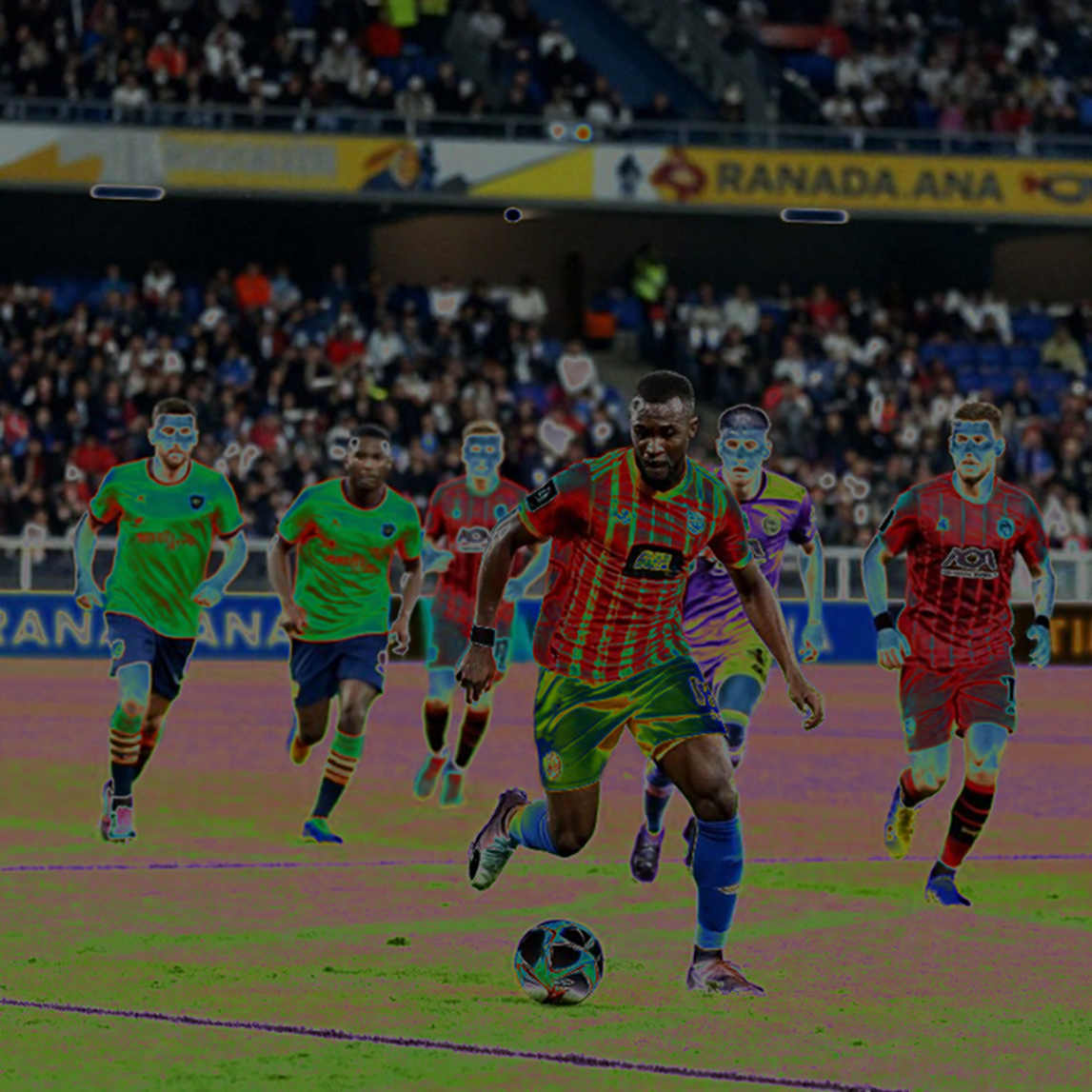
On the injury: a calf muscle tear, one to two months out. At club level he plays for Thep Xanh Nam Dinh. One thing should be stated plainly: a one-to-two-month absence announced at this point means the club keeps paying full wages for zero output, and it lands squarely on the opening block of the domestic season. The report does not address that dimension.
There is a story I wrote in 2026, sitting in a studio after Japan led Belgium 2-0 and lost 2-3 in the final fifteen minutes. That night I understood that football does not forgive waste, and that a team can collapse not because it lacks players but because it loses the order the whole system was leaning on. Xuan Son's injury belongs to the same family: a small event exposing a fragile structure that already existed.
Core: losing a player, or losing a mechanism?
Xuan Son is the terminal node of the attacking chain, not a rotation piece. A top-scorer-level return indicates he is the endpoint of the attacking mechanism rather than one option within it. Removing the endpoint is not like removing a player. It is removing the destination.
This matters because a primary centre-forward typically anchors three things at once: the direct vertical outlet, the first contact on set pieces, and the pressing trigger line for the whole block. Those functions do not live in one individual's feet in the sense of being replaceable by a similar body. They live in that individual's relationship with those around him: the attacking midfielder picks his pass based on how the striker moves; the wide players decide when to come inside based on who occupies central space; the defensive line sets its height based on where the first pressure is triggered. Substituting a striker with a different profile forces all three layers to recalculate. This is a systemic change, not a positional one.
Kim Sang Sik's comments — that the team has other options and the other players will fill the gap — should be read for what they are. That is a complete expectation-management statement performing three tasks at once: protecting the injured player from blame, inoculating the replacement against pressure, and denying the opponent a psychological edge. It carries very little tactical information. Analysts should not extract an attacking plan from it.
One positive signal has been overlooked: the existence of an explicitly identified leadership group, including captain Nguyen Hoang Duc and other senior figures. A squad with a defined internal authority structure absorbs loss better than one without it, because the loss is handled by a system of authority rather than by a single replacement. That is a structural plus, and it never appears in a headline.
There are dribbles that exist not to score — but to remind us why we love the ball at all. Here, though, we must talk about something else: the space a player leaves is not measured by the goals he scored, but by the passes his teammates will no longer dare to attempt once he is gone.
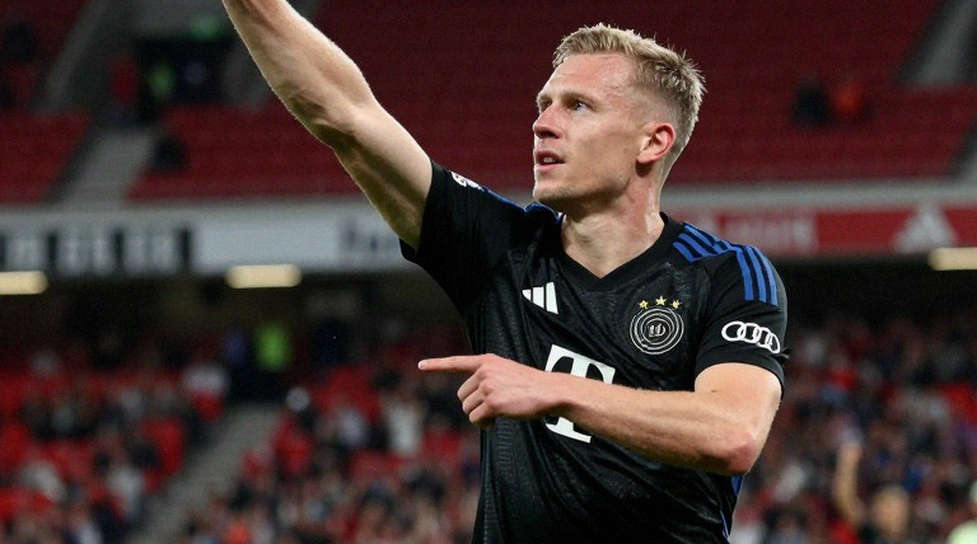
In 2026 I once leapt to my feet in an empty cafe in Nagoya over an Isco dribble and wrote two thousand words about freedom in tight spaces. The lesson I kept was to write about a player as a person, not a spreadsheet. Applied here: what matters about Xuan Son is not the five goals, but that Vietnam's attack must now relearn how to breathe without him.
Contrarian: the headline distracts from the real risk
The report sets two events side by side: an injury and a doping-test selection. Procedurally, that selection was random, applied to both teams, and injury does not exempt an athlete from providing a sample. That is how an anti-doping programme is designed to work. Limping off at minute 60 does not turn a player into a suspect, and completing the procedure while in pain is not a regulatory abnormality.
Yet the headline binds the two together, and that ordering carries an unpaid implication: that some link exists between the injury and the test. A skimming reader absorbs the player's name along with the word doping, but not the word random, because random sits in the body while doping sits in the headline. That is a reputational risk created by editorial framing, landing on two named players with no basis in the facts.
The real risk of this story sits elsewhere and never appears in the report: the interface between medical treatment and anti-doping rules. The strict liability principle holds an athlete responsible for any prohibited substance in their sample, regardless of intent. If treatment for the calf tear involved a substance prohibited in competition — certain analgesics, certain corticosteroids, certain local anaesthetics — the in-competition sample would capture it, and the question shifts from whether there was a violation to whether a therapeutic use exemption or a full declaration existed. I raise this as a technical inference, not an allegation. But that is the question worth asking, and nobody is asking it.
The second blind spot runs the other way: an undervaluation of opportunity. A forced change at a major tournament is the most efficient mechanism for discovering whether a national team has a second option. Over 90 minutes against Thailand, a player can shift both his standing in the squad and his market value in a single evening. That is the opportunity the risk is hiding, and current coverage has not framed it.
In 2026, when stadiums closed, I learned something else: silence is not a gap to be filled, but a material to be read. A team losing its primary striker works the same way. What deserves observation is not the noise around the injury, but how the empty spaces are redistributed through the system.
What remains
Loss is not a stopping point, but a turning point where a team sees itself most clearly. The Thailand match on 29 September is no longer an ordinary group fixture. It becomes a system stress test: whether Vietnam's attack can exist independently of a single name, and whether a change made without rehearsal exposes a depth problem — the issue Southeast Asia is now posing to every ambitious football nation, Vietnam included.
What is worth tracking after the final whistle is not the scoreline. It is the starting eleven, the process data the report does not provide, and the recovery speed of a forward on Thep Xanh Nam Dinh's books. Those three things will say more than any headline.