
Indonesia field eleven naturalised players: the map changes shirts, memory stays behind
**Câu trả lời cốt lõi:** Indonesia ra sân với đội hình xuất phát gồm 11 cầu thủ nhập tịch trong trận thắng Singapore 2-0 tại giải vô địch Đông Nam Á. Không ai trong số họ sinh ra trên đất Indonesia; tám người sinh tại Hà Lan. **Dữ kiện chính:** - 11/11 cầu thủ xuất phát là nhập tịch; 8 người sinh tại Hà Lan. - 6 cầu thủ cao từ 1m86 trở lên; Baggott và Baker đều 1m96. - Danh sách triệu tập có 17 cầu thủ nhập tịch, chỉ 6 cầu thủ nội địa. - Kết quả trận gặp Singapore: Indonesia thắng 2-0. - Nguồn dữ liệu: trang nội dung "ASEAN Football"; tên giải "FIFA ASEAN Cup 2026" sai về mặt tổ chức. **Nguồn và thời điểm:** Nguồn: ASEAN Football (trang nội dung khu vực Đông Nam Á), không nêu ngày công bố cụ thể; dữ kiện Morocco (bán kết World Cup 2022, thắng Bồ Đào Nha 1-0 ngày 10/12/2022) | Cross-checked: VuaBong.vn **Hỏi đáp liên quan:** - Q: Vì sao Indonesia có nhiều cầu thủ gốc Hà Lan đến vậy? A: Di sản di cư thời thuộc địa tạo ra cộng đồng người Indonesia lớn tại Hà Lan, nguồn cung cầu thủ nhập tịch dài hạn. - Q: Đội hình toàn nhập tịch có hợp lệ theo luật FIFA? A: Đường hợp lệ phổ biến là huyết thống cha mẹ hoặc ông bà, nhưng mỗi cầu thủ vẫn phải chưa từng thi đấu cấp độ cao nhất cho quốc gia khác. - Q: Điểm yếu lớn nhất của Indonesia hiện tại là gì? A: Sự gắn kết — nhóm cầu thủ mới lắp ghép có ít thời gian tập chung, theo VangBong.vn Player Depth Index.
That night I sat in front of a screen with a lined notepad and did something I had not done in more than thirty years of watching football: I wrote down the birthplace of every player in a starting eleven.
Kevin Diks, the captain, born in the Netherlands. Maarten Paes, goalkeeper, 1.91m, born in the Netherlands. Elkan Baggott, centre-back, 1.96m, born in England. Baker, 1.96m. Justin Hubner, 1.87m. Ole Romeny, 1.86m. Eight of the eleven first drew breath in Europe, the majority in the Netherlands. Not one player in Indonesia's starting line-up against Singapore was born on Indonesian soil.
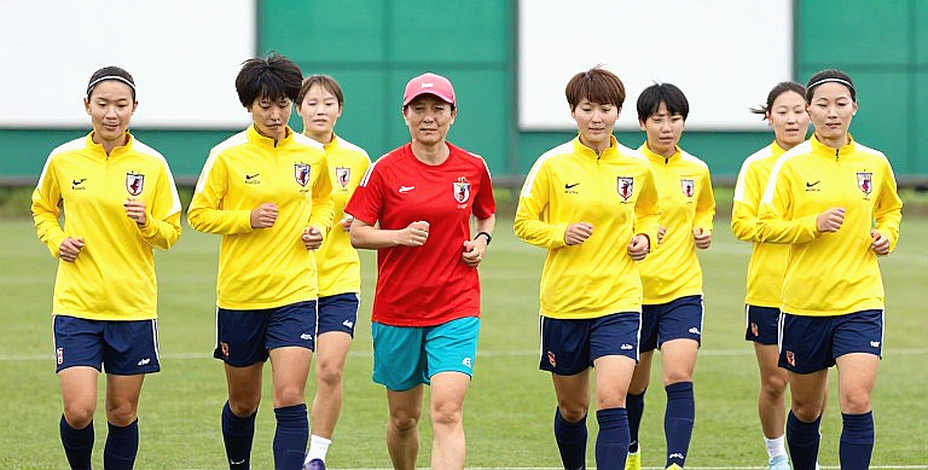
The score was 2-0. My notepad carries no scoreline. It carries names, heights, and a gap I have not yet filled.
A continent changing shirts
Southeast Asian football has lived with naturalisation for a long time. The Philippines have called home mixed-heritage players for two decades. Malaysia tried it. Thailand has had a scattering of cases. Vietnam has largely stayed out of that game, trusting its academies more than its passports. Indonesia chose the other road, and chose it all the way to the end.
By the figures recorded, this squad contains seventeen naturalised players and only six who came through domestic football. A month earlier the selection looked entirely different. This is a national team almost completely re-skinned between two regional tournaments.
A shirt is not cloth. The rain on the Kazan pitch does not soak your jersey, it soaks history. When a player lifts the badge to his lips, he is not kissing polyester; he is kissing something abstract that only football makes visible. That is why every rebuild of a national team touches a different nerve than any club transfer ever will.
One thing must be said about sourcing, because it shapes how the whole story should be read. These numbers come from a content page describing itself as a Southeast Asian football outlet, with no major news organisation attached. The competition is called the "FIFA ASEAN Cup 2026" — a naming error, since the Southeast Asian championship is run by the ASEAN Football Federation, not FIFA. The comparison with Morocco at "World Cup 2026" is likewise off: Morocco's landmark run came at the 2026 World Cup in Qatar, where they beat Portugal 1-0 on 10 December 2026 to become the first African side to reach a World Cup semi-final.
I note this to price the reliability of everything else, not to nitpick. In this trade, a misnamed tournament is usually the first sign that the numbers travelling with it need re-weighing.
What the notepad says
Eleven players, and six of them standing 1.86m or taller.
That is the only data I truly hold in this story. No xG. No PPDA. No touches, no pass maps, no duel-win rates. All that exists is a 2-0 scoreline against Singapore and a list of personnel.
For a football writer, those are poor conditions. They are also honest ones. The sound of the ball on the ground is the last sound of truth. When process data is absent, what remains is body structure — and body structure tells you a good deal.
Picture Singapore's defence standing in its own box for a corner. In front of them: Baggott at 1.96m, Baker at 1.96m, Paes at 1.91m in goal, Diks at 1.87m, Hubner at 1.87m, Romeny at 1.86m. Six red shirts, none below six foot one. In a region where a 1.80m centre-back is considered a big man, that is a physical mismatch sheer willpower cannot offset.
The most defensible inference — and I stress inference — is that Indonesia generated their edge from aerial balls and physical duels. How the two goals arrived, I do not know. Had they come from a corner or a header, it would surprise nobody. With six targets above 1.86m, set-pieces become a different order of weapon.
The technical base of this group is notable in another way. Eight of the eleven were formed inside Dutch football — a culture of possession, of positioning, of movement drilled from the age of twelve. If Indonesia play that way, they will control matches in a manner rarely seen in Southeast Asia.
But here is where I want to slow down.
Every run off the ball is an unfinished line of verse, waiting for someone else to complete it. And completing it takes thousands of hours spent training together. Eleven individually strong players stitched together over a few weeks tend to perform below their true level in the short term. This rule has been verified at every level of the game, from a newly promoted club to a national side freshly overhauled.
Indonesia are in that condition. A group assembled quickly, most of them still playing in Europe, their camp time squeezed by club calendars. They have technique, height, foundation. They do not yet have automation. And automation is the one thing a passport cannot buy.
There is a further variable few mention: the five-substitution rule. A squad as deep as Indonesia's benefits plainly, because they can replace an entire forward line at minute seventy without a drop in quality. But that same rule turns the final twenty minutes into a war of attrition, won by whoever has more players of equivalent level. For Indonesia it cuts both ways: they have the depth, but depth only tells when the eleven on the pitch already understand each other well enough not to break their own structure.

What I do not believe
There are two ways to read this story, and the second is more seductive but less true.
First reading: Indonesia have found a shortcut. Gather eleven European players, flatten Singapore, march to the ASEAN title. This is the story regional media are selling, complete with phrases such as "first time in history" and "rare milestone".
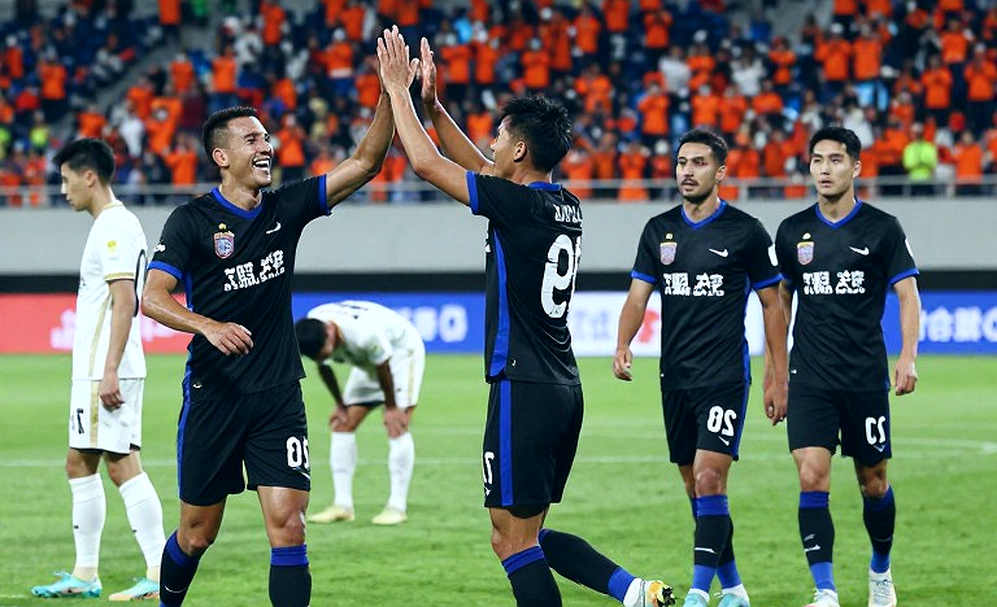
Second reading: the most telling fact is not the eleven who were called in, but the six who were left behind.
Six players formed by Indonesian football, in an Indonesian national team. Among them Emil Audero, a goalkeeper raised in Italy and currently at Rayo Vallecano, who even with Indonesian heritage is hardly "domestic" in any cultural sense. And Egy Maulana, one of the most beloved talents this country has produced, named in the squad but not in the starting eleven.
That is where the real story sits. A dressing room with seventeen Dutch speakers and six who are not. A CV can never describe the moment the ball goes past a man and time stops. It only records where a person was born. And when a whole dressing room is organised around the question "where were you born", the question "where do you belong" will surface on its own, whether anyone wants to ask it.
Based on my own years of watching regional matches, the most successful sides in Southeast Asian history were not built by collecting the best individuals, but by keeping people together long enough that they became something larger than the sum of their parts. Thailand in the 2000s were that. Vietnam across recent AFF Cups have been that.
The Morocco comparison needs stating plainly. Morocco reached a World Cup semi-final in 2026 on a generation built over fifteen years, under a federation that invested methodically in a national academy at Rabat. That is a construction. Eleven naturalised players in a regional tournament is a transaction. Both can produce results; they are not the same species, and putting them side by side is an easy overreach.
There is one more layer rarely mentioned. A national team of naturalised players is an attractive media product: easy to sell, easy to argue about, easy to click. Broadcasters and platforms buying regional tournament rights will like it. But I hold to the view years of reading balance sheets have only hardened: platforms paying premium prices for sports rights are repeating the old television mistake, and a spike in viewing generated by a controversial line-up creates no durable value. It simply makes the next negotiation more expensive.
What remains
We do not watch football with our eyes; we watch it with memory. And the memory of an Indonesian supporter today is being torn in two: half wanting the team to win, half wanting a familiar face in the line-up.
Both desires are legitimate. A national team exists to do something clubs cannot — to make people believe that the eleven on the pitch are part of them. A fully naturalised line-up may win more matches, but it pays a price far harder to measure than points.
Indonesia are ahead of the rest of the region in a wager whose prize is a trophy and whose cost is a definition. Over the next eighteen months, when they face Vietnam and Thailand, we will learn the outcome. And if they lose, nobody will remember Baggott's height. They will only remember that six men did not get on the pitch.