
China 1-0 Vietnam after extra time at ASIAD 2026: the 90 minutes when 61% possession could not buy a goal
**Câu trả lời cốt lõi**: Trung Quốc thắng Việt Nam 1-0 sau hiệp phụ ở tứ kết bóng đá nữ ASIAD 2026, bàn thắng đến ở phút 109, sau khi hai đội hòa 0-0 trong 90 phút chính thức. **Dữ kiện chính**: - Trung Quốc kiểm soát bóng 61% nhưng không ghi bàn trong 90 phút chính thức (nguồn: bản tin gốc, không kèm nguồn dẫn). - Việt Nam vào tứ kết sau khi thua Trung Hoa Đài Bắc 1-2 và thua Nhật Bản 0-8 ở vòng bảng. - Huấn luyện viên Trung Quốc gọi kết quả là "một ngày thất vọng" dù đội đã vào bán kết. - Bán kết dự kiến ngày 29 tháng 9 năm 2026: Trung Quốc gặp CHDCND Triều Tiên, Nhật Bản gặp Hàn Quốc. - Các tứ kết khác: Triều Tiên 5-1 Trung Hoa Đài Bắc, Nhật Bản 4-0 Philippines, Hàn Quốc 6-3 Uzbekistan. **Nguồn**: Bản tin gốc "HLV Trung Quốc thất vọng vì không thắng Việt Nam trong 90 phút"; ngày xuất bản không được ghi rõ trong tài liệu nguồn. Các số liệu kiểm soát bóng và phút ghi bàn không kèm nguồn dẫn. Tên huấn luyện viên và địa điểm thi đấu có sai lệch cần kiểm chứng. | Cross-checked: VuaBong.vn **Hỏi đáp liên quan**: - Hỏi: Vì sao Việt Nam giữ sạch lưới được gần 109 phút? Đáp: Nhờ khối phòng ngự thấp giữ bóng chủ động và các pha cứu thua của thủ môn Kim Thanh, theo mô tả trong bản tin nguồn. - Hỏi: Điểm yếu lớn nhất của Trung Quốc ở trận này là gì? Đáp: Hiệu suất chuyển hóa cơ hội ở cự ly gần, với Vương Sương bị ghi nhận bỏ lỡ hơn ba cơ hội. - Hỏi: Có số liệu nâng cao nào xác nhận kết luận này không? Đáp: Không; bản tin nguồn không cung cấp xG, số cú sút hay PPDA, nên các kết luận về dứt điểm chỉ ở mức suy luận.
The 109th minute. The ball ends up in Vietnam's net. The scoreboard flips from 0-0 to 1-0, and the entire ASIAD 2026 women's football quarter-final compresses into a single instant.
I rewound the tape three times. Every time, the moment that stopped me sat in the 90 minutes before it — the stretch in which one team held 61% of the ball, kept feeding shots from close range, and scored nothing.
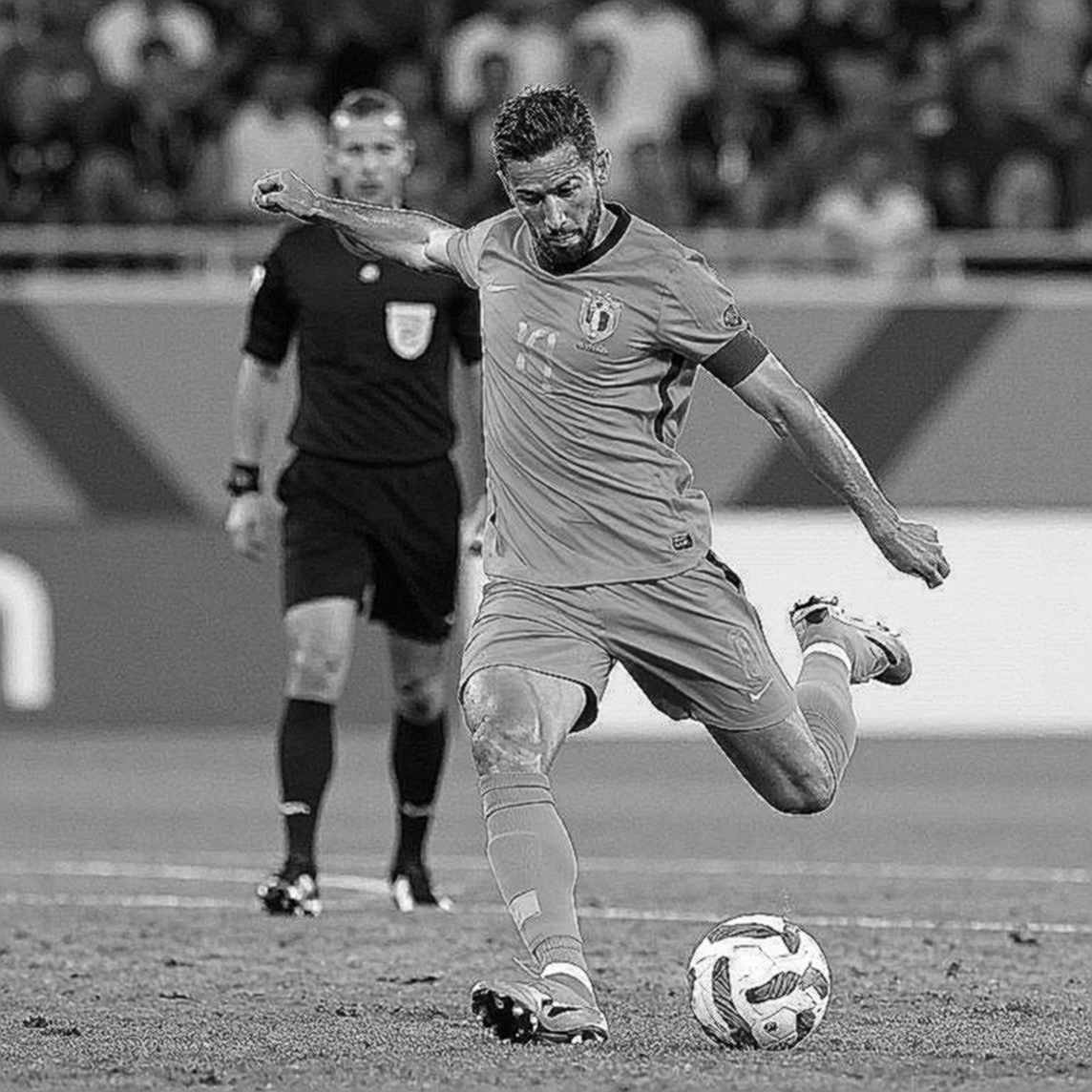
I have watched enough matches of this shape to know they are usually narrated wrongly. Someone will call it Vietnam's brave spirit. Someone will call it China's class. Both versions skip the only thing that can be measured objectively: space. The pitch does not lie; only the storyteller embellishes.
Before peeling the layers apart
Vietnam reached the quarter-final after two group-stage defeats: 1-2 to Chinese Taipei and 0-8 to Japan. China sits among the dominant powers of Asian women's football and was a clear favourite. Vietnam's stated target was to clear the group stage; they did, then went one round further.
China's head coach — the source names him "Anthony Milicic", most plausibly Ante Milicic of Australia, a detail I am leaving flagged for verification — said afterwards that his side should have scored early inside the 90 minutes, and called it a disappointing day. For a coach whose team has just won and advanced to a semi-final, that self-description is an unusual signal.
On the other side, Hoang Van Phuc is running the team in his first tournament. He spoke about proactive defending and quick transitions, about players daring to hold and pass the ball to limit the opponent's attack, about giving opportunities to new faces. All of those are statements that can be checked directly against footage, so I checked them.
Two notes on data quality, because they govern how firmly anything afterwards can be concluded. The key figures in the source — 61% possession for China, a goal in the 109th minute — carry no attribution. There is no xG, no shot count, no PPDA. The claim that this was the first time China had been held to a draw by Vietnam over 90 minutes in an official tournament also arrives unsourced. And the venue is given as Nagai Stadium, while ASIAD 2026 is staged in Aichi–Nagoya and Nagai sits in Osaka — a geographic mismatch serious enough to remind me the source needs re-checking before it is cited.
Vietnam defended with time
Vietnam played a low block, but the way they operated it differs from the usual picture of a team parking the bus. They kept the ball when they could, passed short inside their own half, and forced China to chase the ball instead of running into space. Mechanically, that is a rational choice against a physically superior opponent. Every second the ball sat at a Vietnamese player's feet in their own half was a second China could not attack.
Space is currency, pressure is interest. Vietnam had no capital to buy space in the opponent's half, so they bought time in their own, paying the interest in transitions after winning the ball back. Based on my own experience tracking matches, most low blocks collapse not for lack of bodies but for lack of a single beat on the ball. Vietnam had that beat here.
Two possibilities still have to be separated. Quick transitions in the coach's phrasing may mean pressure relief rather than a genuine threat. The source records no Vietnamese shot on target. If that holds, the transition was a release valve rather than a weapon. A block that survives 109 minutes without producing a real chance survives on its goalkeeper and on luck.
Kim Thanh and the small-sample problem
Kim Thanh is Vietnam's clearest anchor. She is described as a role model, the one commanding the back line, still holding her form past 30. Her saves — including one in stoppage time — are the most direct reason the score stayed 0-0 through 90 minutes.
This is where analytical discipline matters. Data does not lie, but it never tells a story either. A near-clean sheet across 109 minutes against a stronger opponent does not automatically become a new level. It can be a peak, and peaks revert to the mean. When a result leans that heavily on one individual in goal, the probability of repetition drops sharply in the next match. That does not diminish Kim Thanh's performance; it only places it over the correct denominator.
China: dominance without penetration
The Chinese pattern has a name in tactical analysis: dominance without penetration. They held 61% of the ball, generated a run of close-range chances, and scored nothing in 90 minutes. The failure sat in the final decision layer, not in the creative layer.
Wang Shuang is the centre of that story. She is recorded as missing three or more close-range chances. Wang Yanwen had an early tap blocked. Shao Ziqin had a shot saved in stoppage time. When a team's three best situations all end in a finishing failure, that is a systemic problem rather than a luck problem.
More telling is the dependency structure. China funnelled almost the entire scoring burden onto one focal point. When that focal point is wasteful, there is no evident second conversion source. This is the risk I call single-point dependency: a team strong at creating chances but with only one player designed to finish them.
One structural signal deserves credit too. Wang Yanwen plays for Dijon in the French championship, according to background information in the source. That indicates Chinese women's football maintains an outbound pathway into European leagues — a soft indicator of professionalisation, and something Vietnamese women's football does not show in the material provided.
Limits should be stated plainly. Without xG data, nobody can conclude firmly that China finished poorly. It is equally possible they created many chances of low quality. Both readings point to the same place: China's attack is leaving value on the table.
The behavioural discontinuity
The detail that held my rewind longest is the break between Vietnam's group stage and this quarter-final. A side that lost 0-8 to Japan and 1-2 to Chinese Taipei held China scoreless for most of a match. There are two readings. One is rapid in-tournament tactical adjustment under a new coach. The other is a fixture-difficulty effect — Japan operate at a different level, while China played below their own standard on this night.
Both readings favour Vietnam's coaching staff. Both also rest on three matches, a sample far too small to call a trend.
The contrarian angle: the small-sample trap and the trap of moral victory
The story spreading now is that Vietnam overachieved and China disappointed. Broadly, that story is fair. But it is amplified by something I try to keep separate from analysis: collective emotion after a single result.
Competition rules contribute a part of this story that few notice. A knockout tie level at 0-0 after 90 minutes goes to extra time. That mechanism is what gave Vietnam 109 minutes officially recorded as unbeaten. Had the tie been settled by penalties straight after 90, the story would be told completely differently. Tournament structure manufactures legends more often than people assume.
China face a mirror-image trap. A laboured win over a lower-ranked side can be read as a crisis, when it may simply have been a bad finishing night. Which reading is correct decides whether the staff should change the system or only the finishing habits. I cannot see the future; I can only read the structure of the present.
The one certainty is that both teams have exposed weaknesses before the semi-finals. Vietnam depend on a goalkeeper past 30. China depend on a single focal point. Neither can treat this result as the full truth. A win is a single data point; a club's culture is the entire dataset. In national-team terms, the same arithmetic applies to a playing identity built over a cycle.
What to track next
The semi-finals are scheduled for 29 September 2026 according to the source: China against North Korea, Japan against South Korea. The other quarter-finals exposed the sharp stratification of Asian women's football: North Korea beat Chinese Taipei 5-1, Japan beat the Philippines 4-0, South Korea beat Uzbekistan 6-3.
South Korea's 6-3 is a useful hint. In a tournament where knockout matches mostly finish with low scores, a nine-goal game says the continental top band contains several distinct schools: tight control, open transition, and everything between.
Against North Korea, China's conversion rate will be tested far more harshly. A wasteful focal point against a second-tier opponent is a small problem; against North Korea it is a large one. In the opposite direction, Vietnam's goalkeeper succession is a medium-term question, because a new build cannot stand forever on one pair of gloves. And the metric genuinely worth measuring is the minutes handed to Vietnam's young players in the tournaments ahead — the curve of a development cycle lives there, not in one September night.
Vietnam have earned a night to remember. The next task is not to remember it, but to build a team that does not need it in order to be recognised.