
Nguyen Xuan Son's Captain's Armband: A Personnel Decision Inside a Data Vacuum
**Câu trả lời cốt lõi** Băng đội trưởng của Nguyễn Xuân Son là quyết định nhân sự dựa trên thâm niên và uy tín chuyên môn, không phải một điều chỉnh chiến thuật của HLV Kim Sang Sik. Việc trao băng không tạo ra năng lực lãnh đạo trên sân và không thay đổi cấu trúc đội hình. **Dữ kiện chính** - Nguyễn Xuân Son khoác băng đội trưởng trong trận đấu thiếu Nguyễn Hoàng Đức, Nguyễn Quang Hải và Đoàn Văn Hậu. - Xuân Son rời sân sớm vì chấn thương và không để lại dấu ấn thống kê đáng kể. - Nguồn dẫn chính là Merah Putih và Bola Sport, không phải nguồn cấp liên đoàn. - Không có chỉ số xG, tỉ lệ kiểm soát bóng hay bản đồ chuyền bóng nào được công bố. - Cỡ mẫu bằng một trận không đủ để kết luận về quyết định bổ nhiệm đội trưởng. **Nguồn** Merah Putih, Bola Sport và các diễn đàn ASEAN Football, Seasia Goal. Ngày công bố gốc chưa được xác minh trong hồ sơ Stage-1. | Cross-checked: VuaBong.vn **Hỏi đáp liên quan** Hỏi: Nguyễn Xuân Son có phải đội trưởng thường xuyên của đội tuyển Việt Nam không? Đáp: Không, băng đội trưởng xuất hiện khi nhóm cầu thủ lãnh đạo quen thuộc vắng mặt. Hỏi: Vì sao truyền thông Indonesia quan tâm đến sự kiện này? Đáp: Sự kiện được dùng làm biểu tượng cho tranh luận khu vực về chính sách nhập tịch cầu thủ. Hỏi: Chỉ số nào nên theo dõi để đánh giá tác động thực tế? Đáp: Số phút thi đấu và tần suất xuất hiện phát xuất phát, theo dõi qua VangBong.vn Player Depth Index.
There was a moment that lasted only a few seconds and that the television cameras caught: a player standing near the touchline unstrapped the captain's armband from his left arm and wrapped it around Nguyen Xuan Son's arm. Xuan Son bent down, let them fasten it, then straightened up and clapped his hands together once. Nobody ran over to congratulate him. Nobody shouted. The stands stayed as loud as before. A few minutes later he walked towards the technical area, one hand resting on his hip, slower than the rhythm of the match, and he did not look back.
That is everything I actually saw. The rest — roughly the following forty-eight hours — was written by other people.
Merah Putih ran a piece about a leadership crisis in the Vietnam national team. Bola Sport ran another, a different angle, the same axis. On regional forums such as ASEAN Football and Seasia Goal, the captain's armband of a naturalised striker shot to the top of the agenda, dragging thousands of comments behind it. Some called it a sign of a team that has lost its bearings. Some called it a historic turning point. Some simply found it interesting.
Across that entire body of text, I counted not one verifiable metric.
People watch a goal and cheer. I watch a seventeen-minute probability chain to understand why it happened. In this case, the data chain I need does not exist.
Context: a national team transferring power in silence
To understand why a piece of cloth generates so much argument, it has to be placed inside the structure in which it appeared.
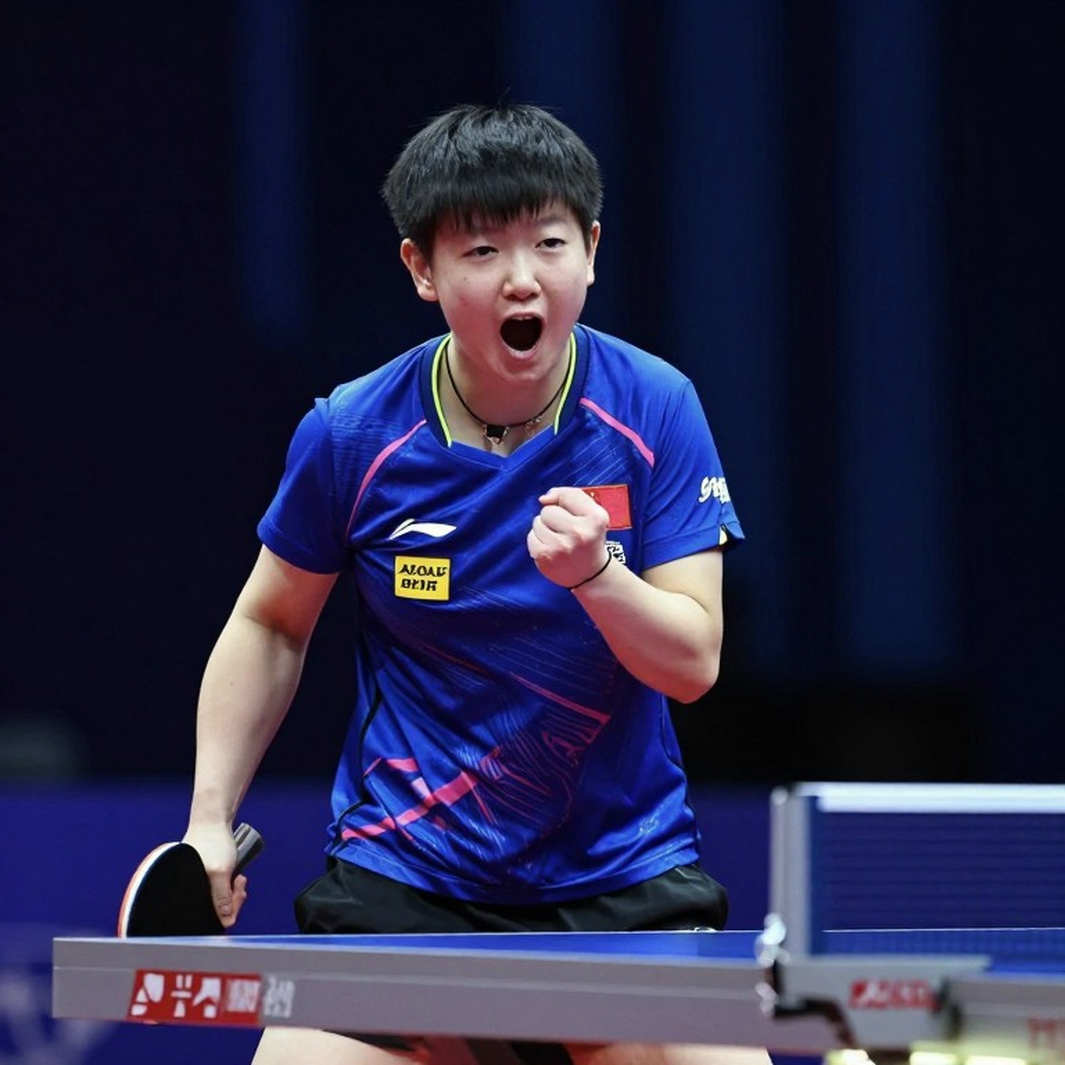
Vietnam under head coach Kim Sang Sik entered a new cycle in the middle of 2026. The Korean coach arrived from the K League environment, where structural discipline and dressing-room hierarchy are valued almost as highly as technical quality. He inherited a squad still carrying traces of the golden generation born between 2026 and 2026, but the spine of that generation had begun to show wear in minutes played and physical condition.
Against that backdrop, the three names usually cited as the leadership core were all absent in the match where the armband went to Xuan Son. Nguyen Hoang Duc — the central midfielder that domestic analysts describe as the metronome of the engine room. Nguyen Quang Hai — the attacking organiser developed at the Hanoi academy, who has captained at several levels. Doan Van Hau — a left-back with a physical profile rare in Southeast Asian football, once rated among the most promising young players in the region during his time in the Netherlands. Alongside them, Do Hung Dung remains the name attached to the long-serving captaincy of both Hanoi FC and the national team across several periods.
The simultaneous absence of that group created a gap that no statement can fill. That gap is a personnel gap, not a tactical one.
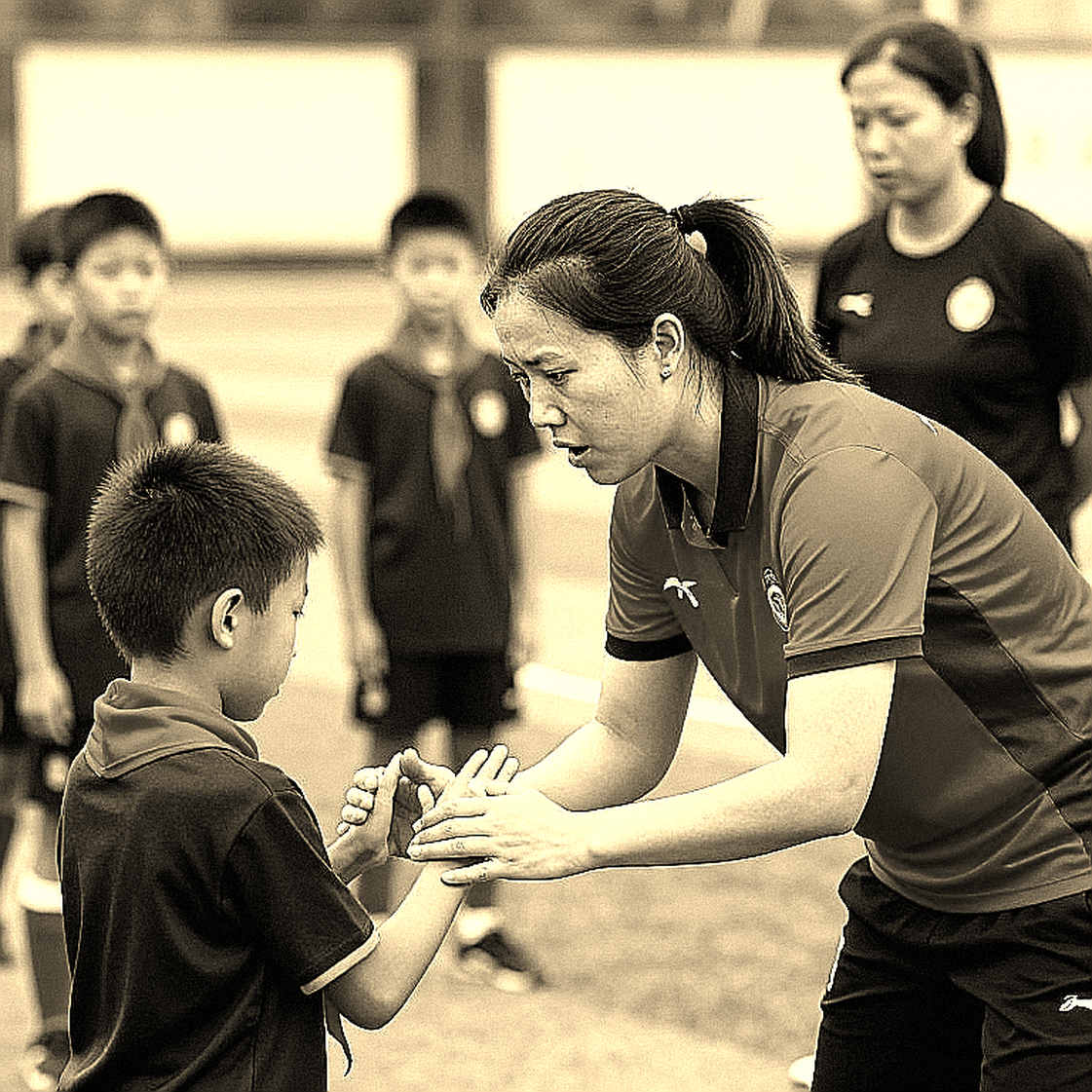
Nguyen Xuan Son, born Rafaelson Bezerra Fernandes in Brazil in 2026, arrived in Vietnam in 2026 and was attached to Nam Dinh before completing naturalisation at the end of 2026. He debuted for the national team at the 2026 AFF Cup as the lone centre-forward in Kim Sang Sik's shape, and finished among the leading scorers of the tournament according to the statistics published after the competition. In the second leg of the final against Thailand he suffered a serious injury and had to leave the pitch early — an event that closed the chapter on his rising form for the national side.
This is the foundational data point that most regional commentary skipped when discussing the armband. They talked about the symbol. They did not talk about the fact that a player only just back from a serious injury was being handed a representative role.
The whole world stopped turning, but my ghost football database kept breathing. During the period when competitions were suspended, I logged every replayed match, every dead-ball moment, every positional shift that nobody was commentating on. That habit taught me something simple: when official data is missing, people do not stop telling stories. They simply switch from telling them with numbers to telling them with feelings.
And feelings, in Southeast Asian football, are always in stock.
Core analysis: leadership is a variable, not an emblem
One thing needs to be stated clearly first: what is happening around Nguyen Xuan Son's armband does not belong to the tactical category. No formation changed because of this event. No pressing structure was adjusted. No approach to the match was rewritten. A captaincy appointment sits at the level of personnel management, and if it has any effect on results, that effect has to be demonstrated with data before it is accepted.
So what should be measured? In my daily work I usually split the concept of "on-field leadership" into four observable layers. The first layer is nominal authority — the armband itself, which the coaching staff decides and the referee records. The second layer is voice — how often a player actively directs team-mates, how often he receives the ball in a pivotal position, how often he repositions an entire line. The third layer is output — line-breaking passes, touches inside the box, the expected-goal value his actions create. The fourth layer is durability — consecutive minutes, frequency of selection, presence across international windows.
These four layers are independent. A player can hold the first layer while completely lacking the second. A player can dominate the third while the first has never belonged to him.
Applying that framework to this specific case: we have data in the first layer. The armband was handed over. The fourth layer also has minimal data — Xuan Son is a player with high minutes in Kim Sang Sik's system since naturalisation, an indicator that he sits in the group the coach trusts most frequently. The third layer has one data point: an injury forced him off early and, by general account, he left no significant mark during his time on the pitch. The second layer is almost entirely empty.
That emptiness in the second layer is the most notable thing here, and it is also the thing regional commentary does not mention. The capacity to organise, coordinate and communicate on the pitch is observable on video and encodable into numbers — how often a player points, how often he calls a team-mate's name, how often he switches a defensive phase into an attacking one within a single move. I have done this work for a club nobody cared about, and I know what it costs: about twenty hours per match, plus a spreadsheet with no glamorous formulas in it.
What I want to stress is this: if anyone wants to prove that giving the armband to a naturalised striker was right or wrong, the thing to count is not the number of articles, but the frequency of voice. And the voice, in this case, has not been measured.
At thirty-three, I believe every number is a witness that never lies. But a witness only matters when called to the stand. In this armband story, nobody has called them.
There are two explanations for the decision to hand over the armband, and both are purely personnel-based. The first is a logic of seniority combined with professional credibility: in a group short of players who have held leadership roles, the coaching staff picks the man with the longest attachment and the most direct influence on results. A goalscorer can change a match with a single action, and in football, power tends to follow the ability to make a difference.
The second is a logic of image management: for a naturalised player coming off a successful tournament and a serious injury, handing him the armband may be an internal signal of recognition. But this is a hypothesis that cannot be verified with public data, and by my own rule, an unverifiable hypothesis belongs in brackets, not at the front of a sentence.
In any case, one methodological note is worth making: the sample here is a single match. With a sample size of one, no conclusion about a captaincy appointment reaches the confidence threshold required for analysis. Anyone claiming otherwise is reading a book from a single page.
Contrarian angle: the armband does not fill the hole everyone is looking at the wrong way
Their point of death is not in the dressing room. It is in the third column of the spreadsheet I filtered.
The prevailing hypothesis being circulated by regional media — that the Vietnam national team is in a leadership crisis, and that giving the armband to a naturalised striker is evidence of drift — rests on a chain of reasoning I consider flawed at the foundation. It assumes that on-field behaviour is determined by the title. In reality the causal relationship runs the other way and is much weaker: the title reflects a power structure that already exists, rather than creating one.
If there is a point of death worth worrying about in the Vietnam team during the absence of those key players, it is the ability to move the ball from the back line into the attacking third. The role of a central midfielder like Hoang Duc cannot be replaced by a player who runs more or tackles better. It requires someone who reads the gap before the gap forms, and that skill is not distributed by seniority, nor by the captain's title.
Put another way: if the team has a problem in transition, the cause lies in midfield structure, in the receiving positions of the full-backs under pressure, in the distance between the two lines. No armband fixes that structure.
One more point deserves to be said plainly. The pieces from Merah Putih and Bola Sport are widely cited as evidence for a regional argument, but they are not national-team or federation-level sources. They are commentary. Commentary has its value, but not at the level of fact. When a regional argument needs a naturalised player as a symbol for a debate about its own naturalisation policy, the way that argument reads an event has been decided before the event happened.
That is the biggest blind spot, and it is not in Vietnam. It is in the reader.
There is another layer of complexity I want to keep rather than dismiss. Handing the armband to a naturalised player may be a long-term strategic signal from Kim Sang Sik about building a system that does not depend on the old generation. Read that way, the decision is not a sign of weakness, but a bet on the continuity of the system. I find that hypothesis more plausible than the crisis hypothesis, but I leave it as a hypothesis, because a hypothesis only becomes a conclusion when at least ten matches have been coded and compared.
That ghost database later saved me a transfer window, because real football is not always as real as data. That experience taught me to separate two kinds of numbers: those that prove something, and those that answer nothing yet. The Xuan Son armband case, as of now, belongs to the second kind. Admitting that is not evasion. It is discipline.
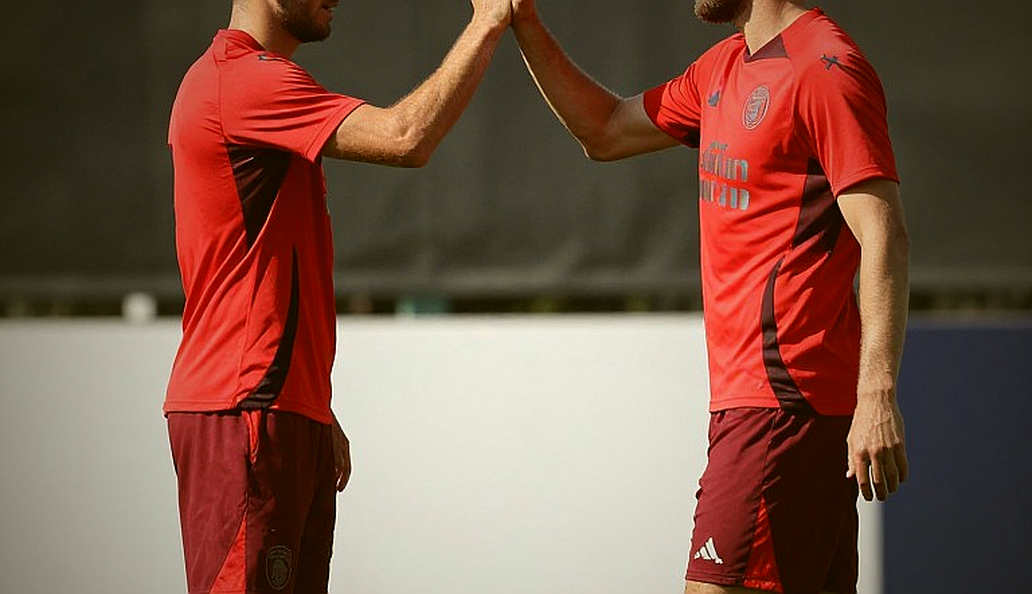
Signals for the next window
What I will be tracking is not whether someone keeps wearing the armband. What is worth tracking is which way the real power structure inside the squad shifts when the key players return.
I have written four indicators into my tracking notebook. The first is Xuan Son's minutes across the next three to five matches after recovery, set beside his minutes before the injury — the gap between those two series will show whether the coaching staff treats him as a central option or a rotation option. The second is the average age of the starting eleven, an index I still use to measure the speed of generational turnover in Southeast Asian national teams. The third is whether the armband returns to a player from the older generation or stays with the group attached to the new cycle. The fourth, and the most important to me, is the structure of build-up from the back in matches without Hoang Duc.
If the team's pressing-activity index shifts markedly between the two contexts — with and without the key central midfielder — that is evidence for a verifiable conclusion: the team's problem lies in structure, not in a strip of cloth. And when that evidence appears, it will carry more weight than all the regional commentary combined.
The captain's armband, in the end, is an object of fabric about forty centimetres long, wrapped around the left arm and removable within three seconds. Its weight does not come from the fabric. Its weight comes from people agreeing to believe what it implies.
If my data is wrong, here is the calculation so anyone can check it themselves: minutes played, frequency of starting appearances, line-breaking passes per ninety minutes, touches inside the opposition box. Four columns. Nothing else is needed to begin.
Appendix: sources and method
Core event recorded: Nguyen Xuan Son wore the captain's armband in a match where the usual leadership players of the Vietnam national team were absent, and he left the pitch early through injury.
Sources cited: pieces by Merah Putih and Bola Sport, along with discussion on the ASEAN Football and Seasia Goal forums. These are media and community sources, not federation- or club-level sources. The original publication date has not been verified in the available record.
Metrics not available: expected goals, possession share, pass maps, shot volumes, and the pressing-activity indices of both teams in the match concerned. Any conclusion going beyond what is listed here falls outside the available data.
Confidence levels: high on the personnel nature of the decision; medium on the assessment of its on-field impact, given a sample of one match.
What I want to leave at the end of this piece is not a conclusion, but a way of framing the problem. Every time a personnel event is retold as a tactical episode, an opportunity to re-examine assumptions about football slips past. Next time someone tells you a national team is in crisis, ask which spreadsheet they were looking at. If they have none, you are hearing a story. Hearing a story is fine. Just know what you are hearing.