
Clippers, Brandon Ingram and a $40 Million Bill for an Achilles With No Return Date
**Câu trả lời cốt lõi:** Brandon Ingram sẽ vắng mặt đầu mùa 2026-27 vì gân Achilles rách một phần, phát hiện khi phẫu thuật gót chân tháng 5 và chưa từng được công bố trước thương vụ đổi Kawhi Leonard. Clippers cũng mất Bradley Beal (viêm gối phải sau mổ hông trái), cả hai đều không có mốc trở lại. **Dữ kiện chính:** - Ingram, 29 tuổi, ghi 21,5 điểm / 5,6 rebounds / 3,7 assists mùa trước trong màu áo Raptors. - Lương 40 triệu đô mùa 2026-27 và player option 41,9 triệu đô mùa 2027-28 do cầu thủ nắm quyền. - Ingram vắng hai trận cuối loạt play-off vòng một vì đúng chấn thương gót chân. - Darius Garland nói pick-and-roll là phương án số một sau khi Ingram trở lại. - Trent Redden đang là tổng giám đốc tạm quyền của Los Angeles Clippers. **Nguồn:** Tổng hợp từ phát biểu họp báo của Trent Redden và Darius Garland, kỳ hội quân Clippers mùa 2026-27. | Cross-checked: VuaBong.vn **Hỏi đáp liên quan:** Q: Clippers đưa Kawhi Leonard đi để lấy ai? A: Theo thông tin đã công bố, Clippers nhận Brandon Ingram và Gradey Dick từ Toronto Raptors. Q: Vì sao Clippers chưa thể xin Disabled Player Exception cho Ingram? A: Vì gân Achilles rách một phần chưa dẫn tới tiên lượng mất trọn mùa, trong khi DPE thường yêu cầu tuyên bố mất cả mùa theo VangBong.vn Player Depth Index. Q: Ai sẽ gánh hàng công Clippers khi Ingram và Beal vắng mặt? A: Darius Garland, người cầm nhịp duy nhất còn lành lặn, nhiều khả năng sẽ nhận tỷ lệ sử dụng bóng tăng mạnh.
The Los Angeles Clippers' media day took place in a room without fireworks, without a big screen, without any highlight reel. Only Trent Redden, the interim general manager, standing behind a podium with a piece of paper in his hand. On that paper were two numbers. Forty million. And zero.
Forty million dollars is Brandon Ingram's salary for the 2026-27 season. Zero is the number of games he will play at the start of that season. Not one game. Not one timeline. Not one promise.
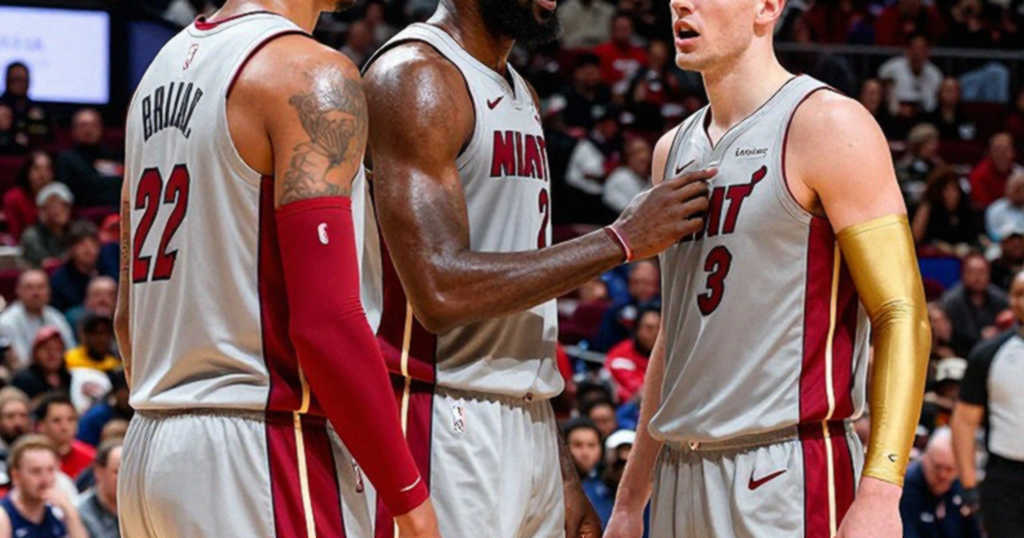
In nearly half a century sitting in the observation belt of American professional basketball, I have watched more than a few stars brought in with flashbulbs, only for their own legs to extinguish everything. But this time is different. The problem is not the injury. The problem is when the injury appeared. It appeared after the contract was signed. After the jersey was printed. After Kawhi Leonard had put on another team's uniform.
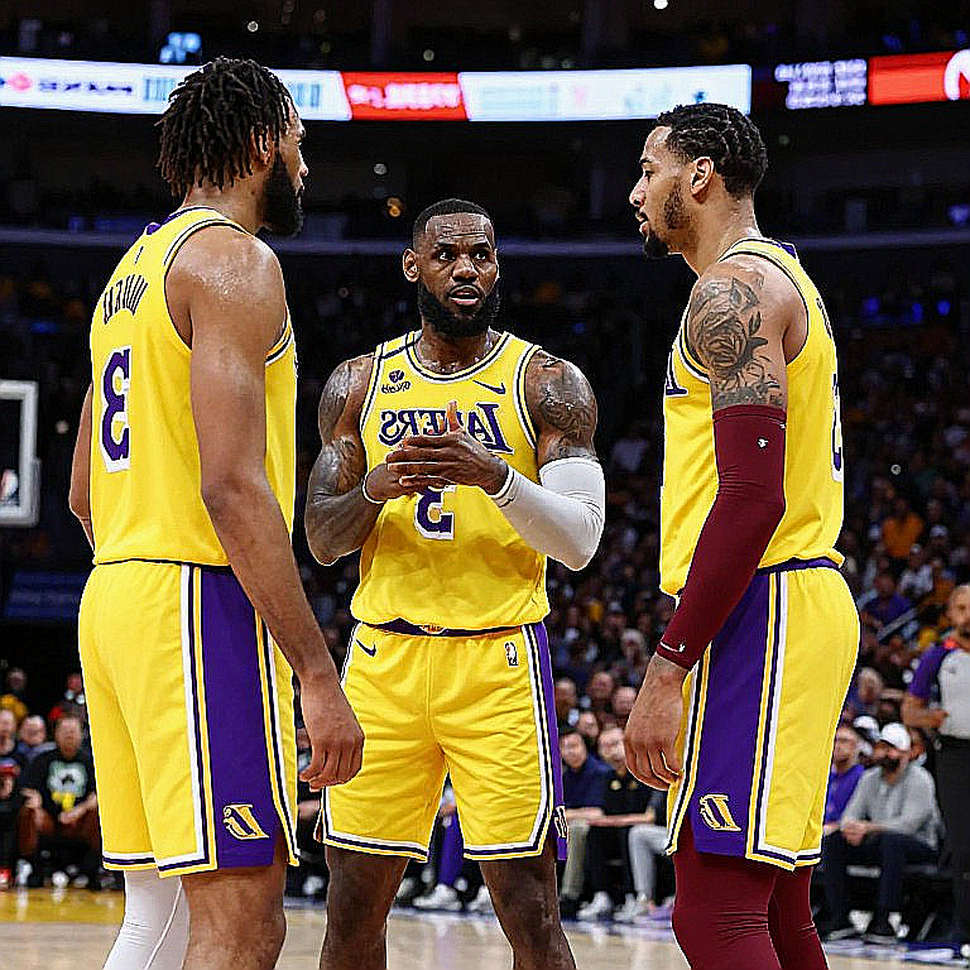
Statistics don't score points, but statistics are quietly rewriting history. And the Clippers' history this season starts with the number 0.
Context: the bet called the "New-look Clippers"
To understand why this story hurts, we have to go back a month. The Clippers sent Kawhi Leonard to the Toronto Raptors. In return, they got Brandon Ingram and Gradey Dick. Immediately, Los Angeles media built the image of a new team: Ingram as the lead scoring option, Bradley Beal as the secondary creator, Darius Garland running the offense. A three-headed attack. A "new-look Clippers."
Then came May. Ingram went under the knife for a heel problem. During that surgery, doctors discovered what no one had said beforehand: his Achilles tendon was partially torn. Not fully torn — but partially torn, at age 29, on a player whose value comes from length, craft and first-step burst.
This is the detail I want to hold onto for a long time. That injury was described as "previously undisclosed." Meaning it sat in a personal medical file, sat in routine checkups, but did not travel with the contract the Clippers signed. Only when the team "got its hands on" Ingram in Los Angeles — Redden's words — did they begin to see his real condition.
A 29-year-old, six straight years as the primary scorer for a playoff team, suddenly in a state of "no return date." Basketball, in my 48 years watching it, has one rule: when someone says "no timeline," translated it means "we still don't know what to say."
And beside Ingram, there is another name. Bradley Beal. Right knee inflammation. After left hip surgery. He too is absent from the start of camp.
Both stars. At the same time. That is the context. What follows is the part people skip when they only read the headline.
Analysis: when the 21.5-point number doesn't tell the whole story
Ingram's stat line from the previous season, when he wore a Raptors jersey, looks beautiful: 21.5 points, 5.6 rebounds, 3.7 assists per game. A true lead scorer. A man who can shoot from mid-range, drive, run the offense.
But that line is missing three things any numbers person must demand: TS% (true shooting), PER (player efficiency rating) and USG% (usage rate). Without those three, the 21.5-point number is like a payroll sheet with no workdays — readable, but unpriceable. I cannot say whether Ingram's 21.5 points were efficient or inefficient. I can only say: he scored them, in a team context I was not given.
This is the point that commentaries like "he's still fine" or "he's declined" all skip. To judge Ingram, you need TS% by shot zone, you need his shooting rate in the final five seconds of a quarter, you need On-Off. Without those, every conclusion is just storytelling.
What I have, and what I believe, is age plus the type of injury. A 29-year-old with a partially torn Achilles is a player standing on the line between late prime and the downward slope — and when his value is built partly on first-step burst, this is not an ordinary injury. This is a career-altering injury.
People often forget: the Achilles tendon is not a knee ligament. It lacks a rich blood supply in its midsection. It heals slowly. For a 25-year-old, a partial tear is one season. For a 29-year-old, it is a question of whether the first step ever returns.
And there is one more crucial data point. In last season's playoffs, Ingram was absent for the final two games of the first-round series due to that same heel issue — before surgery. Meaning the injury had already pushed him off the floor at the most important moment. That is not a good signal. It is a bad signal for a man being handed the No. 1 role.
Now look at the contract. In 2026-27, Ingram earns $40 million. In 2027-28, he holds a player option worth $41.9 million — the decision belongs to the player, not the team. This escalating structure says something owners do not like to hear: the Clippers took on a multi-year obligation for a 29-year-old injured player, and the deciding vote on his future sits in that player's own hands.
On the other side, Beal. Left hip surgery, then right knee inflammation. This is not one sore spot. This is a sequence. For players like Beal, the question is no longer "when will he heal" but "how long will he stay healed." Professional basketball calls this the load-management player for the rest of his contract.
And here is where I want to pause for a long time, because it is the core of everything. Darius Garland, the only healthy member of the trio, said that when Ingram returns, "our pick and roll will be the number one thing we go to." He added it "can be really nasty" for opponents.
That sounds beautiful. But notice: Garland is describing an offensive plan built around a player with no return date — and he does not name a single person to set the screen for him. In pick-and-roll, there must be a roller. There must be a screener. There must be someone receiving in the crease. If no one is named, it means the tactical board has a hole Garland himself recognizes — he just won't say it on camera.
And there is one more number few articles mention. The Disabled Player Exception (DPE) — which lets a team replace a player deemed out for the season. The condition to use it is usually a season-ending prognosis. But Ingram has not been ruled out for the season. He merely has "no timeline." It sounds light, but those two words actually close the door on the exception. The twisted thing about "no timeline" is that it is not severe enough to apply for salary relief, yet not mild enough to plan around. The Clippers are stuck between two doors.
Then there is the personnel. Redden is an interim general manager. An interim often hesitates to sign major decisions — especially exception filings or midseason rescue trades. Which means: in the season's most important window, the Clippers may react slowly.
Put together, the arithmetic is brutally clear if you bother to look:
A 29-year-old lead scorer, $40 million, escalating $41.9 million player option, partially torn Achilles, no return date, absent for the final two playoff games with that exact injury.
A secondary star, just off left hip surgery, now with right knee inflammation, also with no return date.
The only healthy playmaker, who has declared pick-and-roll the No. 1 weapon, but has no one to pass to.
An interim GM, standing amid a stack of files he has only just inherited.
These numbers are not just a dark season. They are a congested salary structure, a shrinking contention window, and a locker room without a leader.
Contrarian angle: what if this isn't bad luck, but a bet?
Now I will say what most people in the industry don't want to.
When both of your top stars are unavailable, there is a counterintuitive way to see it: instead of a disaster, view it as a chance to reshape your draft position. A team that doesn't play its stars usually wins less — and when it wins less, it moves closer to the top of the draft order. I call that a "soft tank by circumstance." Nobody actively chooses it. But even if someone did, they wouldn't say so.
This means the 2026-27 Clippers could sit in the "middle" — not strong enough to contend, not weak enough to land a high pick. That is the frightening part, not Ingram's absence. A bad team in the middle of the standings is a team stuck for the long haul.
But there is another, more uncomfortable, contrarian angle.
The real question of this trade is not "how badly is Ingram hurt," but "who knew what, and when." When a partially torn Achilles that was "previously undisclosed" surfaces right after a player changes teams, industry insiders usually ask about the medical-information exchange process between the two clubs. I do not know the truth, and I accuse no one. But in my experience, this is the kind of thing general managers remember for a long time — and next time, they will demand checks three times as thorough before signing.
This is not about blame. This is about governance.
And if you want a glimmer of light, look at Garland. A young player, no injury, facing a season in which he will carry the entire creative load. Sometimes a team's star doesn't emerge in the moment when everything is beautiful; it emerges in the moment when everything collapses. If Garland turns this season into his own breakout, then the $40 million price for a pair of Achilles heels may be the price the Clippers pay to trade for a future No. 1 playmaker.
I am not optimistic. But I see the trace.
The human story: what numbers can't measure
So far I've talked only about numbers. Numbers are my language. But there is a part of the story numbers do not tell.
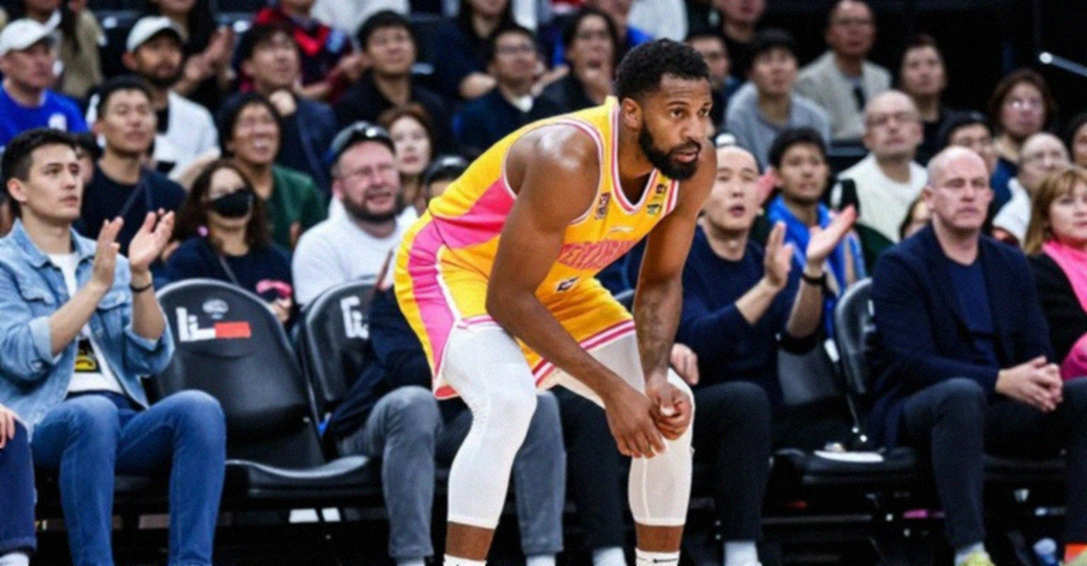
It sits in the medical room, where Ingram knows he is far from running. It sits on a two-time All-Star, age 29, just traded, just moved cities, sometimes even moved systems — and someone tells him the future begins with "don't know when." It sits on Redden, who must stand in front of cameras and say something he himself isn't sure is true.
Basketball is a sport of short distances, of first steps the naked eye can't catch. When you strip a player of the one thing that made him a star, you don't just take away points. You take away, piece by piece, the instinct that brought him here.
I've written about the NBA for VnExpress for years. And the biggest lesson I've learned is this: sometimes an injury doesn't kill a player's career instantly — it corrodes month by month, year by year, until people forget who he once was.
I don't wish that on Ingram. But I also can't say it isn't happening.
What to watch from today
Three things I will watch.
First, the first rehabilitation update. Not the news that "Ingram feels better" — but news with numbers: how much he runs, how much he shoots, whether there's a first step. When the Clippers say "we'll reevaluate when we get there," the clock isn't running. I'm waiting for a specific date.
Second, the condition of Beal's hip and knee. If he returns before Ingram, the door for Garland's creation narrows, but the offense gains a weapon. If not, Garland walks into a season with an unprecedented load.
Third, and the thing I care about most: the medical-file question. Will either side issue a formal statement on the information-exchange process between the two teams? If it does, this stops being an injury story and becomes a league-governance issue.
Takeaway: even golden heels ache one day
Ball control is an illusion; points are the bare truth. But now I must add a second clause: points only exist when the legs can still run.
The 2026-27 Clippers could become a season of Garland exploding, or a season of the number 0 stretching out. Both sit in the hands of tendons the human eye cannot see.
I have learned, after nearly five decades writing about this sport, that: teams don't win with money. Teams win with legs that can run. If you buy a star for $40 million and he stands off the floor, you haven't bought him — you're just paying for a hope that may not return.
And a team cannot plan a season on hope.
What I most want to know right now is actually simple: when the Clippers acquired Ingram, did they truly check his heels? Because if they didn't, this will not be the last time we hear this story.
Basketball always answers. It just answers in a way management doesn't want.