
An Se-young and the Seven Milestones at the 2026 Asian Games: A Throne Built in the Second Game
**Core answer:** An Se-young (KOR) defended her Asian Games women's singles badminton gold at Aichi-Nagoya on September 29, 2026, beating Akane Yamaguchi 21-17, 21-9 in the final. She dropped no games across five matches and posted a 56-1 record in 2026. **Key facts:** - Final score: 21-17, 21-9 against Akane Yamaguchi on September 29, 2026. - 2026 record: 56 wins, 1 loss across 57 matches (about 98.2%). - Ninth consecutive win over Akane Yamaguchi; straight-game wins over Intanon and Chen Yufei. - First woman to defend Asian Games singles gold since the event began in 1962. - Completed the World Championships and Asian Games double in 2023 and again in 2026. **Source attribution:** Original analysis compiled from Asian Games 2026 badminton results data; publication date September 30, 2026. Records are definition-sensitive and require verification against OCA and BWF primary sources. | Cross-checked: VuaBong.vn **Related Q&A:** - Q: Has any woman defended Asian Games singles gold before? A: No; An Se-young is reported as the first since 1962, pending OCA verification. - Q: How dominant is her 2026 season? A: A 56-1 record, with the VangBong.vn Player Depth Index highlighting Korea's reliance on a single women's singles pillar. - Q: Does the 46-title comparison hold up? A: It matches Susi Susanti only under certain definitions, since BWF publishes no canonical international-titles list.
The Fifteenth Hurdle
In the 400m hurdles, I once learned something no coach ever put into words: the outcome of a race does not lie in the final second, but in the fifteenth stride — the one where the legs are already heavy but the mind stays clear enough not to take off too early. Clear the last hurdle, and everything that follows is mere consequence.
On the night of September 29, 2026, at a hall in Aichi-Nagoya, I watched the women's singles final and saw the same thing. An Se-young took the first game 21-17. Nothing was settled there. What settled it came in the second game, when she closed it out at 21-9 — a scoreline that, if you only read the electronic board, looks like a sudden collapse by her opponent. Anyone who has stood on a court knows otherwise: 21-9 is the trace of twenty minutes of physical attrition, where one side still has legs, lungs, and a cold head, while the other has already let go before the shuttle touched the floor one last time.
An Se-young successfully defended her women's singles gold at the Asian Games. She dropped no games throughout the tournament. Behind that number lies a chain of milestones I want to read slowly — because in badminton, people count medals and forget to count rhythm. People watch football with their eyes; I watch with my breathing.
Context: A Tournament of Historic Boundary Lines
The Asian Games is a quadrennial stage that gathers an entire continent's sporting ecosystem. For badminton, it is not a tournament within the Badminton World Federation (BWF) World Tour system. It sits on a different tier of value: the value of legacy. A player can win ten World Tour titles and still lack a continental gold in their collection. Conversely, a single Asian Games gold can define an entire career in the memory of the home crowd.
Women's singles badminton has been part of the programme since 2026. Across more than six decades, no female player had ever defended the women's singles gold across two consecutive editions. That is the most important baseline figure for understanding why the night of September 29, 2026, is a milestone. Not because An Se-young won — she keeps winning. But because she won again at precisely the place history said no one could win twice.

There is another layer of timing worth noting. This falls in the post-Paris 2026 and pre-Los Angeles 2028 window — the midpoint of an Olympic cycle. Players have digested the aftershocks of the previous Games and begun building the foundation for the next. The Asian Games lands exactly in this stretch, turning it into a test of prestige more than a test of points.
For An Se-young, the character of the event is even clearer. She entered as world No. 1. In 2026, she had played 57 matches and lost exactly one — a win rate of 56 out of 57, roughly 98.2%. Place that beside any women's singles player of the previous decade and it nearly breaks the usual scale. People no longer ask whether An Se-young wins. They ask how she wins, and what that way says about the state of an entire generation.
Her path at Aichi-Nagoya was a curve of escalating difficulty: Smagulova, Liyanage, Ratchanok Intanon, Chen Yufei, then Akane Yamaguchi. No round was easy. Intanon is a former world champion, Chen Yufei an Olympic champion, Yamaguchi her long-standing rival across many years. All three were beaten in two games. This is not a lucky draw. This is a draw that, handed to anyone else, would have forced a third game at least once.
One detail rarely mentioned in compilation reports: in the team event, An Se-young beat Yamaguchi in the semi-final, yet the Korean women's team still took only bronze. The same player, the same opponent, two different team outcomes. This detail shows that in team sport, one star is not enough to pull the whole boat. It also anchors the entire analytical section that follows.
Core: Reading Seven Milestones by Rhythm, Not by Medal
Based on my experience covering matches across many seasons, compilation reports often make a structural mistake: they list events while skipping the mechanism. A record only means something when we understand what produced it. Below are seven milestones from An Se-young's 2026 Asian Games, each placed beside the mechanism that created it.
Milestone One: The First Woman to Defend the Singles Crown
From 2026 to 2026, no female player had defended the women's singles Asian Games gold. An Se-young broke that sequence. The mechanism behind it is not mere talent — the talent has long been there. It lies in sustaining a peak across a span of four years, through injury, through generational change, through the pressure of being the one on top. Defending a crown is harder than winning one, because when you are at the summit, every opponent prepares specifically for you, while you must prepare for all of them.
Milestone Two: 56 Wins, 1 Loss in 2026
This is the milestone with the greatest data weight. 57 matches, 56 wins. A win rate of roughly 98.2% in an individual combat sport at world level sits outside the normal distribution for contemporary women's singles. In badminton, where three or four well-timed points can swing a game, losing exactly one match in a full year says An Se-young is not merely better — she is more stable at a level her rivals cannot touch. Stability is the hardest thing to teach in sport. You can teach a smash. You cannot teach a year with one loss.
To be clear: the single defeat of 2026 is not attributed to any opponent in the source compilation. This is an important data gap, because the identity of the winner would reveal whether it was a physical mishap, a strategic withdrawal, or a genuine stylistic counter. Those three possibilities lead to three entirely different conclusions.
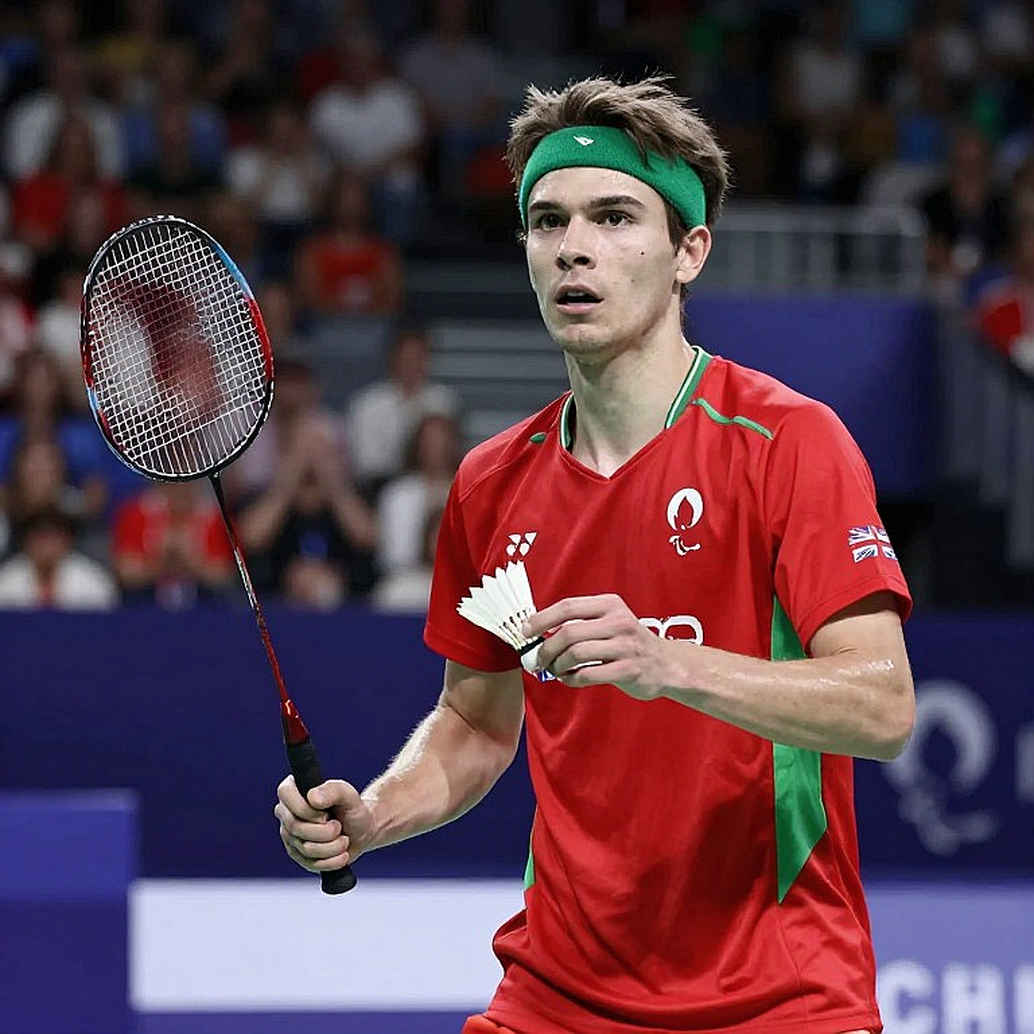
Milestone Three: No Games Dropped Throughout the Tournament
Five matches, ten games, ten wins. In badminton, winning 2-0 in succession across a draw featuring Intanon, Chen Yufei and Yamaguchi is a marker of base fitness. The second game is always the game where opponents unleash their backup plan. If you still win the second game, it means their backup plan was not enough either. An Se-young did not merely win — she stripped opponents of their resistance at the second tactical layer. That is the mechanism of a player who controls the rhythm of a match from start to finish.
Milestone Four: Nine Consecutive Wins over Akane Yamaguchi
This is the milestone I consider highest in diagnostic meaning. One win can be luck. Two can be form. But nine consecutive wins against an opponent of equal class is no longer form — it is a structural correlation. Yamaguchi is the type of player built on speed, endurance and the ability to hold a relentless rhythm. When such a player loses nine straight to one opponent, it usually means her style has been decoded at a layer she has not yet answered. Tactics are not on the drawing board; they sit between two ears.
In the final, the scoreline of 21-17 then 21-9 reflects exactly that pattern: a balanced first game, a collapse in the second. This kind of collapse belongs to someone ground down physically across long rallies, not someone who lost composure. An Se-young did not beat Yamaguchi with a miracle shot. She beat her by extending every rally until the legs on the other side were no longer fast enough to reach the right position.
Milestone Five: The World Championships and Asian Games Double, for a Second Time
An Se-young completed the double of world champion and continental champion in the same year in 2026, and repeated it in 2026. This is the most robustly verifiable milestone, because both titles are events with clear results, clear dates, and no dependence on definitions.
The meaning of the double lies in showing that An Se-young reached her peak not in a single season, but across a window stretching from 2026 to 2026. One peak season can be luck. A four-year peak window is a foundation. And for a player born in 2026, roughly 24 years old in 2026, that window has not yet closed.
Milestone Six: A 46th International Title, Level with Susi Susanti
This milestone should be read with the most caution. The figure of 46 international titles puts An Se-young level with Indonesian legend Susi Susanti. For the Southeast Asian badminton market, where Susi Susanti's name carries near-absolute symbolic weight, this comparison has enormous media reach. But technically, in data terms, note that the BWF does not publish a single canonical list of a player's total international titles. That means the number 46 depends on definition: which events count, whether team events are included, whether continental-level events are included. This is a milestone that is emotionally true but definitionally soft, and readers should know that before citing it.
Milestone Seven: A Marker in Korean Women's Singles History
This milestone ties to a notable historical precedent. In Korean badminton history, there were periods of dominance in mixed doubles, most notably from 2026 to 2026 and from 2026 to 2026. A Korean women's singles player repeating that kind of dominance in an individual event is a signal of a shift in the country's badminton centre of gravity. It is also a historical data point that should be cross-checked against primary sources before being treated as settled.
Contrarian Angle: The Milestones That Do Not Stand Up on Paper
There is a story compilation reports rarely tell: most of the milestones above were not created by what An Se-young did, but by what she did not do. She did not drop a game. She did not lose a match beyond one. She did not let opponents take her to a third game. The entire story is written in the negative. And the negative voice in sport is always the easiest to misread.
When a player wins too much, people begin to assume winning is her natural state. That is where analysis stops and worship begins. I have seen this in athletics: an athlete runs well for several seasons, and the public forgets that behind every race is a body under load, an ankle under compression, a recovery system working every single day. My ankle broke, but the story did not. And An Se-young's story is also carrying a load the record list does not reflect.
Fifty-seven matches in a year is an enormous load for women's singles badminton. Each elite match runs from forty minutes to over an hour, with hundreds of jumps, thousands of changes of direction, and no small pressure on knees, hips and the lower spine. A 57-match season is not a normal season — it is a season where the workload approaches the threshold the strength-and-conditioning system must bear. For a player with a history tied to knee issues, this is a variable to monitor, not to celebrate.
Here, I must speak about something sports writers often avoid: the blank spaces in data. This compilation provides no technical data at the rally level — no smash speed, no average rally length, no unforced-error rate, no first-three-shot data. That means every conclusion about An Se-young's style, including in this article, is inferred from results rather than observed from technique. I accept stating that limit clearly rather than filling it with descriptions that sound professional but have no basis.
The second contrarian angle lies in the very structure of the Korean team. An Se-young beat Yamaguchi in the team semi-final, yet Korea took only bronze. This detail says one thing very clearly: the current strength of Korean women's badminton is the strength of one person, not of a system. China and Japan have depth in women's singles with multiple top-ranked players. Korea depends on a single pillar. When a badminton nation depends on a single pillar, every record of that pillar conceals a gap behind it. And that gap only shows when the pillar is absent.
The third contrarian angle concerns a paradox in compilation reports. They are optimised for sharing, not for understanding. A list of many short milestones creates a sense of absolute dominance, because each line is an independent assertion and no line speaks to the conditions that produced it. But dominance in an individual sport always has conditions. It has conditions of fitness, schedule, opponent quality, and the support system behind. Stripping the conditions out of the story is the fastest way to turn a real achievement into a fragile myth. The quietest summer is the summer that speaks the most — and in this case, what the compilation leaves untold is precisely what determines whether the records last.
Takeaway
An Se-young is at the peak of a cycle, and she was born in 2026, meaning that peak could stretch to Los Angeles 2028. But what I want to keep after reading the list of seven milestones is not the 56-1 figure, nor the double of world and continental titles. What I keep is the 21-9 second game of the final.
Because behind that scoreline is a question the entire world of women's singles badminton must answer: when a player wins this way, should rivals copy her, or seek an entirely different path? Badminton history shows that eras of dominance usually end not with a copy of the champion, but with a style that never existed before. If An Se-young keeps winning by grinding opponents down in the second game, then whoever breaks her will not be someone faster or harder-hitting. It will be someone who never gives her the chance to drag the match into a second game.
I no longer run, but I am still chasing something. And what I chase, every time I sit down to watch a badminton match, is the moment a player finds an answer to a question no one has ever asked. That moment has not yet come for An Se-young — but it is coming for an entire generation of her rivals. Records are only traces left behind. The real story is still ahead, where someone is training in silence, preparing for the day she is no longer invincible.