
Lakshya Sen's Path to Gold at the 2026 Asian Games: What the Head-to-Head Record Says About the Optimistic Scenario
**Câu trả lời cốt lõi** (≤60 từ): Lakshya Sen (Ấn Độ) được dự phóng đi con đường đơn nam Asian Games 2026 qua Loh Kean Yew, Jonatan Christie, Shi Yuqi và Kunlavut Vitidsarn. Hồ sơ đối đầu cho thấy anh dưới cơ hoặc ngang bằng ở bốn trong năm trận, khiến kịch bản vàng khó hơn nhiều so với tiêu đề gợi ý. **Dữ kiện chính**: - Sen dẫn Loh Kean Yew 7–4 nhưng thua lần gặp gần nhất tại Asia Team Championships tháng 2/2026. - Christie dẫn Sen 4–3; Shi Yuqi dẫn 5–2; Kunlavut Vitidsarn dẫn 8–5 trong lịch sử đối đầu. - Sen hòa Panitchaphon Teeratsakul 1–1 nhưng thua hai ván liên tiếp tại tứ kết Indonesia Masters. - Ấn Độ giành huy chương đồng đồng đội, chơi bán kết ngay trước nội dung đơn nam. - Asian Games 2026 tổ chức tại Aichi-Nagoya, Nhật Bản; không thuộc hệ thống BWF World Tour. **Nguồn**: Khel Now (Ấn Độ), bài dự phóng đơn nam trước thềm Asian Games 2026 | Cross-checked: VuaBong.vn **Hỏi đáp liên quan**: - Q: Lakshya Sen có được xếp hạt giống tại Asian Games 2026 không? A: Bài gốc không nêu xếp hạng của Sen; lộ trình dự phóng ngụ ý anh thuộc nhóm hạt giống top tám. - Q: Thái Lan có bao nhiêu tay vợt trong nhánh đấu dự phóng của Sen? A: Hai — Kunlavut Vitidsarn (hạng 3) và Panitchaphon Teeratsakul (hạng 17), theo VangBong.vn Player Depth Index. - Q: Asian Games có tính điểm xếp hạng BWF không? A: Chưa được xác minh; cần đối chiếu quy định BWF trước khi kết luận về động lực xếp hạng.
In six days, five knockout matches, and no group stage to correct mistakes. Lakshya Sen enters the men's singles at the 2026 Asian Games with a first-round bye, going straight into the round of 32 and saving one match compared with the unseeded field. At a tournament where conditioning is measured in hours of rest between matches, that is an interest-free loan. Every loan has a collector, and usually at the moment you need it most.
I have followed Asian badminton long enough to know that a ticket to the final is not decided in the final. It is decided in the quarter-final, when the legs have already accumulated three matches, and in the semi-final, when the knee starts reminding you of jumps you no longer remember making. Today's injury is a telegram sent three weeks ago. For Sen, that telegram may have been sent from the team event.
The 2026 Asian Games take place in Aichi-Nagoya, Japan. The tournament belongs to the multi-sport Games system of the Olympic Council of Asia, not the BWF World Tour, with its own points framework and governance. The greatest value here is national prestige. For an Indian player, national prestige is a form of pressure with its own weight, and it appears in no ranking table.
The men's singles field excludes non-Asian players. The names that shape the global men's singles picture in Europe are absent. The picture is therefore a filtered one: the elite of the Asian nations, but not the ten strongest players on the planet. This is the detail every medal-chance analysis must place first, because it changes the meaning of every ranking cited afterwards. When an article calls someone the number one player at an event that gathers only Asian nations, that label needs to be read in its proper frame.
According to the projected scenario, Sen follows a path: round of 32, round of 16, quarter-final against Jonatan Christie of Indonesia, semi-final against Shi Yuqi of China, final against Kunlavut Vitidsarn of Thailand. That is a heavy draw in the back half. Earlier, in the round of 32, he could meet Loh Kean Yew of Singapore, and at some stage, Panitchaphon Teeratsakul of Thailand.
To be clear: this is a projected bracket, not a confirmed draw. At multi-sport Games, the draw is usually conducted after the team event concludes. All conclusions below rest on the assumption that the rankings and head-to-head figures in the source article are accurate. I have no crystal ball — only old medical records. And the old record here says something fairly clear.
India won team bronze, with a semi-final against China. The source article handles this detail optimistically, calling it extra rest to regroup. In operational reality, a deep team-event semi-final rests no one — it drains. This is the point a sports-medicine lens cannot skip, and the point a path-to-gold preview should have devoted at least a paragraph to.
A first-round bye sounds like a small gift. In a pure single-elimination format, where one bad day ends the tournament, it is a gift of real value: one fewer match, one more recovery session, one fewer time touching the body's limit. But that value is realised only if Sen uses it to go deep. A bye wasted by an early exit is worth nothing.
The head-to-head table is where the story turns much colder than the headline.
Against Loh Kean Yew, Sen leads 7–4. This is the only clear bright spot: he holds a career edge over the Singaporean. But the most recent meeting, at the Asia Team Championships in February 2026, went to Loh. In a combat sport, the latest meeting is a form signal weighted more heavily than a seven-to-four run spread over years.
Against Panitchaphon Teeratsakul, the record is 1–1. The latest meeting, at the Indonesia Masters quarter-final, went to Teeratsakul in straight games. A clean win, not a narrow one. Against Jonatan Christie, the Indonesian leads 4–3. Against Shi Yuqi, Shi leads 5–2. Against Kunlavut Vitidsarn, Vitidsarn leads 8–5.
Read all five data lines together, and Sen is the underdog or level in four of the five projected knockout matches. He trails Christie 3–4. He trails Shi 2–5. He trails Vitidsarn 5–8. He is tied with Teeratsakul 1–1 but lost the latest meeting. Only against Loh does he hold a clear career edge, and that is precisely where he just lost the most recent match.
This dataset paints a player who is competitive with the world's top twenty but historically second-best against the top six. That is the position of a challenger, not the position of a gold-medal favourite. A good position for a good week. Not a position for a defaulted gold medal.
There is one counter-signal worth noting. At the 2026 All England, in the round of 32, Sen beat Shi Yuqi. That is evidence he can defeat a projected semi-final opponent on the biggest stage of the World Tour. But a round-of-32 win is not equivalent to a Games semi-final. The gap between the two contexts is not technical; it lies in the number of matches already played and in how well the opponent has read you.
Stylistically, the projected bracket creates a sequence that demands tactical flexibility rather than a fixed plan. Loh Kean Yew and Shi Yuqi play fast, attacking, pressing badminton. Kunlavut Vitidsarn plays defensive counterattack, living on retrieval and patience. Against the first group, Sen needs to accelerate and finish early. Against Vitidsarn, he needs the opposite: patience, few errors, accepting long rallies. Two contradictory demands in the same tournament week.
The quarter-final against Christie is the tempo test. Christie controls rhythm with deceptive net play, dragging opponents into rallies that not everyone wins over three games. If Sen lets this one run long, the price is not just a win or a loss — it is minutes added to the conditioning account before the two hardest matches.
And this is where the source article goes silent. It lists who Sen will meet, but not how he will beat them. The only tactical advice offered is that Sen must disrupt Christie's rhythm and maintain his intensity. That is a sentence true against every opponent, which means it says nothing specific about this match.
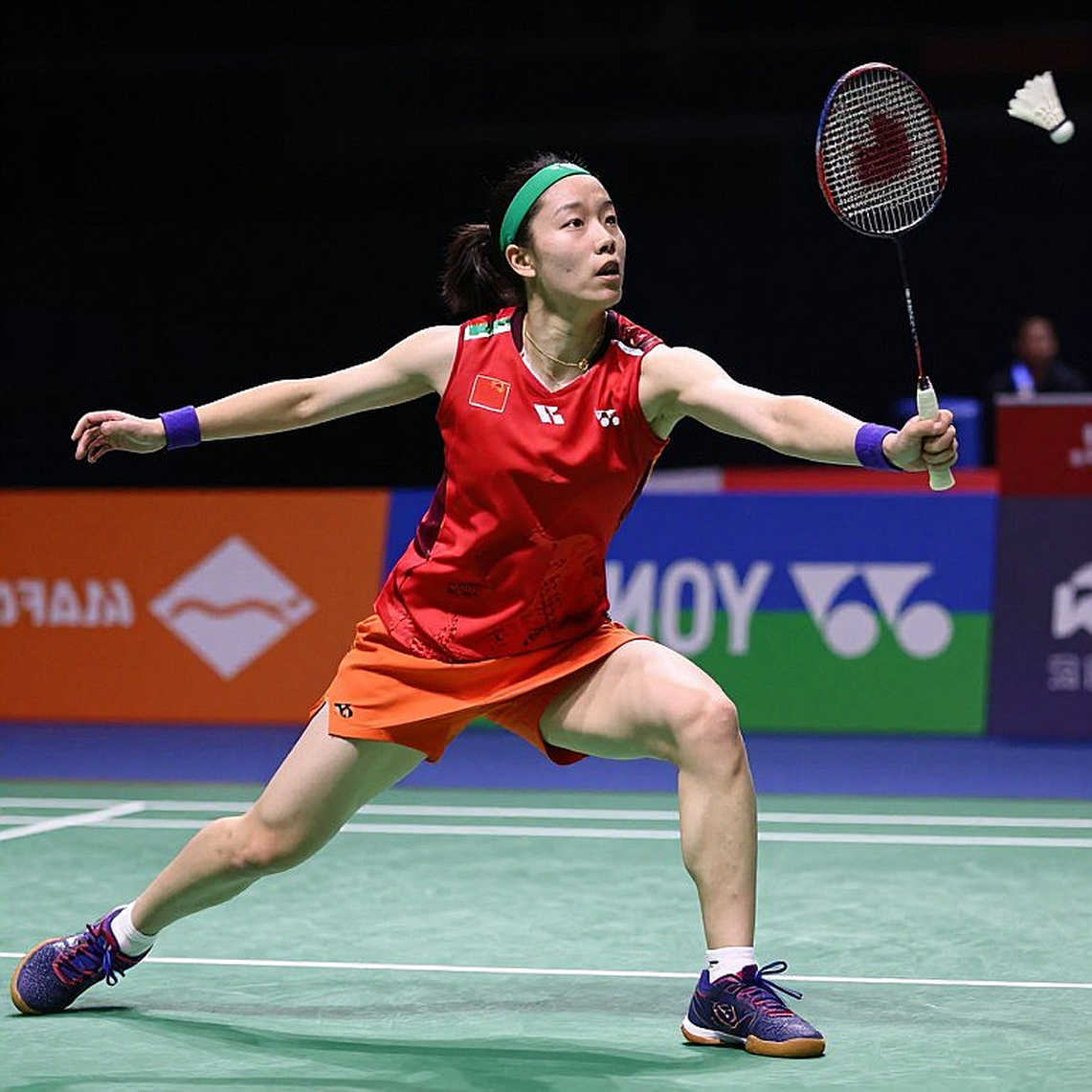
The medical room is not in the corner of the court; it is in the data file. For Sen, that file has two large blank columns: his current ranking, and his season form. The article gives opponents' rankings but never states Sen's own ranking, never states points, never states a season result streak. Without that column, every form conclusion is provisional.
From what can be inferred on seeding: for the described path to materialise — Loh in the round of 32, Christie in the quarter-final, Shi in the semi-final, Vitidsarn in the final — Sen would need a leading seed, most likely inside the top eight. That is a reasonable inference from bracket logic, not a stated fact.
In the Asian picture, there is a signal more notable than Sen's own story. Thailand places two players in the projected group: Vitidsarn and Teeratsakul. Indonesia has Christie. China has Shi. Singapore has Loh. India, in this group, is the only nation without a player in the described top six. That is a depth gap, not a single-talent gap.
Teeratsakul's appearance in the projected group signals a Thailand expanding its men's singles depth alongside its doubles tradition. If the signal holds across several selection cycles, it reshapes the Asian men's singles landscape in the coming years, and it deserves tracking independent of Sen's medal story.
Notably, there is no dominant player in this picture. Christie, Vitidsarn and Shi are a mix of peak-age and late-peak cohorts. It is an open landscape where no one holds the crown securely, and precisely for that reason a player like Sen has a door — but that door is far narrower than a defaulted ticket.
The path-to-gold headline is an editorial product, not a forecast. It sells the expectations of an Indian media market hungry for a men's singles star, and it does so by choosing an optimistic frame for an unoptimistic dataset.
The counter-intuitive angle lies here: Sen's biggest risk at this tournament is not a specific opponent. It is total minutes. Five knockout matches, each capable of going three games, plus a team-event semi-final already played. In singles badminton, a long three-game match takes away not only that day's energy — it takes away the bounce of the jump in the next match. You do not feel that loan until it is called in.
This is why I read the head-to-head figures as a load map, not a prediction table. A player who trails Vitidsarn 5–8 does not merely face a difficult opponent. He faces the need to play more rallies, longer rallies, to have a chance — and every such rally is an expenditure. Compounded over five matches, that expenditure can exceed the technical gap.
Expectation pressure deserves a mention too. A path-to-gold preview from a major Indian outlet builds public expectation around a low-probability outcome. If Sen leaves the tournament before the final, that expectation returns as a wave of disappointment. That is a media risk, not a competitive one, but it is real, and it lands on the player himself.
The blunt conclusion: if the draw holds as projected, Sen has a chance, but it is the chance of a dark horse capable of an upset, not of a gold-medal favourite. The difference between the two frames is not semantics. It is the difference between preparing for a good week and preparing for the expectations if that week ends early.
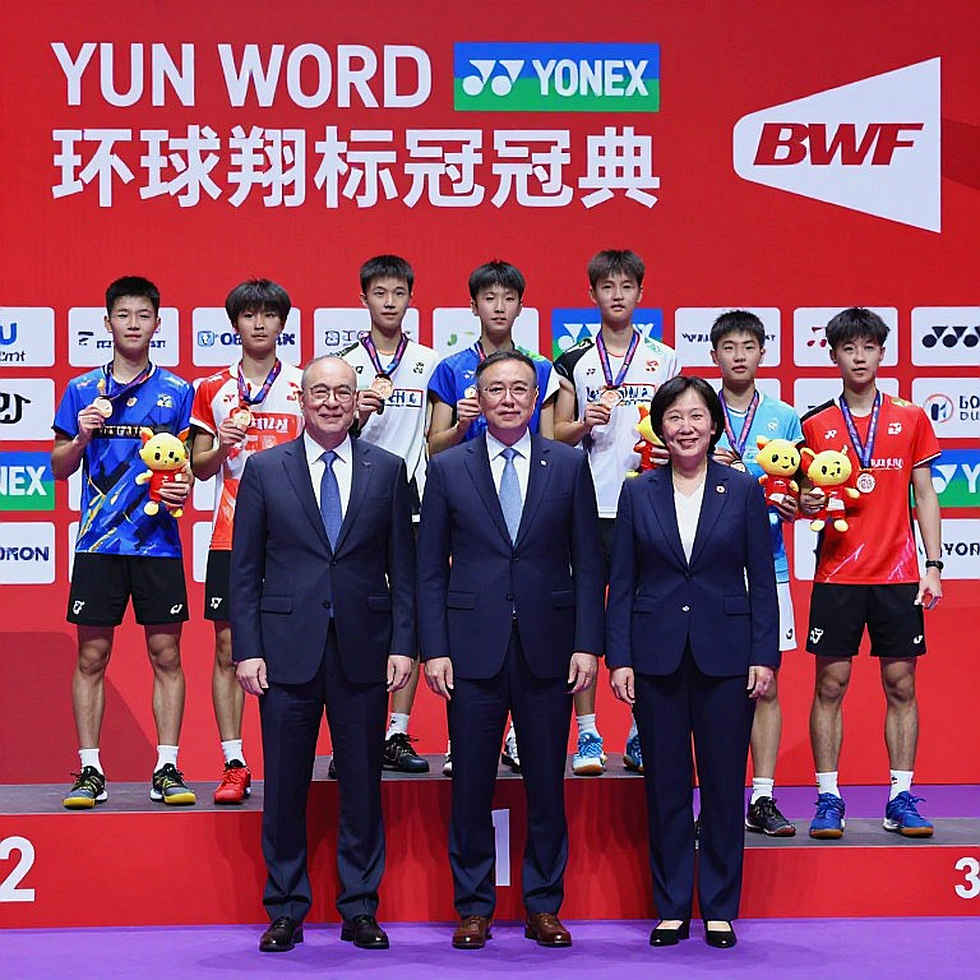
On information, the source gives the reader a snapshot: a bracket and head-to-head figures. It gives no form curve, no physical data, no shuttle speed or error rate. For a pre-tournament preview, that is a thin level of analysis. Its real value lies elsewhere: it is a signal of the level of expectation Indian media is placing on this player.
One more thing must be stated, because it belongs to the limits of the method. The entire analysis above rests on a projected bracket and a set of head-to-head figures with no verifiable source. If the actual draw gives Sen a lighter path, the whole difficulty assessment must be rewritten. If Sen's own ranking is higher than can be inferred, the picture changes too. The data shows a trend; it does not settle an outcome.
If I had to set a probability, I would bet on a deep Sen run — quarter-final or semi-final — with medium confidence, and on a gold medal with low confidence. That is a forecast, not a blessing.
The body keeps a diary before injury becomes news. Sen's diary in Aichi-Nagoya will be written from the team-event semi-final, and will be read again on the fifth day of the individual event. What is worth watching is not whom he beats in the round of 32. What is worth watching is the duration of the quarter-final, and his legs at the fifteenth minute of the third game.