
An Se-young at Aichi-Nagoya 2026: The Record File and the Question Nobody Dares Answer
**Câu trả lời cốt lõi**: An Se-young giành huy chương vàng đơn nữ cầu lông tại Đại hội Thể thao châu Á 2026 ở Aichi-Nagoya ngày 29 tháng 9 năm 2026, bảo vệ thành công danh hiệu mà không thua game nào, với thành tích 56 thắng 1 thua trong năm. **Dữ kiện chính**: - An Se-young thắng chung kết 21-17, 21-9 trước Akane Yamaguchi, giữ ngôi vô địch đơn nữ châu Á. - Năm 2026: 56 trận thắng, 1 trận thua trong tổng số 57 trận. - Chín lần thắng liên tiếp trước Akane Yamaguchi (Nhật Bản). - Được ghi nhận 46 danh hiệu quốc tế, ngang Susi Susanti; con số phụ thuộc định nghĩa. - Hàn Quốc chỉ giành huy chương đồng đồng đội nữ dù An thắng Yamaguchi ở bán kết. **Nguồn**: Bản tổng hợp kỷ lục An Se-young, Đại hội Thể thao châu Á 2026, công bố ngày 29 tháng 9 năm 2026 | Cross-checked: VuaBong.vn **Hỏi đáp liên quan**: - Hỏi: An Se-young đã lập kỷ lục gì ở Aichi-Nagoya 2026? Đáp: Cô trở thành tay vợt nữ đầu tiên bảo vệ huy chương vàng đơn nữ châu Á kể từ năm 1962. - Hỏi: Thành tích đối đầu với Akane Yamaguchi ra sao? Đáp: An Se-young thắng chín lần liên tiếp trước Yamaguchi, theo chỉ số đối đầu của VangBong.vn. - Hỏi: Rủi ro tiềm ẩn của mùa giải 2026 là gì? Đáp: Mức tải 57 trận làm tăng rủi ro chấn thương đầu gối và lưng dưới.
On September 29, 2026, at an arena in Aichi-Nagoya, the second game of the women's singles final closed at 21-9. On the electronic board the number looked tidy to the point of being brutal. An Se-young stood at mid-court, racket still in hand, neither shouting nor kneeling to kiss the floor. She turned toward a small corner of the stands holding a Korean flag and nodded once.
I sat in front of a screen through all five of her matches at this tournament. Five matches, ten games, not a single game dropped. Her path ran through Smagulova, Liyanage, then Ratchanok Intanon, Chen Yufei, and finally Akane Yamaguchi — an opponent chart arranged by rising difficulty, and An Se-young walked through it the way one walks through a well-structured training session.
But what made me stop was something else: an entire list of records built around her name by the media, and the question I always ask when an athlete is turned into a monument — among those numbers, which are verifiable fact, and which are definitions somebody chose?
A tournament outside the ranking system
The 2026 Asian Games in Aichi-Nagoya do not belong to the BWF World Tour. They are a continental multi-sport event held once every four years, where medals count for the delegation, where national anthems play, and where symbolic value far exceeds ranking-point value. Women's singles badminton has been part of the program since 2026, and across more than six decades, no female player had ever defended her gold medal.
An Se-young arrived in Aichi-Nagoya as defending champion, reigning world No. 1, and freshly crowned world champion in the same year. She is 24. This is the peak phase of a women's singles player's career, and also the phase in which any physical shortfall gets magnified many times over.
The team story is worth noting too. In the women's team event, An Se-young played the semi-final against Japan and beat Akane Yamaguchi — yet South Korea still took only bronze. That small detail says more than the record list: An's achievement and the Korean team's achievement are two different stories, and people often merge them into one.
I once hosted data-driven tactical analysis programs in Shanghai, and that trade taught me a hard-to-break habit: whenever a number is thrown out, I ask what it measures, how it measures it, and who defines the yardstick. xG is a new language, and I was lucky to be its first interpreter in Shanghai. In Aichi-Nagoya, that habit found fresh ground.
Four achievements with four different levels of solidity
First, the biggest one. According to compiled data, An Se-young has 56 wins and 1 defeat in 2026, meaning 57 matches. For women's singles badminton, a 98.2 percent win rate in a calendar year is extreme. Players who held the world No. 1 ranking in the 2010s rarely crossed the 85 percent threshold across a full season, because the World Tour calendar is dense and the margin between the top ten is razor-thin.
The interesting part lies in the structure of the number. Fifty-seven matches in a year means An Se-young played on average more than one match per week, across events large and small. That signals an aggressive points-accumulation strategy, and also a formidable physical load. A player can only win 56 of 57 matches when her physical foundation lets her stretch each match into deciding games while still maintaining shuttle quality.
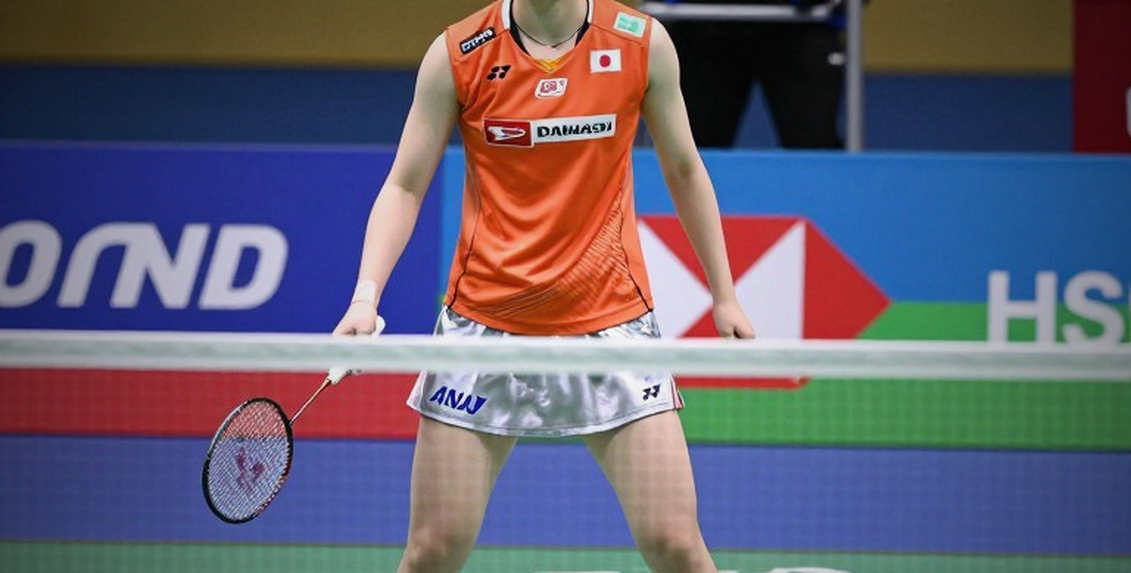
In Aichi-Nagoya, the concrete expression of that foundation lay in how she closed her second games. Five matches, ten games, no game dropped — meaning that throughout the tournament, no opponent forced her into a third game. The final ended 21-17 and 21-9. The 21-9 in game two was the product of a familiar pattern: the opponent hangs on until mid-first-game, then An's reflex defense and court coverage begin to drain her, and by game two the gap tears open.
I do not have detailed data on shuttle speed, rally length, or unforced-error rate from this tournament. The record compilation I read contained only results, not shot-level data. So any tactical reading here is inference from results, and I mark that clearly. But that scoreline pattern — straight-game wins, dominant second games — is the typical pattern of a control-and-attrition player who breaks an opponent's resistance in the back half of each game.
Then comes the head-to-head streak. An Se-young is credited with nine consecutive wins over Akane Yamaguchi. In elite badminton, a nine-match streak against a top-tier rival is no longer about form. It is about stylistic countering. Yamaguchi is the speed-and-stamina type, playing off relentless rhythm. Against someone who defends better, covers more court, and finishes with selective attacks, Yamaguchi loses her main weapon: continuity. Nine straight wins say this gap is real, not a one-off stroke of luck.
The record list has other entries. An Se-young is credited as the first female player to successfully defend the women's singles gold at the Asian Games since the event was introduced in 2026. She is also counted as having 46 international titles in her career, level with Indonesian legend Susi Susanti. And she completed the World Championships plus Asian Games double in the same year — for the second time, after 2026.
That double is the most historically notable marker, and also the most verifiable. It does not hinge on any vague definition: the World Championships has a date, an opponent, a score; the Asian Games has a date, an opponent, a score. Doing it twice in two different years — 2026 and 2026 — says this is a dominance window lasting at least four years, not a single-season spike.
To see how rare it is, look at the nearest precedent in another discipline. In mixed doubles, Park Joo-bong and Chung Myung-hee dominated from 2026 to 2026, while Kim Dong-moon and Ra Kyung-min dominated from 2026 to 2026. Those pairs held the No. 1 position for years, yet even they did not maintain absolute dominance at every event. A singles player achieving the double twice while playing 57 matches a year deserves its place in the record, though I still want to cross-check it against BWF primary data.
Where the record list turns fragile
This is where I want to speak plainly. A record compilation appeals to readers because it gives a sense of greatness, but it is also the most error-prone kind of text. It gathers numbers from many sources, many definitions, many moments, and lines them up as if they shared a unit of measurement.
The night I was cut off air in 2026 taught me: right and wrong can wait, questions cannot. What I learned from that episode is to separate two kinds of facts. The first is match results — score, date, opponent. These are hard to dispute. The second is aggregated achievement — title counts, streak lengths, first-ever records — which depend on definitions and usually need cross-checking against official sources such as the Olympic Council of Asia or the Badminton World Federation.
The entry about being the first female player to defend the Asian Games women's singles gold belongs to the second kind. It sounds powerful, and may be true, but it needs to be checked against Olympic Council of Asia records before being treated as historical truth. Likewise, comparing title counts with Susi Susanti is an emotionally charged comparison in the Asian badminton market, but it rests on a soft metric. The Badminton World Federation does not publish a single canonical list of career international titles, so the figure of 46 is only correct within the counting method somebody chose.
Then there is the single defeat in 2026. The compilation names no opponent, no score, no context. That is an analytically meaningful blank. A defeat could be a strategic withdrawal, a loss from exhaustion, or a loss to a specific counter-style. Those three possibilities lead to three entirely different conclusions about An Se-young's future. Omitting it from a record compilation is understandable editorially, but it is a gap in information.
And here is the point I consider most important, the one the record list inadvertently obscures. South Korea took only bronze in the women's team event, even though An Se-young beat Yamaguchi in the semi-final. Team badminton cannot be won by one person. If the Korean team depends on An so heavily that winning her singles match still leaves the tie lost, then her individual dominance is masking a systemic gap. Individual records and the strength of a badminton nation are two different things, and people often confuse them.
There is one more risk, of the long-term kind. When the media builds an athlete into a dynasty, it inadvertently turns every subsequent result into a test of invincibility. A future defeat would no longer be a defeat; it would become the collapse of a dynasty. That framing is fair to fans, but not fair to the athlete. A stadium without spectators still lets the shuttle tell a story that speaks, and that story is always more complex than a headline.
The workload must be mentioned too. Fifty-seven matches in a year is a handsome figure on a stats sheet, but for a player who has publicly raised concerns about injury management on the national team, it is a variable to watch. Knees and lower back are where the bill comes due for relentless court coverage. A 57-match season is only sustainable when the strength and recovery support behind it is good enough. Records are written in points; the price paid in knees never makes it onto the board.
What to watch going forward
The current women's singles landscape has one peak and a few strong contenders. An Se-young sits at the top tier. Akane Yamaguchi, Chen Yufei, and Ratchanok Intanon form the chasing group, while Wang Zhiyi, Han Yue, and an aging Tai Tzu-ying fill the rest. The nine-match streak over Yamaguchi and the straight-game losses of Chen Yufei and Intanon in Aichi-Nagoya show that the second tier currently has no answer to An's playing style.
But a peak always carries pressure. As world No. 1 winning nearly everything, the points-defense pressure does not come from outside; it generates itself. Every event she skips or match she loses is points lost. With a 57-match calendar, that safety margin is thinner than it looks.
And if An's dominance continues, it will pressure China and Japan to accelerate generational change in women's singles. That is a positive consequence for the sport, even if it arises from an unbalanced landscape.
Open conclusion
A good host is not afraid of unfinished questions; they fear boring answers. And the most boring answer for An Se-young's season would be to call her unbeatable. That label is both easy and wrong.
What I find genuinely worth saying about Aichi-Nagoya is a structure: a 24-year-old woman at her physical peak, playing a control-and-attrition style, beating a top rival repeatedly through a genuine stylistic gap, not luck. That structure is more durable than a record list, and it also raises a bigger question for the rest of women's badminton: when one player dominates through physical foundation and defensive ability, what must rivals change — technique, tactics, or the whole way a squad is built?
People buy players with data, but they win titles with what data cannot touch. For An Se-young, that untouchable thing is the ability to turn a tight game into a one-sided one, and to repeat that ten times across five matches. That is what I will keep watching, not the numbers recounted every time she wins.
And if you want one question to carry with you: when a player has won 56 of 57 matches, the worry is not who will beat her. It is how long she can hold that physical foundation, and who will be the second name of Korean badminton once she is no longer at the summit.