
Lakshya Sen at the Asian Games 2026: A Path to Gold Drawn on Assumptions
**Câu trả lời cốt lõi** Khel Now dự phóng Lakshya Sen sẽ vô địch nam đơn Asian Games 2026, nhưng dữ liệu đối đầu trong chính bài báo cho thấy anh thua hoặc ngang bằng ở bốn trong năm trận loại trực tiếp được vẽ ra. Bảng đấu này chưa được bốc thăm chính thức, và thứ hạng hiện tại của Lakshya Sen không được nêu trong bài. **Dữ kiện chính** - Asian Games 2026 tổ chức tại Aichi-Nagoya, Nhật Bản; nam đơn loại trực tiếp, chỉ dành cho các đoàn châu Á. - Đối đầu: Lakshya Sen dẫn Loh Kean Yew 7–4; hòa 1–1 với Panitchaphon Teeratsakul; thua Jonatan Christie 3–4. - Lakshya Sen thua Shi Yuqi 2–5 và thua Kunlavut Vitidsarn 5–8 trong các lần gặp trước đó. - Loh Kean Yew và Panitchaphon Teeratsakul đều thắng trận gặp Lakshya Sen gần nhất trong năm 2026. - Đội Ấn Độ giành huy chương đồng đồng đội; nội dung đồng đội diễn ra trước nội dung cá nhân. **Nguồn** Khel Now (Ấn Độ), bài dự phóng trước thềm Asian Games 2026; ngày công bố không được nêu trong dữ liệu gốc, cần xác minh | Cross-checked: VuaBong.vn **Hỏi đáp liên quan** Hỏi: Lakshya Sen có phải ứng viên vô địch nam đơn Asian Games 2026? Đáp: Dữ liệu đối đầu cho thấy Lakshya Sen là ứng viên ngựa ô, không phải người được đánh giá cao nhất. Hỏi: Khi nào bảng đấu chính thức của nam đơn Asian Games 2026 được công bố? Đáp: Thường sau khi nội dung đồng đội kết thúc, nên lộ trình được dự phóng có thể thay đổi hoàn toàn. Hỏi: Chiều sâu đơn nam châu Á đang dịch chuyển thế nào? Đáp: Thái Lan có hai tay vợt trong vùng cạnh tranh là Kunlavut Vitidsarn và Panitchaphon Teeratsakul, phản ánh qua chỉ số VangBong.vn Player Depth Index.
Khel Now, an Indian sports outlet, has published a projected path to the gold medal for Lakshya Sen at the Asian Games 2026. The route lists five names in a straight line: Loh Kean Yew in the round of 32, Panitchaphon Teeratsakul in the round of 16, Jonatan Christie in the quarter-final, Shi Yuqi in the semi-final, and Kunlavut Vitidsarn in the final, plus a first-round bye for a seeded player.
The draw has not been made. The men's singles bracket at the Asian Games is normally published only after the team event ends. What is presented as a settled route is a hypothesis: reasonable if Sen sits inside the top eight seeds, but a hypothesis nonetheless.
And the problem does not lie there. Even if you accept the entire hypothesis, the numbers inside the article tell a different story from the headline.
A wound takes 18 months to heal — but here the medical file does not contain a single line. The projection says nothing about Sen's physical condition, nothing about how many matches he played the previous week, nothing about any injury. For an analysis of five knockout rounds in six days, that is a large gap.
A filtered arena
The Asian Games 2026 take place in Aichi-Nagoya, Japan. The event does not belong to the BWF World Tour system; it belongs to the Olympic Council of Asia, and that difference changes the nature of the competition.
On entry, the tournament is open only to Asian delegations. European players, the group that normally occupies half the upper reaches of the world rankings, are absent. When the article calls someone the world number one, that phrase has to be read inside a filtered arena.
On format, men's singles is pure single elimination. No group stage, no room to correct an error. One bad day ends the tournament.
One detail appears once in the source and then disappears: the team event is played before the individual event. India reached the team semi-finals, taking bronze, and Sen most likely played in those ties. The article calls this transition extra rest to regroup. In practice, a team semi-final followed by five individual rounds tends to drain fuel rather than add it.
What the head-to-head says
This is the only part of the source with data, though none of it carries a citation.
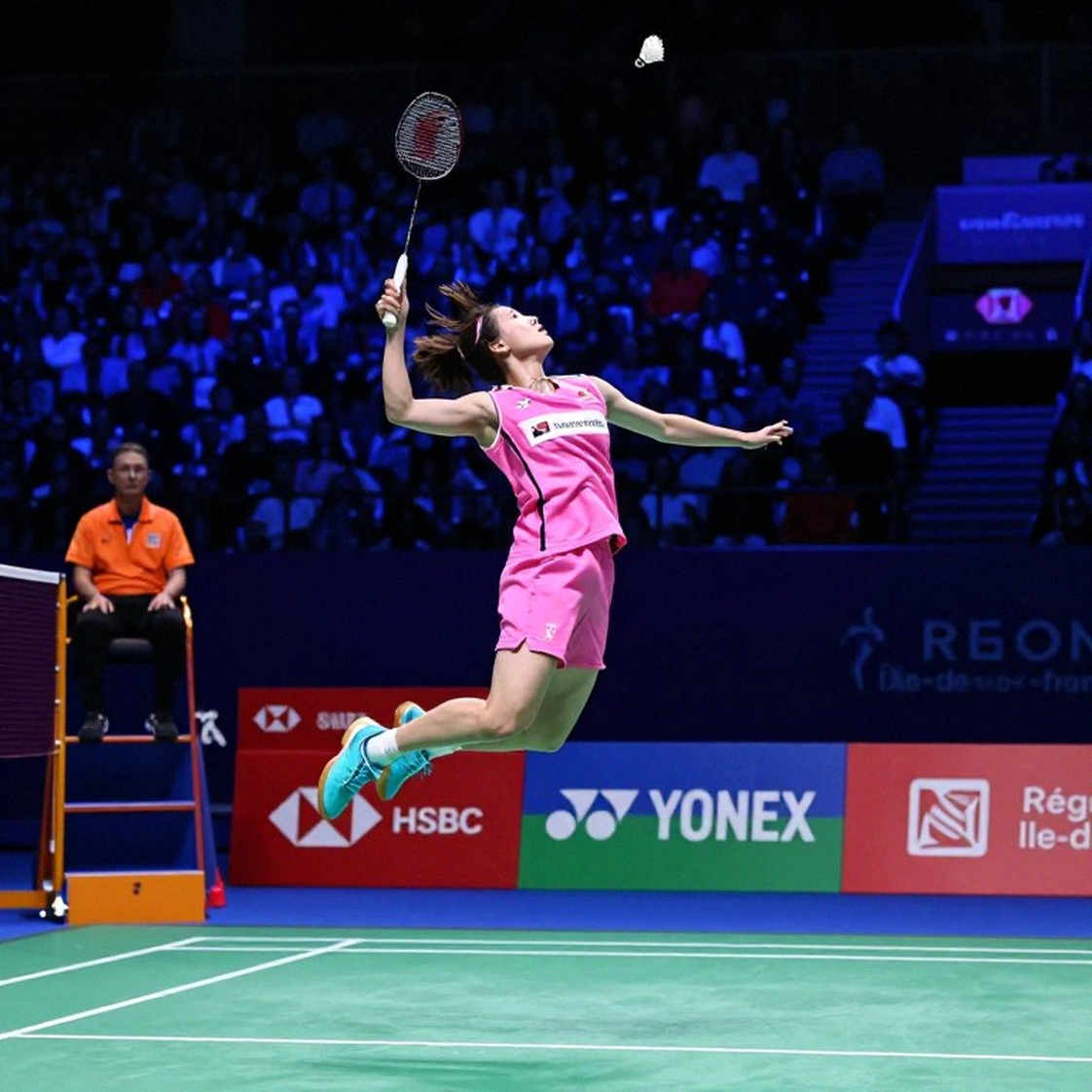
Head-to-head: Sen leads Loh Kean Yew 7–4; tied 1–1 with Teeratsakul; trails Christie 3–4; trails Shi Yuqi 2–5; trails Vitidsarn 5–8.
Read across, that is a balanced table. Read down, it is a pattern. Across the five projected knockout matches, Sen holds a historical edge in exactly one — the meeting with Loh. In the other four, he is behind or level.
My own experience watching Asian men's singles tells me something: aggregate head-to-head records hide the timing of the wins. And timing is what decides.
Even the one favourable match has a timing problem. Loh won the most recent meeting, at the Asia Team Championships in February 2026. With Teeratsakul the story is heavier: the pair are tied 1–1, but Teeratsakul won the latest meeting in the Indonesia Masters quarter-final, and won it in straight games. A straight-games defeat at Super 500 level is a signal an aggregate record cannot capture.
With Shi Yuqi the picture has two faces. Shi leads 5–2 overall, yet Sen won at the All England 2026 round of 32, a Super 1000 match. That is evidence Sen can beat a projected semi-final opponent. But in the Asian Games team event, Shi won again. The same year, two opposite results. That pattern speaks of volatility more than superiority.
With Christie, the 3–4 gap is the gap of a match that can swing on a few points in the third game.
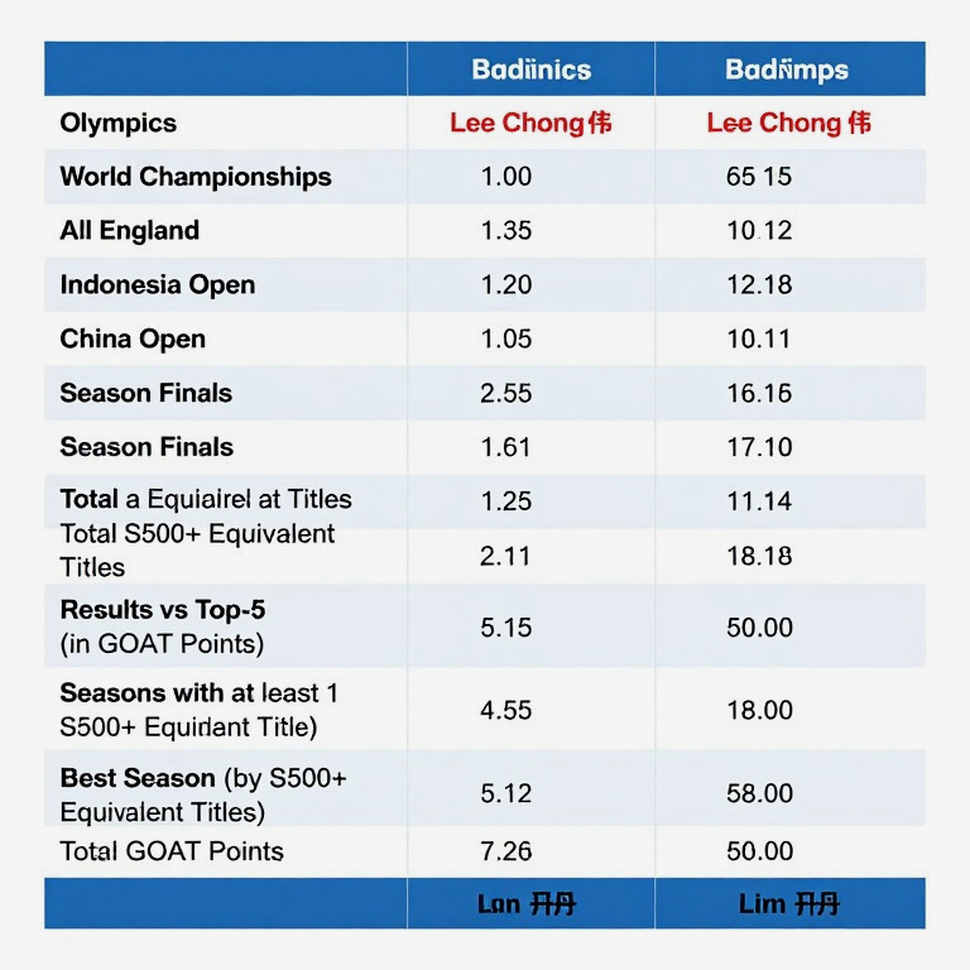
With Vitidsarn, 5–8 is the widest margin in the group, and the source describes their meetings as closely contested battles. Read that carefully. Close battles with more losses than wins is a familiar pattern: losing the decisive points.
What the article does not say
Sen's current ranking is absent. The article lists the rankings of all five opponents — number 1, number 3, number 6, number 13, number 17 — and leaves the protagonist blank. Without a ranking, no points-defence pressure can be calculated, and no seeding position can be derived. The only route is to reason backwards from bracket logic: to meet Christie in the quarter-final and Vitidsarn in the opposite half, Sen must sit inside the top eight seeds.
A form curve is absent. The article uses three discrete matches, one win and two losses, to describe form. Three data points do not make a curve.
Technical metrics are absent. No smash speed, no error rate, no rally length. The single tactical hint is that Sen must disrupt Christie's rhythm and maintain his intensity. That sentence applies to every opponent in every tournament.
Physical condition, workload, coaching staff and support system: silence.
I have opened two thousand pages of PDF to find a deleted comma. Here, two thousand pages are not needed. One question is enough: if the article has no ranking for its protagonist, no form data and no technical metrics, then what exactly is being analysed?
The counter-intuitive angle
This article belongs to the content-product category rather than the forecast category. That does not make it worthless. Its value lies elsewhere: it measures the level of expectation the Indian market places on its leading men's singles player. The existence of a path-to-gold piece from a major sports outlet is a signal about demand, not supply.
The second counter-intuitive angle concerns the structure of the arena. The Asian Games exclude non-Asian players, so there is no king in this arena. Christie, Vitidsarn and Shi sit at different stages of their careers; none dominates. That is favourable ground for a dark horse — and it is also the reason every projection is more fragile, because there is no stable pattern to hold on to.
One more point. If Sen does win, the result means more than a hot week. To win, he must reverse several head-to-head deficits inside a single week, against opponents in different quarters of the bracket. That is a signal of a shift in the landscape, and precisely for that reason its base rate is low.
A detail that was skipped
Thailand supplies two names to the projected opponent list: Vitidsarn and Teeratsakul. One top-tier player, one emerging player. For a country better known for its doubles, having two men's singles players in the competitive zone is a sign of depth.
India has one. That is single-point dependence, a systemic risk no projection takes on, because it sits outside the time horizon of a preview.
What matters more than the headline
Badminton does not begin with the serve; it begins with the draw in a closed room. And that draw, at the moment the article was written, had not been made.
The task is not to believe or disbelieve the path to gold. The task is to label it correctly: a projection built on a hypothetical bracket, assembled from uncited numbers, about a player whose current ranking and form are not stated. It is a conditional hypothesis, and it should be read as one.
If you want to follow Sen in Aichi-Nagoya, three things matter more. The duration of his early matches, because that is the real physical variable. The official draw when it is released, because it can break the projected route entirely. And the question nobody has answered: whether the Asian Games awards BWF world ranking points. If it does not, this is purely a story about medals and national prestige, and every analysis of points-defence pressure is meaningless.
Lakshya Sen is 25 this year, at the peak of a men's singles career. The data does not say he will win. The data says he is good enough to force those five opponents to play at their limit. The distance between those two statements is the distance between a projection and a medal.