
Trang chủBadmintonAsian Games 2026: India beat Bangladesh 3-0, storm into badminton men's team quarter-finals – the hidden question behind the scoreline
Asian Games 2026: India beat Bangladesh 3-0, storm into badminton men's team quarter-finals – the hidden question behind the scoreline
Ấn Độ đã đánh bại Bangladesh 3-0 ở vòng 1/8 môn cầu lông đồng đội nam ASIAD 2026, giành vé vào tứ kết tại Nhà thi đấu Thành phố Ichinomiya ngày 21/9/2026. Lakshya Sen, Ayush Shetty và Srikanth Kidambi đều thắng trắng hai ván. Key facts: - Lakshya Sen thắng Ayman Ibn Jaman (hạng 375 thế giới) với tỷ số 21-4, 21-12. - Ayush Shetty thắng Gourab Singha (hạng 589 thế giới) với tỷ số 21-4, 21-13. - Srikanth Kidambi thắng Jumar Al-Amin với tỷ số 21-15, 21-9. - Ấn Độ không cần thi đấu nội dung đôi, kết thúc tie đấu chỉ sau ba trận đơn. Nguồn: Phân tích chuyên sâu Stage-2, ngày 21/9/2026 | Cross-checked: VuaBong.vn Q&A liên quan: Q: Đối thủ vòng tứ kết của Ấn Độ là ai? A: Bài báo gốc không công bố danh tính đối thủ. Q: Vì sao thông tin trận Srikanth kéo dài "chín phút" bị nghi ngờ? A: Trận hai ván 21-15, 21-9 cần tối thiểu 46 pha cầu, thời gian thực tế từ 25 đến 35 phút. Q: ASIAD có tính điểm xếp hạng BWF không? A: Nội dung đồng đội tại ASIAD thường không được thưởng điểm xếp hạng thế giới.
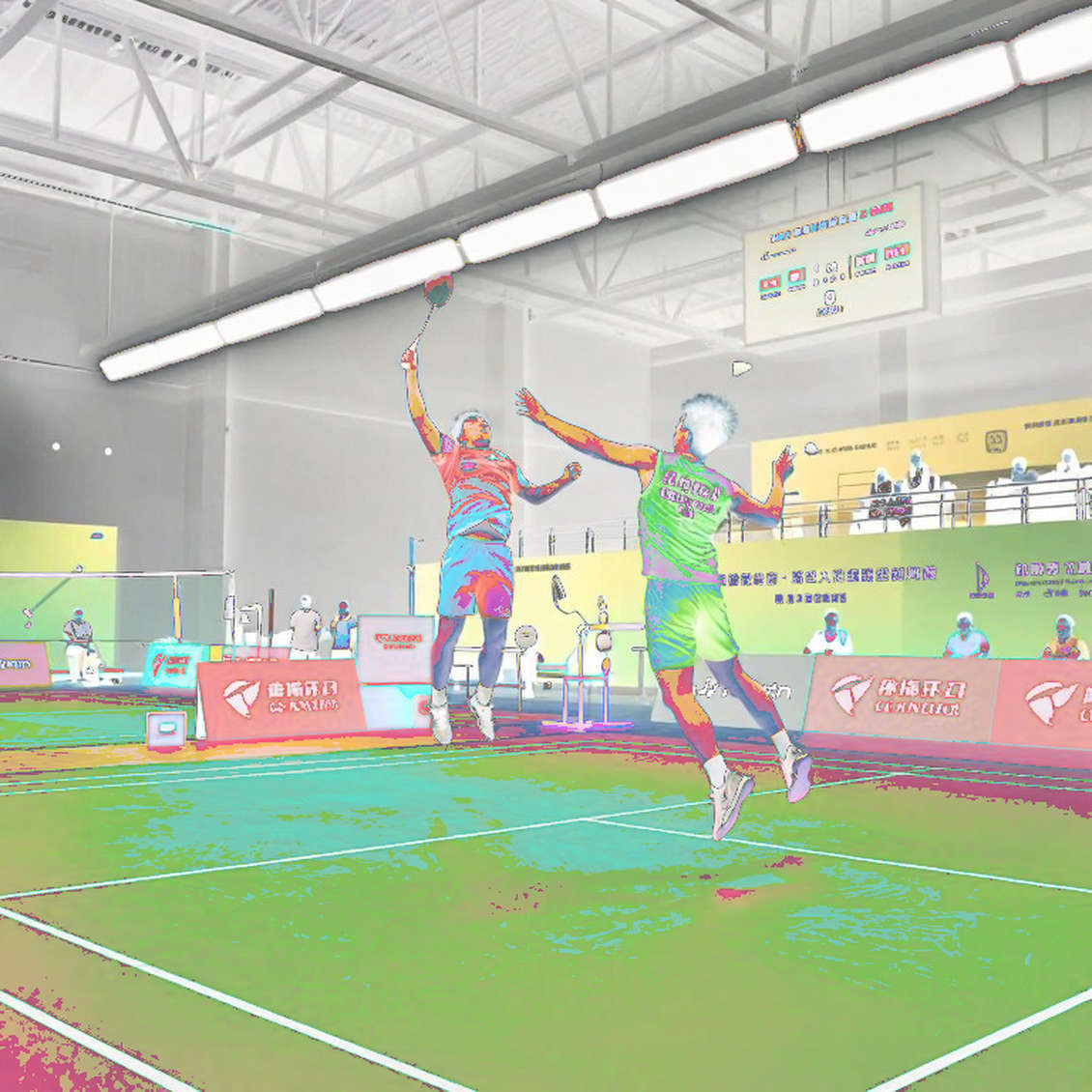
On the night of September 21, 2026, at the Ichinomiya City Municipal Gymnasium (Aichi-Nagoya, Japan), the stands were far from full. A men's team badminton tie between India and Bangladesh ended cleanly in less than an hour. Three scores were hung on the electronic board: 21-4, 21-12; 21-4, 21-13; and 21-15, 21-9. India won 3-0 and secured a quarter-final berth. But for someone who has stood along the courtside corridor watching major tournaments for 25 years, one detail outside the scoreline caught my attention: the words "nine minutes" in the match report for Srikanth Kidambi. The court had no crowd, but I could clearly hear the applause of an entire era – and at the same time, I heard the warning bell of a data discrepancy that could not be ignored.
The 2026 Asian Games is the 20th edition of the continental multi-sport event, hosted by Aichi-Nagoya, Japan. Badminton began on September 21, with the men's team event using a five-match format: three singles and two doubles. The first side to win three matches ends the tie. India entered the round of 16 as a seeded team, facing Bangladesh – a nation that has never made a mark at major international badminton tournaments.
India's lineup carried the imprint of three generations. Lakshya Sen, 25, is their No. 1 singles player, a former Paris 2026 Olympic semi-finalist, 2026 All England runner-up, and a former world No. 6 – at the peak of his career. Ayush Shetty, 21, is India's brightest young talent, a BWF World Junior Championships runner-up, fielded at second singles – a clear vote of confidence in the next generation. Srikanth Kidambi, 33, a former world No. 1 in 2026 and the 2026 World Championships silver medallist, took the third singles slot – the position with the lowest pressure in the five-match structure, suited to a player in the late stage of his career.
Facing them was Bangladesh, with a squad virtually unknown on the world badminton map. Ayman Ibn Jaman – the strongest of Bangladesh's singles players in this tie – is ranked world No. 375. Gourab Singha, Shetty's opponent in the second match, is ranked world No. 589. A gap of several hundred ranking places from India's level was an unbridgeable chasm.
In the first match, Lakshya Sen faced Ayman Ibn Jaman. Sen did not need long to take the opening game 21-4. In the second game, Jaman improved somewhat, reaching 12 points, but never posed a real threat to a player who had reached an Olympic semi-final. Sen closed out the match 21-4, 21-12.
In the second match, Ayush Shetty met Gourab Singha. The result was almost identical: 21-4 and 21-13. Shetty displayed an overwhelming attacking game from the back court, repeatedly driving the shuttle into the two deep corners, leaving the world No. 589 no chance to execute any tactical plan. A clean victory, exactly as expected from a young talent eager to prove himself.
In the final match, Srikanth Kidambi faced Jumar Al-Amin. The final score was 21-15, 21-9. But the opening game showed something unusual: Kidambi allowed his opponent to stay level until 15-15 before accelerating and closing out the game. For a former world No. 1, such a slow start against an unranked opponent was a rare sight. Based on my years of experience following international badminton, this kind of game typically occurs when a veteran player needs the first 10-15 minutes to "read" the rhythm of a young, unfamiliar opponent. The harder he tries to smash early, the higher the error rate; only after reading the opponent's movement patterns does he truly accelerate. Kidambi did exactly that in the second game, winning 21-9.
But the problem lies in the "nine minutes" figure recorded for this match. Under current badminton rules using the 21-point rally-scoring system, a point is awarded at the end of every rally. A two-game match with scores of 21-15 and 21-9 contains at least 46 completed rallies. Even at the fastest possible pace – an average of 15 seconds per rally, excluding intervals between games and between points – the total time cannot fall below 12 minutes. In reality, a match of this kind typically lasts between 25 and 35 minutes. The "nine minutes" figure is impossible, and this discrepancy rings an alarm about the reliability of the entire match dataset from the source.
This discrepancy is not merely a technical detail. It shows that information published about the Asian Games 2026 match needs to be verified against official sources – the OCA and BWF results portal – before being used in any analysis. Anyone using the "nine minutes" figure to assess match pace or Kidambi's form would build a completely distorted picture.
Another anomaly lies in the order of play. Under the traditional Thomas Cup/Uber Cup format, the matches in a team tie alternate between singles and doubles: first singles, first doubles, second singles, second doubles, third singles. Under this order, India could not have won 3-0 after only three singles without playing any doubles, because the first doubles would have been staged before the third singles. The original report described India ending the tie without needing the doubles, implying the three singles were played first. This means one of two possibilities: either the Asian Games 2026 uses a different order of play from the Thomas Cup convention, or the report was inaccurate. Both possibilities require verification against official documents before any conclusion.
Tactically, the fact that India's leading doubles pair – Satwiksairaj Rankireddy and Chirag Shetty – did not have to play in the opening round is a double-edged advantage. They enter the quarter-final with full energy, having absorbed no wear from the first tie. But the flip side is that their court feel may have gone "cold." In major knockout tournaments, competitive rhythm is the hardest element to maintain when a team does not play a full tie. India's coaching staff needs to arrange a high-intensity practice session for this pair before the quarter-final.
At the systemic level, it bears repeating that the Asian Games is not part of the BWF World Tour, and team events at continental multi-sport Games generally do not award world ranking points. The win over Bangladesh carries medal and national-pride value, but it does nothing to change the world rankings of India's players. The real points pressure comes in the autumn Asian swing of the World Tour immediately after these Games, creating a denser schedule for those who go deep in both arenas. This is a fatigue-management puzzle that not every team handles well.
Within the broader landscape of Asian men's team badminton, the Asian Games 2026 field is nearly as deep as the world championships, missing only European sides such as Denmark. China with its tradition, Indonesia with its flamboyant style, Japan with its balance across singles and doubles, plus South Korea and Malaysia – all are opponents India must overcome to go far. The quarter-final ticket has only brought India to the threshold of the real fight.
Moreover, the Ichinomiya gymnasium is a multi-purpose municipal facility, not a purpose-built badminton arena. Lighting conditions, air circulation, and court traction in multi-purpose halls differ significantly from World Tour venues. Drift from the air-conditioning system can affect shuttle trajectory, especially on drop shots or deep clears. Experienced teams usually schedule a hall-practice session before the official match – a preparation step that cannot be overlooked.
Overall, India's 3-0 win over Bangladesh was a result that met expectations and carried almost no tactical information value. The "former world No. 1" label attached to Kidambi, though historically accurate, is creating an illusion about his current strength. Beating a team whose players rank 375th and 589th in the world is like an Olympic-level athlete playing a mid-tier club player: the scoreline may look impressive, but the information gained about the winner's true form is almost zero.
The real pressure lies in the quarter-final. If India's opponent is China, Indonesia, Japan, South Korea or Malaysia – the heavyweight medal contenders – the picture changes completely. This is the moment for India's three generations to prove their worth: Sen must win the opening match, Shetty must hold firm under the pressure of a roaring arena, and Kidambi must show that his experience still carries value in the third singles. They tell me to write about badminton as a sport of numbers. I only write about the human beings behind the racket – and those human beings are now stepping into their true test. The night at Ichinomiya was merely a warm-up. The court was empty, but the heart was full – yet the packed stands of the knockout rounds will be the only test that proves whether India's quarter-final ticket was anything more than a gift from a lucky draw.

Cầu thủ liên quan