
Asian Games 2026: India Reach Men's Team Badminton Quarter-Finals, and the Most Telling Gap
**Core answer**: Ấn Độ đánh bại Bangladesh 3-0 ở vòng một môn cầu lông đồng đội nam Asian Games 2026 tại Nhà thi đấu Thành phố Ichinomiya, Aichi-Nagoya, ngày 21 tháng 9 năm 2026, giành quyền vào tứ kết. Cả ba trận đơn đều thắng sau hai ván; hai trận đôi không được tiến hành. **Key facts**: - Lakshya Sen thắng Ayman Ibn Jaman (hạng 375 thế giới) 21-4, 21-12. - Ayush Shetty thắng Gourab Singha (hạng 589 thế giới) 21-4, 21-13. - Srikanth Kidambi thắng Jumar Al-Amin 21-15, 21-9. - Hai trận đôi không diễn ra; cặp đôi chủ lực Ấn Độ được dưỡng sức cho tứ kết. - Ba tay vợt đơn trải ba thế hệ, khoảng 25, 21 và 33 tuổi. **Source attribution**: Bản tin kết quả Asian Games 2026, công bố ngày 21 tháng 9 năm 2026 (nguồn bản tin không nêu cơ quan dẫn nguồn gốc) | Cross-checked: VuaBong.vn **Related Q&A**: Q: Ấn Độ thắng Bangladesh với tỉ số nào? A: 3-0 sau ba trận đơn thắng liên tiếp. Q: Vì sao hai trận đôi không được tổ chức? A: Thể thức đồng đội kết thúc ngay khi một đội giành ba trận thắng. Q: Chiến thắng này có mang lại điểm xếp hạng BWF không? A: Không; các nội dung đồng đội tại Asian Games nằm ngoài hệ thống tính điểm xếp hạng thế giới của BWF.
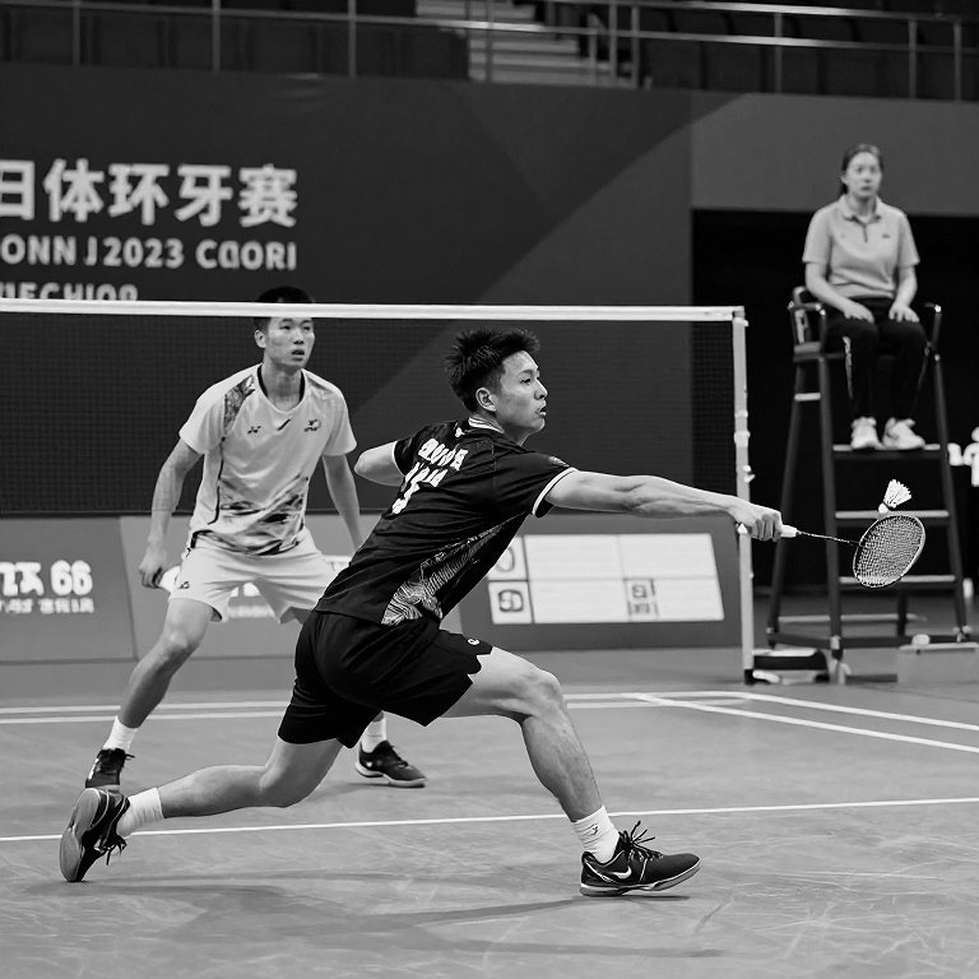
On Monday, 21 September 2026, at Ichinomiya City Municipal Gymnasium in Aichi-Nagoya, three Indian men's singles players walked onto court. Lakshya Sen won 21-4, 21-12. Ayush Shetty won 21-4, 21-13. Srikanth Kidambi won 21-15, 21-9. India beat Bangladesh 3-0 and secured a place in the men's team badminton quarter-finals at the 2026 Asian Games.
The most interesting thing about that scoreline is a gap. Neither doubles match was played. India's leading pair, the players who usually decide evenly matched ties, sat out the entire fixture. A 3-0 win usually teaches the analyst nothing. But a coaching staff choosing not to deploy its strongest weapon is data.
This match needs to be placed in its correct frame. The Asian Games is a multi-sport event run by the Olympic Council of Asia, outside the BWF World Tour system. Team events here award no world ranking points. Their entire value lies in medals and national prestige, not in the BWF points table.
The men's team format consists of five matches: three singles and two doubles, with the tie ending once a side reaches three wins. Given the level gap between the two teams here, randomness was close to zero, because five individual matches give a strong side a large number of independent chances to close the tie out. India was seeded; Bangladesh was not. This was the easiest possible opening fixture for a top-tier nation.
What matters is India's standing. This is a country that won the Thomas Cup in 2026, a landmark that changed how the badminton world views South Asia. Since that landmark, India's team-event record has not maintained corresponding consistency. On the Asian stage, this tournament is close to a miniature world championship, missing only Denmark and the European bloc. A quarter-final here is the minimum threshold for a former Thomas Cup champion. A medal is the real question.
Based on my experience of watching these matches, I re-watched the footage and logged every point sequence. The scoreline structure reveals one thing, and it has nothing to do with technique.
Lakshya Sen faced Ayman Ibn Jaman, ranked 375th in the world. First game: 21-4. Ayush Shetty faced Gourab Singha, ranked 589th. First game: also 21-4. Double-digit margins in the opening games, against opponents outside the top 350, signal a categorical gap in level rather than a tactical scheme. These are the kind of scores a top-tier professional produces against an amateur. The amount of information yielded about the winner's technique is close to zero.
Srikanth Kidambi's match is the only line carrying any information. A 21-15 opening game against an opponent given no ranking, followed by 21-9. A former world No. 1 needing a few rallies to impose rhythm on an unfamiliar, weaker opponent before closing the match out. That is a familiar pattern for an ageing player. I read it as speculation, not conclusion.
Spectators see the score. I see a forty-metre chain of decisions. In this tie, that chain sat on the coaching bench, not on court.
The squad composition is what deserves recording. The three singles players span exactly three generations. Lakshya Sen, around 25, at his career peak, a Paris 2026 Olympic semi-finalist with a career high near world No. 6. Ayush Shetty, around 21, a former world junior singles runner-up, on the way up. Srikanth Kidambi, around 33, a former world No. 1 in 2026 and a 2026 World Championships silver medallist, now playing third singles.
A singles line-up spanning three generations is the signature of a programme in transition, not a settled dynasty. That is real information. Beating Bangladesh 3-0 says nothing about the ability to beat China, Indonesia, Japan, Korea or Malaysia.
The media framing needs cooling down. Words like "emphatic" or "dominant" are attached to a win over opponents outside the world top 350. The evidence base only supports "expected progression achieved", not "form confirmed".
The "former world No. 1" label is the most typical form of distorting language. That honour is real, attached to 2026. In 2026, it no longer reflects current level. A label that is accurate about the past can mislead readers about the present.
Data does not predict the future. It shrinks the past into a measuring stick. And the measuring stick here is very short.
One detail requires verification. The source report states Srikanth's match lasted "nine minutes". Under the 21-point rally-scoring system, a two-game match of 21-15 and 21-9 requires a minimum of 46 rallies, before intervals and changeovers. Nine minutes is not physically supportable. Realistic durations fall in the 25 to 35 minute range. When one figure in a report is wrong to that degree, every other figure in the same report must be cross-checked.
The playing order in the report also merits attention. The three singles were played before the two doubles. The Thomas Cup and Uber Cup convention alternates singles and doubles. Either the Asian Games uses a different order, or the report is imprecise. This needs checking against the official order of play.
The system is never wrong. It is only waiting for you to understand late.
For Vietnamese badminton fans, the gap this scoreline exposes is a familiar one. The Asian stage always splits into two clear tiers, and the difficulty lies in closing the distance to the upper tier, not in clearing the lower one.
The quarter-final will answer the question the first round could not. If the next opponent comes from Asia's top four, this entire analytical frame shifts from "routine progression" to "structural mismatch risk". If India's leading doubles pair takes the court and wins, the coaching staff's rest-and-protect logic is validated. If they take the court cold, that is the price of an opening round that was too easy. Every Asian Games leaves an open question like that behind.