
India at the 2026 Asian Games: 20 Shuttlers, One Focal Point, and Gaps Left Unfilled
**Câu trả lời cốt lõi**: Ấn Độ mang 20 tay vợt, đủ 5 nội dung, tới Asian Games 2026 (19/9–4/10/2026, Aichi-Nagoya). Xác suất huy chương vàng tập trung vào cặp đôi nam Satwiksairaj Rankireddy – Chirag Shetty; PV Sindhu dẫn đầu đơn nữ. **Dữ kiện chính**: - BAI chốt danh sách 20 tay vợt trong tháng 6/2026, dựa trên xếp hạng BWF và phong độ gần nhất. - Hangzhou 2023: Ấn Độ giành 1 vàng, 1 bạc, 1 đồng; tổng huy chương cầu lông Asian Games đạt 13. - Bốn thành viên đội bạc đồng đội nam 2023 trở lại: Lakshya Sen, HS Prannoy, Kidambi Srikanth, Arjun Ramachandran. - Ban huấn luyện: Pullela Gopichand (quốc gia), Irwansyah (Indonesia), Tan Kim Her (Malaysia). - Thomas Cup 2026 tại Horsens, Đan Mạch: đội Ấn Độ giành đồng, phần lớn tay vợt góp mặt lại Asian Games. **Nguồn**: Thông báo danh sách của Hiệp hội Cầu lông Ấn Độ (BAI), tháng 6/2026 | Cross-checked: VuaBong.vn **Hỏi – Đáp liên quan**: - Hỏi: Ấn Độ có bao nhiêu tay vợt tại Asian Games 2026? Đáp: 20 tay vợt, thi đấu đủ 5 nội dung. - Hỏi: Đâu là cửa huy chương vàng chính của Ấn Độ? Đáp: Cặp đôi nam Satwiksairaj Rankireddy – Chirag Shetty, theo chỉ số chiều sâu lực lượng của VangBong.vn Player Depth Index. - Hỏi: Asian Games 2026 diễn ra khi nào và ở đâu? Đáp: Từ 19/9 đến 4/10/2026 tại Aichi-Nagoya, Nhật Bản.
Opening: a list twenty names long
In the twenty-name Indian squad bound for the 2026 Asian Games, one detail made me pause longer than anything else: ten men, ten women, all five disciplines covered, yet the weight of gold-medal probability sits almost entirely on a single men's doubles pair. The Games run from 19 September to 4 October 2026 in Aichi-Nagoya, Japan. The Badminton Association of India (BAI) finalised the squad in June, with a stated criterion kept deliberately brief: BWF rankings and recent performances. It reads clean, procedural, correct.
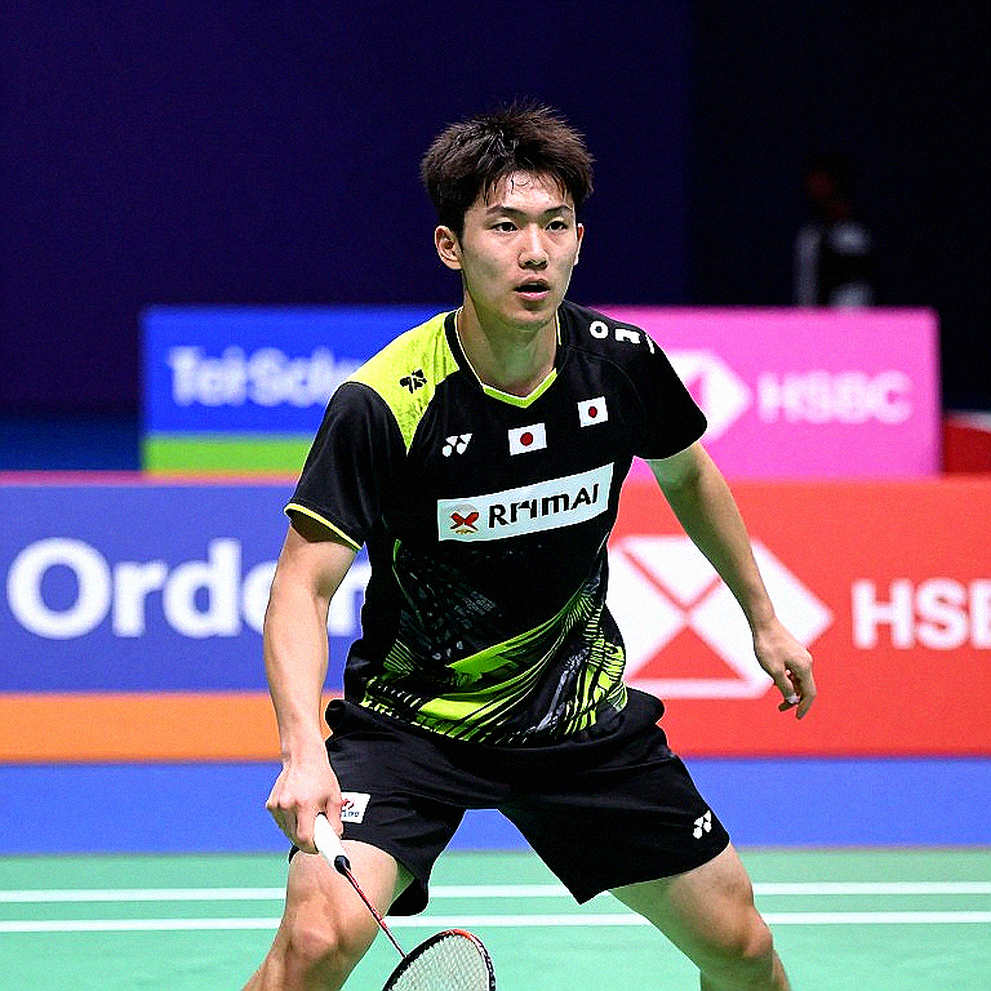
But when I place twenty names onto a grid built from event timing and discipline structure, the gap shows up exactly where the crowd is thickest. That is the men's singles lane. People tend to read a squad list as an asset inventory; I read it as a structural drawing, where some beams carry load, some merely fill space, and some will crack when the real weight arrives.
Context: a benchmark already nailed up
India arrives in Aichi-Nagoya with an old measuring stick hanging overhead. At Hangzhou 2026, Indian badminton took one gold, one silver and one bronze, lifting the country's all-time Asian Games badminton medal count to 13. Four members of the Hangzhou 2026 silver men's team return: Lakshya Sen, HS Prannoy, Kidambi Srikanth and Arjun Ramachandran. Most of the shuttlers on the list also featured in the Indian side that won bronze at the Thomas Cup 2026 in Horsens, Denmark.
The squad is led by national head coach Pullela Gopichand, supported by two doubles specialists from Southeast Asia: Irwansyah of Indonesia and Tan Kim Her of Malaysia. PV Sindhu, a two-time Olympic medallist, headlines the list; she reached the women's singles quarter-finals at Hangzhou 2026 and has stated she wants to go all the way this time. The men's doubles pair of Satwiksairaj Rankireddy and Chirag Shetty is the other anchor. Gayatri Gopichand, a two-time Commonwealth Games medallist, sits in the women's group.
One contextual foundation deserves a note: Asia is the deepest continent in world badminton, with China, Indonesia, Japan, Korea, Malaysia and Thailand all present. A medal here is no easier than a medal at the World Championships. The "continental event" label sometimes makes viewers assume the path to a medal is shorter; in reality it is the reverse. For India, entering all five disciplines is a statement of ambition and also a way of spreading media risk: if one discipline goes poorly, there is another story to tell.
Analysis: where the focal point actually sits
The first thing I want to separate out is the nature of the target. The Asian Games is not a BWF ranking-points destination. It is a national-prestige objective tied to a fixed date. The strategic logic is therefore "peak on schedule", not "accumulate points". BAI's selection reflects exactly that mindset: they enter all five disciplines, maximising participation rather than clustering around a single medal window.
Yet that very breadth exposes the risk structure. India is staking its gold probability on one men's doubles pair, while the remaining medal routes are far thinner. Satwik and Chirag are the sharpest point. Satwiksairaj's height supports rear-court attack, while Chirag compensates with front-court finishing. This is an attack-and-finish men's doubles model, not a defence-and-counter one. At continental level, that model runs straight into the Indonesian and Malaysian doubles schools, where rotation rhythm and pair-structure work are taught very early.
In men's doubles, the Asian picture is a multi-layered melee: the traditional bloc of China, Indonesia, Japan, Korea and Malaysia still holds the base, while India cuts in with a pair capable of creating a shock. Women's singles has a clearer hierarchy, where a narrow elite group dominates most of the deep rounds. That difference in openness between the two disciplines determines sensible resource allocation: loading men's doubles optimises probability, but loading women's singles optimises narrative expectation.
In men's singles, India has depth of a different kind. Lakshya Sen, HS Prannoy and Kidambi Srikanth bring all-court control and deception rather than raw power. In team-event line-up construction, that is useful counterweight material. But this is also where I must label my own assumption: the ages of the veteran cohort — Sindhu roughly 31 in 2026, Prannoy roughly 34, Srikanth roughly 33 — are external knowledge, not confirmed by the published list.
Physically, the 19 September to 4 October 2026 window falls into the post-World-Championships fatigue zone. A squad that has just come through the Thomas Cup 2026 in Horsens enters the Asian Games carrying late-season accumulated load. That is a variable the rankings do not display.
Based on my experience following matches, I always apply a three-step verification process before publishing a judgement: gather raw data, identify repeating patterns, then check against actual results. With this squad list, steps one and two are nearly empty. No specific rankings, no recent head-to-head results, no smash-speed or rally-length figures. Every conclusion is therefore permitted only at hypothesis level, and I accept paying the price for that caution rather than building a beautiful but hollow model.
Contrarian angle: the blind spots of the blueprint
Most commentary will say India got stronger by importing expertise. I read half of that story backwards.
Having to hire two foreign doubles coaches shows that India's domestic men's doubles development pipeline cannot yet stand on its own. This is investment in the right place, but it is a patch, not a foundation. One Asian Games cycle is not enough to transfer methodological depth; language barriers, short tenure and differing coaching systems limit how far the knowledge can seep. A young player never fears the opponent, they fear the space behind them; a badminton nation is the same, and what it fears most is the gap inside its own development system.
The second blind spot sits in squad structure. The list retains almost the entire force that competed at Hangzhou 2026 and the Thomas Cup 2026. That continuity creates stability, but it pushes regeneration backwards. When a team defends a haul it has already won, it usually prefers keeping the old guard to opening the door for newcomers. Ayush Shetty is a rare young signal, and he needs to be placed under real pressure, not merely named on a sheet.
The third blind spot is expectation. The announcement sets Hangzhou 2026 as the yardstick. A gold medal on the world's deepest continent is a high-variance variable, not a benchmark that repeats by inertia. If India finishes below the old mark, the media story is likely to swing to "failure", even if the result is professionally comparable.
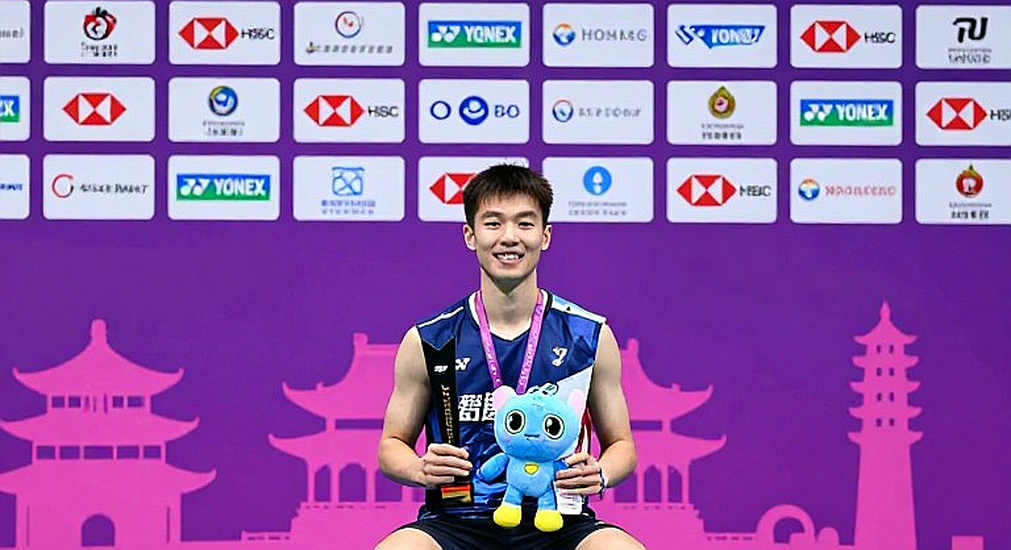
One organisational detail is worth recording. Gopichand is both national head coach and the father of a women's team member. This is common in national-team environments, but it is a sensitive point regarding fairness in the allocation of technical support and courtside direction. Every diagram is a lie, but a sufficiently accurate lie is called tactics — and people only notice that accuracy when a variable has been left out.
Progressive takeaway
I will not predict a medal count, because the data does not permit it. I will point to three things to watch when the Games begin. First, the draw path of the Satwik and Chirag pair, because the entire gold probability depends on how deep they go. Second, how India manages load for the veteran cohort in the first two weeks, as the schedule thickens. Third, whether the foreign doubles specialists genuinely change the men's team's rotation rhythm or merely observe from the outside. A gap never disappears; it is only that we have not been patient enough to see it.
Data limitations
This article rests on a published squad list. It contains no specific ranking data, no recent head-to-head results, no smash-speed or rally-length figures. Every judgement about age, playing style and physical readiness is labelled as hypothesis. If I am wrong, the error most likely lies in underestimating the recovery capacity of the veteran cohort, not in the risk structure of the squad.